
News
South Asian nations must collaborate on climate fund

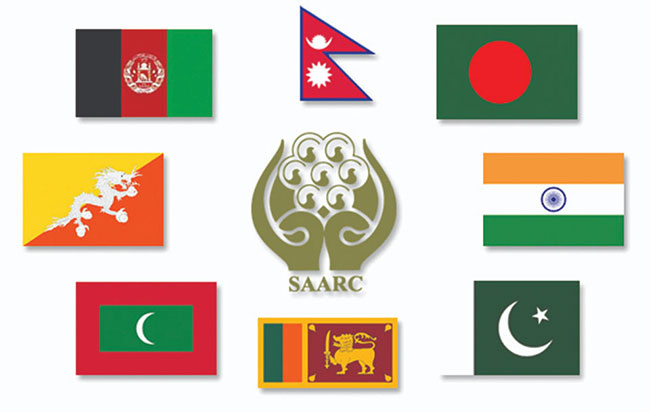
‘SA region needs to double down on pursuing sustainable development goals’
South Asian countries have been asked to establish a South Asia Association for Regional Cooperation Climate Fund, which could pay for adaptation and mitigation initiatives with a strong focus on innovations, joint R&D, technology transfer, knowledge exchange, and capacity building.
A report published by The Hindustan Times (HT) says the regional cooperation in South Asia has been an exercise in hope but suboptimal in its outcome. The climate crisis can alter it. Home to about one-fourth of the global population, the region is responsible for 4% of historical global greenhouse gas (GHG) emissions. The annual per capita GHG emissions were 2.6 tonnes of CO2 equivalent in 2019, the lowest of any region globally, while the Gross Domestic Product per capita (purchasing power parity) was $5,814 in 2020, the second lowest globally, just ahead of Africa.
The HT report says: “South Asia faces several climate challenges. However, the similarity of the challenges and the complementary strengths of the nations, along with their shared geography, socioeconomic characteristics, and cultures, present opportunities for collaboration among the South Asian countries. For example, the Himalayan countries of Afghanistan, Bhutan, India, Nepal, and Pakistan have large, unutilised hydropower resources. Collaboration on technologies and finances, and the development of a common South Asian power market can lead to increased energy security while reducing power costs and GHG emissions. India’s lead on solar power can help other countries develop this renewable resource as a cheap and principal energy source.”
There are existing initiatives that have lessons for all countries: Adaptation strategies of Bangladesh (including its Delta Plan 2100), India’s focus on enhanced energy efficiency, sustainable management of forests by Bhutan, fisheries management by Bangladesh and India, micro-hydropower in Nepal, ecotourism in Maldives and Sri Lanka, and climate-smart agriculture in Bangladesh, India and Pakistan. In addition, India has a rich experience in attempting to develop sustainable and economically productive cities, with programmes such as the Smart Cities Mission, Atal Mission for Rejuvenation and Urban Transformation, Swachh Bharat Mission, Housing for All, Start-Up Mission, Street Vendors Act 2014 and India Cooling Action Plan.
Based on the climate crisis challenges and current initiatives, five key areas emerge for regional cooperation: Sustainable urbanisation (inclusive sustainable municipal services, green transport, pollution abatement and prevention); climate-smart agriculture (water and resource efficiency, minimising food wastage, transport logistics and cold chains, and food processing); disaster resilience (joint and coordinated early warning systems for hydro-meteorological events, shared response mechanisms to disasters including chemical and oil spills in coastal areas, and forest fires); renewable and clean energy (solar and wind energy, power storage technologies, joint development of hydropower projects, regional energy market, and increasing energy efficiency across industries, farms, institutions, offices and homes); and downscaled climate modelling to predict short- to long-term impacts and implement people-oriented adaptation plans.
The private sector will have a substantial role in climate adaptation and mitigation. Thus, relaxation of foreign direct investment rules will help, especially for green technologies, digital firms, fourth industrial revolution technologies, waste management and treatment, disaster resilience enhancing processes, and technologies including in infrastructure sectors such as climate-resilient roads and water transport. Countries could establish a South Asia Association for Regional Cooperation Climate Fund, which could pay for adaptation and mitigation initiatives with a strong focus on innovations, joint R&D, technology transfer, knowledge exchange, and capacity building. The fund could also raise money from private foundations and individuals, corporate social responsibility initiatives, and bilateral and multilateral agencies.
In addition, South Asia needs to double down on pursuing sustainable development goals. Lastly, India could leverage its development assistance to other South Asian countries by joining hands with international development agencies to jointly design, fund, and implement climate resilience programmes.




The U.S. Embassy in Colombo welcomed the U.S. Sports Envoys to Sri Lanka, former National Basketball Association (NBA) and Women’s National Basketball Association (WNBA) players Stephen Howard and Astou Ndiaye, from June 8 through 14.
The Public Diplomacy section of the U.S. Embassy said that it would launch a weeklong basketball program intended to harness the unifying power of sports, made possible through collaboration with Foundation of Goodness and IImpact Hoop Lab.
While in Sri Lanka, Howard and Ndiaye, both retired professional basketball players, will conduct a weeklong program, Hoops for Hope: Bridging Borders through Basketball. The Sports Envoys will lead basketball clinics and exhibition matches and engage in leadership sessions in Colombo and Southern Province for youth aged 14-18 from Northern, Uva, Eastern and Western Provinces, offering skills and leadership training both on and off the court. The U.S. Envoys will also share their expertise with the Sri Lanka Basketball Federation, national coaches, and players, furthering the development of basketball in the country. Beyond the clinics, they will collaborate with Sri Lankan schoolchildren to take part in a community service project in the Colombo area.
“We are so proud to welcome Stephen and Astou as our Sports Envoys to Sri Lanka, to build on the strong people-to-people connections between the United States and Sri Lanka,” said U.S. Ambassador Julie Chung. “The lessons that will be shared by our Sports Envoys – communication, teamwork, resilience, inclusion, and conflict resolution – are essential for leadership development, community building, equality, and peace. The U.S. Sports Envoy program is a testament to our belief that sports can be a powerful tool in promoting peace and unity.”
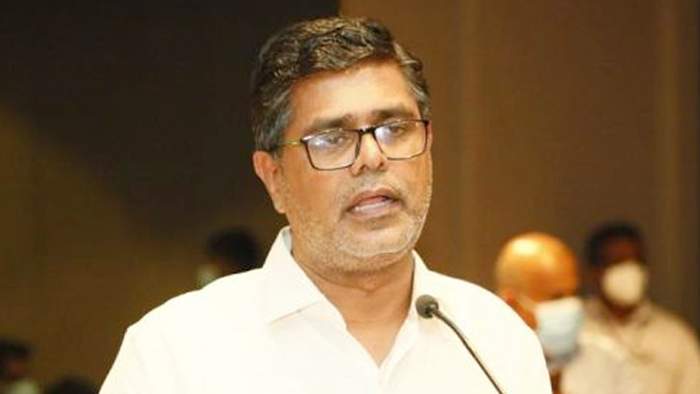
SJB Colombo District MP Mujibur Rahuman in parliament demanded to know from the government the reasons for CEB suspending the leave of all its employees until further notice from Thursday.
MP Rahuman said that the CEB has got an acting General Manager anew and the latter yesterday morning issued a circular suspending leave of all CEB employees with immediate effect until further notice.
“We demand that Minister Kanchana Wijesekera should explain this to the House. This circular was issued while this debate on the new Electricity Amendment Bill was pending. There are many who oppose this Bill. The Minister must tell parliament the reason for the urge to cancel the leave of CEB employees,” the MP said.However, Speaker Mahinda Yapa Abeywardena prevented Minister Wijesekera responding to the query and said that the matter raised by MP Rahuman was not relevant.
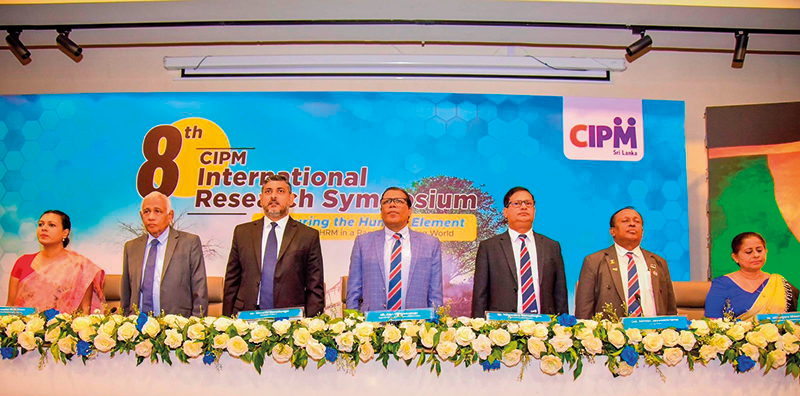
The Chartered Institute of Personnel Management (CIPM) successfully concluded the 8th Annual CIPM Symposium, which took place on 31st May 2024. Themed “Nurturing the Human Element—Redefining HRM in a Rapidly Changing World,” the symposium underscored the pivotal role of human resource management (HRM) in today’s dynamic global landscape. Since its inception in 1959, CIPM has been dedicated to advancing the HR profession through education, professional development, and advocacy, solidifying its position as Sri Lanka’s leading professional body for HRM.
Ken Vijayakumar, the President of the CIPM, graced the occasion as the chief guest. The symposium commenced with the welcome address by the Chairperson, Prof. Arosha Adikaram, followed by the Web Launch of the Symposium Proceedings and Abstract Book by the CIPM President. The event featured distinguished addresses, including a speech by Chief Guest Ken Vijayakumar, President of CIPM, and an address by Guest of Honor Shakthi Ranatunga, Chief Operating Officer of MAS Holdings Pvt. Ltd., Sri Lanka.
The symposium also featured an inspiring keynote address by Prof. Mario Fernando, Professor of Management and Director of the Centre for Cross Cultural Management (CCCM) at the University of Wollongong, Australia.
Vote of Thanks of the inauguration session was delivered by Dr. Dillanjani Weeratunga, Symposium Co-chair.
The symposium served as a comprehensive platform for researchers to present their findings across a wide range of critical topics in HRM. These included Cultural Diversity and Inclusion, Talent Development and Retention, Ethical Leadership and Corporate Social Responsibility, Adapting to Technological Advancements, Mental Health and Well-being at Work, Global Workforce Challenges, Employee Empowerment, and Reskilling and Upskilling.
The plenary session was led by Prof. Wasantha Rajapakse. Certificates were awarded to the best paper presenters during the valedictory session, followed by a vote of thanks delivered by Kamani Perera, Manager of Research and Development.
The annual symposium of CIPM was a truly inclusive event, attracting a diverse audience that spanned undergraduates, graduates, working professionals, research scholars and lecturers. This widespread interest highlights the symposium’s significance in the field of HRM, offering a unique opportunity for everyone to network and learn from scholarly brains.The CIPM International Research Symposium was sponsored by Hambantota International Port, Sri Lanka Institute of Information Technology (SLIIT), E B Creasy & Co. PLC, and Print Xcel Company.



US sports envoys to Lanka to champion youth development

Rahuman questions sudden cancellation of leave of CEB employees


