
News
Women trapped in microfinance debt flay govt. for not keeping its pledge to liberate them

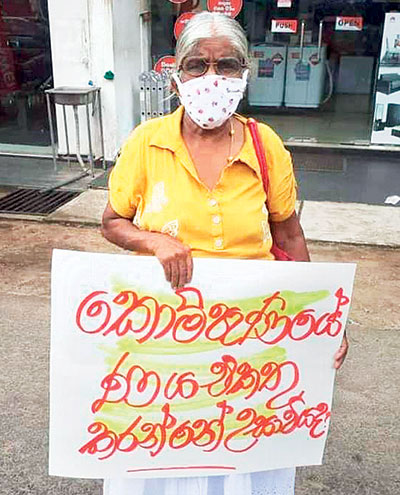
The government, which came to power, pledging to abolish all microfinance debt had failed to keep its promise, the Collective of Women Affected by Microfinance (CWAM) said in a press release.
CWAM said that the government had also failed to make an effective intervention to help women affected by a microfinance crisis. “In a context where standards of living of all people affected by microfinance have been deteriorating, the Collective of Women Affected by Microfinance called for a Satyagraha on 08 March 2021, to raise public awareness of the gravity of the problem and to caution the larger society of new dangers to come. Again, the government failed to respond to the demands of the Collective during the Satyagraha which lasted for 55 days in front of the State Monument in Hingurakgoda, Polonnaruwa. As the national collective of women affected by microfinance, we convey our displeasure and opposition to the government for safeguarding the microfinance companies responsible for our financial catastrophe while misleading women and all people affected by the microfinance crisis,” they said.
CWAM says that all governments have enabled the finance companies to exploit the poor, especially women, instead of addressing their problems through a national economic development plan.
“Unpayable debt dumped on the women and their families bear witness to the failure of the government policy. We have been raising consciousness on the nexus between our livelihoods, suicides, dispossession, displacement, domestic violence, family disputes and the problem of over-indebtedness for over half a decade since 2017. We have communicated to the government, the Central Bank, the Ministry of Finance, key political leaders in the government as well as the public repeatedly on this matter. However, the political leadership, as well as the policymakers, appear to be deaf and blind as they believe that new loan schemes would solve the current microfinance crisis. They have discarded our lived experiences, confirmation of the failure of debt-driven entrepreneurship and self-employment. We will not fall from the frying pan to the fire by following the failed government policy of debt-driven entrepreneurship and self-employment.
“Loss of income and increase in cost-of-living triggered by the economic crisis that the country is facing as well as the crisis in agriculture at present, have precluded the ability of indebted women to pay back their debt.
Concerns arising from the current context:
1. Persistent collection of debt drives women to danger
a. Microfinance borrowers engaged in livelihoods related to agriculture, fisheries and the informal economy do not enjoy guaranteed wages or retirement benefits. Hence, they are more susceptible to climate change, economic instability, sickness, and accidents. COVID-19 pandemic illustrates many incidents where women were forced into more hazardous forms of debt as they fail to meet debt repayment owing to the collapse of their regular sources of income.
b. Women borrowers of microfinance record incidents of losing their savings, household
goods, gold, and land in the process of debt repayment.
c. Women often succumbed to domestic violence arising from household disputes as they prioritize debt repayment over other household expenses related to food, education, and health care.
d. A 2018 report by the Independent Expert on Foreign Debt and Human Rights to the UN Human Rights Council Juan Pablo Bohoslavski documented that 2.4 million out of the 2.8 million ensnared in the microfinance debt trap were women.
e. News reports over the years as well as national suicide records with the Department of Police account for over 200 suicides related to microfinance.
2. Litigation against women failing to repay
a. Finance companies and microfinance companies have been misusing the judiciary mechanism to coerce women to repay unpayable debt.
b. Some companies are threatening women in remote areas with litigation in courts in Colombo.
c. Most of the borrowers cannot bear lawyers’ fees. Many cannot afford to travel to appear in the courts. As a result, microfinance victims do not get a just hearing or legal representation. Almost all the cases are determined favourably to the finance companies.
3. Permanent financial disenfranchisement
a. Borrowers unable to repay are delisted in the Credit Information Bureau (CRIB) which bar them from accessing other financial sources in the formal financial sector.
b. A majority of the microfinance borrowers listed in the CRIB are excluded from accessing financial concessions provided in line with the COVID-19 pandemic.
c. Denying microfinance borrowers access to formal financial markets directly expose them to precarious forms of finance in the informal market.
4. Pressure to repay debt compels women into anti-social activities.
a. In many villages lack of income-generating opportunities have pushed women into prostitution.
b. Debt burden has negatively affected children’s education and psychological wellbeing of the family.”



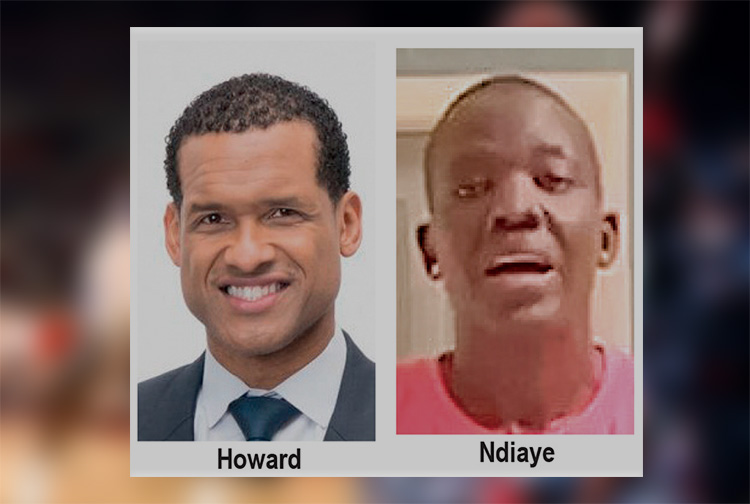
The U.S. Embassy in Colombo welcomed the U.S. Sports Envoys to Sri Lanka, former National Basketball Association (NBA) and Women’s National Basketball Association (WNBA) players Stephen Howard and Astou Ndiaye, from June 8 through 14.
The Public Diplomacy section of the U.S. Embassy said that it would launch a weeklong basketball program intended to harness the unifying power of sports, made possible through collaboration with Foundation of Goodness and IImpact Hoop Lab.
While in Sri Lanka, Howard and Ndiaye, both retired professional basketball players, will conduct a weeklong program, Hoops for Hope: Bridging Borders through Basketball. The Sports Envoys will lead basketball clinics and exhibition matches and engage in leadership sessions in Colombo and Southern Province for youth aged 14-18 from Northern, Uva, Eastern and Western Provinces, offering skills and leadership training both on and off the court. The U.S. Envoys will also share their expertise with the Sri Lanka Basketball Federation, national coaches, and players, furthering the development of basketball in the country. Beyond the clinics, they will collaborate with Sri Lankan schoolchildren to take part in a community service project in the Colombo area.
“We are so proud to welcome Stephen and Astou as our Sports Envoys to Sri Lanka, to build on the strong people-to-people connections between the United States and Sri Lanka,” said U.S. Ambassador Julie Chung. “The lessons that will be shared by our Sports Envoys – communication, teamwork, resilience, inclusion, and conflict resolution – are essential for leadership development, community building, equality, and peace. The U.S. Sports Envoy program is a testament to our belief that sports can be a powerful tool in promoting peace and unity.”
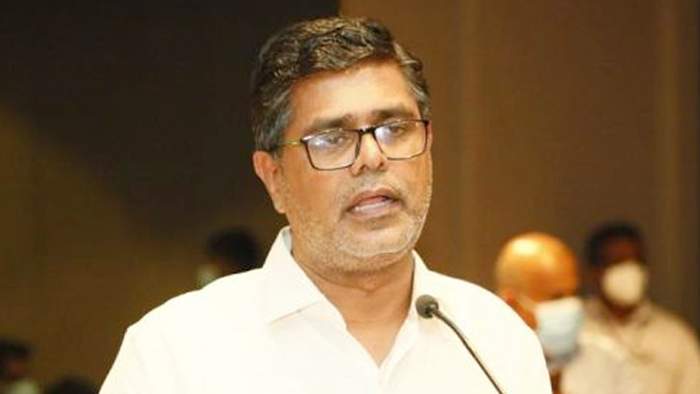
SJB Colombo District MP Mujibur Rahuman in parliament demanded to know from the government the reasons for CEB suspending the leave of all its employees until further notice from Thursday.
MP Rahuman said that the CEB has got an acting General Manager anew and the latter yesterday morning issued a circular suspending leave of all CEB employees with immediate effect until further notice.
“We demand that Minister Kanchana Wijesekera should explain this to the House. This circular was issued while this debate on the new Electricity Amendment Bill was pending. There are many who oppose this Bill. The Minister must tell parliament the reason for the urge to cancel the leave of CEB employees,” the MP said.However, Speaker Mahinda Yapa Abeywardena prevented Minister Wijesekera responding to the query and said that the matter raised by MP Rahuman was not relevant.
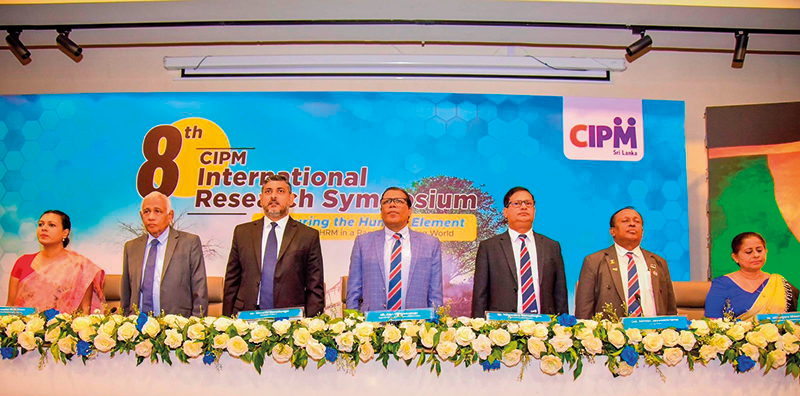
The Chartered Institute of Personnel Management (CIPM) successfully concluded the 8th Annual CIPM Symposium, which took place on 31st May 2024. Themed “Nurturing the Human Element—Redefining HRM in a Rapidly Changing World,” the symposium underscored the pivotal role of human resource management (HRM) in today’s dynamic global landscape. Since its inception in 1959, CIPM has been dedicated to advancing the HR profession through education, professional development, and advocacy, solidifying its position as Sri Lanka’s leading professional body for HRM.
Ken Vijayakumar, the President of the CIPM, graced the occasion as the chief guest. The symposium commenced with the welcome address by the Chairperson, Prof. Arosha Adikaram, followed by the Web Launch of the Symposium Proceedings and Abstract Book by the CIPM President. The event featured distinguished addresses, including a speech by Chief Guest Ken Vijayakumar, President of CIPM, and an address by Guest of Honor Shakthi Ranatunga, Chief Operating Officer of MAS Holdings Pvt. Ltd., Sri Lanka.
The symposium also featured an inspiring keynote address by Prof. Mario Fernando, Professor of Management and Director of the Centre for Cross Cultural Management (CCCM) at the University of Wollongong, Australia.
Vote of Thanks of the inauguration session was delivered by Dr. Dillanjani Weeratunga, Symposium Co-chair.
The symposium served as a comprehensive platform for researchers to present their findings across a wide range of critical topics in HRM. These included Cultural Diversity and Inclusion, Talent Development and Retention, Ethical Leadership and Corporate Social Responsibility, Adapting to Technological Advancements, Mental Health and Well-being at Work, Global Workforce Challenges, Employee Empowerment, and Reskilling and Upskilling.
The plenary session was led by Prof. Wasantha Rajapakse. Certificates were awarded to the best paper presenters during the valedictory session, followed by a vote of thanks delivered by Kamani Perera, Manager of Research and Development.
The annual symposium of CIPM was a truly inclusive event, attracting a diverse audience that spanned undergraduates, graduates, working professionals, research scholars and lecturers. This widespread interest highlights the symposium’s significance in the field of HRM, offering a unique opportunity for everyone to network and learn from scholarly brains.The CIPM International Research Symposium was sponsored by Hambantota International Port, Sri Lanka Institute of Information Technology (SLIIT), E B Creasy & Co. PLC, and Print Xcel Company.



US sports envoys to Lanka to champion youth development

Rahuman questions sudden cancellation of leave of CEB employees


