
News
WHO extends time for booster shot, raises hope for AZ jab recipients

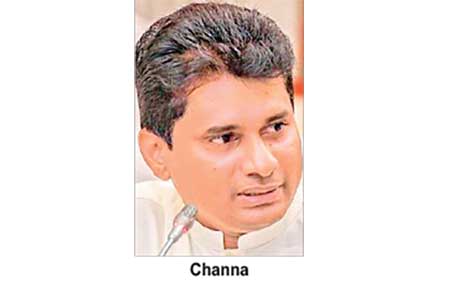
Prof. CJ explains how combination of three vaccines was used to address problem
By Shamindra Ferdinando
Those who have missed Oxford AstraZeneca (Covishield) second jab so far are unlikely to get theirs before the originally stipulated period to ensure the best effect of the vaccine.
Various government spokespersons, including Senior Presidential Advisor Lalith Weeratunga are on record as having said that the second jab should be administered between 12 to 16 weeks to maximise protection against new variants of coronavirus.
However, State Minister of Pharmaceutical Production, Supply and Regulation Prof Channa Jayasumana yesterday (24) said subsequently the WHO had determined that the second jab could be given in 24 weeks (six months).
Prof. Jayasumana said that though the original deadline couldn’t be met due to the disruption to the supply line, the time and space provided by the latest WHO technical paper would give the government an opportunity to complete the inoculation of those who earlier received Covishield first jab.
Prof. Jayasumana said so in response to The Island queries.
 Asked how the government intended to ensure the second jab for approximately 570,000 before the expiring of the new deadline, Prof Jayasumana said that in addition to 264,000 covishield promised through the Covax programme in the second week of July, Sri Lanka would take delivery of 26,000 Pfizer vaccines doses on July 5, 12 and 19 and the remaining requirement would be met through US donation of Covid-19 vaccines, probably Moderna. “If everything goes as expected, the issue of Covishield second jab can be settled by end of July,” Prof Jayasumana said.
According to the State Minister, the WHO has said the second dose could be given after 20 weeks though previously it was 16 weeks. According to WHO technical study dated May 26, 2021. “The uncertainty of future supplies has prompted countries to review policy and programmatic implications, as providing the second dose of the vaccine within the WHO recommended 8-12-week schedule may not be feasible in the near future,” according to the WHO study.
The Island sought an explanation from Prof. Neelika Malavige, who is also the Head, Department of Immunology and Molecular Medicine at the Sri Jayewardenepura University Medical Faculty, what would happen if the deadline couldn’t be met. Prof. Malavige said that a slight delay wouldn’t be an issue but in the absence of required data she couldn’t comment on much delayed inoculation and what its impact would be.
Referring to available foreign research data, Prof. Malavige said having the second dose was essential to guarantee the best effect of the vaccine, and in particular to maximise protection against new variants.
Director General of Health Services (DGHS) Dr. Asela Gunawardena didn’t answer his mobile phone and therefore the response of the senior most official responsible for Covid-19 counter-measures to the plight of nearly 600,000 persons awaiting the second jab couldn’t be obtained.
Prof. Malavige pointed out that against the backdrop of sharp increase in the cases of the Delta variant, in some parts of the world the administration of the second dose had been advanced. According to the Office of Health Ministry’s Chief Epidemiologist as at 8pm, June 22, 2021, altogether 372,675 had received the booster shot whereas 925,242 got the first dose during January-April 2021. The report revealed that on June 20, 21 and 22, the covishield second dose had been given to 252, 132 and 385 persons.
Sri Lanka received altogether three stocks of Covishield consisting 1,264,000 from Serum Institute, Pune beginning January 28, 2021. Of them, India and Covax donated 500,000 and 264,000, respectively. Sri Lanka paid for the rest.
The Japanese Embassy on Wednesday (23) said that Sri Lanka’s request for stock of AstraZeneka vaccines was still under consideration. The Island raised the issue with The Japanese embassy in the wake of a statement issued by the President’s Media Division (PMD) on June 09 regarding positive Japanese government response to Sri Lanka’s request.
“President Gotabaya Rajapaksa’s request to the Prime Minister of Japan, Yoshihide Suga for 600,000 doses of AstraZeneca vaccine has received positive response,” PMD stated in a statement soon after the President met Japanese Ambassador in Colombo Sugiyama Akira on June 09.
Asked whether the Japanese Embassy could comment on the PMD statement, the Japanese Embassy has sent The Island the following statement: When circumstances allow and at an appropriate time, Japan will allocate around 30 million doses of vaccines manufactured in Japan to other countries and regions, including through the COVAX Facility. We have received a request from the Government of Sri Lanka for assistance in relation to vaccines. The two governments are in discussion on the issue and the request is being considered at our HQ. We would like to refrain from making further comments on the diplomatic communications.”
However, according to media reports Japan had already donated 1.24 million doses of AstraZeneca vaccine to Taiwan early this month.
Authoritative Foreign Ministry sources told The Island that the Sri Lanka reiterated call for urgent supply of AstraZeneca from the UK in the wake of recently concluded G7 summit where the issue of some influential countries hoarding vaccine stocks was revealed.
Both Prof. Jayasumana and Prof. Malavige explained the current status on the basis of relevant documents made available to The Island. Prof Jayasumana acknowledged that it would be the responsibility of the government to ensure the proper implementation of the inoculation drive though some shortcomings were obvious. He said the issue of malpractices in the overall programme couldn’t be denied but every effort would be made to implement the programme.



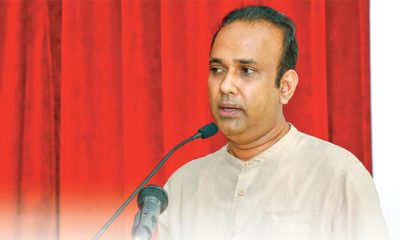




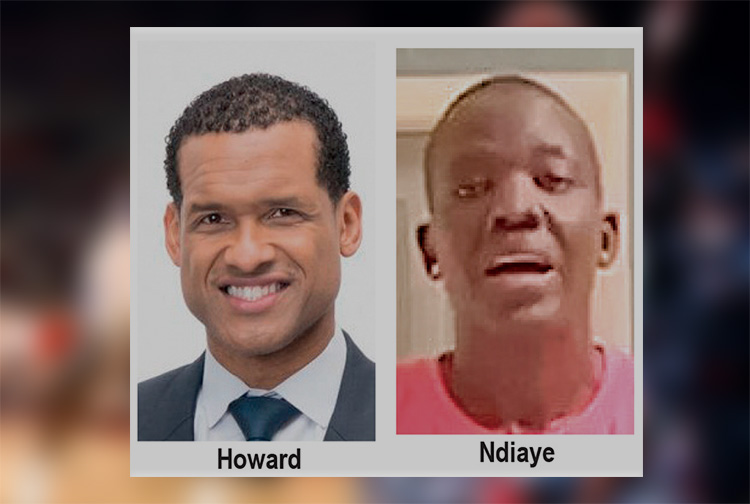
The U.S. Embassy in Colombo welcomed the U.S. Sports Envoys to Sri Lanka, former National Basketball Association (NBA) and Women’s National Basketball Association (WNBA) players Stephen Howard and Astou Ndiaye, from June 8 through 14.
The Public Diplomacy section of the U.S. Embassy said that it would launch a weeklong basketball program intended to harness the unifying power of sports, made possible through collaboration with Foundation of Goodness and IImpact Hoop Lab.
While in Sri Lanka, Howard and Ndiaye, both retired professional basketball players, will conduct a weeklong program, Hoops for Hope: Bridging Borders through Basketball. The Sports Envoys will lead basketball clinics and exhibition matches and engage in leadership sessions in Colombo and Southern Province for youth aged 14-18 from Northern, Uva, Eastern and Western Provinces, offering skills and leadership training both on and off the court. The U.S. Envoys will also share their expertise with the Sri Lanka Basketball Federation, national coaches, and players, furthering the development of basketball in the country. Beyond the clinics, they will collaborate with Sri Lankan schoolchildren to take part in a community service project in the Colombo area.
“We are so proud to welcome Stephen and Astou as our Sports Envoys to Sri Lanka, to build on the strong people-to-people connections between the United States and Sri Lanka,” said U.S. Ambassador Julie Chung. “The lessons that will be shared by our Sports Envoys – communication, teamwork, resilience, inclusion, and conflict resolution – are essential for leadership development, community building, equality, and peace. The U.S. Sports Envoy program is a testament to our belief that sports can be a powerful tool in promoting peace and unity.”
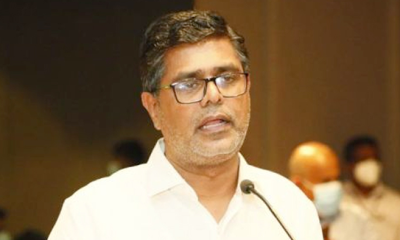
SJB Colombo District MP Mujibur Rahuman in parliament demanded to know from the government the reasons for CEB suspending the leave of all its employees until further notice from Thursday.
MP Rahuman said that the CEB has got an acting General Manager anew and the latter yesterday morning issued a circular suspending leave of all CEB employees with immediate effect until further notice.
“We demand that Minister Kanchana Wijesekera should explain this to the House. This circular was issued while this debate on the new Electricity Amendment Bill was pending. There are many who oppose this Bill. The Minister must tell parliament the reason for the urge to cancel the leave of CEB employees,” the MP said.However, Speaker Mahinda Yapa Abeywardena prevented Minister Wijesekera responding to the query and said that the matter raised by MP Rahuman was not relevant.
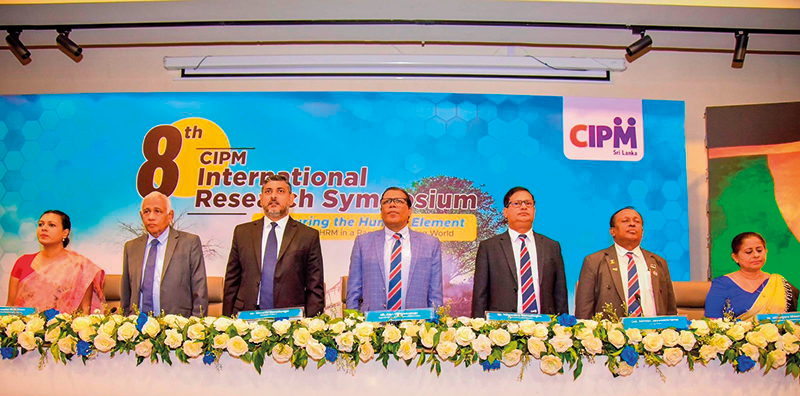
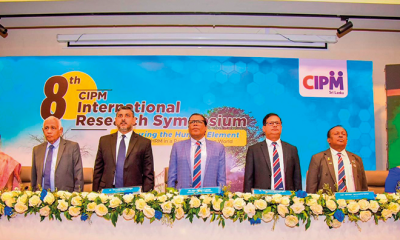
The Chartered Institute of Personnel Management (CIPM) successfully concluded the 8th Annual CIPM Symposium, which took place on 31st May 2024. Themed “Nurturing the Human Element—Redefining HRM in a Rapidly Changing World,” the symposium underscored the pivotal role of human resource management (HRM) in today’s dynamic global landscape. Since its inception in 1959, CIPM has been dedicated to advancing the HR profession through education, professional development, and advocacy, solidifying its position as Sri Lanka’s leading professional body for HRM.
Ken Vijayakumar, the President of the CIPM, graced the occasion as the chief guest. The symposium commenced with the welcome address by the Chairperson, Prof. Arosha Adikaram, followed by the Web Launch of the Symposium Proceedings and Abstract Book by the CIPM President. The event featured distinguished addresses, including a speech by Chief Guest Ken Vijayakumar, President of CIPM, and an address by Guest of Honor Shakthi Ranatunga, Chief Operating Officer of MAS Holdings Pvt. Ltd., Sri Lanka.
The symposium also featured an inspiring keynote address by Prof. Mario Fernando, Professor of Management and Director of the Centre for Cross Cultural Management (CCCM) at the University of Wollongong, Australia.
Vote of Thanks of the inauguration session was delivered by Dr. Dillanjani Weeratunga, Symposium Co-chair.
The symposium served as a comprehensive platform for researchers to present their findings across a wide range of critical topics in HRM. These included Cultural Diversity and Inclusion, Talent Development and Retention, Ethical Leadership and Corporate Social Responsibility, Adapting to Technological Advancements, Mental Health and Well-being at Work, Global Workforce Challenges, Employee Empowerment, and Reskilling and Upskilling.
The plenary session was led by Prof. Wasantha Rajapakse. Certificates were awarded to the best paper presenters during the valedictory session, followed by a vote of thanks delivered by Kamani Perera, Manager of Research and Development.
The annual symposium of CIPM was a truly inclusive event, attracting a diverse audience that spanned undergraduates, graduates, working professionals, research scholars and lecturers. This widespread interest highlights the symposium’s significance in the field of HRM, offering a unique opportunity for everyone to network and learn from scholarly brains.The CIPM International Research Symposium was sponsored by Hambantota International Port, Sri Lanka Institute of Information Technology (SLIIT), E B Creasy & Co. PLC, and Print Xcel Company.



US sports envoys to Lanka to champion youth development

Rahuman questions sudden cancellation of leave of CEB employees


