
News
WFP aims to reach 3.4 Mn Lankans with food and nutrition assistance

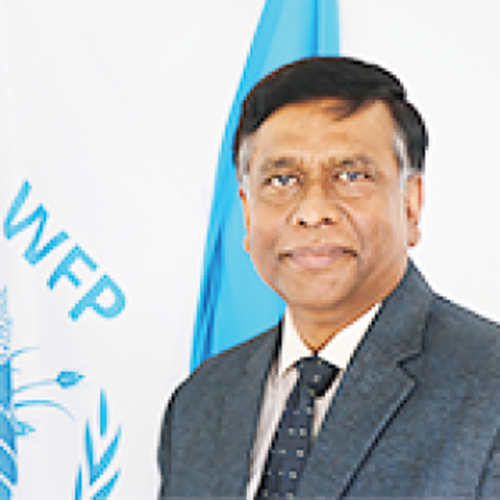
The World Food Programme (WFP) is seeking donor support to reach 3.4 million people in Sri Lanka with food and nutrition assistance as nearly a quarter of Sri Lanka is facing food shortages for millions.Sri Lanka’s worst economic crisis since independence is spinning off a “serious food crisis,” says the World Food Programme Representative and Country Director Abdur Rahim Siddiqui. He describes a toxic mix of spiking prices, shrinking crop yields, the fallout of the war in Ukraine and a lack of state funds to pay for key supplies.
“The economy has collapsed and the country has run out of the money needed to import essentials like fuel, food and fertilizer,” he adds, urging more donor support to WFP and other humanitarian responders.
A recent assessment by WFP and the UN Food and Agriculture Organization (FAO) shows that 6.3 million people – nearly 30 percent of the population – are food-insecure. It comes as WFP warns of an unprecedented global food crisis.Sri Lanka is grappling with a record 90 percent food inflation, making even staples such as rice unaffordable for millions of families. (Indeed, the average monthly cost of a nutritious diet has soared 156 percent since 2018).
“What we are seeing on the ground is alarming,” says Siddiqui, who has witnessed first-hand how dramatically the island nation’s fortunes have fallen in just over a year. “We know that millions of Sri Lankans are struggling to have sufficient and nutritious food.”
Without urgent intervention, he adds, things look depressingly bleak for a country which should be able to grow enough to feed its population of 22 million.
“People are cutting back on the number of meals they eat – in effect one in four people is skipping a meal,” says Siddiqui. “People are either chipping away at their precious savings or racking up debt to survive.”
Multiple factors are shaping Sri Lanka’s food crisis. In its bid to make farming more environmentally sustainable, the Government last year banned imported chemical fertilizers. But the move sharply reduced agricultural output – and while import rules have since been eased, the effects remain.
“This country used to produce around 300,000 tons of maize,” Siddiqui says. “Now production is negligible because the varieties of seeds that (farmers) are using are the high-yielding kind, which are not compatible with organic fertilizer.”
After two consecutive harvest failures, a third would be “catastrophic,” he adds.Sri Lanka is also feeling the aftershocks of the war in Ukraine. Along with disrupting key grain exports and driving up global food and fuel prices, the conflict has battered two of its top tourist markets – Russia and Ukraine itself – reducing the availability of hard currency and, in turn, Sri Lanka’s ability to import, with far-reaching effects.
“Around 200,000 fishermen are out of their livelihoods because this country doesn’t have fuel following import restrictions,” says Siddiqui. “We need to provide support to the smallholder farmers,” he adds. “International organizations like WFP have a duty to step in to provide emergency food assistance to the most vulnerable cross-section of the population.”
WFP kicked off its emergency response operation mid-June, distributing food vouchers to pregnant women in some of the underserved sections of the capital.
“Through our emergency response, we aim to scale up and reach 3.4 million people with food and nutrition assistance,” says Siddiqui. “This will not only be in the form of food but also cash and vouchers, which enables people to buy food and other essentials based on their specific needs.”
WFP’s emergency response will also support resuming a key program: providing food to pregnant and breastfeeding mothers and malnourished young children – bridging a key gap created when Sri Lanka’s Government was forced to halt critical assistance programs for lack of funds.
Similarly, WFP’s support for the national school meal program will ensure that primary grade children continue to receive the daily meals that help them learn and grow.
But these and other essential initiatives are costly. WFP needs US$63 million to provide life-saving assistance to 3.4 million people in Sri Lanka in the coming months.
“We urgently need more funds to ensure we can carry out our operations as planned,” Siddiqui says. “We are urging donors to support not just WFP’s program but also other humanitarian programs which will provide much-needed assistance to those most at risk.”



The U.S. Embassy in Colombo welcomed the U.S. Sports Envoys to Sri Lanka, former National Basketball Association (NBA) and Women’s National Basketball Association (WNBA) players Stephen Howard and Astou Ndiaye, from June 8 through 14.
The Public Diplomacy section of the U.S. Embassy said that it would launch a weeklong basketball program intended to harness the unifying power of sports, made possible through collaboration with Foundation of Goodness and IImpact Hoop Lab.
While in Sri Lanka, Howard and Ndiaye, both retired professional basketball players, will conduct a weeklong program, Hoops for Hope: Bridging Borders through Basketball. The Sports Envoys will lead basketball clinics and exhibition matches and engage in leadership sessions in Colombo and Southern Province for youth aged 14-18 from Northern, Uva, Eastern and Western Provinces, offering skills and leadership training both on and off the court. The U.S. Envoys will also share their expertise with the Sri Lanka Basketball Federation, national coaches, and players, furthering the development of basketball in the country. Beyond the clinics, they will collaborate with Sri Lankan schoolchildren to take part in a community service project in the Colombo area.
“We are so proud to welcome Stephen and Astou as our Sports Envoys to Sri Lanka, to build on the strong people-to-people connections between the United States and Sri Lanka,” said U.S. Ambassador Julie Chung. “The lessons that will be shared by our Sports Envoys – communication, teamwork, resilience, inclusion, and conflict resolution – are essential for leadership development, community building, equality, and peace. The U.S. Sports Envoy program is a testament to our belief that sports can be a powerful tool in promoting peace and unity.”
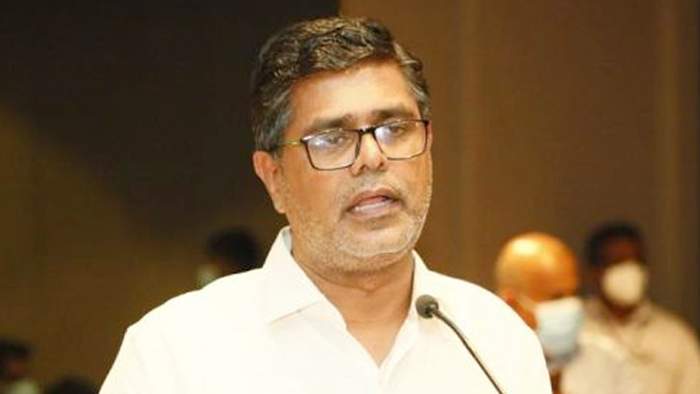
SJB Colombo District MP Mujibur Rahuman in parliament demanded to know from the government the reasons for CEB suspending the leave of all its employees until further notice from Thursday.
MP Rahuman said that the CEB has got an acting General Manager anew and the latter yesterday morning issued a circular suspending leave of all CEB employees with immediate effect until further notice.
“We demand that Minister Kanchana Wijesekera should explain this to the House. This circular was issued while this debate on the new Electricity Amendment Bill was pending. There are many who oppose this Bill. The Minister must tell parliament the reason for the urge to cancel the leave of CEB employees,” the MP said.However, Speaker Mahinda Yapa Abeywardena prevented Minister Wijesekera responding to the query and said that the matter raised by MP Rahuman was not relevant.
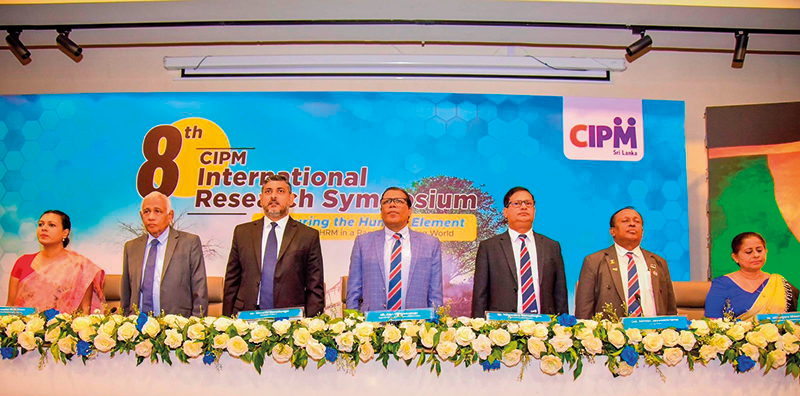
The Chartered Institute of Personnel Management (CIPM) successfully concluded the 8th Annual CIPM Symposium, which took place on 31st May 2024. Themed “Nurturing the Human Element—Redefining HRM in a Rapidly Changing World,” the symposium underscored the pivotal role of human resource management (HRM) in today’s dynamic global landscape. Since its inception in 1959, CIPM has been dedicated to advancing the HR profession through education, professional development, and advocacy, solidifying its position as Sri Lanka’s leading professional body for HRM.
Ken Vijayakumar, the President of the CIPM, graced the occasion as the chief guest. The symposium commenced with the welcome address by the Chairperson, Prof. Arosha Adikaram, followed by the Web Launch of the Symposium Proceedings and Abstract Book by the CIPM President. The event featured distinguished addresses, including a speech by Chief Guest Ken Vijayakumar, President of CIPM, and an address by Guest of Honor Shakthi Ranatunga, Chief Operating Officer of MAS Holdings Pvt. Ltd., Sri Lanka.
The symposium also featured an inspiring keynote address by Prof. Mario Fernando, Professor of Management and Director of the Centre for Cross Cultural Management (CCCM) at the University of Wollongong, Australia.
Vote of Thanks of the inauguration session was delivered by Dr. Dillanjani Weeratunga, Symposium Co-chair.
The symposium served as a comprehensive platform for researchers to present their findings across a wide range of critical topics in HRM. These included Cultural Diversity and Inclusion, Talent Development and Retention, Ethical Leadership and Corporate Social Responsibility, Adapting to Technological Advancements, Mental Health and Well-being at Work, Global Workforce Challenges, Employee Empowerment, and Reskilling and Upskilling.
The plenary session was led by Prof. Wasantha Rajapakse. Certificates were awarded to the best paper presenters during the valedictory session, followed by a vote of thanks delivered by Kamani Perera, Manager of Research and Development.
The annual symposium of CIPM was a truly inclusive event, attracting a diverse audience that spanned undergraduates, graduates, working professionals, research scholars and lecturers. This widespread interest highlights the symposium’s significance in the field of HRM, offering a unique opportunity for everyone to network and learn from scholarly brains.The CIPM International Research Symposium was sponsored by Hambantota International Port, Sri Lanka Institute of Information Technology (SLIIT), E B Creasy & Co. PLC, and Print Xcel Company.



US sports envoys to Lanka to champion youth development

Rahuman questions sudden cancellation of leave of CEB employees


