
News
Used cars turn to gold as economy skids on the edge


By Amal Jayasinghe
Supermarket shelves are bare and restaurants can’t serve meals, but Sri Lanka’s economic crisis is a bonanza for used car dealers, with vehicle shortages pushing prices higher than a house in a nice area.
The island nation of 22 million is on the brink of bankruptcy, inflation is red hot and the government has barred a range of “non-essential” imports to save dollars needed to buy food, medicine and fuel.
In the car market, this two-year ban has kept factory-fresh automobiles off local roads, forcing desperate buyers to pay some of the world’s highest prices for beaten-up compacts and no-frills family sedans.
Anthony Fernando spent a recent weekend coursing through sales lots in the Colombo outskirts on behalf of his daughter, who has tried to find an affordable set of wheels for nearly a year.
“She was thinking that prices will come down,” the 63-year-old told AFP, but now she is “paying for procrastinating”.
Prices have gone “beyond the reach of a common person”, he said.
A five-year-old Toyota Land Cruiser was on offer online for an eye-watering 62.5 million rupees ($312,500) — triple the pre-ban rate, and enough to buy a house in a middle-class Colombo neighbourhood or a new luxury apartment in the city centre.
A decade-old Fiat five-seater with a busted engine that might be stripped for parts elsewhere was listed at $8,250 — more than twice Sri Lanka’s average yearly income.
“A car and a house are symbols of success,” said a grinning Sarath Yapa Bandara, the owner of one of the capital’s biggest dealerships.
“That is why most people are willing to buy even at these high prices.”
Car ownership remains a virtual necessity in the traffic-snarled streets of Colombo, where a ramshackle bus and rail network was already struggling with overcrowding.
The number of taxis has also fallen sharply, with drivers selling their cabs to cash in on the dizzying prices, and those still working charging double their old fares or more.
“You must have your own car,” said Udaya Hegoda Arachchi, another buyer preparing to bite the bullet at a dealership.
“We can’t expect prices to come down anytime soon, given the economic situation in the country,” he told AFP.
Covid has sent Sri Lanka into a tailspin, drying up all-important earnings from tourism and foreign remittances.
In March 2020 the government brought in a wide-ranging import ban — including for new cars — to stop foreign currency from leaving the country.
But the policy has not been able to staunch the outflow of dollars, and has instead left the nation struggling to source critical goods.
Food retailers have rationed rice, restaurants have shuttered because they cannot find cooking gas, and cash-strapped power utilities unable to afford oil have imposed rolling blackouts. Farmers have run out of fertilizer.
Rating agencies have warned that Sri Lanka might default soon although the government says it will meet its commitments. It is trying to renegotiate its Chinese debts with Beijing.
The import ban has also left car parts in short supply, meaning drivers are at risk of being stranded after a breakdown.
Ravi Ekanayake told AFP that his Colombo repair garage was doing a roaring trade from owners unable to afford the astronomical costs of switching to a new vehicle.
“But parts are scarce. It is a catch-22: You either get caught with an old car without parts or you don’t have the money to buy a new car.”
Financial analyst Murtaza Jafferjee said the prices also underscored a problem caused by excessive money printing by a cash-strapped central bank, with “too much money chasing too few goods”.
He said the prices were also increasing transport costs and adding to inflation, which hit a record 14 percent in December.
“When vehicles become unaffordable for a segment of society, their activities will be limited. Then we will also see a loss of economic output,” the CEO of JB Securities said.
“We are about to collapse and not many people appreciate the depth of the problem.”




The U.S. Embassy in Colombo welcomed the U.S. Sports Envoys to Sri Lanka, former National Basketball Association (NBA) and Women’s National Basketball Association (WNBA) players Stephen Howard and Astou Ndiaye, from June 8 through 14.
The Public Diplomacy section of the U.S. Embassy said that it would launch a weeklong basketball program intended to harness the unifying power of sports, made possible through collaboration with Foundation of Goodness and IImpact Hoop Lab.
While in Sri Lanka, Howard and Ndiaye, both retired professional basketball players, will conduct a weeklong program, Hoops for Hope: Bridging Borders through Basketball. The Sports Envoys will lead basketball clinics and exhibition matches and engage in leadership sessions in Colombo and Southern Province for youth aged 14-18 from Northern, Uva, Eastern and Western Provinces, offering skills and leadership training both on and off the court. The U.S. Envoys will also share their expertise with the Sri Lanka Basketball Federation, national coaches, and players, furthering the development of basketball in the country. Beyond the clinics, they will collaborate with Sri Lankan schoolchildren to take part in a community service project in the Colombo area.
“We are so proud to welcome Stephen and Astou as our Sports Envoys to Sri Lanka, to build on the strong people-to-people connections between the United States and Sri Lanka,” said U.S. Ambassador Julie Chung. “The lessons that will be shared by our Sports Envoys – communication, teamwork, resilience, inclusion, and conflict resolution – are essential for leadership development, community building, equality, and peace. The U.S. Sports Envoy program is a testament to our belief that sports can be a powerful tool in promoting peace and unity.”
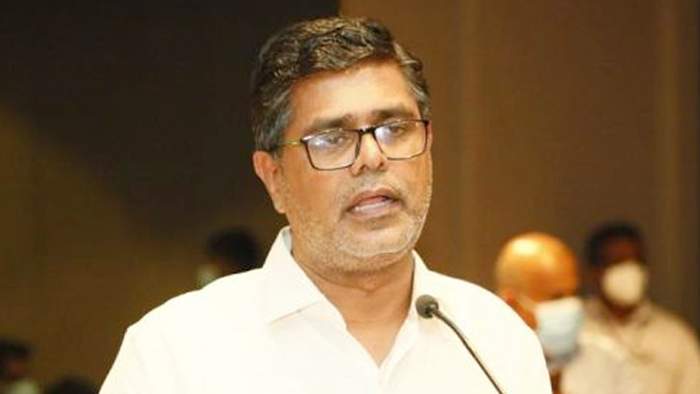
SJB Colombo District MP Mujibur Rahuman in parliament demanded to know from the government the reasons for CEB suspending the leave of all its employees until further notice from Thursday.
MP Rahuman said that the CEB has got an acting General Manager anew and the latter yesterday morning issued a circular suspending leave of all CEB employees with immediate effect until further notice.
“We demand that Minister Kanchana Wijesekera should explain this to the House. This circular was issued while this debate on the new Electricity Amendment Bill was pending. There are many who oppose this Bill. The Minister must tell parliament the reason for the urge to cancel the leave of CEB employees,” the MP said.However, Speaker Mahinda Yapa Abeywardena prevented Minister Wijesekera responding to the query and said that the matter raised by MP Rahuman was not relevant.
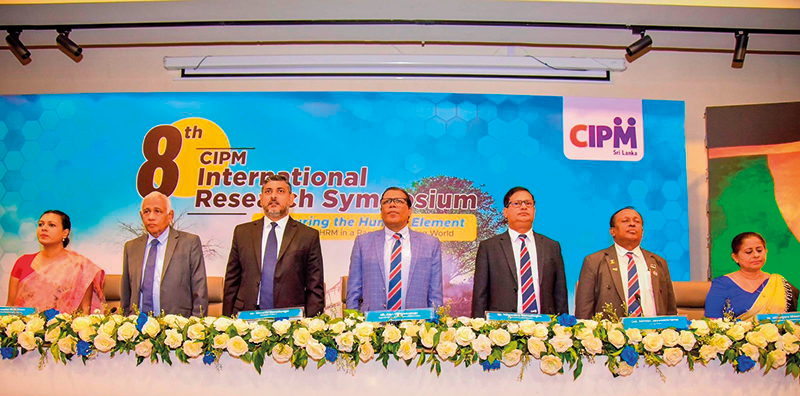
The Chartered Institute of Personnel Management (CIPM) successfully concluded the 8th Annual CIPM Symposium, which took place on 31st May 2024. Themed “Nurturing the Human Element—Redefining HRM in a Rapidly Changing World,” the symposium underscored the pivotal role of human resource management (HRM) in today’s dynamic global landscape. Since its inception in 1959, CIPM has been dedicated to advancing the HR profession through education, professional development, and advocacy, solidifying its position as Sri Lanka’s leading professional body for HRM.
Ken Vijayakumar, the President of the CIPM, graced the occasion as the chief guest. The symposium commenced with the welcome address by the Chairperson, Prof. Arosha Adikaram, followed by the Web Launch of the Symposium Proceedings and Abstract Book by the CIPM President. The event featured distinguished addresses, including a speech by Chief Guest Ken Vijayakumar, President of CIPM, and an address by Guest of Honor Shakthi Ranatunga, Chief Operating Officer of MAS Holdings Pvt. Ltd., Sri Lanka.
The symposium also featured an inspiring keynote address by Prof. Mario Fernando, Professor of Management and Director of the Centre for Cross Cultural Management (CCCM) at the University of Wollongong, Australia.
Vote of Thanks of the inauguration session was delivered by Dr. Dillanjani Weeratunga, Symposium Co-chair.
The symposium served as a comprehensive platform for researchers to present their findings across a wide range of critical topics in HRM. These included Cultural Diversity and Inclusion, Talent Development and Retention, Ethical Leadership and Corporate Social Responsibility, Adapting to Technological Advancements, Mental Health and Well-being at Work, Global Workforce Challenges, Employee Empowerment, and Reskilling and Upskilling.
The plenary session was led by Prof. Wasantha Rajapakse. Certificates were awarded to the best paper presenters during the valedictory session, followed by a vote of thanks delivered by Kamani Perera, Manager of Research and Development.
The annual symposium of CIPM was a truly inclusive event, attracting a diverse audience that spanned undergraduates, graduates, working professionals, research scholars and lecturers. This widespread interest highlights the symposium’s significance in the field of HRM, offering a unique opportunity for everyone to network and learn from scholarly brains.The CIPM International Research Symposium was sponsored by Hambantota International Port, Sri Lanka Institute of Information Technology (SLIIT), E B Creasy & Co. PLC, and Print Xcel Company.



US sports envoys to Lanka to champion youth development

Rahuman questions sudden cancellation of leave of CEB employees


