
News
Urgent action needed in South Asia to curb deadly air pollution

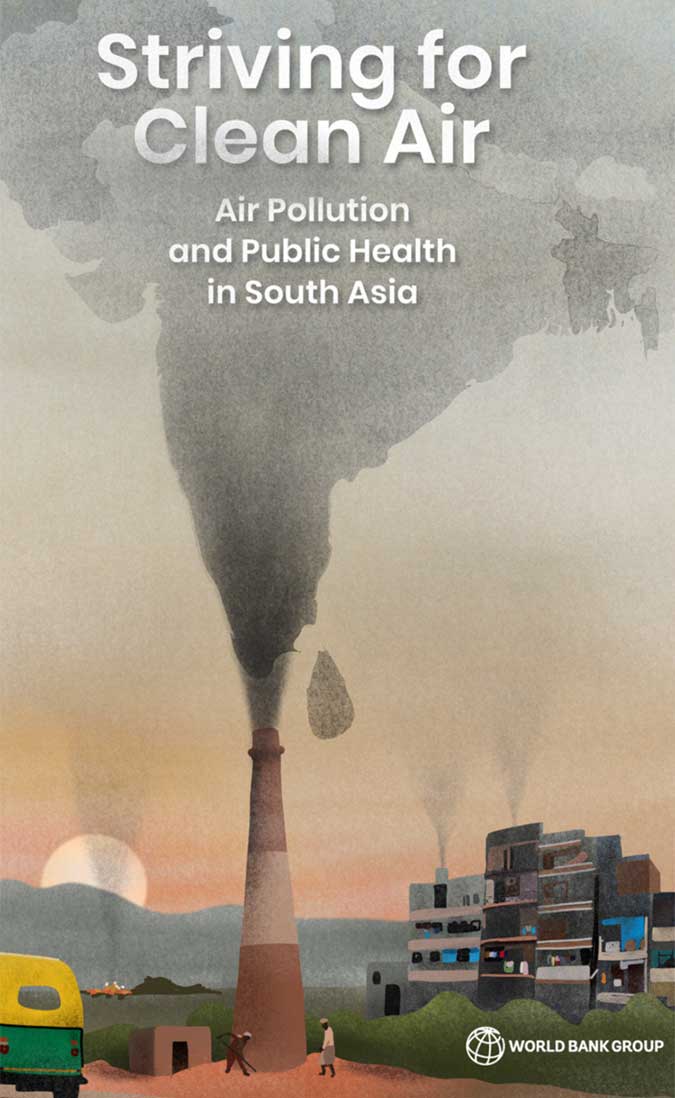
South Asia is home to nine of the world’s ten cities with the worst air pollution, which causes an estimated two million premature deaths across the region each year and incurs significant economic costs. A new World Bank report shows that there are economically feasible, cost-effective solutions to achieve clean air in the region, but this requires countries to coordinate policies and investments.
Striving for Clean Air: Air Pollution and Public Health in South Asia, released recently says concentrations of fine particulate matter such as soot and small dust (PM 2.5) in some of the region’s most densely populated and poor areas are up to 20 times higher than what WHO considers healthy (5 µg/m?). Exposure to such extreme air pollution has impacts ranging from stunting and reduced cognitive development in children, to respiratory infections and chronic and debilitating diseases. This drives up healthcare costs, lowers a country’s productive capacity, and leads to lost days worked.
Large industries, powerplants and vehicles are dominant sources of air pollution around the world, but in South Asia, other sources make substantial additional contributions. These include combustion of solid fuels for cooking and heating, emissions from small industries such as brick kilns, burning of municipal and agricultural waste, and cremation.
Air pollution travels long distances— crossing municipal, state, and national boundaries—and gets trapped in large “airsheds” that are shaped by climatology and geography. The report identifies six major airsheds in South Asia where spatial interdependence in air quality is high. Particulate matter in each airshed comes from various sources and locations, for example less than half of the air pollution in South Asia’s major cities is produced within cities.
“Persistently hazardous levels of air pollution have caused a major public health crisis in South Asia that demands urgent action,” said Martin Raiser, World Bank Vice President for South Asia. “Curbing air pollution requires not only tackling its specific sources, but also close coordination across local and national jurisdictional boundaries. Regional cooperation can help implement cost-effective joint strategies that leverage the interdependent nature of air quality.”
Several South Asian countries have adopted policies to help improve air quality, but their focus on mitigating air pollution generated within cities is yielding insufficient results. The report shows that current policy measures will only be partially successful in reducing PM 2.5 concentrations across South Asia even if fully implemented. To achieve greater progress, the focus of policy makers should expand into other sectors, particularly small manufacturing, agriculture, residential cooking, and waste management.
The report analyzes four scenarios to reduce air pollution with varying degrees of policy implementation and cooperation among countries. The most cost-effective scenario, which calls for full coordination between airsheds, would cut the average exposure of PM 2.5 in South Asia to 30 µg/m³ at a cost of $278 million per µg/m? of reduced exposure, and save more than 750,000 lives annually.
“The economic benefits of policies to reduce air pollution in South Asia exceed the economic costs by a large margin,” said Hans Timmer, World Bank Chief Economist for South Asia. “But optimal solutions depend on several factors such as better monitoring systems, more scientific capacity, greater coordination between governments, and behavioral change among farmers, small firms, and households.”
To this end, the report offers a three-phased roadmap:
• Phase 1: Sets the condition for airshed wide coordination by expanding the monitoring of air pollution beyond the big cities, sharing data with the public, creating or strengthening credible scientific institutes that analyze airsheds, and taking a whole-of-government approach.
• Phase 2: Abatement interventions are broadened beyond the traditional targets of powerplants, large factories and transportation. During this phase major progress can be made in reducing air pollution from agriculture, solid waste management, cookstoves, brick kilns, and other small firms. At the same time, airshed-wide standards can be introduced.
• Phase 3: Economic incentives are finetuned to enable private-sector solutions, to address distributional impacts, and to exploit synergies with climate change policies. In this phase trading of emission permits can also be introduced to optimize abatement across jurisdictions and firms.



The U.S. Embassy in Colombo welcomed the U.S. Sports Envoys to Sri Lanka, former National Basketball Association (NBA) and Women’s National Basketball Association (WNBA) players Stephen Howard and Astou Ndiaye, from June 8 through 14.
The Public Diplomacy section of the U.S. Embassy said that it would launch a weeklong basketball program intended to harness the unifying power of sports, made possible through collaboration with Foundation of Goodness and IImpact Hoop Lab.
While in Sri Lanka, Howard and Ndiaye, both retired professional basketball players, will conduct a weeklong program, Hoops for Hope: Bridging Borders through Basketball. The Sports Envoys will lead basketball clinics and exhibition matches and engage in leadership sessions in Colombo and Southern Province for youth aged 14-18 from Northern, Uva, Eastern and Western Provinces, offering skills and leadership training both on and off the court. The U.S. Envoys will also share their expertise with the Sri Lanka Basketball Federation, national coaches, and players, furthering the development of basketball in the country. Beyond the clinics, they will collaborate with Sri Lankan schoolchildren to take part in a community service project in the Colombo area.
“We are so proud to welcome Stephen and Astou as our Sports Envoys to Sri Lanka, to build on the strong people-to-people connections between the United States and Sri Lanka,” said U.S. Ambassador Julie Chung. “The lessons that will be shared by our Sports Envoys – communication, teamwork, resilience, inclusion, and conflict resolution – are essential for leadership development, community building, equality, and peace. The U.S. Sports Envoy program is a testament to our belief that sports can be a powerful tool in promoting peace and unity.”
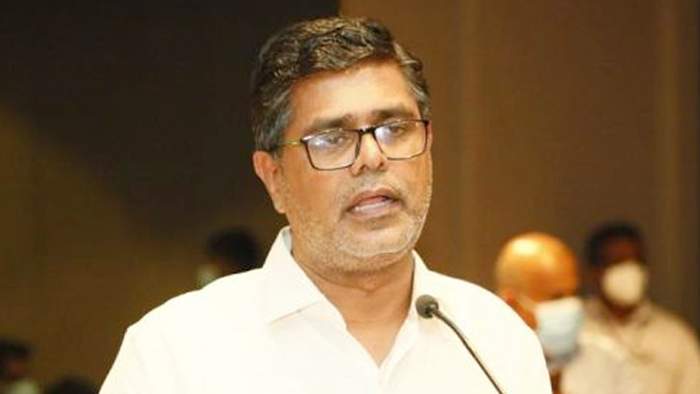
SJB Colombo District MP Mujibur Rahuman in parliament demanded to know from the government the reasons for CEB suspending the leave of all its employees until further notice from Thursday.
MP Rahuman said that the CEB has got an acting General Manager anew and the latter yesterday morning issued a circular suspending leave of all CEB employees with immediate effect until further notice.
“We demand that Minister Kanchana Wijesekera should explain this to the House. This circular was issued while this debate on the new Electricity Amendment Bill was pending. There are many who oppose this Bill. The Minister must tell parliament the reason for the urge to cancel the leave of CEB employees,” the MP said.However, Speaker Mahinda Yapa Abeywardena prevented Minister Wijesekera responding to the query and said that the matter raised by MP Rahuman was not relevant.
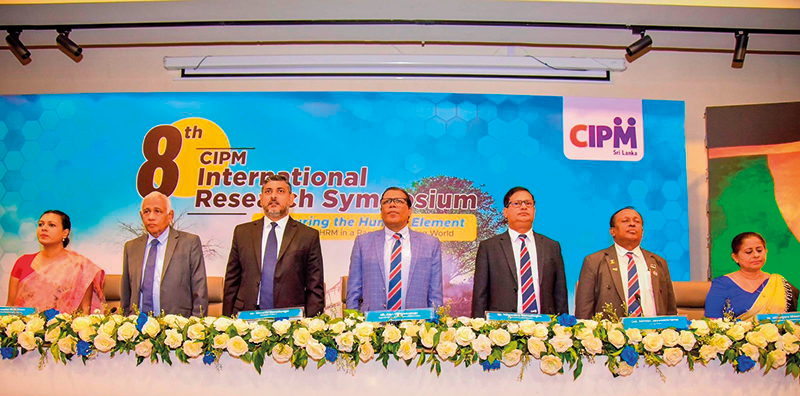
The Chartered Institute of Personnel Management (CIPM) successfully concluded the 8th Annual CIPM Symposium, which took place on 31st May 2024. Themed “Nurturing the Human Element—Redefining HRM in a Rapidly Changing World,” the symposium underscored the pivotal role of human resource management (HRM) in today’s dynamic global landscape. Since its inception in 1959, CIPM has been dedicated to advancing the HR profession through education, professional development, and advocacy, solidifying its position as Sri Lanka’s leading professional body for HRM.
Ken Vijayakumar, the President of the CIPM, graced the occasion as the chief guest. The symposium commenced with the welcome address by the Chairperson, Prof. Arosha Adikaram, followed by the Web Launch of the Symposium Proceedings and Abstract Book by the CIPM President. The event featured distinguished addresses, including a speech by Chief Guest Ken Vijayakumar, President of CIPM, and an address by Guest of Honor Shakthi Ranatunga, Chief Operating Officer of MAS Holdings Pvt. Ltd., Sri Lanka.
The symposium also featured an inspiring keynote address by Prof. Mario Fernando, Professor of Management and Director of the Centre for Cross Cultural Management (CCCM) at the University of Wollongong, Australia.
Vote of Thanks of the inauguration session was delivered by Dr. Dillanjani Weeratunga, Symposium Co-chair.
The symposium served as a comprehensive platform for researchers to present their findings across a wide range of critical topics in HRM. These included Cultural Diversity and Inclusion, Talent Development and Retention, Ethical Leadership and Corporate Social Responsibility, Adapting to Technological Advancements, Mental Health and Well-being at Work, Global Workforce Challenges, Employee Empowerment, and Reskilling and Upskilling.
The plenary session was led by Prof. Wasantha Rajapakse. Certificates were awarded to the best paper presenters during the valedictory session, followed by a vote of thanks delivered by Kamani Perera, Manager of Research and Development.
The annual symposium of CIPM was a truly inclusive event, attracting a diverse audience that spanned undergraduates, graduates, working professionals, research scholars and lecturers. This widespread interest highlights the symposium’s significance in the field of HRM, offering a unique opportunity for everyone to network and learn from scholarly brains.The CIPM International Research Symposium was sponsored by Hambantota International Port, Sri Lanka Institute of Information Technology (SLIIT), E B Creasy & Co. PLC, and Print Xcel Company.



US sports envoys to Lanka to champion youth development

Rahuman questions sudden cancellation of leave of CEB employees


