
News
Unilateral scrapping of trilateral pact on ECT upsets India and Japan

BY S VENKAT NARAYAN
Our Special Correspondent
NEW DELHI, February 6:
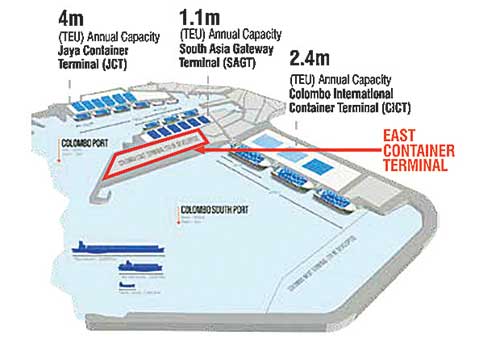
The unilateral scrapping by Sri Lanka of the trilateral agreement on developing the strategic East Container Terminal (ECT) at the Colombo Port has upset both India and Japan.
Last week, Sri Lanka unilaterally pulled out of the 2019 agreement with India and Japan after as many as 223 Sri Lankan trade unions and civil societies groups backed the Sri Lanka port trade unions demand to cancel the ECT agreement.
Said a top Indian source: “The ECT pact was a trilateral government-to-government agreement between the Government of Sri Lanka and the Governments of India and Japan. If Sri Lanka pulls out of such a G2G agreement unilaterally, what message will it convey to other governments and private investors? Will it not shake their confidence in the Sri Lankan Government’s ability to honour signed agreements? Who will want to invest in a country whose government is not able to honour a multi-billion dollar G2G agreement?”
After the Sri Lankan decision reneging on the 2019 agreement, the country’s cabinet has approved a proposal to develop the West Container Terminal (WCT) of the Colombo port as a Public Private Partnership with Japan and India. Two top sources in the Sri Lankan government said Indian response to the compensatory offer was “ambiguous” and “almost rejecting.” But Indian officials said there was no formal communication about WCT till Tuesday noon.
The Indian Express quoted an unidentified Sri Lankan official as saying: “Commercially, the West Terminal offer is better for India as it gives 85% stake for developers of the West Terminal against the 49% in ECT. Even if this is the better deal for the investor (including Adani), the final decision has to come from the Indian government. And geopolitically too, West Terminal is almost the same if they consider the security aspect and the necessity to have a port terminal in Sri Lanka.”
He went on: “And the West Terminal is no smaller in size or depth compared to the East Terminal… If Indian response remains uncertain to this proposal, I am sure it was not communicated (from the Sri Lankan side) properly to India. There is no difference between East and West Terminals except for the fact that development of the ECT is partially completed while the development of the West Terminal has to start from scratch.”
In 2019, India and Sri Lanka signed a memorandum of understanding for “co-operation on economic projects”. The development and operation of the container terminal was one of the projects in the MoU: “A Container Terminal in Colombo Port as a Joint Venture, which includes Indian investments considering that majority of transshipment in Colombo Port is related to India. GOSL will announce the award of the contract…by end May 2017”.
The MoU did not mention the Eastern Container Terminal, but India and Sri Lanka had already been in discussion for its development and operation.
xAlthough India and Sri Lanka have seemingly friendly ties and much cultural affinity and people-to-people contact, the relationship is complex — and the majority Sinhala-Buddhist public opinion is layered with the memory of Indian intervention in the ethnic conflict in the late 1980s.
Unlike Chinese projects, big projects by India have always faced opposition in Sri Lanka. Sinhala-Buddhist politicians either ride such opposition opportunistically when it suits them, sometimes using this as a pretext over the real reason, or are reluctant to go counter to the public sentiment for fear of being attacked for surrendering to “big brother India”.
This was perhaps why India had invited Japan to work with it in at least two of the projects listed in the MoU: the ECT, and an LNG Terminal/Floating Storage Regasification Unit (FSRU) in Kerawalapitiya/Colombo with a piped gas distribution system along with retail outlets for CNG etc. The expectation was that this would ensure that the projects come through. Japan was the biggest donor to Sri Lanka through the years of conflict. The Geoffrey Bawa-built Sri Lankan Parliament, which came up at the height of the conflict, was funded by Japan. It continues to give Sri Lanka substantial financial support even now.
However, the old relationship between Sri Lanka and Japan has undergone changes as China’s footprint over Colombo has grown. Late last year, the Rajapaksa government unilaterally cancelled a Japanese project for a commuter rail in Colombo.
As per a Memorandum of Co-operation (MoC) signed by the previous Maithripala Sirisena-Ranil Wickremesinghe administration, the Sri Lanka Ports Authority (SLPA) would have 100 per cent ownership of the ECT. The Terminal Operations Company (TOC) conducting all East Container Terminal operations was to be jointly owned, with Sri Lanka retaining a 51% stake, and the joint venture partners 49%, according to a statement by the Ports and Shipping Ministry at the time. A 40-year loan at an interest rate of 0.1% from Japan was expected to fund the development of the ECT.
“The envisaged Japanese loan carries one of the best loan terms Sri Lanka has obtained. The 51% stake is also one of the best in SLPA joint ownership endeavours. SLPA’s majority ownership in the new TOC represents a significant step in prioritising national interests,” the statement had said.
The Sri Lankan side believes it can persuade India and Japan that the West terminal is strategically no different from the East, and commercially even better. One official told the Indian Express that the developers could hold as much as 85 per cent stake in the West terminal as opposed to just 49 per cent in ECT. It would be a much better option for Adani, he said.
For New Delhi, the ECT deal is important as between 60 and 70 per cent of transshipment that takes place through it is India-linked. The ECT is also considered more strategic than any other in Colombo Port. It is located next to the Colombo International Container Terminal (CICT) project, a joint venture between China Merchants Port Holdings Company Ltd. and SLPA.
India had been offered the Western Container Terminal earlier, but had refused. The ECT is already operational, while the WCT has to be built from scratch.
There are reports circulating in diplomatic circles that China had played a role in instigating port unions’ protest against India’s interest. New Delhi and Tokyo have desisted from commenting on such reports. But an Indian source quipped: “The Sri Lankan Government has done nothing so far to deny such reports.”
A senior SLPP minister said: “Gota (President Gotabya Rajapaksa) is a man who never changes his word. But he had to agree to cancel the ECT agreement as it was almost reaching up to the level of shaking his Presidential chair.”
Will there be similar protests and crises if India and Japan accept the West Terminal offer?
The Sri Lanka government sources rules out chances of any further trouble on the cabinet-proposed West Terminal offer.
“There were talks held at this point and the Sri Lanka government authorities received the feedback that John Keells Holding PLC (JKH), largest public listed conglomerate in Sri Lanka, and India’s Adani group may agree with WTC offer as a compromise formula with a promise that the private stake will be 85% in WTC instead of 49% at ECT,” said a top Sri Lanka Ports Authority (SLPA) official.
The Sri Lanka government also got the written consent of unions in this regard. Out of 23 unions, 22 signed and gave a letter agreeing to support the government in its plans to develop the West Terminal with private investment. The consent letter of unions said: “We will support a good investment decision that the government would take in future in relation to the West Terminal.”
Viyath Maga (Professionals for a Better Future), a network of academics, professionals and entrepreneurs, had played a key role in the final round of negotiations between the unions and the government, which had led to the latest WTC proposal.
Nalaka Godahewa of Viyath Maga, who was the former chairman of SLPA and the current state minister of Urban Development, told the Indian Express in a telephone interview that Sri Lanka is not pushing India away from the deal. “Instead, we being professionals, we volunteered to talk and find an agreeable ground through dialogues ensuring that it would respect the Indian interests as well. It is a win-win solution now,” he said.



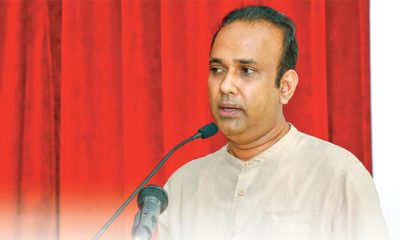




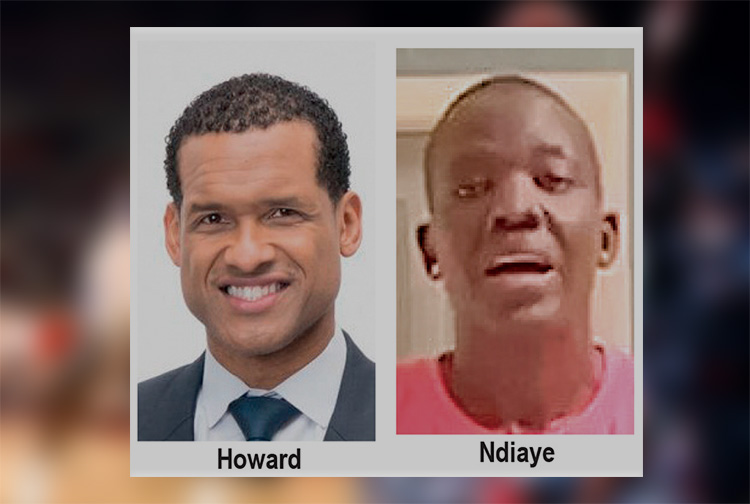
The U.S. Embassy in Colombo welcomed the U.S. Sports Envoys to Sri Lanka, former National Basketball Association (NBA) and Women’s National Basketball Association (WNBA) players Stephen Howard and Astou Ndiaye, from June 8 through 14.
The Public Diplomacy section of the U.S. Embassy said that it would launch a weeklong basketball program intended to harness the unifying power of sports, made possible through collaboration with Foundation of Goodness and IImpact Hoop Lab.
While in Sri Lanka, Howard and Ndiaye, both retired professional basketball players, will conduct a weeklong program, Hoops for Hope: Bridging Borders through Basketball. The Sports Envoys will lead basketball clinics and exhibition matches and engage in leadership sessions in Colombo and Southern Province for youth aged 14-18 from Northern, Uva, Eastern and Western Provinces, offering skills and leadership training both on and off the court. The U.S. Envoys will also share their expertise with the Sri Lanka Basketball Federation, national coaches, and players, furthering the development of basketball in the country. Beyond the clinics, they will collaborate with Sri Lankan schoolchildren to take part in a community service project in the Colombo area.
“We are so proud to welcome Stephen and Astou as our Sports Envoys to Sri Lanka, to build on the strong people-to-people connections between the United States and Sri Lanka,” said U.S. Ambassador Julie Chung. “The lessons that will be shared by our Sports Envoys – communication, teamwork, resilience, inclusion, and conflict resolution – are essential for leadership development, community building, equality, and peace. The U.S. Sports Envoy program is a testament to our belief that sports can be a powerful tool in promoting peace and unity.”
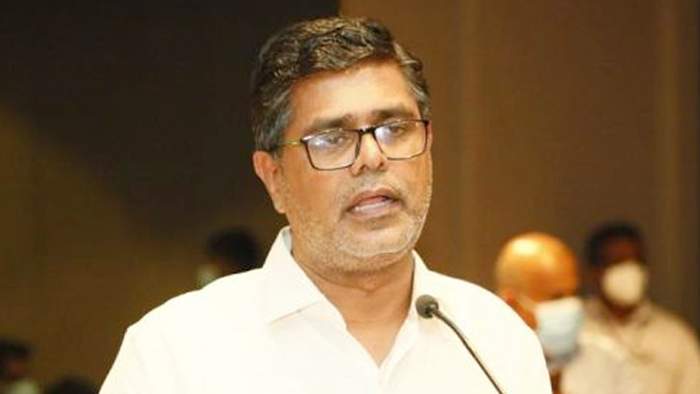
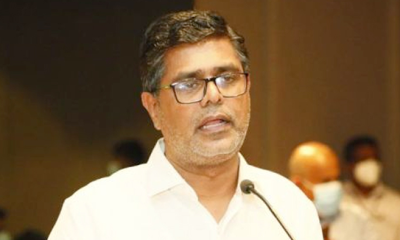
SJB Colombo District MP Mujibur Rahuman in parliament demanded to know from the government the reasons for CEB suspending the leave of all its employees until further notice from Thursday.
MP Rahuman said that the CEB has got an acting General Manager anew and the latter yesterday morning issued a circular suspending leave of all CEB employees with immediate effect until further notice.
“We demand that Minister Kanchana Wijesekera should explain this to the House. This circular was issued while this debate on the new Electricity Amendment Bill was pending. There are many who oppose this Bill. The Minister must tell parliament the reason for the urge to cancel the leave of CEB employees,” the MP said.However, Speaker Mahinda Yapa Abeywardena prevented Minister Wijesekera responding to the query and said that the matter raised by MP Rahuman was not relevant.
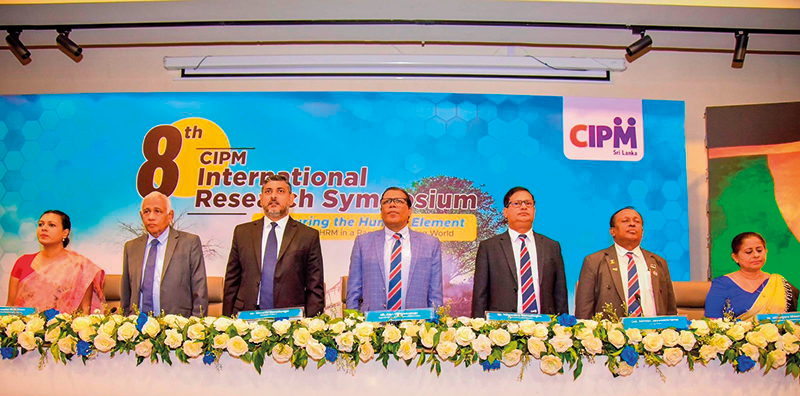
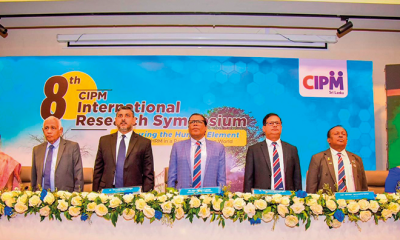
The Chartered Institute of Personnel Management (CIPM) successfully concluded the 8th Annual CIPM Symposium, which took place on 31st May 2024. Themed “Nurturing the Human Element—Redefining HRM in a Rapidly Changing World,” the symposium underscored the pivotal role of human resource management (HRM) in today’s dynamic global landscape. Since its inception in 1959, CIPM has been dedicated to advancing the HR profession through education, professional development, and advocacy, solidifying its position as Sri Lanka’s leading professional body for HRM.
Ken Vijayakumar, the President of the CIPM, graced the occasion as the chief guest. The symposium commenced with the welcome address by the Chairperson, Prof. Arosha Adikaram, followed by the Web Launch of the Symposium Proceedings and Abstract Book by the CIPM President. The event featured distinguished addresses, including a speech by Chief Guest Ken Vijayakumar, President of CIPM, and an address by Guest of Honor Shakthi Ranatunga, Chief Operating Officer of MAS Holdings Pvt. Ltd., Sri Lanka.
The symposium also featured an inspiring keynote address by Prof. Mario Fernando, Professor of Management and Director of the Centre for Cross Cultural Management (CCCM) at the University of Wollongong, Australia.
Vote of Thanks of the inauguration session was delivered by Dr. Dillanjani Weeratunga, Symposium Co-chair.
The symposium served as a comprehensive platform for researchers to present their findings across a wide range of critical topics in HRM. These included Cultural Diversity and Inclusion, Talent Development and Retention, Ethical Leadership and Corporate Social Responsibility, Adapting to Technological Advancements, Mental Health and Well-being at Work, Global Workforce Challenges, Employee Empowerment, and Reskilling and Upskilling.
The plenary session was led by Prof. Wasantha Rajapakse. Certificates were awarded to the best paper presenters during the valedictory session, followed by a vote of thanks delivered by Kamani Perera, Manager of Research and Development.
The annual symposium of CIPM was a truly inclusive event, attracting a diverse audience that spanned undergraduates, graduates, working professionals, research scholars and lecturers. This widespread interest highlights the symposium’s significance in the field of HRM, offering a unique opportunity for everyone to network and learn from scholarly brains.The CIPM International Research Symposium was sponsored by Hambantota International Port, Sri Lanka Institute of Information Technology (SLIIT), E B Creasy & Co. PLC, and Print Xcel Company.



US sports envoys to Lanka to champion youth development

Rahuman questions sudden cancellation of leave of CEB employees


