
News
To the future through Digital Disruption

Today, we live in a very fast paced world which rapidly changes with the internet and technology. The significance of technology is as such, that if a nation, society or a company fails to adopt these evolving technologies for sure they’ll be left behind. In a way this scenario can be described from a biological viewpoint. In 1859 Charles Darwin published ‘Origin of species’ where he rejected the creationism and argued humans, animals, insects & all the living and nonliving things in the world were created through a process called evolution which took millions of years in the making. Darwin explained that “Natural selection acts by competition”, organisms or species who adapt to their environment and ecological factors to perform better than others and secure their survival through reproduction and increasing their numbers.
We can broadly apply this theory to many areas,
Today powerful technological advancements such as Machine Learning, Cloud Computing and Artificial Intelligence (AI) have spread from complex research based industries to perform simple day to day activities. Even in Sri Lanka, already there are companies which use such technologies to forecast future market activities, logistics supply and to conduct precise marketing campaigns. The impact of digital transformation is at that level where the biggest players in the market or industry do not hold the advantage, barriers to entry are so low or even cannot be seen in some areas. Small businesses with big ideas can turn the markets in quick time thanks to these advancements. It intensifies the competition and transfer the ultimate benefit to customers. If we refer to the Sri Lankan story, at the end of year 2022 there are 743 small tech savvy companies (some are industry leaders today) ‘Startups’ who directly involve to core operations of widespread multinational companies. Most of them are situated outside Colombo, which is proof that we are moving in the right direction.
Cutting edge technologies as AI & ML are widely used to analys trillions of consumer data to derive tailor made algorithms. Images captured by remote sensors are helping to train autonomous cars, patterns identified in financial markets are used to price insurance and place trades, access to patient data assesses healthcare providers to disease identification and to create solutions. Also, in the race against imminent Climate Crisis these high-tech applications are used to suggest how to cut down on greenhouse gas emissions and to recycle pollutants.
In the age of Digital evolution, success will lie with the nations or firms who adopt and apply new technological advancements to its operations not just with the intellectual capacity of people or employees. The best example for these applications are the reemergence of online market places and work from home initiative. Most of the traditional brick & mortar organisations had to get into the digital space to assure their survival. They had to offer goods and services via online platforms and to rely on AI based social media, search engine based promotional campaigns instead of costly ATL sources.
When you look at an economy from a macro point of view, it is like a large rive that flows, at some places branches connect to the river body carrying water in and out. When it comes across a barrier it either destroys them or changes its speed or changes its shape, but it’ll flow through.
Because of the Covid pandemic global economic growth rate came to a halt. Since we live in a highly globalised world the economic growth rates of US, China, Europa and Asia contracted at an alarming rate. The impact of the slowdown was felt across nations in every social stratum. Income levels dropped, businesses crashed resulting in mass layoffs, supply chains were blocked. At the height of the pandemic 50% of the global work force of 3.3 billion came near to the threat of getting unemployed. But things took a turn for the good by implementing touchless online sales platforms and by enabling employees do their job by working from home. These trends were evident in all the sectors of economy, education, healthcare, transportation, telecommunication and most prominently in the fintech industry. By reducing operational costs and gaining the trust of all the segments of society these technological improvements became close to ordinary people.
When we talk about the market adaptation to technology report by the CANTAR LMRB ‘Covid-19 Barometer Sri Lanka Report’ shows that when we compare the convergence of the e-commerce industry in SL there is a 245% growth. It lists what are the online activities our people engaged mostly, use of online facilities to do online payments, digital banking services, getting medical advice via video conferencing and to play online games. It further illustrates that money spent on average has increased from USD 11 to USD 38 compared to the pre Covid period. Therefore, as an individual with a progressive view to the future I believe we as a nation should invest heavily in new technologies when we sail the rough seas of economic crisis.
In our path to achive ultimate customer satisfaction we always believe in Digital Disruption, that is why we came up with our own Smart digital banking application the ‘NSB Pay’. Its available in Android and Apple store. It will empower you to experience the digital financial atmosphere at absolutely no charge, as at today we the NSB is the only bank to provide such high tech smart app for free to Sri Lankans. By using the app you can enjoy the ease of banking, settle the loan, transfer and get money to and from other banks in real time, settle your credit card, reload the phone, pay household bills, check your fixed deposit balances, sellte payments to selected governemnt entities etc.
As a responsible state bank we invest money to fine tune the efficiency and accuracy of our services to become more customer friendly hence, we think Machine Learning, Cloud Compting and use of AI is the future in achiving this ultimatum.
In a recent study by the ‘Economic Impact’ magazine it revealed that in US the post Covid e-commerce usage has increased from 17% to 33%. 70% Industry leaders have said that they experice the digital disruption and 85% of them forecasts that in the next five years the progress in this sector will exceed the expectations. Even if we do a similar survey in SL for sure we will get similar results.
By the end of 2022 60% of the world are connected to the world (in 2000 it was 5.8%) by usisng this connectivity our small island can go a long way. I know that the things are difficult and hard but these times shall pass too, nothing is for forever. Tough times comes to test our endurance, strength and capacity. When we look around I know it is easier said than done yet we as a nation cannot give up there’s lot more to achieve.
Banking sector is the backbone of our financial system, fruits of its success belongs to all of us and as the premiere specialized savings bank with RS. 1.6 trillion of asset base and Rs. 1.4 deposit base we the NSB strive towards future with optimisum and hope knowing that as a nation will come atop these difficult times for good.


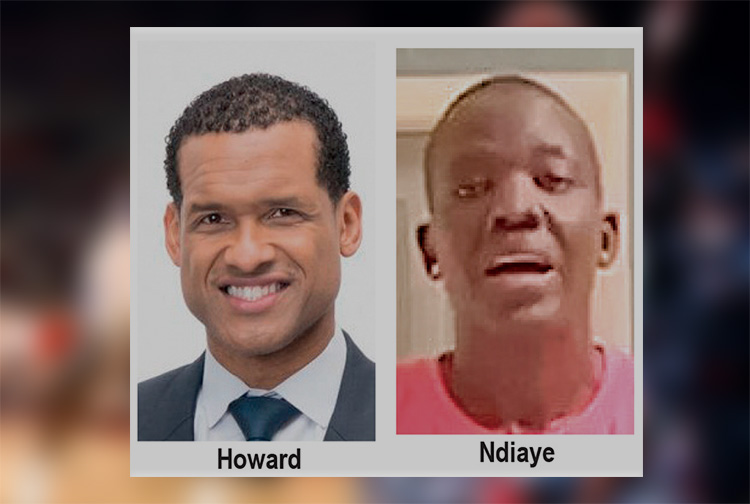
The U.S. Embassy in Colombo welcomed the U.S. Sports Envoys to Sri Lanka, former National Basketball Association (NBA) and Women’s National Basketball Association (WNBA) players Stephen Howard and Astou Ndiaye, from June 8 through 14.
The Public Diplomacy section of the U.S. Embassy said that it would launch a weeklong basketball program intended to harness the unifying power of sports, made possible through collaboration with Foundation of Goodness and IImpact Hoop Lab.
While in Sri Lanka, Howard and Ndiaye, both retired professional basketball players, will conduct a weeklong program, Hoops for Hope: Bridging Borders through Basketball. The Sports Envoys will lead basketball clinics and exhibition matches and engage in leadership sessions in Colombo and Southern Province for youth aged 14-18 from Northern, Uva, Eastern and Western Provinces, offering skills and leadership training both on and off the court. The U.S. Envoys will also share their expertise with the Sri Lanka Basketball Federation, national coaches, and players, furthering the development of basketball in the country. Beyond the clinics, they will collaborate with Sri Lankan schoolchildren to take part in a community service project in the Colombo area.
“We are so proud to welcome Stephen and Astou as our Sports Envoys to Sri Lanka, to build on the strong people-to-people connections between the United States and Sri Lanka,” said U.S. Ambassador Julie Chung. “The lessons that will be shared by our Sports Envoys – communication, teamwork, resilience, inclusion, and conflict resolution – are essential for leadership development, community building, equality, and peace. The U.S. Sports Envoy program is a testament to our belief that sports can be a powerful tool in promoting peace and unity.”
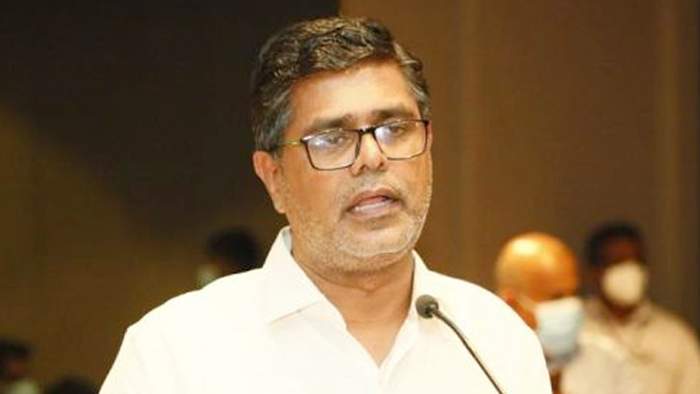
SJB Colombo District MP Mujibur Rahuman in parliament demanded to know from the government the reasons for CEB suspending the leave of all its employees until further notice from Thursday.
MP Rahuman said that the CEB has got an acting General Manager anew and the latter yesterday morning issued a circular suspending leave of all CEB employees with immediate effect until further notice.
“We demand that Minister Kanchana Wijesekera should explain this to the House. This circular was issued while this debate on the new Electricity Amendment Bill was pending. There are many who oppose this Bill. The Minister must tell parliament the reason for the urge to cancel the leave of CEB employees,” the MP said.However, Speaker Mahinda Yapa Abeywardena prevented Minister Wijesekera responding to the query and said that the matter raised by MP Rahuman was not relevant.
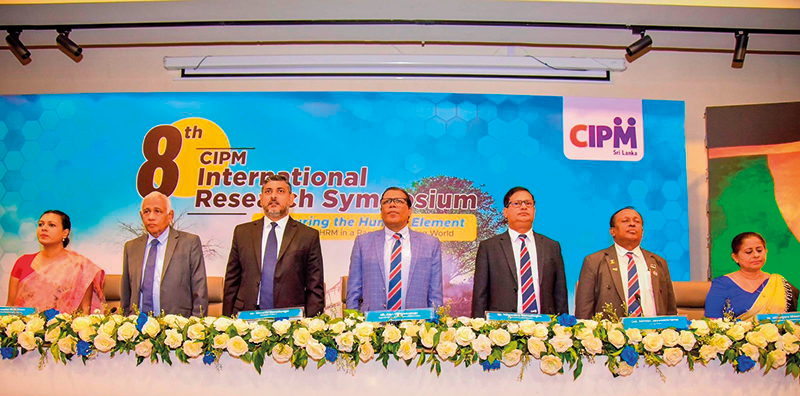
The Chartered Institute of Personnel Management (CIPM) successfully concluded the 8th Annual CIPM Symposium, which took place on 31st May 2024. Themed “Nurturing the Human Element—Redefining HRM in a Rapidly Changing World,” the symposium underscored the pivotal role of human resource management (HRM) in today’s dynamic global landscape. Since its inception in 1959, CIPM has been dedicated to advancing the HR profession through education, professional development, and advocacy, solidifying its position as Sri Lanka’s leading professional body for HRM.
Ken Vijayakumar, the President of the CIPM, graced the occasion as the chief guest. The symposium commenced with the welcome address by the Chairperson, Prof. Arosha Adikaram, followed by the Web Launch of the Symposium Proceedings and Abstract Book by the CIPM President. The event featured distinguished addresses, including a speech by Chief Guest Ken Vijayakumar, President of CIPM, and an address by Guest of Honor Shakthi Ranatunga, Chief Operating Officer of MAS Holdings Pvt. Ltd., Sri Lanka.
The symposium also featured an inspiring keynote address by Prof. Mario Fernando, Professor of Management and Director of the Centre for Cross Cultural Management (CCCM) at the University of Wollongong, Australia.
Vote of Thanks of the inauguration session was delivered by Dr. Dillanjani Weeratunga, Symposium Co-chair.
The symposium served as a comprehensive platform for researchers to present their findings across a wide range of critical topics in HRM. These included Cultural Diversity and Inclusion, Talent Development and Retention, Ethical Leadership and Corporate Social Responsibility, Adapting to Technological Advancements, Mental Health and Well-being at Work, Global Workforce Challenges, Employee Empowerment, and Reskilling and Upskilling.
The plenary session was led by Prof. Wasantha Rajapakse. Certificates were awarded to the best paper presenters during the valedictory session, followed by a vote of thanks delivered by Kamani Perera, Manager of Research and Development.
The annual symposium of CIPM was a truly inclusive event, attracting a diverse audience that spanned undergraduates, graduates, working professionals, research scholars and lecturers. This widespread interest highlights the symposium’s significance in the field of HRM, offering a unique opportunity for everyone to network and learn from scholarly brains.The CIPM International Research Symposium was sponsored by Hambantota International Port, Sri Lanka Institute of Information Technology (SLIIT), E B Creasy & Co. PLC, and Print Xcel Company.



US sports envoys to Lanka to champion youth development

Rahuman questions sudden cancellation of leave of CEB employees


