
News
The Deadly Delta Wave Must Be Overcome For The Vaccine Program To Succeed Prof. Tissa Vitarana


It is with great sorrow that I write this article due to the sudden death of my friend Suresh Perera, News Editor of the Sunday Island. He was a victim of the present wave of the deadly Covid19 Delta virus which is sweeping to all parts of Sri Lanka, and the world. He was 59 years of age and at the height of his career. I extend my deepest sympathies to his wife, daughter and the rest of his family and colleagues who are in a state of shock after his sudden death. Like many Sri Lankans he took little care about his safety, and had he exercised more care he would still have been with us. But the same can be said of all the other thousands who have died and are yet to die from the Delta virus.
Those who died and the many seriously ill patients who have taken up every available Intensive care unit (ICU) bed in the hospitals, and have filled the other beds, and are even forced to sleep under them were all careless. Why? Because the fact that the health rules were for their own safety had not been instilled into their minds. They treated them as Government regulations that had to be observed. On TV we have seen jostling crowds of people all wearing the masks below the chin, and immediately a policeman is sighted they cover the nose as well. A new mindset has to be developed nation wide, with a new behavior pattern, if we are to survive.
An important solution is getting immunized through vaccination. The Government, with the President and PM giving the lead, have done well to procure a maximum amount of vaccines from abroad, in the face of a heavy demand worldwide. The health and military personnel have expended their energies and done a great number of vaccinations. Unfortunately there does not appear to be a good plan and the population groups selected do not conform to any thought out risk- based priority list. There are still a significant number of over 60s to be vaccinated. The same for those with relevant co-morbidities e.g. diabetes, heart and lung disease etc. Outside this vulnerable group, there should be ‘a drop according to age’ selection process giving preference to those working in crowded locations e.g. garment factories etc.
But a problem is that both immunity after infection and after vaccination appears to be low , six months to one year. So that repeated boosters at least once a year may be required, a costly exercise. If I may suggest why not start our own Covid 19 vaccine production factory. It can save forex and also earn it. The use of mRNA vaccines ( like Pfizer and Moderna) is better avoided, as they are gene material which has not been used in the preparation of vaccine ever before. The European Union has banned the import of GM foods as they contain added or modified genetic material. That is food which gets processed in the bowel, but in the case of a vaccine there is direct injection into our tissues. Finally recipients of vaccines must be made aware of the delay in developing protection till about two weeks after the second dose.
They must not lower their guard even after that because of the large number of infected people in society and the relatively short period of immunity. The danger of more virulent and infectious variants can arise at any time and cause problems when immunity is dropping. Everyone must take the vaccine as it helps to build up herd immunity, so that with time resistance in the community to new variants will keep on increasing. But the vaccine defence of the community takes time.
But a short term solution is required for the present Delta pandemic tragedy which is going to lead to more and more severe cases with no ICU facilities available, more deaths and suffering for the people of Sri Lanka. If we have a spark of humanity left in us we must act positively to end transmission of the virus, as far as possible. At this moment the most effective action would be a LOCKDOWN for two weeks. Depending on how well this is done it will be at least be a partial success reducing the number of cases and deaths. Every day that we delay more the deaths.
The only time I met the Health Minister about seven months ago at the Health Advisory Committee I said that the virus is no longer in containable clusters. It is spreading in the community to several people mainly in the Western Province, from one unknown person to another. No traceable connections have been found. It is now a case of community spread. The two main points I made were (1) to set up a Covid Committee of Party leaders in Parliament that could interact with the Minister. They too can get to know your plans and progress. With their input it becomes a national campaign. This can be extended down to village and slum level. This Clovid committee at village level will ensure that everyone observes the four health regulations. The whole village will have to be educated on why the observance of those rules will protect each one. There are many asymptomatic cases. They will not be able to infect the others. Transmission should stop if effective. The virus will have no access to the live cells of the human respiratory tract where it takes over each cell and gets it to produce thousands of viral replicas. When that stops the virus which is unable to multiply on its own will just die out.
(2) the village Clovid Committee will besides health education and enforcement of the health rules, will spot likely cases as soon as they arise and get them seen by a doctor and PCR tested.



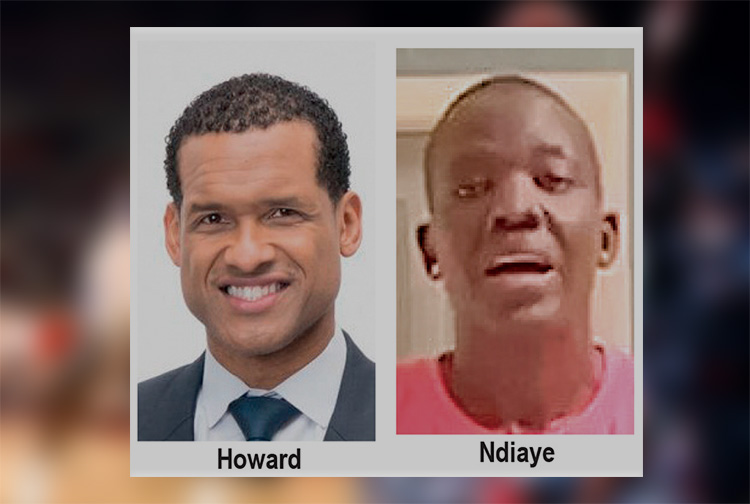
The U.S. Embassy in Colombo welcomed the U.S. Sports Envoys to Sri Lanka, former National Basketball Association (NBA) and Women’s National Basketball Association (WNBA) players Stephen Howard and Astou Ndiaye, from June 8 through 14.
The Public Diplomacy section of the U.S. Embassy said that it would launch a weeklong basketball program intended to harness the unifying power of sports, made possible through collaboration with Foundation of Goodness and IImpact Hoop Lab.
While in Sri Lanka, Howard and Ndiaye, both retired professional basketball players, will conduct a weeklong program, Hoops for Hope: Bridging Borders through Basketball. The Sports Envoys will lead basketball clinics and exhibition matches and engage in leadership sessions in Colombo and Southern Province for youth aged 14-18 from Northern, Uva, Eastern and Western Provinces, offering skills and leadership training both on and off the court. The U.S. Envoys will also share their expertise with the Sri Lanka Basketball Federation, national coaches, and players, furthering the development of basketball in the country. Beyond the clinics, they will collaborate with Sri Lankan schoolchildren to take part in a community service project in the Colombo area.
“We are so proud to welcome Stephen and Astou as our Sports Envoys to Sri Lanka, to build on the strong people-to-people connections between the United States and Sri Lanka,” said U.S. Ambassador Julie Chung. “The lessons that will be shared by our Sports Envoys – communication, teamwork, resilience, inclusion, and conflict resolution – are essential for leadership development, community building, equality, and peace. The U.S. Sports Envoy program is a testament to our belief that sports can be a powerful tool in promoting peace and unity.”
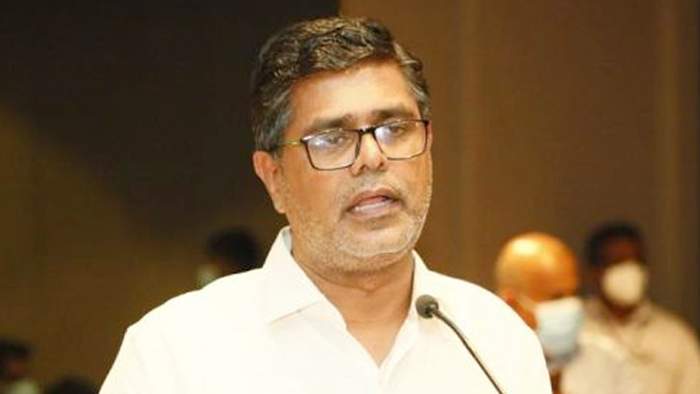
SJB Colombo District MP Mujibur Rahuman in parliament demanded to know from the government the reasons for CEB suspending the leave of all its employees until further notice from Thursday.
MP Rahuman said that the CEB has got an acting General Manager anew and the latter yesterday morning issued a circular suspending leave of all CEB employees with immediate effect until further notice.
“We demand that Minister Kanchana Wijesekera should explain this to the House. This circular was issued while this debate on the new Electricity Amendment Bill was pending. There are many who oppose this Bill. The Minister must tell parliament the reason for the urge to cancel the leave of CEB employees,” the MP said.However, Speaker Mahinda Yapa Abeywardena prevented Minister Wijesekera responding to the query and said that the matter raised by MP Rahuman was not relevant.
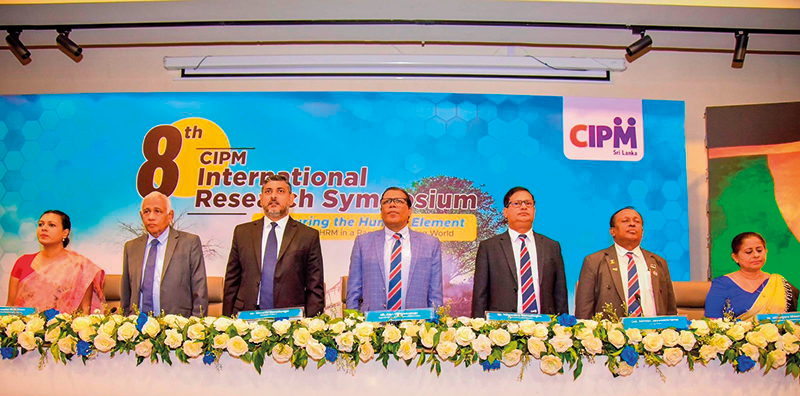
The Chartered Institute of Personnel Management (CIPM) successfully concluded the 8th Annual CIPM Symposium, which took place on 31st May 2024. Themed “Nurturing the Human Element—Redefining HRM in a Rapidly Changing World,” the symposium underscored the pivotal role of human resource management (HRM) in today’s dynamic global landscape. Since its inception in 1959, CIPM has been dedicated to advancing the HR profession through education, professional development, and advocacy, solidifying its position as Sri Lanka’s leading professional body for HRM.
Ken Vijayakumar, the President of the CIPM, graced the occasion as the chief guest. The symposium commenced with the welcome address by the Chairperson, Prof. Arosha Adikaram, followed by the Web Launch of the Symposium Proceedings and Abstract Book by the CIPM President. The event featured distinguished addresses, including a speech by Chief Guest Ken Vijayakumar, President of CIPM, and an address by Guest of Honor Shakthi Ranatunga, Chief Operating Officer of MAS Holdings Pvt. Ltd., Sri Lanka.
The symposium also featured an inspiring keynote address by Prof. Mario Fernando, Professor of Management and Director of the Centre for Cross Cultural Management (CCCM) at the University of Wollongong, Australia.
Vote of Thanks of the inauguration session was delivered by Dr. Dillanjani Weeratunga, Symposium Co-chair.
The symposium served as a comprehensive platform for researchers to present their findings across a wide range of critical topics in HRM. These included Cultural Diversity and Inclusion, Talent Development and Retention, Ethical Leadership and Corporate Social Responsibility, Adapting to Technological Advancements, Mental Health and Well-being at Work, Global Workforce Challenges, Employee Empowerment, and Reskilling and Upskilling.
The plenary session was led by Prof. Wasantha Rajapakse. Certificates were awarded to the best paper presenters during the valedictory session, followed by a vote of thanks delivered by Kamani Perera, Manager of Research and Development.
The annual symposium of CIPM was a truly inclusive event, attracting a diverse audience that spanned undergraduates, graduates, working professionals, research scholars and lecturers. This widespread interest highlights the symposium’s significance in the field of HRM, offering a unique opportunity for everyone to network and learn from scholarly brains.The CIPM International Research Symposium was sponsored by Hambantota International Port, Sri Lanka Institute of Information Technology (SLIIT), E B Creasy & Co. PLC, and Print Xcel Company.



US sports envoys to Lanka to champion youth development

Rahuman questions sudden cancellation of leave of CEB employees


