
News
Taj Mahal reopens to public after six months


BY S VENKAT NARAYAN
Our Special Correspondent
NEW DELHI:
Taj Mahal, the world’s most famous monument to love located in Agra in India’s Uttar Pradesh state 221km from here, reopened to the public last Monday after six months. It remained shut since March 17 due to Covid-19 pandemic. About 160 tickets were booked online on the first day. The first to enter was a tourist from Taiwan staying in India, officials said.
A maximum of 5,000 visitors will be allowed in two shifts per day into the monument, the 17th-century architectural marvel built by fifth Mughal Emperor Shah Jahan (1592-1666) in memory of his favourite wife Mumtaz Mahal, who died while giving birth to their 14th child.
On normal days, the Taj attracts 25,000 to 30,000 visitors a day.
Tight Covid-19 protocol will be followed for checking tourists. There will be no window ticket sale, visitors can scan the code to purchase tickets or book online through the Archaeological Survey of India (ASI) website, or through the ASI mobile app.
Not many paid Rs 200 to visit the main mausoleum but appeared content taking photos of the monument and clicking themselves on the ‘Diana seat’.
ASI officials said they had not neglected the monument despite its gates having remained closed for so long.
“Lawns were maintained all through these six months. The Taj will stay open from sunrise to sunset. All will go through thermal check and they will be provided with sanitizer,” said AN Gupta, conservation assistant, ASI at the white marble monument.
Gupta said not more than five visitors will be allowed at a time within the main mausoleum, which houses the graves of Emperor Shah Jahan and Mumtaz Mahal, the third of his six wives. The mausoleum will remain closed on Fridays, said Agra district magistrate Prabhu N Singh.
Vasant Swarnkar, superintending archaeologist for ASI’s Agra circle, said: “The Taj Mahal will have visitors in two slots — pre-lunch and post-lunch. In each slot, there will be a maximum of 2,500 visitors. Once tickets for the first slot are sold, tickets will be issued for the second slot. In a day, a maximum of 5,000 visitors can visit the Taj.”
Central Industrial Security Force (CISF) jawans will remain at a distance and check visitors with hand-held metal detectors.
No goods are to be carried inside the Taj. An an ambulance will be ready at the gates, Gupta said.
The Taj’s reopening has excited all those who make a living in and around the monument. For instance, Munawwar Ali, 50, began cleaning items at his marble goods shop on Sunday for the first time since March 16.
“We have called the staff on Monday after six months. We expect business to be slow but at least we will see tourists going to the Taj,” said Ali. He has a shop adjoining the western gate of the monument.
‘Yes, we are excited about the reopening of the Taj after such a long duration. A day will come when international flights will resume. In the beginning, domestic tourists from nearby regions will come,” said Rajiv Tiwari, president of the Federation of Travel Association of Agra.
“ASI needs to follow the Covid-19 protocol so that all goes smoothly. The government should begin thinking about restarting international flights as European nations have resumed tourism. We have to live with the coronavirus,” Tiwari added.
Indians will have to pay INR 50 per ticket for visiting the Taj Mahal and cough up another INR200 for entering the main mausoleum. During routine days, it was mostly foreign tourists who used to pay extra to enter the main mausoleum.
Tourism trade experts recollect that the Taj Mahal had never remained closed for such a long period before. The decision to close monuments all over the country due to the Covid-19 pandemic was taken on March 17, before the lockdown.
“It is perhaps for the first time that the seventh New Wonder of the World, which attracts a large number of foreign tourists to India, had been closed for such a long time,” said Arun Dang, former president of Tourism Guild.
“This is unprecedented. Though the monument was closed during the Second World War and also during two wars with Pakistan in 1965 and 1971, the closure had not been so long,” said Dang.
While the Taj Mahal will remain closed on Fridays and Sundays, Agra Fort will remain shut on Sundays.
According to ASI estimates, the Taj Mahal receives around seven to eight million visitors each year, including a large number of foreign tourists who are not likely to come till regular international traffic resume. The Agra Fort gets three million visitors a year.
Emperor Shah Jahan reigned over much of what are now India, Pakistan, Bangladesh and Afghanistan for 30 years (1628-58), and built the Red Fort and Jama Masjid in Delhi and the Lahore Fort in Lahore (now in Pakistan).
It took 21 years (1532-53) for over 20,000 labourers to build the Taj on a 17-hectare (42-acre) plot on the banks of River Yamuna at a cost of INR 32 million then, and INR 70 billion or nearly one billion US dollars now.
When he took ill, and handed over his reign to his elder son Dara Shiko, younger son Aurangzeb killed Dara Shiko, seized power, declared Shah Jahan an incompetent ruler who wasted too much money on building massive monuments, and jailed him in the Agra Fort.
Shah Jahan could see the Taj only from a tiny window in his cell in the Fort, and died a sad man in 1666.



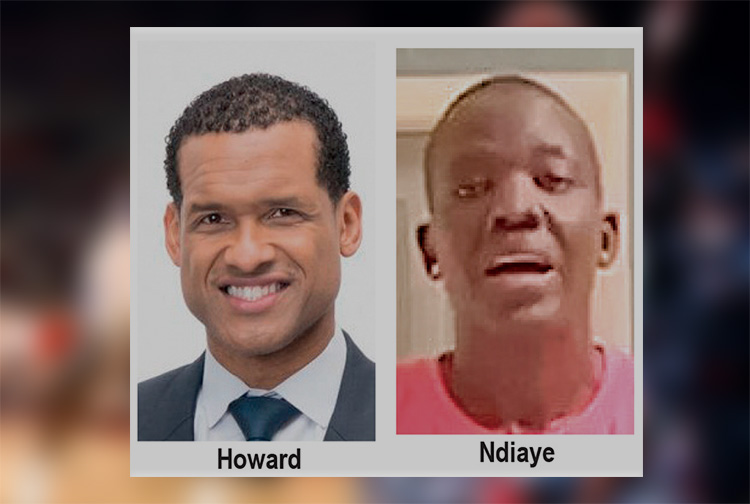
The U.S. Embassy in Colombo welcomed the U.S. Sports Envoys to Sri Lanka, former National Basketball Association (NBA) and Women’s National Basketball Association (WNBA) players Stephen Howard and Astou Ndiaye, from June 8 through 14.
The Public Diplomacy section of the U.S. Embassy said that it would launch a weeklong basketball program intended to harness the unifying power of sports, made possible through collaboration with Foundation of Goodness and IImpact Hoop Lab.
While in Sri Lanka, Howard and Ndiaye, both retired professional basketball players, will conduct a weeklong program, Hoops for Hope: Bridging Borders through Basketball. The Sports Envoys will lead basketball clinics and exhibition matches and engage in leadership sessions in Colombo and Southern Province for youth aged 14-18 from Northern, Uva, Eastern and Western Provinces, offering skills and leadership training both on and off the court. The U.S. Envoys will also share their expertise with the Sri Lanka Basketball Federation, national coaches, and players, furthering the development of basketball in the country. Beyond the clinics, they will collaborate with Sri Lankan schoolchildren to take part in a community service project in the Colombo area.
“We are so proud to welcome Stephen and Astou as our Sports Envoys to Sri Lanka, to build on the strong people-to-people connections between the United States and Sri Lanka,” said U.S. Ambassador Julie Chung. “The lessons that will be shared by our Sports Envoys – communication, teamwork, resilience, inclusion, and conflict resolution – are essential for leadership development, community building, equality, and peace. The U.S. Sports Envoy program is a testament to our belief that sports can be a powerful tool in promoting peace and unity.”
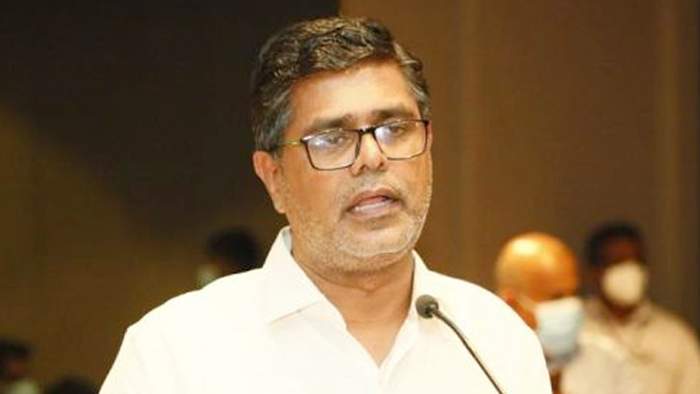
SJB Colombo District MP Mujibur Rahuman in parliament demanded to know from the government the reasons for CEB suspending the leave of all its employees until further notice from Thursday.
MP Rahuman said that the CEB has got an acting General Manager anew and the latter yesterday morning issued a circular suspending leave of all CEB employees with immediate effect until further notice.
“We demand that Minister Kanchana Wijesekera should explain this to the House. This circular was issued while this debate on the new Electricity Amendment Bill was pending. There are many who oppose this Bill. The Minister must tell parliament the reason for the urge to cancel the leave of CEB employees,” the MP said.However, Speaker Mahinda Yapa Abeywardena prevented Minister Wijesekera responding to the query and said that the matter raised by MP Rahuman was not relevant.
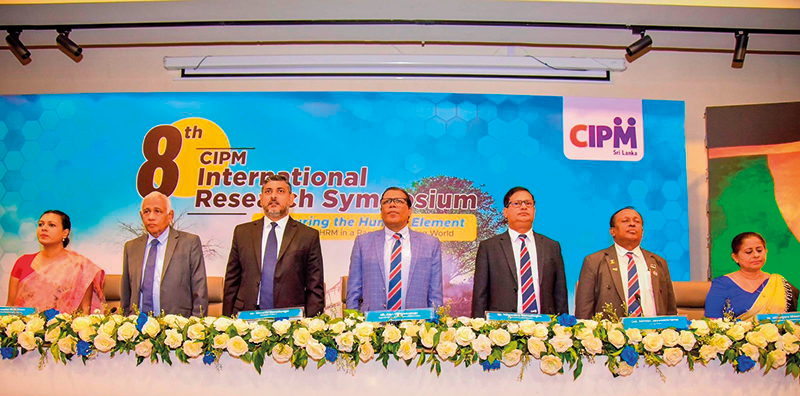
The Chartered Institute of Personnel Management (CIPM) successfully concluded the 8th Annual CIPM Symposium, which took place on 31st May 2024. Themed “Nurturing the Human Element—Redefining HRM in a Rapidly Changing World,” the symposium underscored the pivotal role of human resource management (HRM) in today’s dynamic global landscape. Since its inception in 1959, CIPM has been dedicated to advancing the HR profession through education, professional development, and advocacy, solidifying its position as Sri Lanka’s leading professional body for HRM.
Ken Vijayakumar, the President of the CIPM, graced the occasion as the chief guest. The symposium commenced with the welcome address by the Chairperson, Prof. Arosha Adikaram, followed by the Web Launch of the Symposium Proceedings and Abstract Book by the CIPM President. The event featured distinguished addresses, including a speech by Chief Guest Ken Vijayakumar, President of CIPM, and an address by Guest of Honor Shakthi Ranatunga, Chief Operating Officer of MAS Holdings Pvt. Ltd., Sri Lanka.
The symposium also featured an inspiring keynote address by Prof. Mario Fernando, Professor of Management and Director of the Centre for Cross Cultural Management (CCCM) at the University of Wollongong, Australia.
Vote of Thanks of the inauguration session was delivered by Dr. Dillanjani Weeratunga, Symposium Co-chair.
The symposium served as a comprehensive platform for researchers to present their findings across a wide range of critical topics in HRM. These included Cultural Diversity and Inclusion, Talent Development and Retention, Ethical Leadership and Corporate Social Responsibility, Adapting to Technological Advancements, Mental Health and Well-being at Work, Global Workforce Challenges, Employee Empowerment, and Reskilling and Upskilling.
The plenary session was led by Prof. Wasantha Rajapakse. Certificates were awarded to the best paper presenters during the valedictory session, followed by a vote of thanks delivered by Kamani Perera, Manager of Research and Development.
The annual symposium of CIPM was a truly inclusive event, attracting a diverse audience that spanned undergraduates, graduates, working professionals, research scholars and lecturers. This widespread interest highlights the symposium’s significance in the field of HRM, offering a unique opportunity for everyone to network and learn from scholarly brains.The CIPM International Research Symposium was sponsored by Hambantota International Port, Sri Lanka Institute of Information Technology (SLIIT), E B Creasy & Co. PLC, and Print Xcel Company.



US sports envoys to Lanka to champion youth development

Rahuman questions sudden cancellation of leave of CEB employees


