
News
State Minister Cabraal dispels fears about Sri Lanka’s debt service capacity

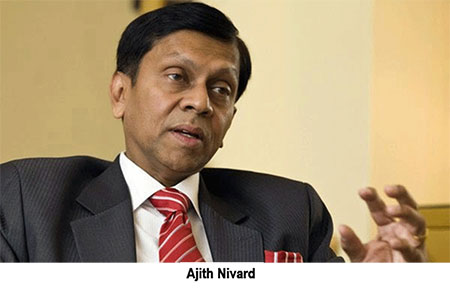
State Minister of Money and Capital Markets and State Enterprise Reforms Ajith Nivard Cabraal has said nobody should harbour fears of Sri Lanka’s ability to service its debt. Fears being expressed in some quartes are unfounded he has said, issuing a media statement.
Following is a statement issued by the State Minister of Money & Capital Markets and State Enterprise Reforms Ajith Nivard Cabraal on 30th October 2020 “With the spread of the COVID-19 pandemic, all countries including Sri Lanka, observed a contraction in economic activity, reduction in foreign exchange earnings, decrease in revenue collection, and increase in health and welfare related expenditure. However, the prompt and measured policy support provided by the Government and the Central Bank enabled Sri Lanka to contain the unfavourable effects of Covid-19 to a great extent, and return the economy to near-normalcy by mid-May 2020. In fact, most economic activities have displayed a notable revival from May onwards, and this recovery is on-going. The recent detection of a new Covid cluster is now being decisively addressed by the Government, and this wave is also expected to be short-lived. Accordingly, the expansion of the fiscal deficit and the increase in debt levels in 2020, should not be generalised as a prolonged debt distress, but rather as a “one-off” deviation from the clear fiscal consolidation path that has been well articulated in the new Government’s policy framework.
“The election of a new President in mid November 2019 and the formation of a single-party Government with a sizable majority in August 2020, has enable the new Government to address the uncertainties in the political and policy spheres observed during the period 2015 to 2019. Consequently, Sri Lanka has been able to address public health concerns swiftly, as well as take difficult economic decisions with greater confidence. For example, when the Government was of the view that it was necessary to conserve forex, given the likelihood of low foreign exchange earnings due to the pandemic, and the need to prioritize foreign debt service obligations, the Sri Lankan authorities imposed restrictions on non-essential imports from March 2020. Such decisive and bold action, along with the reduction in global petroleum prices, resulted in a substantial saving of nearly US$ 3 billion in terms of expenditure on merchandise imports in the first nine months of the year, compared to the same period of the previous year. This saving, along with the better-than-expected outcomes in terms of merchandise exports, services exports other than tourism, and workers’ remittances, is now projected to compress the external current account deficit to below 1.5% of GDP in 2020.
“It would also be noted that capital flows and official reserves were also affected during the early months of the global outbreak of Covid-19. However, growing business confidence due to decisive action by the Government and the Central Bank has enabled the country to stabilize the exchange rate with only a marginal depreciation of around 1.5% so far this year, even while the Central Bank was able to purchase/absorb US$ 300 million from the domestic foreign exchange market during the year. As a result, official reserves remain close to US$ 6 billion, after settling foreign debt service repayments of around US$ 4 billion thus far during the year, including the repayment of the matured International Sovereign Bond of US$ 1 billion in October 2020. In the meantime, it would be further noted that the Sri Lankan authorities are presently negotiating a loan of USD 700 million from the China Development Bank which is expected to be at an interest rate and terms of repayment that are significantly more favourable than the USD 1 billion Sovereign Bond that was just re-paid. In addition, an attractive, exchange rate risk-free, Forex SWAP facility has been introduced for any foreign investor who invests in Sri Lankan government securities, which is expected to boost foreign exchange inflows particularly from the Middle-East, in the period ahead.
“In terms of growth performance, Sri Lanka is once again set to embark on a growth path, following the setback in the first half of 2020 caused by the pandemic. The formulation of the new Government Cabinet and State Ministerial structure, with clear performance indicators has been geared towards improving the efficiency and effectiveness of the economy. These new governance structures are bound to enhance agriculture and agro-based and mineral-based industries, increase export opportunities, as well as facilitate large projects within the Port City, Hambantota Port, and dedicated industrial zones. The expected revitalization of state owned enterprises, together with the private sector-led growth projects would also revert the Sri Lankan economy to the high growth path that was observed prior to 2015 whereby annual growth rates of over 6.5% were regularly recorded.
“In the meantime, Sri Lanka’s entire local debt stock of about Rs. 7.7 trillion (USD 42 billion) as at end July 2020 is being rolled-over and re-priced now at interest rates which are almost half of what was paid in 2019, while the Rupee remains stable. It may also be noted that a new trend has been established where greater reliance is being placed on domestic financing, and that strategy has already improved the “domestic: foreign” ratio of the debt from 51:49 at end 2019 to 56:44 now, which trend the authorities are keen to improve further in the period ahead. It is therefore clear that the Government’s commitment and support towards better debt management, both directly and indirectly, has already started to take effect.
“Sri Lanka is justifiably proud of its immaculate debt service record, without a single default. It would also be noted that Sri Lanka has experienced similar challenging circumstances previously, with high levels of debt. For instance, during 2001-2004, the country’s debt to GDP ratio was well over 100%, and by end 2005, it was at 91%. Nevertheless, Sri Lanka was able to gradually reduce the debt to GDP ratio to just 72% by end 2014 through decisive and innovative action.”



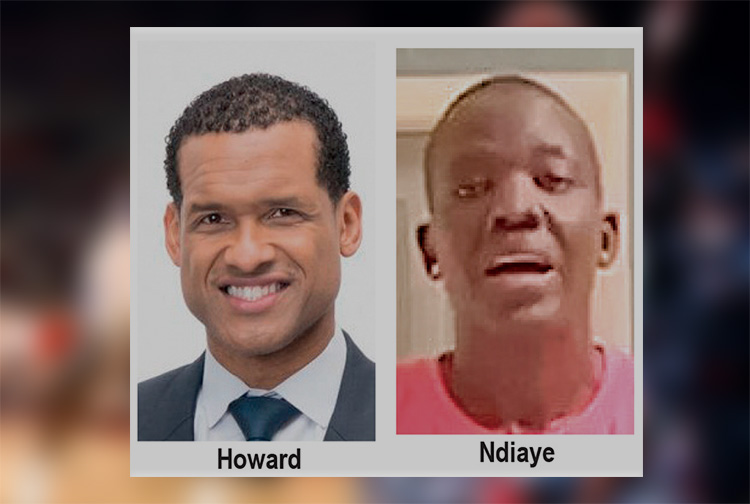
The U.S. Embassy in Colombo welcomed the U.S. Sports Envoys to Sri Lanka, former National Basketball Association (NBA) and Women’s National Basketball Association (WNBA) players Stephen Howard and Astou Ndiaye, from June 8 through 14.
The Public Diplomacy section of the U.S. Embassy said that it would launch a weeklong basketball program intended to harness the unifying power of sports, made possible through collaboration with Foundation of Goodness and IImpact Hoop Lab.
While in Sri Lanka, Howard and Ndiaye, both retired professional basketball players, will conduct a weeklong program, Hoops for Hope: Bridging Borders through Basketball. The Sports Envoys will lead basketball clinics and exhibition matches and engage in leadership sessions in Colombo and Southern Province for youth aged 14-18 from Northern, Uva, Eastern and Western Provinces, offering skills and leadership training both on and off the court. The U.S. Envoys will also share their expertise with the Sri Lanka Basketball Federation, national coaches, and players, furthering the development of basketball in the country. Beyond the clinics, they will collaborate with Sri Lankan schoolchildren to take part in a community service project in the Colombo area.
“We are so proud to welcome Stephen and Astou as our Sports Envoys to Sri Lanka, to build on the strong people-to-people connections between the United States and Sri Lanka,” said U.S. Ambassador Julie Chung. “The lessons that will be shared by our Sports Envoys – communication, teamwork, resilience, inclusion, and conflict resolution – are essential for leadership development, community building, equality, and peace. The U.S. Sports Envoy program is a testament to our belief that sports can be a powerful tool in promoting peace and unity.”
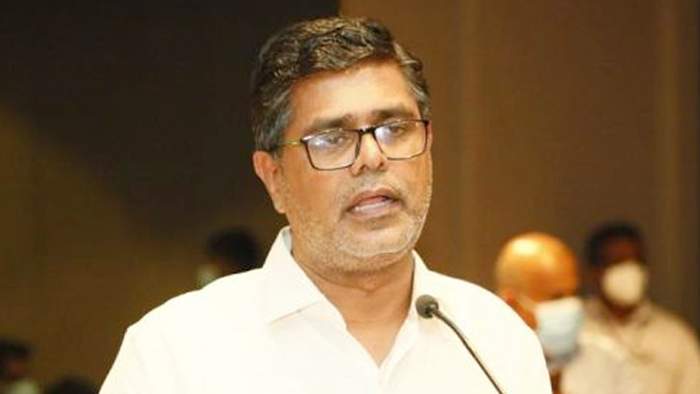
SJB Colombo District MP Mujibur Rahuman in parliament demanded to know from the government the reasons for CEB suspending the leave of all its employees until further notice from Thursday.
MP Rahuman said that the CEB has got an acting General Manager anew and the latter yesterday morning issued a circular suspending leave of all CEB employees with immediate effect until further notice.
“We demand that Minister Kanchana Wijesekera should explain this to the House. This circular was issued while this debate on the new Electricity Amendment Bill was pending. There are many who oppose this Bill. The Minister must tell parliament the reason for the urge to cancel the leave of CEB employees,” the MP said.However, Speaker Mahinda Yapa Abeywardena prevented Minister Wijesekera responding to the query and said that the matter raised by MP Rahuman was not relevant.
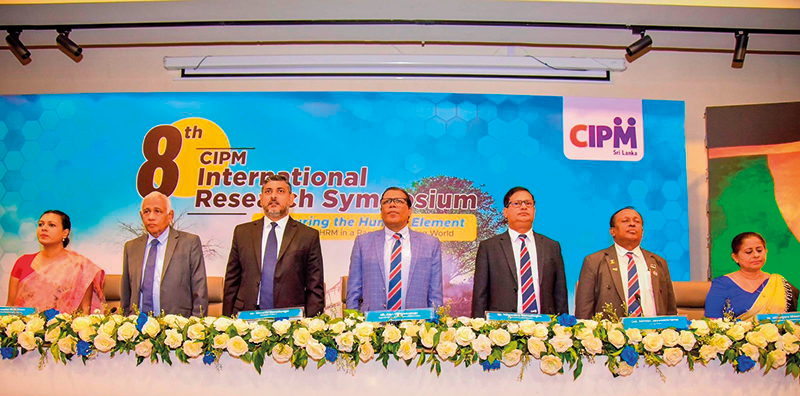
The Chartered Institute of Personnel Management (CIPM) successfully concluded the 8th Annual CIPM Symposium, which took place on 31st May 2024. Themed “Nurturing the Human Element—Redefining HRM in a Rapidly Changing World,” the symposium underscored the pivotal role of human resource management (HRM) in today’s dynamic global landscape. Since its inception in 1959, CIPM has been dedicated to advancing the HR profession through education, professional development, and advocacy, solidifying its position as Sri Lanka’s leading professional body for HRM.
Ken Vijayakumar, the President of the CIPM, graced the occasion as the chief guest. The symposium commenced with the welcome address by the Chairperson, Prof. Arosha Adikaram, followed by the Web Launch of the Symposium Proceedings and Abstract Book by the CIPM President. The event featured distinguished addresses, including a speech by Chief Guest Ken Vijayakumar, President of CIPM, and an address by Guest of Honor Shakthi Ranatunga, Chief Operating Officer of MAS Holdings Pvt. Ltd., Sri Lanka.
The symposium also featured an inspiring keynote address by Prof. Mario Fernando, Professor of Management and Director of the Centre for Cross Cultural Management (CCCM) at the University of Wollongong, Australia.
Vote of Thanks of the inauguration session was delivered by Dr. Dillanjani Weeratunga, Symposium Co-chair.
The symposium served as a comprehensive platform for researchers to present their findings across a wide range of critical topics in HRM. These included Cultural Diversity and Inclusion, Talent Development and Retention, Ethical Leadership and Corporate Social Responsibility, Adapting to Technological Advancements, Mental Health and Well-being at Work, Global Workforce Challenges, Employee Empowerment, and Reskilling and Upskilling.
The plenary session was led by Prof. Wasantha Rajapakse. Certificates were awarded to the best paper presenters during the valedictory session, followed by a vote of thanks delivered by Kamani Perera, Manager of Research and Development.
The annual symposium of CIPM was a truly inclusive event, attracting a diverse audience that spanned undergraduates, graduates, working professionals, research scholars and lecturers. This widespread interest highlights the symposium’s significance in the field of HRM, offering a unique opportunity for everyone to network and learn from scholarly brains.The CIPM International Research Symposium was sponsored by Hambantota International Port, Sri Lanka Institute of Information Technology (SLIIT), E B Creasy & Co. PLC, and Print Xcel Company.



US sports envoys to Lanka to champion youth development

Rahuman questions sudden cancellation of leave of CEB employees


