
News
Sri Lanka stokes Muslim and Christian ire with COVID burial rules

Rajapaksa’s forced cremations of minority victims worsen human rights record
MARWAAN MACAN-MARKAR, Asia regional correspondent
COLOMBO — Predominantly Buddhist Sri Lanka’s ultranationalist government is forcing families of the country’s Muslim and Christian minorities to abandon their faith-based burial rites for relatives who die of COVID-19 — consequently inviting fresh international scrutiny of the nation’s already troubled human rights record.
As the country’s death toll from the pandemic inches toward 200, the government of the hawkish President Gotabaya Rajapaksa is sticking to a policy backed by hard-line allies from the majority Sinhala-Buddhists, the political constituency that helped Rajapaksa secure two thumping electoral mandates over the past year. The official policy is for COVID-19 victims to be swiftly cremated. It has sent religious minorities already grieving for lost kin into deeper anguish.
The youngest victim was a 20-day-old Muslim baby who was forcibly cremated against the parents’ wishes. An estimated 80 Muslims have died of the coronavirus, with their surviving family members suffering the same indignity. The pandemic has infected close to 40,000 people since the first case was detected on the Indian Ocean island early this year.
The policy “has led to so much agony within the community at a time when they have to grieve for someone who has died,” said Shreen Saroor, a leading Muslim women’s rights activist. “The relatives are caught in a dilemma of having to sin and having so much guilt for being part of the sin because of the cremation.”
 The anti-burial measures endorsed by Rajapaksa, who enjoys autocratic powers following a constitutional amendment, have been defended on two grounds that have made Sri Lanka an outlier in the global response to the deadly pandemic. One rationale is that burying COVID victims could result in the virus spreading in the soil and contaminating the country’s water table. The other: Muslims will use the dead bodies in graves as a “biological weapon.”
Prime Minister Mahinda Rajapaksa, left, and President Gotabaya Rajapaksa. The Rajapaksa government’s forced cremations appear to have touched off a sense of solidarity in a deeply polarized nation. © Reuters
Sri Lanka’s stance flies in the face of the international consensus among medical scientists and virologists regarding the last rites of COVID victims. The World Health Organization, the Geneva-based U.N. body, has shaped international opinion with guidelines that state the choice of cremation or burial of a COVID victim is a cultural decision. Over 180 of its members have endorsed this.
Not surprisingly, there are emerging signs that Sri Lanka will pay a diplomatic price for Rajapaksa’s efforts to weaponize COVID. Colombo-based embassies from the world’s Muslim countries “are monitoring the burial ban closely and gathering information,” said a diplomatic source from an Asian mission in the Sri Lankan capital.
The embassies have taken a cue from the Organization of Islamic Cooperation, a Saudi Arabia-based 57-member bloc that has issued three statements condemning Sri Lanka’s forced cremation policy.
Likewise, Western diplomatic missions have stood behind statements issued by U.N. officials about the Rajapaksa government hounding religious minorities in their hour of grief. “I fear that not allowing burials is having a negative effect on social cohesion and, more importantly, could also adversely impact the measures for containing the spread of the virus as it may discourage people to access medical care when they have symptoms or history of contact,” wrote Hanaa Singer, the U.N. Resident Coordinator in Sri Lanka, in a letter to the Rajapaksa government in November.
The international scrutiny Sri Lanka is now under adds to the diplomatic pressure it is expected to face in early 2021, when its postwar record will be in the spotlight at the United Nations Human Rights Council in Geneva. “The members of the OIC have traditionally backed Sri Lanka or abstained when there were resolutions critical of the country at the UNHRC,” said Hilmy Ahamed, vice president of the Muslim Council of Sri Lanka, a civil society network. “But Sri Lanka may not be assured of such support in Geneva next year because of the enforced cremations.”
The nearly 30-year civil war, which ended in May 2009, pitted government troops against the separatist Tamil Tigers. The conflict’s grim numbers include more than 100,000 people killed and over 23,000 missing, according to estimates.
For years, an international push for accountability — including in regard to grisly accounts of alleged war crimes committed by government troops and the separatists — has cast a shadow over Sri Lanka. Now the public backlash against the enforced cremations has laid bare a new layer of pain to the still unhealed wounds of Sri Lanka’s fragile, postwar peace.
The protests that have spread locally as well as in Western cities suggest the government’s forced cremations have kindled a sense of solidarity in a deeply polarized country. The participants come from across the country’s religious communities — Buddhists, Hindus, Catholics, other Christians and Muslims. Their banners decry the country for being a graveyard for human rights.
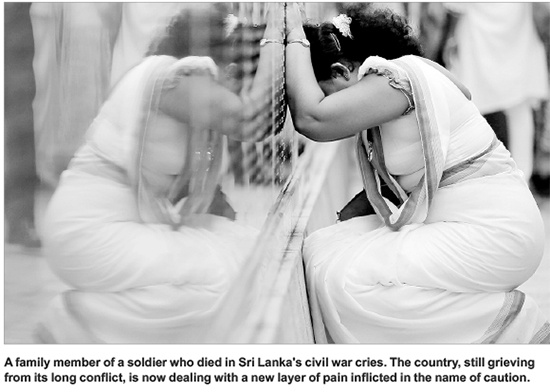
A family member of a soldier who died in Sri Lanka’s civil war cries. The country, still grieving from its long conflict, is now dealing with a new layer of pain inflicted in the name of caution. © Reuters
Symbols of the interreligious solidarity that has taken shape against Rajapaksa are appearing. One is a small white cloth that protesters have begun to tie to the poles that surround the main cemetery in Colombo, where the body of the 20-day-old Muslim baby was forcefully cremated. The white cloths symbolize the white shrouds that the bodies of dead Muslims are buried in. White is also the color of the clothing people wear at non-Muslim funerals.
Some demonstrators wear strips of white cloth around a wrist. The idea of the white-cloth protests was conceived by a Christian and Hindu, both in their 20s.
“This issue has grown beyond Muslim circles,” said Ruki Fernando, a prominent Catholic human rights activist. “There is more solidarity and consciousness, and this discontent will add to the fire the government may face at the U.N. in Geneva.”



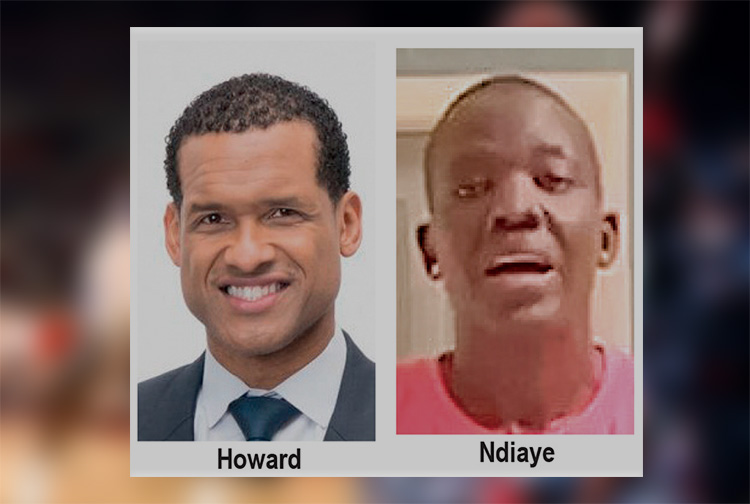
The U.S. Embassy in Colombo welcomed the U.S. Sports Envoys to Sri Lanka, former National Basketball Association (NBA) and Women’s National Basketball Association (WNBA) players Stephen Howard and Astou Ndiaye, from June 8 through 14.
The Public Diplomacy section of the U.S. Embassy said that it would launch a weeklong basketball program intended to harness the unifying power of sports, made possible through collaboration with Foundation of Goodness and IImpact Hoop Lab.
While in Sri Lanka, Howard and Ndiaye, both retired professional basketball players, will conduct a weeklong program, Hoops for Hope: Bridging Borders through Basketball. The Sports Envoys will lead basketball clinics and exhibition matches and engage in leadership sessions in Colombo and Southern Province for youth aged 14-18 from Northern, Uva, Eastern and Western Provinces, offering skills and leadership training both on and off the court. The U.S. Envoys will also share their expertise with the Sri Lanka Basketball Federation, national coaches, and players, furthering the development of basketball in the country. Beyond the clinics, they will collaborate with Sri Lankan schoolchildren to take part in a community service project in the Colombo area.
“We are so proud to welcome Stephen and Astou as our Sports Envoys to Sri Lanka, to build on the strong people-to-people connections between the United States and Sri Lanka,” said U.S. Ambassador Julie Chung. “The lessons that will be shared by our Sports Envoys – communication, teamwork, resilience, inclusion, and conflict resolution – are essential for leadership development, community building, equality, and peace. The U.S. Sports Envoy program is a testament to our belief that sports can be a powerful tool in promoting peace and unity.”
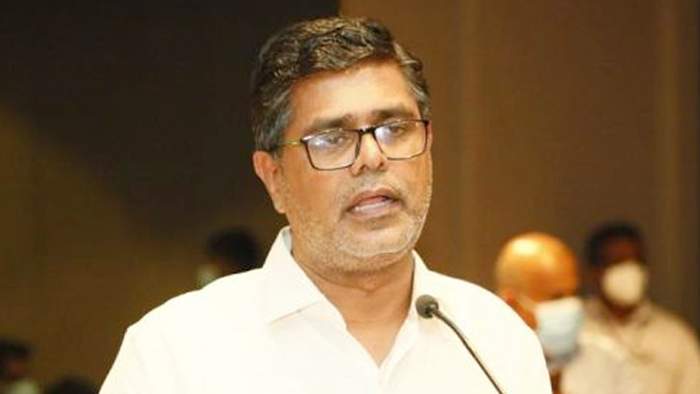
SJB Colombo District MP Mujibur Rahuman in parliament demanded to know from the government the reasons for CEB suspending the leave of all its employees until further notice from Thursday.
MP Rahuman said that the CEB has got an acting General Manager anew and the latter yesterday morning issued a circular suspending leave of all CEB employees with immediate effect until further notice.
“We demand that Minister Kanchana Wijesekera should explain this to the House. This circular was issued while this debate on the new Electricity Amendment Bill was pending. There are many who oppose this Bill. The Minister must tell parliament the reason for the urge to cancel the leave of CEB employees,” the MP said.However, Speaker Mahinda Yapa Abeywardena prevented Minister Wijesekera responding to the query and said that the matter raised by MP Rahuman was not relevant.
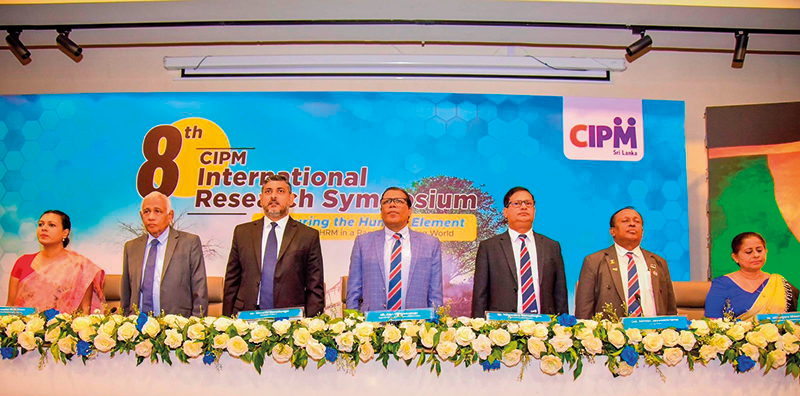
The Chartered Institute of Personnel Management (CIPM) successfully concluded the 8th Annual CIPM Symposium, which took place on 31st May 2024. Themed “Nurturing the Human Element—Redefining HRM in a Rapidly Changing World,” the symposium underscored the pivotal role of human resource management (HRM) in today’s dynamic global landscape. Since its inception in 1959, CIPM has been dedicated to advancing the HR profession through education, professional development, and advocacy, solidifying its position as Sri Lanka’s leading professional body for HRM.
Ken Vijayakumar, the President of the CIPM, graced the occasion as the chief guest. The symposium commenced with the welcome address by the Chairperson, Prof. Arosha Adikaram, followed by the Web Launch of the Symposium Proceedings and Abstract Book by the CIPM President. The event featured distinguished addresses, including a speech by Chief Guest Ken Vijayakumar, President of CIPM, and an address by Guest of Honor Shakthi Ranatunga, Chief Operating Officer of MAS Holdings Pvt. Ltd., Sri Lanka.
The symposium also featured an inspiring keynote address by Prof. Mario Fernando, Professor of Management and Director of the Centre for Cross Cultural Management (CCCM) at the University of Wollongong, Australia.
Vote of Thanks of the inauguration session was delivered by Dr. Dillanjani Weeratunga, Symposium Co-chair.
The symposium served as a comprehensive platform for researchers to present their findings across a wide range of critical topics in HRM. These included Cultural Diversity and Inclusion, Talent Development and Retention, Ethical Leadership and Corporate Social Responsibility, Adapting to Technological Advancements, Mental Health and Well-being at Work, Global Workforce Challenges, Employee Empowerment, and Reskilling and Upskilling.
The plenary session was led by Prof. Wasantha Rajapakse. Certificates were awarded to the best paper presenters during the valedictory session, followed by a vote of thanks delivered by Kamani Perera, Manager of Research and Development.
The annual symposium of CIPM was a truly inclusive event, attracting a diverse audience that spanned undergraduates, graduates, working professionals, research scholars and lecturers. This widespread interest highlights the symposium’s significance in the field of HRM, offering a unique opportunity for everyone to network and learn from scholarly brains.The CIPM International Research Symposium was sponsored by Hambantota International Port, Sri Lanka Institute of Information Technology (SLIIT), E B Creasy & Co. PLC, and Print Xcel Company.



US sports envoys to Lanka to champion youth development

Rahuman questions sudden cancellation of leave of CEB employees


