
News
Sri Lanka Rajapaksa clan presses for imperial presidency

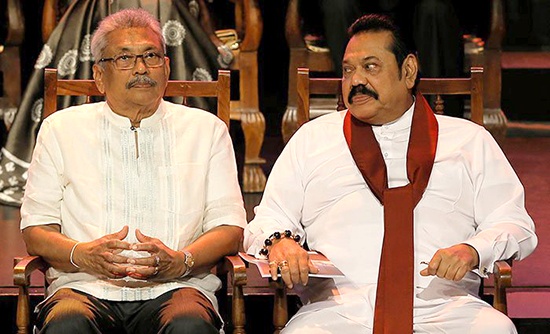
Constitutional amendment includes free hand to appoint justices and police chiefs
MARWAAN MACAN-MARKAR,
Asia regional correspondent
COLOMBO —
Sri Lanka’s political pendulum is swinging toward a strong, centralized state in the grip of an executive president with sweeping authoritarian powers, fulfilling a goal of the Rajapaksas, the South Asian nation’s most influential political clan.
The government of the ruling Rajapaksa siblings — President Gotabaya Rajapaksa and Prime Minister Mahinda Rajapaksa — has now set the stage for an imperial presidency. It did so by introducing a constitutional amendment in parliament, where the Sri Lanka Podujana Peramuna, the brothers’ political vehicle, enjoys an invincible majority.
The amendment, which would be the 20th, seeks to enshrine absolute presidential powers, complete with legal immunity for the hawkish Gotabaya, the younger of the two, during his term in office. The change would also free Gotabaya of existing parliamentary checks on executive authority and reduce the role of the prime minister to that of a rubber stamp for presidential decisions.
Other clauses would give the executive president a free hand to appoint the chief justice and judges of the Supreme Court and other high courts; he would also choose the police chief.
In addition, the amendment paves the way for a Sri Lankan who has dual nationality to be a parliamentarian. This would enable Basil Rajapaksa, another sibling and U.S. national, to become a lawmaker and a minister in the Rajapaksa administration.
Rajapaksa allies argue that an all-powerful executive echoes the political mood in the country, where the brothers have tapped into an ultranationalist, majoritarian sentiment to win two decisive electoral victories, in November’s presidential balloting and in August parliamentary elections.
The SLPP won the backing of the Sinhala-Buddhists, the country’s majority ethnic community, with a campaign for a centralized government anchored by a strongman president to succeed a right-of-center administration that was divisive, dysfunctional and prone to backstabbing to settle political scores.
“The people have given [Gotabaya] a huge mandate, and after that are we to clip his wings so that he can’t do the job?” asked Gamini Lakshman Peiris, education minister and head of the ruling SLPP. “Is it right that we do not empower the president as that is what the people wanted?”
Peiris was asking his rhetorical questions last week during a news conference.
His jabs came ahead of a Supreme Court session that will hear 39 petitions filed by opponents of the 20th amendment. Since the nation’s legislative and judicial systems do not accept any court challenges on laws passed by parliament, most of the petitioners — ranging from opposition lawmakers to political activists — are rushing to push the justices to rule that the amendment needs to be approved by a national referendum, in addition to it needing to win a two-thirds majority in the 225-member parliament.
Lawyers expect the judges to examine the amendment’s potential to undermine entrenched clauses in the constitution that protect the sovereignty of the people. “The problem with the 20th amendment,” said Sudarshana Gunawardena, a Sri Lankan human rights lawyer, “is that certain clauses give the president powers, such as when to dissolve the parliament, that will affect the people’s sovereignty. The court may also take note of the concerns expressed by a group of retired judges and the Bar Association [of Sri Lanka] about the amendment because they are knowledgeable about constitutional matters.”
History favors the Rajapaksas. Previous amendments to the 1978 constitution have not been subject to a national referendum. Parliament’s makeup also favors the brothers, whose political juggernaut has given the SLPP 145 seats. The party is confident of attracting five more votes from smaller parties to meet the two-thirds threshold.
Sri Lankans have had a taste of Rajapaksa political dominance before, during elder-brother Mahinda’s nearly 10-year presidency, which ended with his shock defeat in January 2015. That decade was marked by an authoritarian character and by the brothers presiding over an administration that saw government troops defeat the Tamil Tiger separatist, ending a nearly 30-year ethnic war. The tough-talking Gotabaya served as Mahinda’s defense secretary during the term.
The proposed amendment has generated a heated debate in the mainstream media, led by liberal and progressive-minded academics, legal experts and civil society activists. They have expressed alarm at the country regressing 40 years, to a period that gave Sri Lankans their first taste of the 1978 charter — a blueprint for an elected autocrat written by Sri Lanka’s first executive president, Junius Richard Jayewardene.
“It appears that the framework of 20A has sought inspirations from wrong constitutional models, at home and abroad, that are devoid of any democratic normative content,” wrote Jayadeva Uyangoda, a former professor of political science at the Colombo University. “The lessons that seem to have been learned are all partisan, narrow-minded, politically shortsighted, and therefore, wrong ones.”
In taking this route, the Rajapaksas are expected to face questions from India over the 13th amendment, which New Delhi shaped during the early stages of the Tamil separatist struggle. That amendment secured devolution of power and established provincial councils, enabling the Tamils, Sri Lanka’s largest minority who live in the north and eastern provinces, to elect regional leaders.
“By further entrenching powers in the executive president, 20A undermines democracy in a major way, and by omission or commission it will undermine 13A,” said Ahilan Kadirgamar, a senior sociology lecturer at Jaffna University in northern Sri Lanka. “Minorities already took a stand about their concerns of rising authoritarianism by their massive number of votes against the president at the November elections.”
The constitutional tinkering comes as the Rajapaksa administration struggles to breathe life into the anemic economy it inherited. On Monday, Moody’s Investors Service made the Rajapaksas’ job more difficult by downgrading Sri Lanka’s ratings two notches, to Caa1, from B2. The global ratings agency pointed to wide budget deficits and external pressures from ballooning foreign debts.
Moody’s already considered Sri Lanakan government debt speculative and high risk before the downgrade.
The $88 billion economy, drained of income by the pandemic, is expected to shrink by 0.5% this year after growing 2.3% in 2019, its worst showing in nearly two decades. Sri Lanka’s foreign debt is $55 billion. “Combined with slower nominal GDP growth and a weaker exchange rate, the government’s debt burden will rise to around 100% of GDP, above the Caa-rated media of 86% of GDP,” Moody’s wrote.
The Rajapaksas’ allies argue that turning around the economy requires a strong president. “Foreign investors ask us if Sri Lanka has a 10-year plan and if it can guarantee 10 years of political stability and policy consistency,” Anura Fernando, general secretary of Viyathmaga, a network of professionals shaping Gotabaya’s policies, told Nikkei Asia. “We need one strong person making executive decisions as a way to build confidence and make Sri Lanka attractive for foreign investors.”
Local businesses share a similar sentiment in the wake of the “chaos and policy inconsistency” of the previous government. “A strong president and policy stability has worked thrice before after the ‘78 constitution,” said a well-connected business insider. “Those years we saw steady growth and foreign capital flowed in. It does where there is stability and opportunity. … That is a fact.”
Gotabaya is not waiting for the amendment. Frustrated by bureaucratic red tape that has come in the way of his plans for efficiency, he launched a broadside against officials who refused to act on his orders.
“President Gotabaya Rajapaksa has directed the officials to treat all verbal orders issued for the common good of the people as circulars to be implemented,” the president’s office said in a statement. “Those who neglect this will face stern action.” (Nikkei Asia)



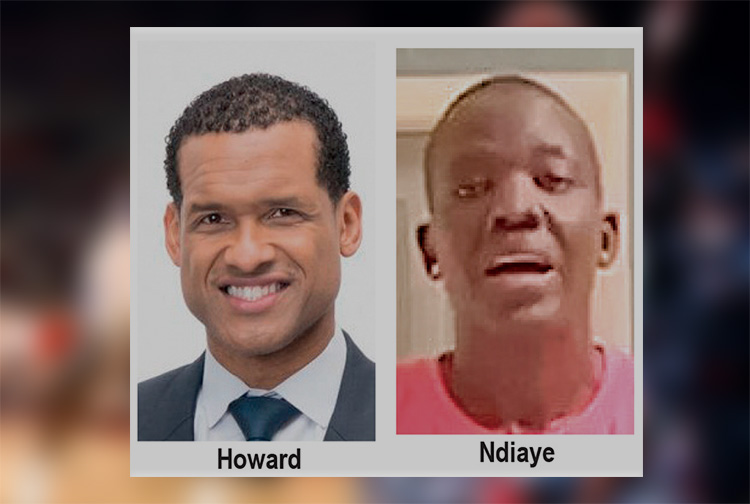
The U.S. Embassy in Colombo welcomed the U.S. Sports Envoys to Sri Lanka, former National Basketball Association (NBA) and Women’s National Basketball Association (WNBA) players Stephen Howard and Astou Ndiaye, from June 8 through 14.
The Public Diplomacy section of the U.S. Embassy said that it would launch a weeklong basketball program intended to harness the unifying power of sports, made possible through collaboration with Foundation of Goodness and IImpact Hoop Lab.
While in Sri Lanka, Howard and Ndiaye, both retired professional basketball players, will conduct a weeklong program, Hoops for Hope: Bridging Borders through Basketball. The Sports Envoys will lead basketball clinics and exhibition matches and engage in leadership sessions in Colombo and Southern Province for youth aged 14-18 from Northern, Uva, Eastern and Western Provinces, offering skills and leadership training both on and off the court. The U.S. Envoys will also share their expertise with the Sri Lanka Basketball Federation, national coaches, and players, furthering the development of basketball in the country. Beyond the clinics, they will collaborate with Sri Lankan schoolchildren to take part in a community service project in the Colombo area.
“We are so proud to welcome Stephen and Astou as our Sports Envoys to Sri Lanka, to build on the strong people-to-people connections between the United States and Sri Lanka,” said U.S. Ambassador Julie Chung. “The lessons that will be shared by our Sports Envoys – communication, teamwork, resilience, inclusion, and conflict resolution – are essential for leadership development, community building, equality, and peace. The U.S. Sports Envoy program is a testament to our belief that sports can be a powerful tool in promoting peace and unity.”
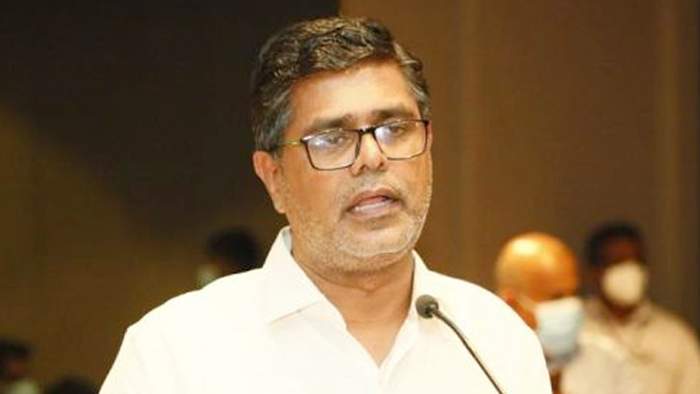
SJB Colombo District MP Mujibur Rahuman in parliament demanded to know from the government the reasons for CEB suspending the leave of all its employees until further notice from Thursday.
MP Rahuman said that the CEB has got an acting General Manager anew and the latter yesterday morning issued a circular suspending leave of all CEB employees with immediate effect until further notice.
“We demand that Minister Kanchana Wijesekera should explain this to the House. This circular was issued while this debate on the new Electricity Amendment Bill was pending. There are many who oppose this Bill. The Minister must tell parliament the reason for the urge to cancel the leave of CEB employees,” the MP said.However, Speaker Mahinda Yapa Abeywardena prevented Minister Wijesekera responding to the query and said that the matter raised by MP Rahuman was not relevant.
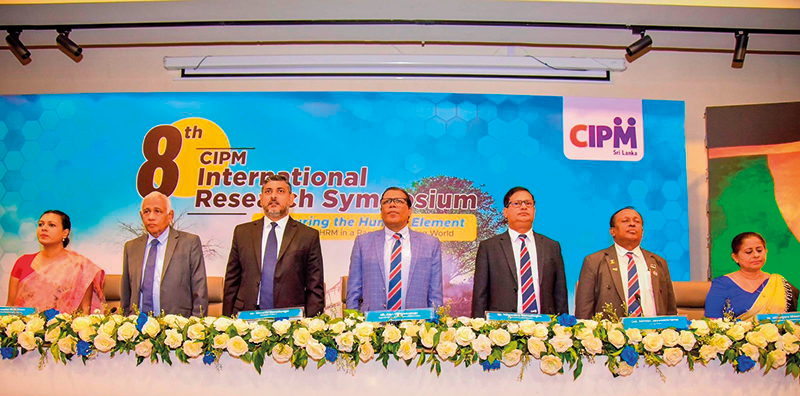
The Chartered Institute of Personnel Management (CIPM) successfully concluded the 8th Annual CIPM Symposium, which took place on 31st May 2024. Themed “Nurturing the Human Element—Redefining HRM in a Rapidly Changing World,” the symposium underscored the pivotal role of human resource management (HRM) in today’s dynamic global landscape. Since its inception in 1959, CIPM has been dedicated to advancing the HR profession through education, professional development, and advocacy, solidifying its position as Sri Lanka’s leading professional body for HRM.
Ken Vijayakumar, the President of the CIPM, graced the occasion as the chief guest. The symposium commenced with the welcome address by the Chairperson, Prof. Arosha Adikaram, followed by the Web Launch of the Symposium Proceedings and Abstract Book by the CIPM President. The event featured distinguished addresses, including a speech by Chief Guest Ken Vijayakumar, President of CIPM, and an address by Guest of Honor Shakthi Ranatunga, Chief Operating Officer of MAS Holdings Pvt. Ltd., Sri Lanka.
The symposium also featured an inspiring keynote address by Prof. Mario Fernando, Professor of Management and Director of the Centre for Cross Cultural Management (CCCM) at the University of Wollongong, Australia.
Vote of Thanks of the inauguration session was delivered by Dr. Dillanjani Weeratunga, Symposium Co-chair.
The symposium served as a comprehensive platform for researchers to present their findings across a wide range of critical topics in HRM. These included Cultural Diversity and Inclusion, Talent Development and Retention, Ethical Leadership and Corporate Social Responsibility, Adapting to Technological Advancements, Mental Health and Well-being at Work, Global Workforce Challenges, Employee Empowerment, and Reskilling and Upskilling.
The plenary session was led by Prof. Wasantha Rajapakse. Certificates were awarded to the best paper presenters during the valedictory session, followed by a vote of thanks delivered by Kamani Perera, Manager of Research and Development.
The annual symposium of CIPM was a truly inclusive event, attracting a diverse audience that spanned undergraduates, graduates, working professionals, research scholars and lecturers. This widespread interest highlights the symposium’s significance in the field of HRM, offering a unique opportunity for everyone to network and learn from scholarly brains.The CIPM International Research Symposium was sponsored by Hambantota International Port, Sri Lanka Institute of Information Technology (SLIIT), E B Creasy & Co. PLC, and Print Xcel Company.



US sports envoys to Lanka to champion youth development

Rahuman questions sudden cancellation of leave of CEB employees


