
News
Sri Lanka is in crisis – and so are its scientists

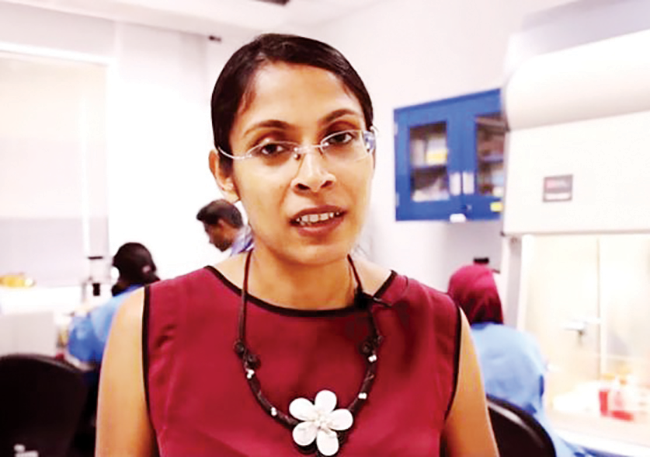
Immunologist Neelika Malavige’s study of a massive dengue-fever outbreak is being hampered by fuel shortages and power cuts, says a report by the Nature journal. It said: Sri Lanka is in a state of crisis. With the country in vast amounts of debt and inflation sky-high, the government doesn’t have enough money to import fuel, exacerbating food shortages. Last weekend, protesters marched into the official residence of President Gotabaya Rajapaksa, demanding his immediate resignation. He has since fled the country.
More than six million Sri Lankans — three in every ten households — don’t know where to get their next meal, according to the World Food Programme. And after wave after wave of COVID-19, Sri Lanka is now experiencing a massive outbreak of dengue fever.Neelika Malavige is an immunologist at the University of Sri Jayewardenepura in Colombo who has studied dengue for more than a decade. She spoke to Nature about the situation in Sri Lanka and how it is affecting her work.
Asked to explain the prevailing situation in Sri Lanka at the moment, Prof Malavige said: Sri Lanka does not have sufficient foreign reserves to import fuel, which has affected every sector. Schools are closed indefinitely. The government has declared Fridays a holiday for all public institutions except essential services. Patients can’t get to hospitals and neither can doctors, nurses and other medical staff. On top of that, we are running out of essential medicines and have daily power outages of more than three hours.
There is also not enough food, partly driven by the government’s decision in May 2021 to impose a nationwide ban on chemical fertilizers, which drastically cut agricultural production and drove up the price of staple foods such as rice and vegetables. Fishing boats don’t have diesel or kerosene to catch fish, an important source of protein. Inflation exceeds 50%, pushing many people into a situation where they can’t afford to eat three meals a day.
We also have close to 41,000 confirmed cases of dengue this year, which exceeds the number we had in the whole of last year.Most people with dengue have mild disease, but some 15% of people who arrive at hospitals go on to develop dengue haemorrhagic fever, which causes severe bleeding and can be fatal. There is no way to predict in the early stages of an infection whether someone will develop severe dengue, which means that people have to visit the hospital daily for blood tests and monitoring to pick up the signs as early as possible. That’s a huge strain on the health-care system.
We are trying to identify biomarkers that can help determine if someone will go on to develop severe dengue. We are also trying to determine the immune response associated with protection from severe disease, which is still unknown for dengue.In addition, my lab is looking for drugs that can be repurposed to treat dengue — for which there is no safe and effective vaccine — and has completed several clinical trials. We are recruiting and collecting samples for a study with a group in Latin America to compare the epidemiology and pathogenesis of dengue in the two regions. At the same time, we are trying to sequence and isolate the dengue virus to understand what is driving the current outbreak.
Prof Malavige said that her work has been affected by the prevailing crisis. “There are a lot of things we are not doing that we could have done last year. Recruiting participants and collecting samples from the hospital, which is 16 kilometres from our lab, is especially difficult right now because of the lack of fuel. A lot of people have started cycling, including myself, but cycling between 8 a.m. and 4 p.m. in temperatures above 33 °C, with 80–90% humidity, under the scorching Sun, is a nightmare.
The power cuts and lack of fuel for back-up electricity generators mean that we cannot use equipment such as our Illumina genomic-sequencing machine, which needs to run continuously for at least 24 hours. Instead, we rely on nanopore sequencing, which can run on a powerful battery. Nanopore sequencing is easier and cheaper and gives better coverage, but has slightly lower accuracy rates. Last week, we managed to sequence a few samples of SARS-CoV-2, because cases have slowly started to rise this month.
Due to the foreign-reserve crisis, we cannot buy reagents for some of our dengue experiments, so we are freezing many samples for when we can get the reagents. But in March, we had power cuts lasting for up to 13 hours, so we lost samples stored in some of our freezers.Some procedures, such as flow cytometry, have to be done on fresh samples, so we have to work around the planned power cuts and restricted opening hours at the university to conduct those experiments. It’s very challenging. I spend most of my time troubleshooting.
The inflation has driven up the price of many essential lab items. For example, a bottle of the cell-culture medium we use was 4,000 Sri Lankan rupees (US$11 at current conversion rates) in 2021, and is now 36,000 rupees. I’m still just scratching my head trying to figure out how to solve this problem. Can we get the medium at a cheaper rate from manufacturers in China? Immune cells are very sensitive, so they might not grow as well in the new medium.Our staff are also severely affected by the rising food prices. An egg now costs 50 rupees, up from 17 in 2020. The price of rice, lentils and coconut oil has also shot up. My research assistants and PhD students are really struggling to make ends meet.






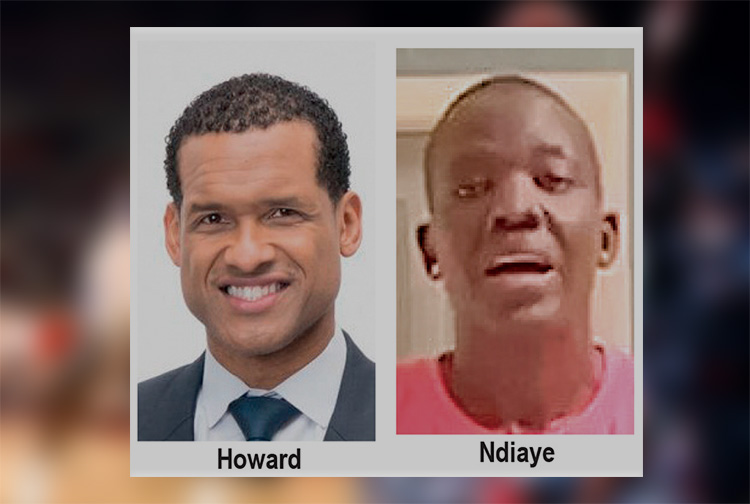
The U.S. Embassy in Colombo welcomed the U.S. Sports Envoys to Sri Lanka, former National Basketball Association (NBA) and Women’s National Basketball Association (WNBA) players Stephen Howard and Astou Ndiaye, from June 8 through 14.
The Public Diplomacy section of the U.S. Embassy said that it would launch a weeklong basketball program intended to harness the unifying power of sports, made possible through collaboration with Foundation of Goodness and IImpact Hoop Lab.
While in Sri Lanka, Howard and Ndiaye, both retired professional basketball players, will conduct a weeklong program, Hoops for Hope: Bridging Borders through Basketball. The Sports Envoys will lead basketball clinics and exhibition matches and engage in leadership sessions in Colombo and Southern Province for youth aged 14-18 from Northern, Uva, Eastern and Western Provinces, offering skills and leadership training both on and off the court. The U.S. Envoys will also share their expertise with the Sri Lanka Basketball Federation, national coaches, and players, furthering the development of basketball in the country. Beyond the clinics, they will collaborate with Sri Lankan schoolchildren to take part in a community service project in the Colombo area.
“We are so proud to welcome Stephen and Astou as our Sports Envoys to Sri Lanka, to build on the strong people-to-people connections between the United States and Sri Lanka,” said U.S. Ambassador Julie Chung. “The lessons that will be shared by our Sports Envoys – communication, teamwork, resilience, inclusion, and conflict resolution – are essential for leadership development, community building, equality, and peace. The U.S. Sports Envoy program is a testament to our belief that sports can be a powerful tool in promoting peace and unity.”
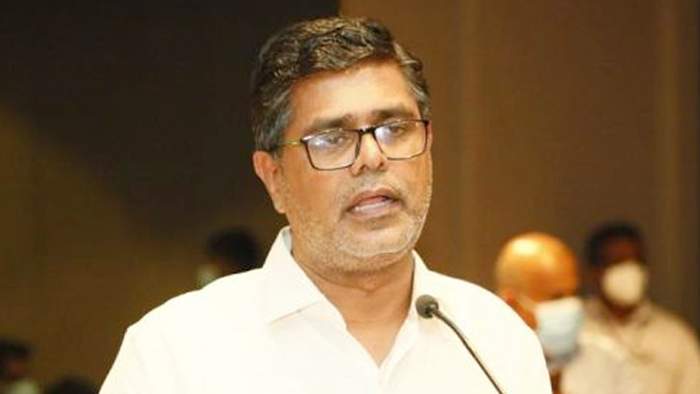
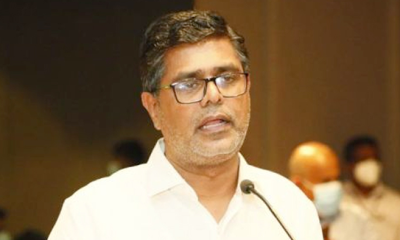
SJB Colombo District MP Mujibur Rahuman in parliament demanded to know from the government the reasons for CEB suspending the leave of all its employees until further notice from Thursday.
MP Rahuman said that the CEB has got an acting General Manager anew and the latter yesterday morning issued a circular suspending leave of all CEB employees with immediate effect until further notice.
“We demand that Minister Kanchana Wijesekera should explain this to the House. This circular was issued while this debate on the new Electricity Amendment Bill was pending. There are many who oppose this Bill. The Minister must tell parliament the reason for the urge to cancel the leave of CEB employees,” the MP said.However, Speaker Mahinda Yapa Abeywardena prevented Minister Wijesekera responding to the query and said that the matter raised by MP Rahuman was not relevant.
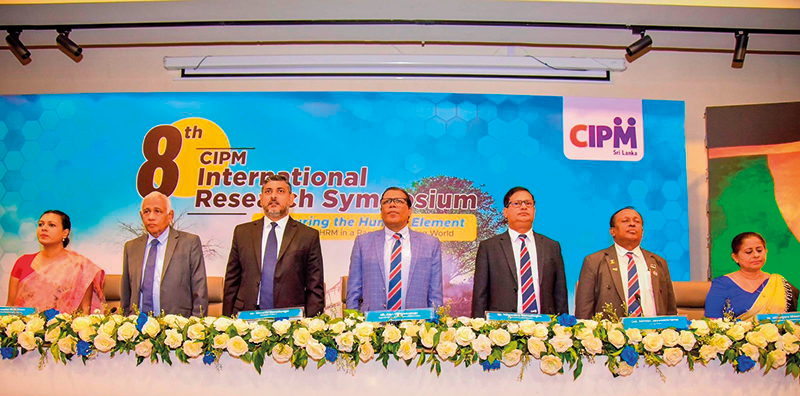
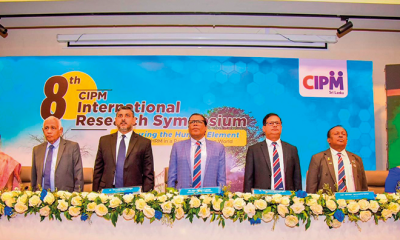
The Chartered Institute of Personnel Management (CIPM) successfully concluded the 8th Annual CIPM Symposium, which took place on 31st May 2024. Themed “Nurturing the Human Element—Redefining HRM in a Rapidly Changing World,” the symposium underscored the pivotal role of human resource management (HRM) in today’s dynamic global landscape. Since its inception in 1959, CIPM has been dedicated to advancing the HR profession through education, professional development, and advocacy, solidifying its position as Sri Lanka’s leading professional body for HRM.
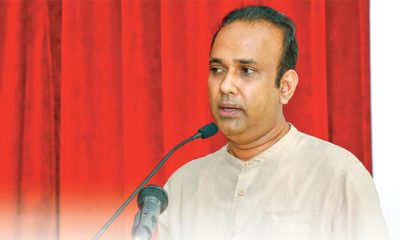
Ken Vijayakumar, the President of the CIPM, graced the occasion as the chief guest. The symposium commenced with the welcome address by the Chairperson, Prof. Arosha Adikaram, followed by the Web Launch of the Symposium Proceedings and Abstract Book by the CIPM President. The event featured distinguished addresses, including a speech by Chief Guest Ken Vijayakumar, President of CIPM, and an address by Guest of Honor Shakthi Ranatunga, Chief Operating Officer of MAS Holdings Pvt. Ltd., Sri Lanka.
The symposium also featured an inspiring keynote address by Prof. Mario Fernando, Professor of Management and Director of the Centre for Cross Cultural Management (CCCM) at the University of Wollongong, Australia.
Vote of Thanks of the inauguration session was delivered by Dr. Dillanjani Weeratunga, Symposium Co-chair.
The symposium served as a comprehensive platform for researchers to present their findings across a wide range of critical topics in HRM. These included Cultural Diversity and Inclusion, Talent Development and Retention, Ethical Leadership and Corporate Social Responsibility, Adapting to Technological Advancements, Mental Health and Well-being at Work, Global Workforce Challenges, Employee Empowerment, and Reskilling and Upskilling.
The plenary session was led by Prof. Wasantha Rajapakse. Certificates were awarded to the best paper presenters during the valedictory session, followed by a vote of thanks delivered by Kamani Perera, Manager of Research and Development.
The annual symposium of CIPM was a truly inclusive event, attracting a diverse audience that spanned undergraduates, graduates, working professionals, research scholars and lecturers. This widespread interest highlights the symposium’s significance in the field of HRM, offering a unique opportunity for everyone to network and learn from scholarly brains.The CIPM International Research Symposium was sponsored by Hambantota International Port, Sri Lanka Institute of Information Technology (SLIIT), E B Creasy & Co. PLC, and Print Xcel Company.



US sports envoys to Lanka to champion youth development

Rahuman questions sudden cancellation of leave of CEB employees


