
News
SJU first University in South Asia to report its greenhouse gas emissions

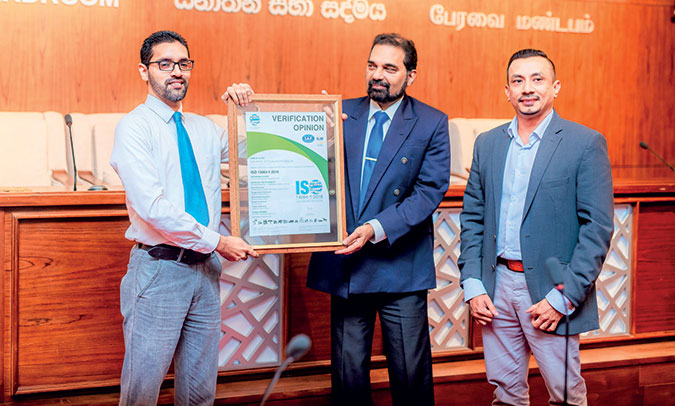
The University of Sri Jayewardenepura has become the first university in South Asia to report its greenhouse gas emissions in accordance with the ISO 14064-1:2018 standard. The official Awarding Ceremony of the ISO 14064-1:2018 certificate took place on Thursday at the Senate Boardroom of the University. The Jayewardenepura University has in a media statement said that it is committed to the environmental well-being of the country and has implemented the “Carbon Neutral Project” led by the Centre for Sustainability (CFS) of the Department of Forestry and Environmental Sciences. The project aims to make USJ the first carbon neutral university in South Asia.
Steps to achieve this goal include calculating the University’s carbon footprint. Calculating and comparing the carbon footprint yearly allows USJ to understand and monitor its individual contribution to global warming and employ strategies to reduce the GHG emissions. Further, to simply calculating the carbon footprint, USJ has now voluntarily disclosed greenhouse gas emissions from 2019 and had them verified in accordance with ISO 14064-3: 2019. The University is now proud to report that the requirements for ISO 14064 -1: 2018 have been successfully met with regards to GHG emissions for the academic year of 2019. A huge achievement on the road to neutrality and combined with multiple other CFS projects brings USJ ever closer to insetting all of its emissions.
The CFS is at the forefront of carbon neutrality study and strategy amongst the academic community of Sri Lanka and has created a systematic plan, based on research findings, to compensate for the University’s GHG emissions, CFS Director, Prof. Priyan Perera, said.Prof. Perera said achieving accurate carbon footprint reporting in an institution of this magnitude is no easy task and requires the contribution and cooperation of all the departments and divisions on campus. He said that the University was to utilise our centralized web-based portal to assist all departments in reporting their individual emissions.
“Spreading awareness about carbon reporting, through training sessions and workshops is, and will remain, a key component of present and future initiatives to reduce our overall climate impact,” he said.
The ISO 14064-1 Certification to the University of Sri Jayewardenepura was awarded by The Sustainable Future Group (SFG), an ISO 14065 accredited body by the International Accreditation Forum (IAF) through the Sri Lanka Accreditation Board (SLAB). SFG is the only sustainability verification and certification body that is accredited to verify and validate Organisational-, Project-, and Product-level GHG emissions inventories under ISO 14064-1 & 2 and ISO 14067.
Under the scrutiny of ‘‘The Sustainable Future Group’ direct and indirect GHG emissions were calculated and verified as 3,838.56 tonnes of CO2e. Direct emissions include sources such as fuel consumption for university-owned vehicles, on-site fuel for generators, and laboratory emissions. Indirect emissions refer to purchased electricity for use in lecture halls, administrative buildings, canteens and other on campus buildings. With this information in hand, the CFS can now start to use its various environmental sustainability projects to attempt to neutralize these emissions.
Reforestation projects represent a vital component of the strategy which proposes to compensate GHG emissions through ‘insetting’. Carbon insetting is the process of balancing one’s carbon emissions via projects that protect existing carbon sinks or create new ones, typically in the form of forests, grasslands or wetlands. The University of Sri Jayewardenepura, through the CFS, now boasts three major carbon sinks including; 145 ha of lowland tropical rainforest at the Yagirala Forest Reserve, 400 ha of dry mixed evergreen forest in Wanniyagamma and 7 ha of mangrove forest and agroforestry land in Ittapana. Reforestation has repeatedly been shown to be one of the most effective ways to combat climate change and the benefits of forest restoration go far beyond carbon sequestration. Forests provide essential ecosystem services to communities around the world in the form of hydrological regulation, biodiversity safe havens and non-timber forest products. Combined with other strategies to reduce GHG emissions on campus such as using alternative energy sources, the expansion of solar power systems and improved waste management and water treatment facilities, the reforestation projects managed by the CFS will make a huge contribution to carbon neutrality.



The U.S. Embassy in Colombo welcomed the U.S. Sports Envoys to Sri Lanka, former National Basketball Association (NBA) and Women’s National Basketball Association (WNBA) players Stephen Howard and Astou Ndiaye, from June 8 through 14.
The Public Diplomacy section of the U.S. Embassy said that it would launch a weeklong basketball program intended to harness the unifying power of sports, made possible through collaboration with Foundation of Goodness and IImpact Hoop Lab.
While in Sri Lanka, Howard and Ndiaye, both retired professional basketball players, will conduct a weeklong program, Hoops for Hope: Bridging Borders through Basketball. The Sports Envoys will lead basketball clinics and exhibition matches and engage in leadership sessions in Colombo and Southern Province for youth aged 14-18 from Northern, Uva, Eastern and Western Provinces, offering skills and leadership training both on and off the court. The U.S. Envoys will also share their expertise with the Sri Lanka Basketball Federation, national coaches, and players, furthering the development of basketball in the country. Beyond the clinics, they will collaborate with Sri Lankan schoolchildren to take part in a community service project in the Colombo area.
“We are so proud to welcome Stephen and Astou as our Sports Envoys to Sri Lanka, to build on the strong people-to-people connections between the United States and Sri Lanka,” said U.S. Ambassador Julie Chung. “The lessons that will be shared by our Sports Envoys – communication, teamwork, resilience, inclusion, and conflict resolution – are essential for leadership development, community building, equality, and peace. The U.S. Sports Envoy program is a testament to our belief that sports can be a powerful tool in promoting peace and unity.”
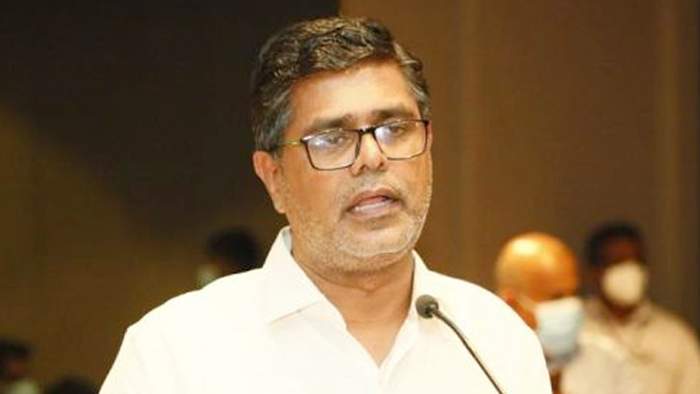
SJB Colombo District MP Mujibur Rahuman in parliament demanded to know from the government the reasons for CEB suspending the leave of all its employees until further notice from Thursday.
MP Rahuman said that the CEB has got an acting General Manager anew and the latter yesterday morning issued a circular suspending leave of all CEB employees with immediate effect until further notice.
“We demand that Minister Kanchana Wijesekera should explain this to the House. This circular was issued while this debate on the new Electricity Amendment Bill was pending. There are many who oppose this Bill. The Minister must tell parliament the reason for the urge to cancel the leave of CEB employees,” the MP said.However, Speaker Mahinda Yapa Abeywardena prevented Minister Wijesekera responding to the query and said that the matter raised by MP Rahuman was not relevant.
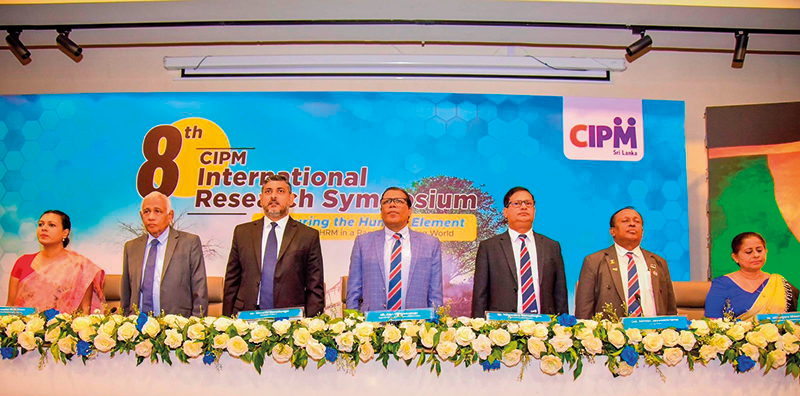
The Chartered Institute of Personnel Management (CIPM) successfully concluded the 8th Annual CIPM Symposium, which took place on 31st May 2024. Themed “Nurturing the Human Element—Redefining HRM in a Rapidly Changing World,” the symposium underscored the pivotal role of human resource management (HRM) in today’s dynamic global landscape. Since its inception in 1959, CIPM has been dedicated to advancing the HR profession through education, professional development, and advocacy, solidifying its position as Sri Lanka’s leading professional body for HRM.
Ken Vijayakumar, the President of the CIPM, graced the occasion as the chief guest. The symposium commenced with the welcome address by the Chairperson, Prof. Arosha Adikaram, followed by the Web Launch of the Symposium Proceedings and Abstract Book by the CIPM President. The event featured distinguished addresses, including a speech by Chief Guest Ken Vijayakumar, President of CIPM, and an address by Guest of Honor Shakthi Ranatunga, Chief Operating Officer of MAS Holdings Pvt. Ltd., Sri Lanka.
The symposium also featured an inspiring keynote address by Prof. Mario Fernando, Professor of Management and Director of the Centre for Cross Cultural Management (CCCM) at the University of Wollongong, Australia.
Vote of Thanks of the inauguration session was delivered by Dr. Dillanjani Weeratunga, Symposium Co-chair.
The symposium served as a comprehensive platform for researchers to present their findings across a wide range of critical topics in HRM. These included Cultural Diversity and Inclusion, Talent Development and Retention, Ethical Leadership and Corporate Social Responsibility, Adapting to Technological Advancements, Mental Health and Well-being at Work, Global Workforce Challenges, Employee Empowerment, and Reskilling and Upskilling.
The plenary session was led by Prof. Wasantha Rajapakse. Certificates were awarded to the best paper presenters during the valedictory session, followed by a vote of thanks delivered by Kamani Perera, Manager of Research and Development.
The annual symposium of CIPM was a truly inclusive event, attracting a diverse audience that spanned undergraduates, graduates, working professionals, research scholars and lecturers. This widespread interest highlights the symposium’s significance in the field of HRM, offering a unique opportunity for everyone to network and learn from scholarly brains.The CIPM International Research Symposium was sponsored by Hambantota International Port, Sri Lanka Institute of Information Technology (SLIIT), E B Creasy & Co. PLC, and Print Xcel Company.



US sports envoys to Lanka to champion youth development

Rahuman questions sudden cancellation of leave of CEB employees


