
News
Senior UNPer Amaratunga says party did not deserve to be defeated

by Zacki Jabbar
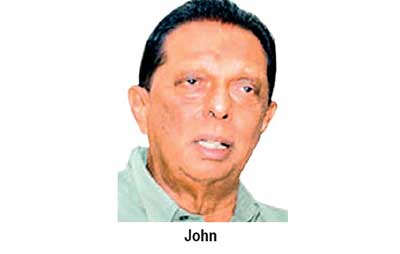
The UNP was a national party with sound policies and through the historic 19th Amendment to the Constitution strengthened democracy in the country, but was defeated in last week’s General Election, mainly because it had shun propogating racism as a means of capturing power, says senior UNPer and former Minister John Amaratunga.
Asked to analyse the UNP’s shocking electoral performance, Amaratunga said that the UNP did not deserve to be defeated in such a manner, considering the extent of work it had done whilst in government between 2015 and March this year, despite droughts, floods and the negative impact on the economy resulting from the April 2019 Easter Sunday suicide bomb explosions by the National Thowheed Jamaat, which had publicly enunciated its policies since 2005.
“Those who defected from the United National Party (UNP) to contest on the Samagi Jana Balawegaya (SJB) ticket, benefitted from the work, we as a UNP government led by Ranil Wickremesinghe did between 2015 and 2019, but the current UNP leadership was left with unfairly taking the blame for not preventing the Easter explosions, when the person who had the power to stop it, slept on the intelligence warnings received well in advance “, he noted, pointing out that the people had been provided substantial relief and public servants given a Rs.10,000 salary increase, despite having to repay the massive high interest commercial dollar loans that President Mahinda Rajapaksa had obtained between 2010 and 2014 – the majority of which were pumped into ego boosting projects that had turned out to be white elephants.
Amaratunga said that the UNP was a party that represented all races in the country and was identified with the birth of an Independent Sri Lanka. Such a grouping he stressed “cannot and will not unashamedly resort to racism to capture power”.
Asked about reports that among the 744,373 spoilt ballots at the General Election, was a sizeable number of UNP votes, due to UNPers being disappointed with the split in the party and not wanting to support either faction as a mark of protest, the seasoned politician said “Yes, that’s possible.”
Asked if the UNP would now opt for a new leader, Amaratunga said that Ranil Wickremesinghe was not keen on hanging on, but to desert the party at the present juncture would also not be advisable. “The future lies with the youth. So, the process of grooming them has to begin now. For that, the seniors have to remain at least in the short term “, he explained stressing that the UNP and the ” Elephant”, which rose majestically after the 1970 debacle to capture a five-sixth majority, would once again re-emerge as a strong force – as certain as the rising Sun in this transient world of politics.
Ameratunga hoped that the UNP and SJB would leave their insignificant differences aside and unite because their policies were similar and most importantly neither propagated racism as a means of capturing power.
Analysing the SJB’s electoral performance, he said it was cock-a-hoop, but in reality had helped the Podujana Peramuna obtain a two-thirds majority, which could have been prevented, if the SJB headed by Sajith Premadasa, had contested as a UNP-led alliance.
The veteran UNPer pointed out that the party winning the Presidential Election, had always gone on to win the Parliamentary polls that followed. “Sajith knew he cannot become the Prime Minister this time. So the next best thing he should have done was to ensure that the Rajapaksas did not get a majority that would enable them to reverse all the democratic gains achieved through the 19th Amendment to the Constitution. The SJB was meant to be a UNP – led alliance with Sajith as its Prime Ministerial candidate, but he made it his alliance and in the process divided the UNP.”
It was evident at the general election that political parties based on policies were overtaken by political movements, Amaratunga noted, warning that it could lead to an unstable political situation in the years to come.



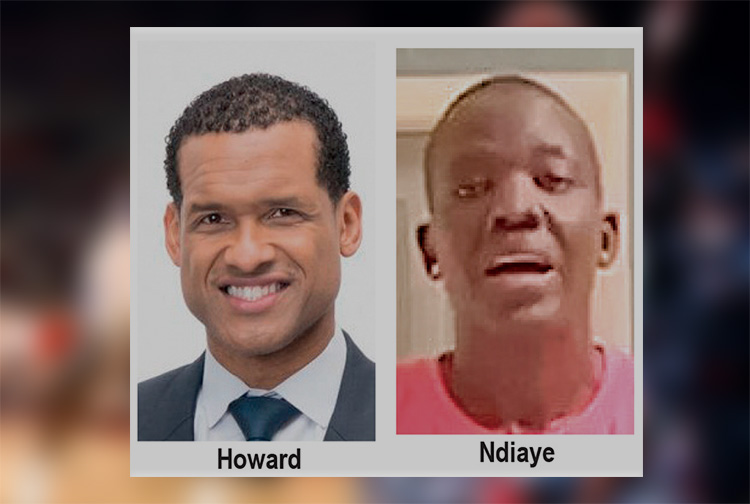
The U.S. Embassy in Colombo welcomed the U.S. Sports Envoys to Sri Lanka, former National Basketball Association (NBA) and Women’s National Basketball Association (WNBA) players Stephen Howard and Astou Ndiaye, from June 8 through 14.
The Public Diplomacy section of the U.S. Embassy said that it would launch a weeklong basketball program intended to harness the unifying power of sports, made possible through collaboration with Foundation of Goodness and IImpact Hoop Lab.
While in Sri Lanka, Howard and Ndiaye, both retired professional basketball players, will conduct a weeklong program, Hoops for Hope: Bridging Borders through Basketball. The Sports Envoys will lead basketball clinics and exhibition matches and engage in leadership sessions in Colombo and Southern Province for youth aged 14-18 from Northern, Uva, Eastern and Western Provinces, offering skills and leadership training both on and off the court. The U.S. Envoys will also share their expertise with the Sri Lanka Basketball Federation, national coaches, and players, furthering the development of basketball in the country. Beyond the clinics, they will collaborate with Sri Lankan schoolchildren to take part in a community service project in the Colombo area.
“We are so proud to welcome Stephen and Astou as our Sports Envoys to Sri Lanka, to build on the strong people-to-people connections between the United States and Sri Lanka,” said U.S. Ambassador Julie Chung. “The lessons that will be shared by our Sports Envoys – communication, teamwork, resilience, inclusion, and conflict resolution – are essential for leadership development, community building, equality, and peace. The U.S. Sports Envoy program is a testament to our belief that sports can be a powerful tool in promoting peace and unity.”
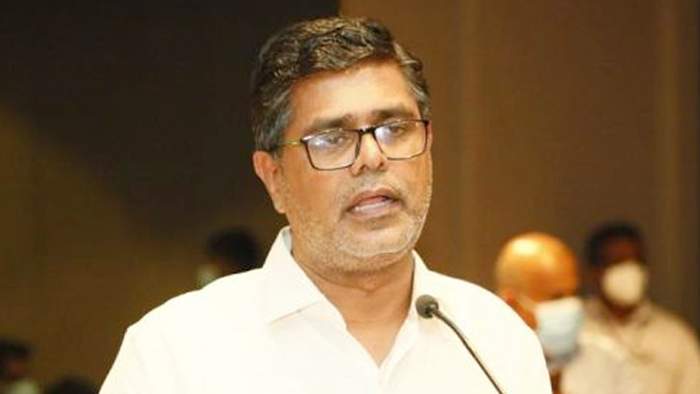
SJB Colombo District MP Mujibur Rahuman in parliament demanded to know from the government the reasons for CEB suspending the leave of all its employees until further notice from Thursday.
MP Rahuman said that the CEB has got an acting General Manager anew and the latter yesterday morning issued a circular suspending leave of all CEB employees with immediate effect until further notice.
“We demand that Minister Kanchana Wijesekera should explain this to the House. This circular was issued while this debate on the new Electricity Amendment Bill was pending. There are many who oppose this Bill. The Minister must tell parliament the reason for the urge to cancel the leave of CEB employees,” the MP said.However, Speaker Mahinda Yapa Abeywardena prevented Minister Wijesekera responding to the query and said that the matter raised by MP Rahuman was not relevant.
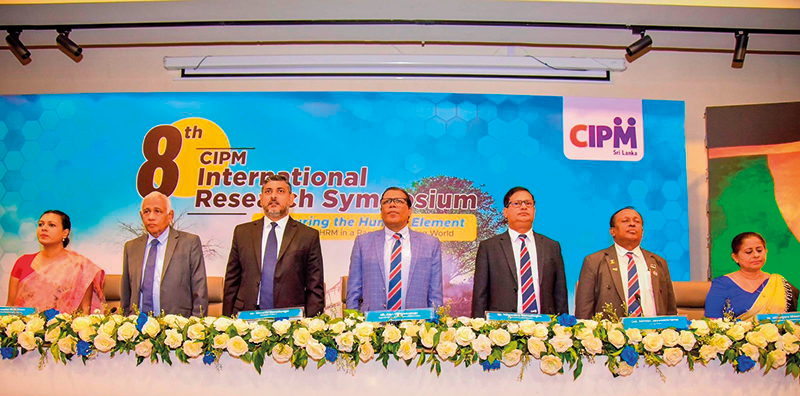
The Chartered Institute of Personnel Management (CIPM) successfully concluded the 8th Annual CIPM Symposium, which took place on 31st May 2024. Themed “Nurturing the Human Element—Redefining HRM in a Rapidly Changing World,” the symposium underscored the pivotal role of human resource management (HRM) in today’s dynamic global landscape. Since its inception in 1959, CIPM has been dedicated to advancing the HR profession through education, professional development, and advocacy, solidifying its position as Sri Lanka’s leading professional body for HRM.
Ken Vijayakumar, the President of the CIPM, graced the occasion as the chief guest. The symposium commenced with the welcome address by the Chairperson, Prof. Arosha Adikaram, followed by the Web Launch of the Symposium Proceedings and Abstract Book by the CIPM President. The event featured distinguished addresses, including a speech by Chief Guest Ken Vijayakumar, President of CIPM, and an address by Guest of Honor Shakthi Ranatunga, Chief Operating Officer of MAS Holdings Pvt. Ltd., Sri Lanka.
The symposium also featured an inspiring keynote address by Prof. Mario Fernando, Professor of Management and Director of the Centre for Cross Cultural Management (CCCM) at the University of Wollongong, Australia.
Vote of Thanks of the inauguration session was delivered by Dr. Dillanjani Weeratunga, Symposium Co-chair.
The symposium served as a comprehensive platform for researchers to present their findings across a wide range of critical topics in HRM. These included Cultural Diversity and Inclusion, Talent Development and Retention, Ethical Leadership and Corporate Social Responsibility, Adapting to Technological Advancements, Mental Health and Well-being at Work, Global Workforce Challenges, Employee Empowerment, and Reskilling and Upskilling.
The plenary session was led by Prof. Wasantha Rajapakse. Certificates were awarded to the best paper presenters during the valedictory session, followed by a vote of thanks delivered by Kamani Perera, Manager of Research and Development.
The annual symposium of CIPM was a truly inclusive event, attracting a diverse audience that spanned undergraduates, graduates, working professionals, research scholars and lecturers. This widespread interest highlights the symposium’s significance in the field of HRM, offering a unique opportunity for everyone to network and learn from scholarly brains.The CIPM International Research Symposium was sponsored by Hambantota International Port, Sri Lanka Institute of Information Technology (SLIIT), E B Creasy & Co. PLC, and Print Xcel Company.



US sports envoys to Lanka to champion youth development

Rahuman questions sudden cancellation of leave of CEB employees


