
News
Restarting economies – Bankers and Telcos must rethink strategies to help Ecommerce


by Kshama Ranawana
The COVID-19 pandemic has facilitated lifestyle changes for most globally, and in this new normal, more consumers are turning to e-Commerce to purchase their daily needs.
Even though shopping online has and will, for the most part, be a trend amongst high and middle-income earners at least in the foreseeable future, the curfews and lockdowns enforced in countries across the globe in the wake of the pandemic, has brought this method of purchasing daily needs, to the notice of almost everyone.
And as online shopping becomes an attractive option for consumers, Dulith Herath, Founder and Chairman of Kapruka.com states that if e-Commerce is to become more sustainable as other businesses move towards on-line trading, governments need to take a more proactive approach to boost infrastructure.
Speaking on the ‘Restart Asian Economies” series hosted by the Friedrich Nauman Foundation for Freedom, (FNF) South Asia office, on “Ideas and Actions for the e-Commerce industry,’ on Monday, November 2nd, Herath listed four areas, which he said were on his wish list, that would give e-Commerce the much-needed support to enhance services.
Herath was joined on the panel by Sonam Chophel, the founder of Druksell in Bhutan to share their experiences and ideas on how COVID-19 impacted their businesses. The session was moderated by Dr Najamul Hossain, Country Representative, FNF Bangladesh.
In Sri Lanka for instance, explained Herath, Telecommunication Companies (Telcos) provide island-wide coverage, yet, if online shopping is to be a more viable option, then Telcos must be more competitive in its data pricing, making it more affordable for all. The government must ensure that telecommunication companies do not look only at their profits, but make pricing a level playing field so more consumers could take advantage of the e-Commerce option.
As well, it is important for bankers to think outside the box. Herath points out that, while bankers are happy to approve a loan for a farmer, owing to their limited knowledge or understanding of e-Commerce, they are more hesitant in supporting these new-wave tech businesses. He proposes that every Bank have on its Board of Directors at least one individual with an understanding of or expertise on e-Commerce.
One of the most interesting points Herath raised was the under-utilisation of the Post Office system. He asks why, a robust set up such as the Post, with a network that reaches all corners of the world, with the infrastructure and the human resources to support it is not transformed to being another FEDEX or UPS? Drawing inspiration from another of his ventures, Grasshoppers.lk, a courier company, Herath claims that all a government needs to do is to put money into that system and restructure it.
For both Herath and Chophel one of the most important aspects of the trade is ensuring that personal data collected from customers remains safe. In countries where privacy laws are either lacking or inadequate, it is up to the company to ensure that practices are in place to ensure customer databases are not shared, and that, says Herath must be enforced from top management down.
Unlike Kapruka, Chophel’s Druksell is a relatively young company and focuses on marketing Bhutanese creations, through partnerships with local artisans. Supporting a niche market, where large scale purchasing and foreign transactions are limited, the Bhutanese companies also encounter more challenges such as strong import regulations and the logistics of last-mile delivery, given the difficult and hilly terrain, one must traverse to get a product to a consumer.
However, even though most still do not understand the concept of e-Commerce, Chophel stated that with curfews and lockdowns, his countrymen realised that shopping online was the best way to obtain their groceries and other daily needs. More than e-Commerce, he pointed out, Bhutanese took to social commerce, using Instagram and Facebook to trade their products. The COVID pandemic, he says saw a spike in the domestic market, as social commerce picked up across the country.
Chophel, who explains that the Bhutanese government is currently drawing up an e-Commerce policy, which is expected to be implemented next year, states that the onus is on the government to put in the right infrastructure and investment and also take the lead in promoting better regional ties at both micro and macro level.
While Chophel finds selling within ASEAN easier than in SAARC countries, he emphasises, that it is time governments re-visited trade agreements and introduced reforms that would promote cross-border trading. Current regulations in countries within the region, he points out are restrictive and discourages e-Commerce entrepreneurs.
But Herath does not see much of a market within the region, which he points out, has the same products to offer, be in garments or tea. Instead, he has found a demand for Sri Lankan products in developed nations. When he found out that local teas were available in popular supermarkets in developed countries, but were not available on Amazon or eBay, Herath had shipped a small consignment of a well-known brand to the US, and had sold it on-line within three months. That was three years ago, and Kapruka is now the e-Commerce seller of local products overseas, with two warehouses in the US and netting in about a half a million dollars, last month, he said.
In Bhutan, though micro-businesses benefitted by pandemic induced closures, with customers reaching out more to this method of obtaining groceries etc., it is still too early to predict whether e-Commerce is the preferred option for consumers, explained Chopel.
Kapruka had a similar experience according to Herath, who stated that when the lockdown was imposed in early March this year, their daily orders which ranged from 5000 to 8000 a day, had suddenly spiked to 80,000. Despite limitations such as human resources and supply chain issues, his company had continued to take orders, Herath said, adding that in hindsight they realise that was a mistake. Ninety percent of the new customers were first time on-line shoppers, and Kapruka failed to meet their expectations. Refunding customers too had been a nightmare, because the mechanism is not set up to handle thousands of refunds a day. They have, however, retained their loyal customers, many of them expatriates.
“With COVID, we initially believed the industry would expand from one to ten, but later realised that was an artificial surge. It only doubled.’ Along with supply chain issues, the company also had to ensure all their delivery staff who visit twenty to thirty buildings a day, were safe from the virus.
Druksell also considers support from the government as vital in reaching consumers in hard to reach areas of the country. Similarly, Kapruka too focusses on delivering to second and third-tier cities which, unlike major cities have limited to access to other markets. Cash on delivery is an attractive option for consumers, who have nothing to lose if an order does not turn up.
In spite of the convenience of online shopping, one of the biggest accusations against e-Commerce is the large scale waste involving packaging. Hossain noted that of the 1.3 million tonnes of e-Commerce generated cardboard in the US in 2018, only 35% was recyclable.
Both Druksell and Kapruka, the panellists explained are concerned about the environment. In fact, Bhutan itself has very strict policies to protect the environment with its National Environment Commission making regular checks on businesses to ensure adherence to the policy. Recycled papers, encouraging consumers to order more than one product at a time to reduce packaging waste and contributing to the country’s annual tree-planting campaign are some of Druksell’s initiatives. As well, the company encourages its customers to have a stake in the well-being of Bhutan’s environment, by contributing towards their programme.
In the case of Kapruka, Herath explained that they have been successful in persuading at least one manufacturer to discontinue the use of plastic packaging. That move, and the online campaign that went with it, he said, had increased sale of the product by 40%. The company itself has invested in seeded paper for their packaging, which means that if a customer throws away the box, the seeds would grow into plants.
Chophel and Herath caution customers from purchasing goods from little known entities as the probability of fraud could be higher. As well, be wary of those who offer discounts, they say, as, in the business of e-Commerce, trust and reliability are key. Discounted products could well be nearing expiry date.
Even a small business, using Facebook as a marketing tool, should be registered with the Consumer Protection Authority to ensure legitimacy. Herath also proposes that e-Commerce be treated like just any other retail trade instead of as a lone type of business. Being considered as one group will strengthen all businesses.
One of the negative aspects of e-Commerce, they say is dealing with returns, especially the logistics involved for cross borders purchasers. Both companies have built-in pricing to deal with such situations. Herath suggests setting up a Regional returns logistics centre, preferably in Sri Lanka, while Chophel would like to see a well-regulated method to handle refunds and returns.
Both panellists see a role for FNF in the e-Commerce business; FNF, says Chophel could bring policymakers across the region together and provide capacity building training and exposure to local entrepreneurs, while Herath believes that FNF could provide small businesses training in online marketing tactics.
(ECONOMYNEXT)




The U.S. Embassy in Colombo welcomed the U.S. Sports Envoys to Sri Lanka, former National Basketball Association (NBA) and Women’s National Basketball Association (WNBA) players Stephen Howard and Astou Ndiaye, from June 8 through 14.
The Public Diplomacy section of the U.S. Embassy said that it would launch a weeklong basketball program intended to harness the unifying power of sports, made possible through collaboration with Foundation of Goodness and IImpact Hoop Lab.
While in Sri Lanka, Howard and Ndiaye, both retired professional basketball players, will conduct a weeklong program, Hoops for Hope: Bridging Borders through Basketball. The Sports Envoys will lead basketball clinics and exhibition matches and engage in leadership sessions in Colombo and Southern Province for youth aged 14-18 from Northern, Uva, Eastern and Western Provinces, offering skills and leadership training both on and off the court. The U.S. Envoys will also share their expertise with the Sri Lanka Basketball Federation, national coaches, and players, furthering the development of basketball in the country. Beyond the clinics, they will collaborate with Sri Lankan schoolchildren to take part in a community service project in the Colombo area.
“We are so proud to welcome Stephen and Astou as our Sports Envoys to Sri Lanka, to build on the strong people-to-people connections between the United States and Sri Lanka,” said U.S. Ambassador Julie Chung. “The lessons that will be shared by our Sports Envoys – communication, teamwork, resilience, inclusion, and conflict resolution – are essential for leadership development, community building, equality, and peace. The U.S. Sports Envoy program is a testament to our belief that sports can be a powerful tool in promoting peace and unity.”
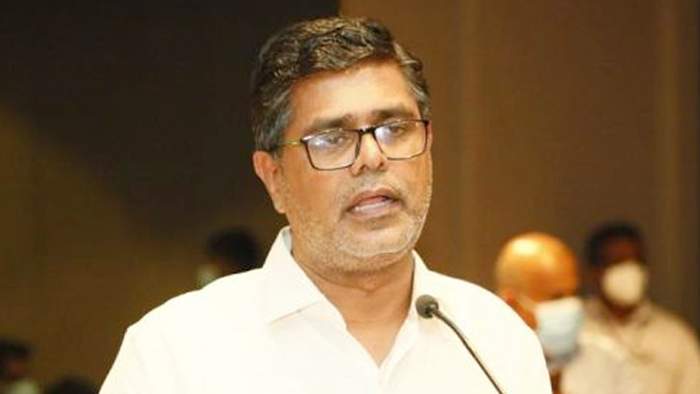
SJB Colombo District MP Mujibur Rahuman in parliament demanded to know from the government the reasons for CEB suspending the leave of all its employees until further notice from Thursday.
MP Rahuman said that the CEB has got an acting General Manager anew and the latter yesterday morning issued a circular suspending leave of all CEB employees with immediate effect until further notice.
“We demand that Minister Kanchana Wijesekera should explain this to the House. This circular was issued while this debate on the new Electricity Amendment Bill was pending. There are many who oppose this Bill. The Minister must tell parliament the reason for the urge to cancel the leave of CEB employees,” the MP said.However, Speaker Mahinda Yapa Abeywardena prevented Minister Wijesekera responding to the query and said that the matter raised by MP Rahuman was not relevant.
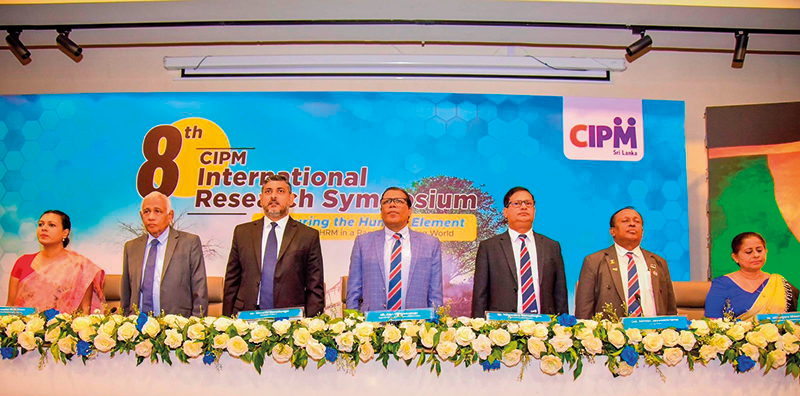
The Chartered Institute of Personnel Management (CIPM) successfully concluded the 8th Annual CIPM Symposium, which took place on 31st May 2024. Themed “Nurturing the Human Element—Redefining HRM in a Rapidly Changing World,” the symposium underscored the pivotal role of human resource management (HRM) in today’s dynamic global landscape. Since its inception in 1959, CIPM has been dedicated to advancing the HR profession through education, professional development, and advocacy, solidifying its position as Sri Lanka’s leading professional body for HRM.
Ken Vijayakumar, the President of the CIPM, graced the occasion as the chief guest. The symposium commenced with the welcome address by the Chairperson, Prof. Arosha Adikaram, followed by the Web Launch of the Symposium Proceedings and Abstract Book by the CIPM President. The event featured distinguished addresses, including a speech by Chief Guest Ken Vijayakumar, President of CIPM, and an address by Guest of Honor Shakthi Ranatunga, Chief Operating Officer of MAS Holdings Pvt. Ltd., Sri Lanka.
The symposium also featured an inspiring keynote address by Prof. Mario Fernando, Professor of Management and Director of the Centre for Cross Cultural Management (CCCM) at the University of Wollongong, Australia.
Vote of Thanks of the inauguration session was delivered by Dr. Dillanjani Weeratunga, Symposium Co-chair.
The symposium served as a comprehensive platform for researchers to present their findings across a wide range of critical topics in HRM. These included Cultural Diversity and Inclusion, Talent Development and Retention, Ethical Leadership and Corporate Social Responsibility, Adapting to Technological Advancements, Mental Health and Well-being at Work, Global Workforce Challenges, Employee Empowerment, and Reskilling and Upskilling.
The plenary session was led by Prof. Wasantha Rajapakse. Certificates were awarded to the best paper presenters during the valedictory session, followed by a vote of thanks delivered by Kamani Perera, Manager of Research and Development.
The annual symposium of CIPM was a truly inclusive event, attracting a diverse audience that spanned undergraduates, graduates, working professionals, research scholars and lecturers. This widespread interest highlights the symposium’s significance in the field of HRM, offering a unique opportunity for everyone to network and learn from scholarly brains.The CIPM International Research Symposium was sponsored by Hambantota International Port, Sri Lanka Institute of Information Technology (SLIIT), E B Creasy & Co. PLC, and Print Xcel Company.



US sports envoys to Lanka to champion youth development

Rahuman questions sudden cancellation of leave of CEB employees


