
News
Proposed Law Breaks Government Pledge to End Abuse’ – HRW

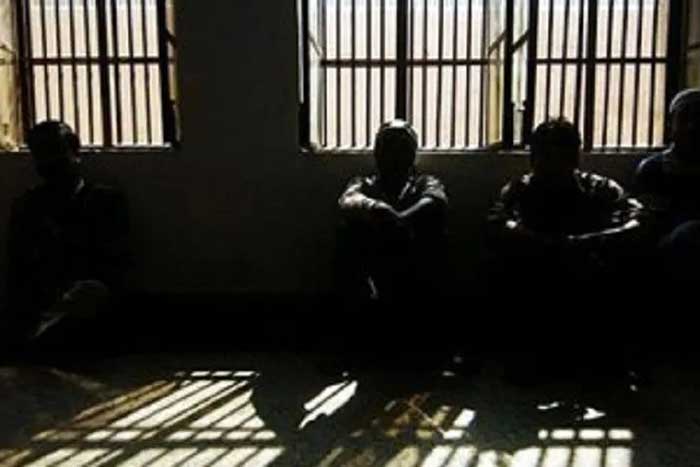
‘Reject New Counterterrorism Bill’
:The government of Sri Lanka’s proposed Anti-Terrorism Act would empower the authorities to systematically violate fundamental human rights, Human Rights Watch said on Friday. The government should withdraw the bill and ensure through consultations that any counterterrorism legislation upholds international human rights standards, Human Rights Watch said.
The government pledged to adopt an improved law following domestic and international criticism of abuses under existing counterterrorism legislation. But instead of addressing the problems, the bill would expand the definition of terrorism to include crimes such as property damage, theft, or robbery, and restrict the rights to freedom of assembly and speech.
“The proposed counterterrorism law would permit the Sri Lankan government to continue to use draconian measures to silence peaceful critics and target minorities,” said Meenakshi Ganguly, South Asia director at Human Rights Watch. “The government’s crackdown on dissent and misuse of existing counterterrorism laws to arbitrarily detain protesters highlights the obvious risk of abuse.”
The Anti-Terrorism Bill, which was published on March 22, 2023, is intended to replace the notorious Prevention of Terrorism Act (PTA), which led to widespread torture and arbitrary detentions since its introduction in 1979. While the new bill contains some improvements, it includes provisions that will facilitate abuse. The bill appears designed to give the president, police, and military broad powers to detain people without evidence, to make vaguely defined forms of speech a criminal offense, and to arbitrarily ban gatherings and organizations without meaningful judicial oversight.
In response to criticism from Sri Lankan activists and lawyers, the United Nations Human Rights Council, foreign governments, and the European Union, successive Sri Lankan governments have repeatedly promised to repeal and replace the PTA with rights-respecting legislation.
The Anti-Terrorism Bill is largely based on proposals presented in 2018, when Sri Lanka’s current president, Ranil Wickremesinghe, was prime minister. The 2018 bill was criticized over human rights concerns and was not enacted. Justice Minister Wijeyadasa Rajapakshe recently expressed satisfaction with the new draft and told journalists that “we won’t make any major change to the current version.”
In 2021, the UN independent expert on human rights and counterterrorism set out five “necessary perquisites” to ensure that Sri Lanka’s counterterrorism law complies with international rights standards. They include providing an appropriate definition of terrorism, ensuring precision and legal certainty, provisions to prevent arbitrary detention, measures that adhere to the absolute prohibition on torture, and due process and fair trial guarantees including judicial oversight. The Anti-Terrorism Bill does not fully meet any of these standards, Human Rights Watch said.
Its definition of terrorism is vague and overbroad and can include peaceful protest or acts that, while criminal, do not rise to the level of any reasonable definition of terrorism. Offenses include participation in certain “unlawful” assemblies if the aim is to “intimidate” the public or “wrongfully” compel the government to act in a certain way, as well as “theft” or “robbery” of government or private property, even if these acts are not intended to cause death or serious harm. The government is currently facing strikes, including by public sector workers. In 2022, the authorities used counterterrorism powers to arbitrarily detain three student leaders after widespread protests over corruption and misgovernance forced both the president and prime minister to resign.
While under the PTA, the authorities can detain a suspect for up to a year on orders signed by the defense minister, the proposed bill gives the authority to issue detention orders to deputy inspector generals of police, increasing risk of abuse. The police could take a detainee from pretrial detention back into police custody, and the defense secretary could transfer a detainee to the custody of “any authority.” This puts suspects at greater risk of torture and other ill-treatment, as abuses under the current law demonstrate.
The proposed bill grants police and military sweeping powers to stop, question, search, and arrest anyone, or seize any document or object without a warrant, if they believe they have “reasonable grounds.” The military, which is not trained in law enforcement, would have 24 hours to transfer a detainee to police custody, placing detainees at greater risk of abuse.
It also provides the president power to issue regulations for “rehabilitation” programs if the attorney general has decided to defer or suspend prosecution. The attorney general could then “impose” “voluntary” rehabilitation on a person who has not been convicted of any crime. In 2021, the Supreme Court stayed similar regulations. The authorities have long committed human rights violations against people accused of terrorism or of drug use, who are incarcerated without trial in government “rehabilitation” programs.
The president, on the advice of the police or military, would be authorized to declare any location a “prohibited place,” with up to three years in prison for violations. This appears to be an attempt to prevent a repetition of the largely peaceful 2022 protests in the capital, Colombo. The government had declared “high security zones” under the Official Secrets Act, which were withdrawn following widespread condemnation.
The bill expands broad powers to criminalize speech that is “likely to be understood” as encouragement or inducement to commit or prepare for terrorism, with the burden of proof on the defendant to show that was not their intention. These offenses also apply to those who publish, distribute, sell, or transmit “terrorist publications,” which could have a further chilling effect. In the past, the government has used the PTA to detain people who commemorated Tamil victims of Sri Lanka’s civil war on social media on the grounds that they were “glorifying” terrorism, which is also an offense under these proposals.
The president would be authorized to ban an organization if authorities have “reasonable grounds” to believe it is acting in a manner “prejudicial to the national security of Sri Lanka, or any other country.” In the past, the government has proscribed Tamil diaspora organizations advocating for human rights and accountability as “terrorist organizations,” and human rights organizations have faced government interference in their banking and finances on the pretext of countering “terrorist financing.”
The bill provides for the death penalty for the terrorism offense of murder, although Sri Lanka has observed a moratorium on executions since 1976. Sri Lanka should abolish the death penalty, which Human Rights Watch opposes in all circumstances because of its inherent cruelty and finality.
The bill includes some new due process protections, including that confessions to the police will not be admitted as evidence, and that female suspects should be searched by women officers. There are new procedures for reporting and notifying the reason for an arrest, providing access to translations of documents in a language a detainee understands, and presenting a detained person before a magistrate every 14 days. It also clarifies the procedures that a magistrate should follow if a detainee appears to have been tortured.
However, the two ostensibly independent entities proposed under the bill, the Board of Review to hear appeals against detention orders, and the Independent Review Panel to advise on rights-respecting implementation of the law, would not be independent by law.
Until new counterterrorism legislation that upholds human rights is drafted, the government should impose a full moratorium on the use of the PTA and take steps to repeal it, Human Rights Watch said.
Successive Sri Lankan governments have offered repeated assurances to the EU that they would uphold rights commitments, including by repealing the PTA, in exchange for tariff-free trade access under the Generalised Scheme of Preferences Plus (GSP+). The trade access is conditioned to the ratification and effective implementation of key human rights treaties. In its latest monitoring report, the European Commission said that Sri Lanka “still has to deliver on a number of important reforms.”
Sri Lanka’s international partners, including the United States, EU, Japan, India, and others should press for genuine reforms to ensure this bill meets Sri Lanka’s international human rights obligations, Human Rights Watch said. The EU should make it clear that replacing the present counterterrorism law with similarly abusive legislation does not address its concerns and could affect Sri Lanka’s GSP+ status.
“The Anti-Terrorism Bill needs to be seen both in light of Sri Lanka’s abusive history of counterterrorism powers and the current government’s repression of peaceful dissent,” Ganguly said. “Sri Lanka’s international partners should make it absolutely clear that they will not reward this abuse with trade preferences and other support.”



The U.S. Embassy in Colombo welcomed the U.S. Sports Envoys to Sri Lanka, former National Basketball Association (NBA) and Women’s National Basketball Association (WNBA) players Stephen Howard and Astou Ndiaye, from June 8 through 14.
The Public Diplomacy section of the U.S. Embassy said that it would launch a weeklong basketball program intended to harness the unifying power of sports, made possible through collaboration with Foundation of Goodness and IImpact Hoop Lab.
While in Sri Lanka, Howard and Ndiaye, both retired professional basketball players, will conduct a weeklong program, Hoops for Hope: Bridging Borders through Basketball. The Sports Envoys will lead basketball clinics and exhibition matches and engage in leadership sessions in Colombo and Southern Province for youth aged 14-18 from Northern, Uva, Eastern and Western Provinces, offering skills and leadership training both on and off the court. The U.S. Envoys will also share their expertise with the Sri Lanka Basketball Federation, national coaches, and players, furthering the development of basketball in the country. Beyond the clinics, they will collaborate with Sri Lankan schoolchildren to take part in a community service project in the Colombo area.
“We are so proud to welcome Stephen and Astou as our Sports Envoys to Sri Lanka, to build on the strong people-to-people connections between the United States and Sri Lanka,” said U.S. Ambassador Julie Chung. “The lessons that will be shared by our Sports Envoys – communication, teamwork, resilience, inclusion, and conflict resolution – are essential for leadership development, community building, equality, and peace. The U.S. Sports Envoy program is a testament to our belief that sports can be a powerful tool in promoting peace and unity.”
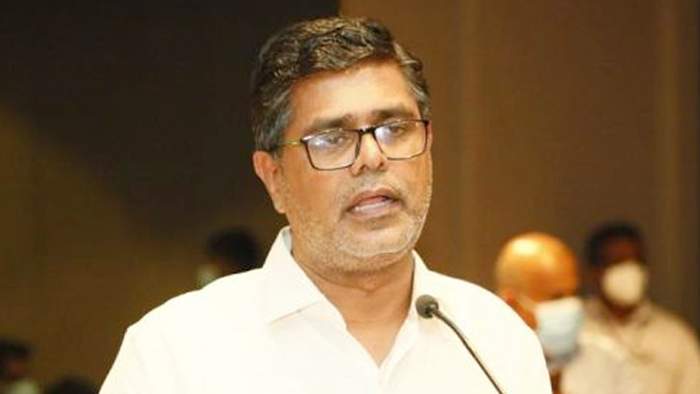
SJB Colombo District MP Mujibur Rahuman in parliament demanded to know from the government the reasons for CEB suspending the leave of all its employees until further notice from Thursday.
MP Rahuman said that the CEB has got an acting General Manager anew and the latter yesterday morning issued a circular suspending leave of all CEB employees with immediate effect until further notice.
“We demand that Minister Kanchana Wijesekera should explain this to the House. This circular was issued while this debate on the new Electricity Amendment Bill was pending. There are many who oppose this Bill. The Minister must tell parliament the reason for the urge to cancel the leave of CEB employees,” the MP said.However, Speaker Mahinda Yapa Abeywardena prevented Minister Wijesekera responding to the query and said that the matter raised by MP Rahuman was not relevant.
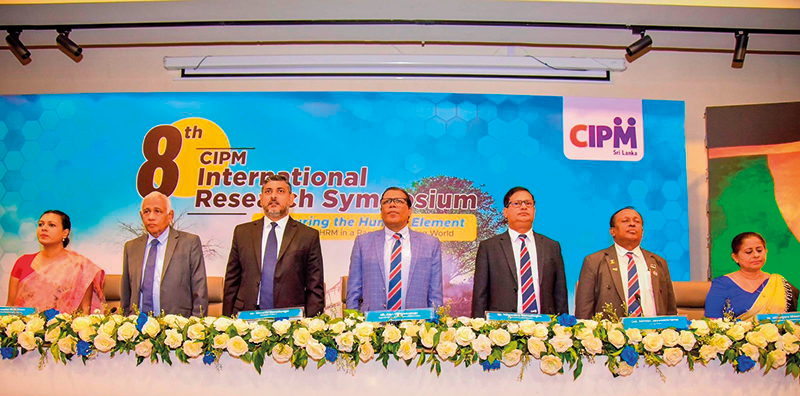
The Chartered Institute of Personnel Management (CIPM) successfully concluded the 8th Annual CIPM Symposium, which took place on 31st May 2024. Themed “Nurturing the Human Element—Redefining HRM in a Rapidly Changing World,” the symposium underscored the pivotal role of human resource management (HRM) in today’s dynamic global landscape. Since its inception in 1959, CIPM has been dedicated to advancing the HR profession through education, professional development, and advocacy, solidifying its position as Sri Lanka’s leading professional body for HRM.
Ken Vijayakumar, the President of the CIPM, graced the occasion as the chief guest. The symposium commenced with the welcome address by the Chairperson, Prof. Arosha Adikaram, followed by the Web Launch of the Symposium Proceedings and Abstract Book by the CIPM President. The event featured distinguished addresses, including a speech by Chief Guest Ken Vijayakumar, President of CIPM, and an address by Guest of Honor Shakthi Ranatunga, Chief Operating Officer of MAS Holdings Pvt. Ltd., Sri Lanka.
The symposium also featured an inspiring keynote address by Prof. Mario Fernando, Professor of Management and Director of the Centre for Cross Cultural Management (CCCM) at the University of Wollongong, Australia.
Vote of Thanks of the inauguration session was delivered by Dr. Dillanjani Weeratunga, Symposium Co-chair.
The symposium served as a comprehensive platform for researchers to present their findings across a wide range of critical topics in HRM. These included Cultural Diversity and Inclusion, Talent Development and Retention, Ethical Leadership and Corporate Social Responsibility, Adapting to Technological Advancements, Mental Health and Well-being at Work, Global Workforce Challenges, Employee Empowerment, and Reskilling and Upskilling.
The plenary session was led by Prof. Wasantha Rajapakse. Certificates were awarded to the best paper presenters during the valedictory session, followed by a vote of thanks delivered by Kamani Perera, Manager of Research and Development.
The annual symposium of CIPM was a truly inclusive event, attracting a diverse audience that spanned undergraduates, graduates, working professionals, research scholars and lecturers. This widespread interest highlights the symposium’s significance in the field of HRM, offering a unique opportunity for everyone to network and learn from scholarly brains.The CIPM International Research Symposium was sponsored by Hambantota International Port, Sri Lanka Institute of Information Technology (SLIIT), E B Creasy & Co. PLC, and Print Xcel Company.



US sports envoys to Lanka to champion youth development

Rahuman questions sudden cancellation of leave of CEB employees


