
News
NMSJ decries unrealistic policies that have led to current mess

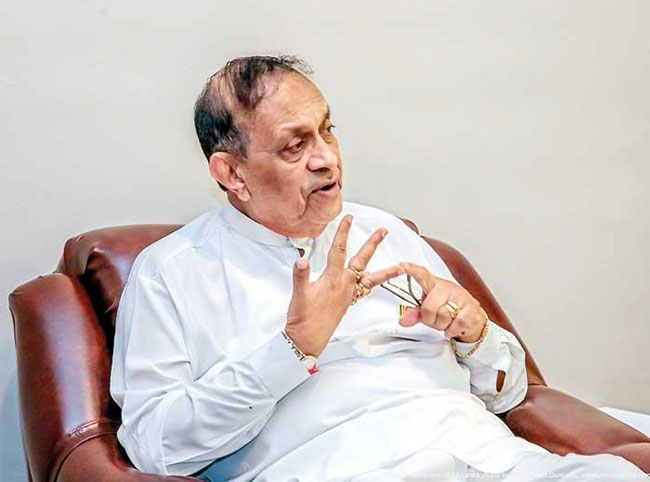
The impact of shortages of essential items and people spending hours in queues was both economic and social, Karu Jayasuriya, Chairman of the National Movement for Social Justice (NMSJ) said yesterday.
Jayasuriya said that many poor families do not have access to daycare or nurseries and when mothers waited in queues for kerosene, gas or other essential items, the children are left without supervision.
“As a result of these queues, the family structure has completely collapsed. This is a tragic situation,” Jayasuriya said.
The only silver lining for the country is the decline in the spread of the devastating Covid pandemic, he said. However every aspect of the daily life of many Sri Lankans hadbeen disrupted due to ongoing shortages of essential goods such as fuel, cement, gas and milk powder.
Experts of Jayasuriya’s statement: “It must be noted that had the government followed the advice of professionals and taken the necessary steps in a timely manner this unfortunate situation would not have arisen. When the country’s foreign reserves dwindled, the majority of the people was of the opinion that a loan of USD 500 million should not be repaid in one lump sum. Instead, it was suggested that only the interest should be paid and that advice should be sought from the International Monetary Fund or another institution on the repayment of the loan. The National Movement for Social Justice expressed and informed this opinion as well.
“However, the government was not willing to accept these sincere proposals. We also pointed out that allowing the rupee to float would be fair to those employed overseas and would encourage exports, and that the import process would reflect realistic prices. This would inevitably lead to the automatic reduction of unnecessary imports. Despite the delay, it is vital that the government realises this.
“In our opinion, one of the main reasons leading to the economic collapse is the government’s failure to maintain one viewpoint. It’s a significant weakness in governance. The 20th Amendment delegated full powers of government to one person and not to the Parliament. Therefore, it is the President with a two-thirds majority that is accountable to the people.
“But many promises made after the new government came to power are yet to be fulfilled.
1. Presenting the draft of the proposed new constitution within a year and eliminating the clause allowing dual citizens to work in government
2. Strengthening national and religious harmony while cooperating with the civil society
3. Protection of democracy and freedom of speech
4. Stop political revenge and give people their complete freedom
5. Reduction of the cost of living
“None of the above has been fulfilled. Constitutional proposals should be prepared not by a pro-government group of lawyers but by Parliament and the people. This is a serious shortcoming as well as a mistake.
“Revenge is still being extracted from political opponents through the Upali Abeyratne Commission. Wrongdoers are being released while leading figures of the opposition are facing investigations at the BMICH. This is an attempt to ruin their political careers. Acts of sabotage are openly taking place to disrupt meetings being held by the leader of the opposition and the leader of the National People’s Power. The ‘One Country, One Law’ policy of the government has become a mere farce. Talking about this itself is fruitless.
“The person who was responsible for the destruction of the palace of King Buwanekabahu and the Minister who forcefully entered the prison to issue death threats to prisoners have managed to remain free sans any investigation into these incidents. The people are highly critical of these transgressions. The Auditor-General conducted an inquiry into the sugar scam and it was stated at the Parliamentary Finance Committee that a fraudulent act had in fact occurred. However, these reports are now gathering dust. The alleged sugar scam on the face of it appears far greater than the Central Bank bond scam. While the Central Bank funds are now with the government, the fraudsters continue to be in possession of the funds obtained through the sugar scam.
“Just recently, the President, Minister of Finance and many others publicly assured the country’s citizens that power cuts would take place after 05 March. However, that promise held true only for a matter of hours. Currently, power cuts lasting up to seven hours are being imposed on the people.
“We are highlighting these important issues with utmost sincerity as under the 20th Amendment the responsibility for the people of this country lies with the President and no other. When the head of state fails to deliver on his promises, the trust of the people deteriorates and the reputation of the leader is damaged. The loss of confidence in future promises is also inevitable. Therefore, it is our belief that going forward it is wise to only speak of promises that can be fulfilled with certainty.
“We can recover from this disastrous situation. Countries that were reduced to ashes by World War II became powerful states because of their national consensus. We must follow the example of Germany and Japan. In 1991, India also faced a major economic crisis. There was a strict import restriction. Foreign reserves for imports were available only for 15 days.
“Prime Minister Narasimha Rao appointed Dr Manmohan Singh, a World Bank veteran as the Minister of Finance with full powers to do the needful. Well knowledgeable and independent economists were appointed to the Central Bank. Politicians were not allowed to disrupt the programme. Prime Minister Rao reached an agreement with fifteen political parties to form a “common programme to deal with the crisis”. This led to an immediate economic revival in India. The foreign exchange reserves, which were limited to 15 days, were increased to USD 100 billion by the year 2004.
“Today, their reserves are close to USD 650 billion. Despite the Covid pandemic, the Indian economy is growing rapidly. India is now an economic power in the world. China’s economy is also driven by world-renowned economists. In the 1980s, leader Deng Xiaoping sent Jiang Zemin who would later go on to become President to Sri Lanka to study the Public-Private Partnership model established by President J.R Jayewardene. During this trip, he only visited Sri Lanka and Singapore. I also had the opportunity to meet the Special Representative as the then Chairman of that joint venture. Even though many Sri Lankans are unaware of these facts, China still remembers this past.
The National Movement for Social Justice has also put forward a proposal to the Government and the people entitled “A Common Minimum Programme to Respond to Sri Lanka’s Current Crisis.” We hope these issues are brought to the attention of the country’s leaders and the people. We urge the government not to act with narrow intentions but to extend the hand of friendship to the country’s people instead. When 6.9 million citizens voted for the President, at least 6.2 million citizens did not approve of him. But he is now the head of state of all Sri Lankan citizens.”



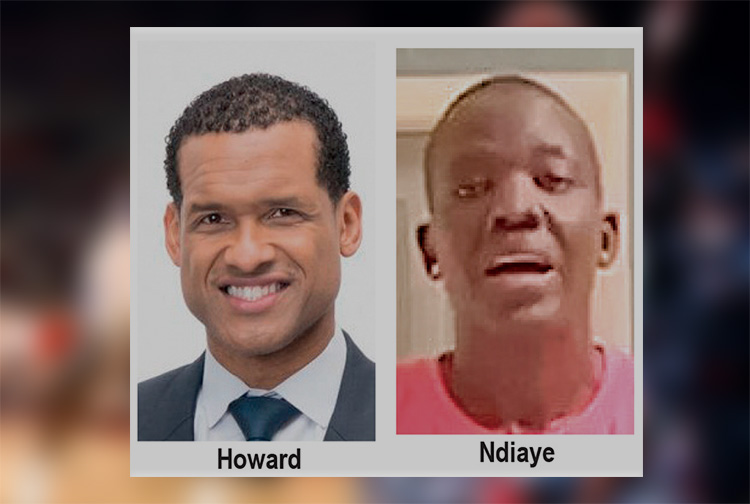
The U.S. Embassy in Colombo welcomed the U.S. Sports Envoys to Sri Lanka, former National Basketball Association (NBA) and Women’s National Basketball Association (WNBA) players Stephen Howard and Astou Ndiaye, from June 8 through 14.
The Public Diplomacy section of the U.S. Embassy said that it would launch a weeklong basketball program intended to harness the unifying power of sports, made possible through collaboration with Foundation of Goodness and IImpact Hoop Lab.
While in Sri Lanka, Howard and Ndiaye, both retired professional basketball players, will conduct a weeklong program, Hoops for Hope: Bridging Borders through Basketball. The Sports Envoys will lead basketball clinics and exhibition matches and engage in leadership sessions in Colombo and Southern Province for youth aged 14-18 from Northern, Uva, Eastern and Western Provinces, offering skills and leadership training both on and off the court. The U.S. Envoys will also share their expertise with the Sri Lanka Basketball Federation, national coaches, and players, furthering the development of basketball in the country. Beyond the clinics, they will collaborate with Sri Lankan schoolchildren to take part in a community service project in the Colombo area.
“We are so proud to welcome Stephen and Astou as our Sports Envoys to Sri Lanka, to build on the strong people-to-people connections between the United States and Sri Lanka,” said U.S. Ambassador Julie Chung. “The lessons that will be shared by our Sports Envoys – communication, teamwork, resilience, inclusion, and conflict resolution – are essential for leadership development, community building, equality, and peace. The U.S. Sports Envoy program is a testament to our belief that sports can be a powerful tool in promoting peace and unity.”
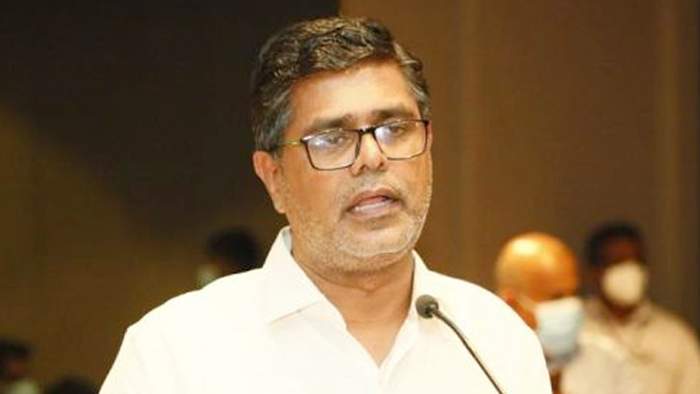
SJB Colombo District MP Mujibur Rahuman in parliament demanded to know from the government the reasons for CEB suspending the leave of all its employees until further notice from Thursday.
MP Rahuman said that the CEB has got an acting General Manager anew and the latter yesterday morning issued a circular suspending leave of all CEB employees with immediate effect until further notice.
“We demand that Minister Kanchana Wijesekera should explain this to the House. This circular was issued while this debate on the new Electricity Amendment Bill was pending. There are many who oppose this Bill. The Minister must tell parliament the reason for the urge to cancel the leave of CEB employees,” the MP said.However, Speaker Mahinda Yapa Abeywardena prevented Minister Wijesekera responding to the query and said that the matter raised by MP Rahuman was not relevant.
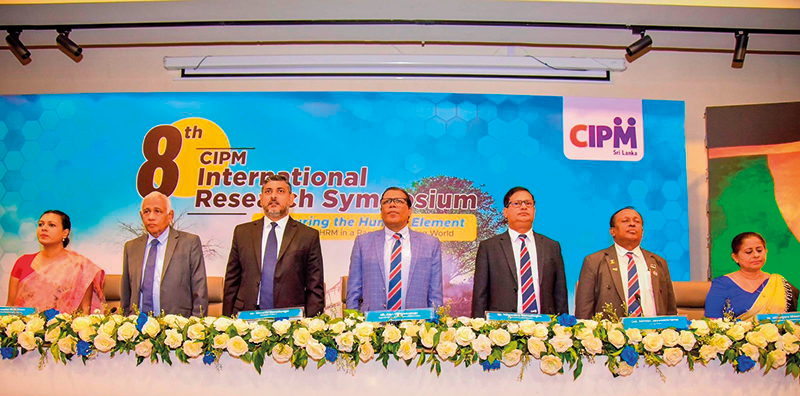
The Chartered Institute of Personnel Management (CIPM) successfully concluded the 8th Annual CIPM Symposium, which took place on 31st May 2024. Themed “Nurturing the Human Element—Redefining HRM in a Rapidly Changing World,” the symposium underscored the pivotal role of human resource management (HRM) in today’s dynamic global landscape. Since its inception in 1959, CIPM has been dedicated to advancing the HR profession through education, professional development, and advocacy, solidifying its position as Sri Lanka’s leading professional body for HRM.
Ken Vijayakumar, the President of the CIPM, graced the occasion as the chief guest. The symposium commenced with the welcome address by the Chairperson, Prof. Arosha Adikaram, followed by the Web Launch of the Symposium Proceedings and Abstract Book by the CIPM President. The event featured distinguished addresses, including a speech by Chief Guest Ken Vijayakumar, President of CIPM, and an address by Guest of Honor Shakthi Ranatunga, Chief Operating Officer of MAS Holdings Pvt. Ltd., Sri Lanka.
The symposium also featured an inspiring keynote address by Prof. Mario Fernando, Professor of Management and Director of the Centre for Cross Cultural Management (CCCM) at the University of Wollongong, Australia.
Vote of Thanks of the inauguration session was delivered by Dr. Dillanjani Weeratunga, Symposium Co-chair.
The symposium served as a comprehensive platform for researchers to present their findings across a wide range of critical topics in HRM. These included Cultural Diversity and Inclusion, Talent Development and Retention, Ethical Leadership and Corporate Social Responsibility, Adapting to Technological Advancements, Mental Health and Well-being at Work, Global Workforce Challenges, Employee Empowerment, and Reskilling and Upskilling.
The plenary session was led by Prof. Wasantha Rajapakse. Certificates were awarded to the best paper presenters during the valedictory session, followed by a vote of thanks delivered by Kamani Perera, Manager of Research and Development.
The annual symposium of CIPM was a truly inclusive event, attracting a diverse audience that spanned undergraduates, graduates, working professionals, research scholars and lecturers. This widespread interest highlights the symposium’s significance in the field of HRM, offering a unique opportunity for everyone to network and learn from scholarly brains.The CIPM International Research Symposium was sponsored by Hambantota International Port, Sri Lanka Institute of Information Technology (SLIIT), E B Creasy & Co. PLC, and Print Xcel Company.



US sports envoys to Lanka to champion youth development

Rahuman questions sudden cancellation of leave of CEB employees


