
News
Need for multipronged reform programme stressed

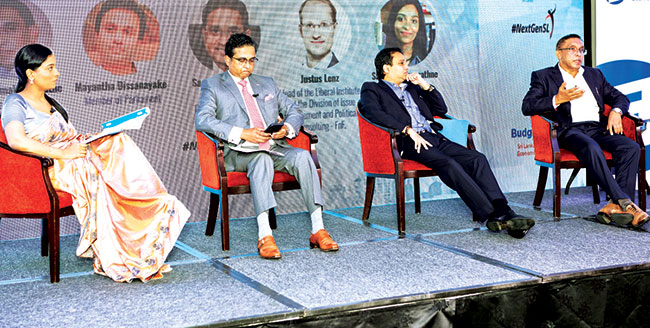
Pre-budget discussion
The need for multi-pronged broad reforms to stabilise the economy and to ensure long-term policy consistency were some of the key highlights at a pre-budget discussion held on Oct 21, addressing a number of economic issues currently faced by Sri Lanka.
The discussion, titled ‘Budget 2022: Sri Lanka’s Path to Economic Stability,’ was organised by NextGenSL and the Friedrich Naumann Foundation for Freedom in Sri Lanka. Justus Lenz, Policy Advisor for Economic and Financial Affairs at the Liberal Institute, the Friedrich Naumann Foundation for Freedom’s think tank, delivered the keynote speech, in which he shared Germany’s experience in economic revival with the hope of encouraging Sri Lanka to embark on broad and meaningful reforms to revive the economy, said a joint press release issued by NextGenSL and the Friedrich Naumann Foundation.
It said: Lenz drew attention to the fact that Germany’s success was based on four primary factors — 1) Free markets, property rights, and unregulated prices 2) The rule of law, infrastructure, and social policies provided by the state 3) Abstention from direct market interventions (mostly) and 4) Free trade and the EU’s common market.
“Actual economic growth depends entirely on entrepreneurs who develop products and services. But in order to drive development and progress, entrepreneurs need a well-functioning market order which provides freedom and security,” he told the audience. “Facing enormous difficulties, West Germany implemented the Social Market Economy and placed its trust in free markets, the entrepreneurial spirit, and an open society. East Germany bet on central planning and top-down control. In the first 10 or 20 years, the race to prosperity seemed to be a close one. But the long-term effects of both free and controlled markets soon became obvious,” he said.
“A lesson that can be drawn from looking at our experience in Germany is that reforms towards a free-market order can be very successful. If one pursues this direction, it is important to consider that success can take time. The implementation time can be painful and long, as seen both after 1948 and 1989”, adding, “Of course, there is no easy recipe for implementing a free-market order such as the Social Market Economy,” he added.
Following the keynote speech, a panel discussion featuring Prof. Sirimal Abeyratne, MP Mayantha Dissanayake, Sanjaya Mohottala, Chairman, Board of Investments, and Justus Lenz took place, primarily focusing on Sri Lanka’s need for broad economic reforms. Sathya Karunarathne of the Advocata Institute moderated the discussion.
Expressing his views at the panel discussion, Prof. Sirimal Abeyratne, a veteran economist, said that Sri Lana should move away from ad-hoc changes and work towards an overall reform package. “Even measures such as the removal of price controls should have come as part of an overall reform package. Without such an approach, there is going to be an enormous impact on low-income groups,” he said, adding that Sri Lanka should not look for short-term solutions for long-term problems.
“Budget is a short-term policy plan which only focuses on a period of 12 months. But it has to be consistent with a long-term plan. The absence of such consistency has been the problem in Sri Lanka,” he explained, adding that it was important to understand that a budget could not grant relief without someone paying for it.
“We had the space to print money during the early stages of the pandemic. Now, the vaccination process has seen significant progress and Sri Lanka has done a commendable job with the vaccination drive when compared to many other developing nations. As a result, inflation and aggregate demand are increasing, limiting the Central Bank’s ability to finance the budget deficit,” he pointed out. Prof. Abeyratne was also of the opinion that the current import controls were an “easy way-out” for Sri Lankan lawmakers.
“We must first understand what hinders the growth of domestic production. There are many factors contributing to this situation, but we brush them aside and resort to import controls because that is the easy way out. As a result, the core issues will remain the same,” he explained.
Parliamentarian Mayantha Dissanayake stressed the fact that both the Government and the opposition must work together with a common agenda to revive the economy and to reach a consensus on long-term policy reforms. “There is an urgent need to restore the trust of investors in the country. For this, a clear and cohesive message should be sent out,” Dissanayake said, adding, “We must find ways to restructure the management of these loss-making SOEs. They have become a severe burden on the economy. I would like to suggest a Temasek-like model for the divestment of government stake in these SOEs. Sri Lanka must strike a fine balance between the aspects of a welfare state and the much-needed economic reforms.”
He was also of the strong view that all reforms must be done in strict adherence to democratic practices, aiming to improve the efficiency and effectiveness of these SOEs. “I am a firm believer of monitoring and evaluation processes. This is why I believe getting rid of the National Audit Commission is an undesirable move by the current administration. Sectoral Oversight Committees, another important tool to ensure accountability, should have been allowed to continue,” the MP said.
He said another pressing problem confronting Sri Lanka at the moment is brain-drain. Even during the time of war, when a number of political leaders were assassinated, we did not see a brain drain of this magnitude,” he said. “This is a serious problem the government must address through meaningful reforms.”
BOI Chairman Sanjaya Mohottala said Sri Lanka’s focus at the moment was to create a compelling environment for FDIs through consistent immediate and long-term reforms. “What we need from the budget the most is stability,” Mohottala said. “This includes better clarity, better transparency, and better consistency.” He added that the country must set the foundation to double the GDP in 10 years with the minimum inconsistencies while addressing a host of other areas and assured the audience that the current administration was working on a number of measures to address the issues faced by investments including ‘simplifying’ the system.
“We must now get out of the pandemic mindset and look for opportunities. We are currently working towards building the capacity in the legal sector to remove some of the impediments. Digitalization of the legal process is a must. Also, we are working to build infrastructure allowing the justice system to address all regulatory-related issues expeditiously,” he said, proposing a pragmatic policy on taxation that would create a better climate for the youth to work in Sri Lanka.
In his remarks at the panel discussion, Justus Lenz said every country must find its own way to address its own. “But we must not forget that good policies are not expensive. Long-term commitment to stability and free-market reforms are not expensive,” he stressed. The German expert also pointed out that it was critically important to remain optimistic and create a long-term consensus on reforms without losing clarity.



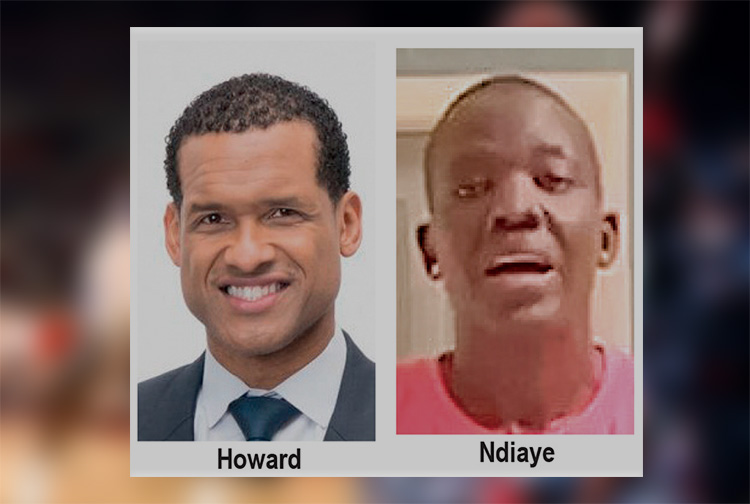
The U.S. Embassy in Colombo welcomed the U.S. Sports Envoys to Sri Lanka, former National Basketball Association (NBA) and Women’s National Basketball Association (WNBA) players Stephen Howard and Astou Ndiaye, from June 8 through 14.
The Public Diplomacy section of the U.S. Embassy said that it would launch a weeklong basketball program intended to harness the unifying power of sports, made possible through collaboration with Foundation of Goodness and IImpact Hoop Lab.
While in Sri Lanka, Howard and Ndiaye, both retired professional basketball players, will conduct a weeklong program, Hoops for Hope: Bridging Borders through Basketball. The Sports Envoys will lead basketball clinics and exhibition matches and engage in leadership sessions in Colombo and Southern Province for youth aged 14-18 from Northern, Uva, Eastern and Western Provinces, offering skills and leadership training both on and off the court. The U.S. Envoys will also share their expertise with the Sri Lanka Basketball Federation, national coaches, and players, furthering the development of basketball in the country. Beyond the clinics, they will collaborate with Sri Lankan schoolchildren to take part in a community service project in the Colombo area.
“We are so proud to welcome Stephen and Astou as our Sports Envoys to Sri Lanka, to build on the strong people-to-people connections between the United States and Sri Lanka,” said U.S. Ambassador Julie Chung. “The lessons that will be shared by our Sports Envoys – communication, teamwork, resilience, inclusion, and conflict resolution – are essential for leadership development, community building, equality, and peace. The U.S. Sports Envoy program is a testament to our belief that sports can be a powerful tool in promoting peace and unity.”
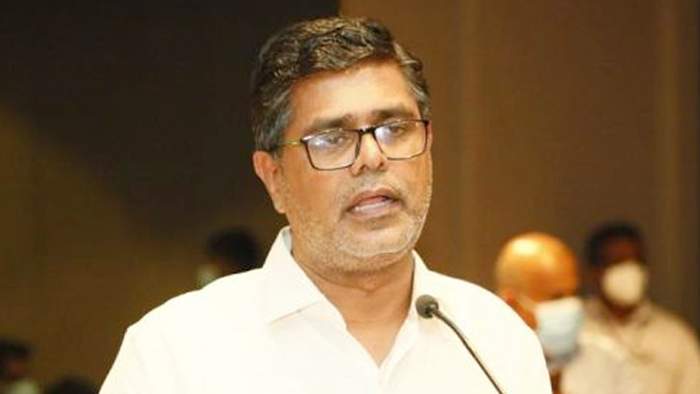
SJB Colombo District MP Mujibur Rahuman in parliament demanded to know from the government the reasons for CEB suspending the leave of all its employees until further notice from Thursday.
MP Rahuman said that the CEB has got an acting General Manager anew and the latter yesterday morning issued a circular suspending leave of all CEB employees with immediate effect until further notice.
“We demand that Minister Kanchana Wijesekera should explain this to the House. This circular was issued while this debate on the new Electricity Amendment Bill was pending. There are many who oppose this Bill. The Minister must tell parliament the reason for the urge to cancel the leave of CEB employees,” the MP said.However, Speaker Mahinda Yapa Abeywardena prevented Minister Wijesekera responding to the query and said that the matter raised by MP Rahuman was not relevant.
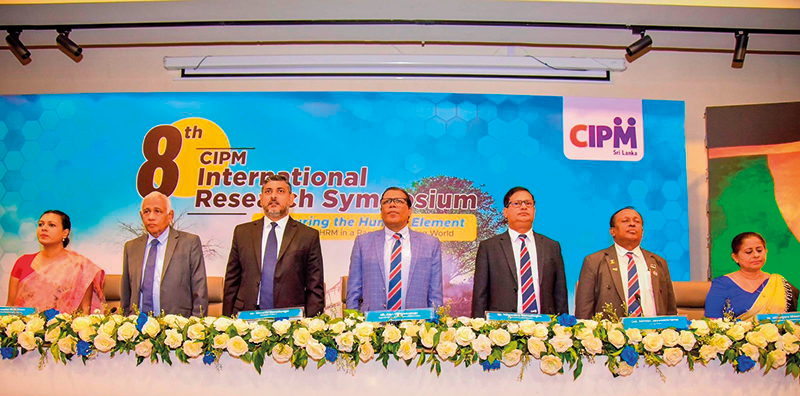
The Chartered Institute of Personnel Management (CIPM) successfully concluded the 8th Annual CIPM Symposium, which took place on 31st May 2024. Themed “Nurturing the Human Element—Redefining HRM in a Rapidly Changing World,” the symposium underscored the pivotal role of human resource management (HRM) in today’s dynamic global landscape. Since its inception in 1959, CIPM has been dedicated to advancing the HR profession through education, professional development, and advocacy, solidifying its position as Sri Lanka’s leading professional body for HRM.
Ken Vijayakumar, the President of the CIPM, graced the occasion as the chief guest. The symposium commenced with the welcome address by the Chairperson, Prof. Arosha Adikaram, followed by the Web Launch of the Symposium Proceedings and Abstract Book by the CIPM President. The event featured distinguished addresses, including a speech by Chief Guest Ken Vijayakumar, President of CIPM, and an address by Guest of Honor Shakthi Ranatunga, Chief Operating Officer of MAS Holdings Pvt. Ltd., Sri Lanka.
The symposium also featured an inspiring keynote address by Prof. Mario Fernando, Professor of Management and Director of the Centre for Cross Cultural Management (CCCM) at the University of Wollongong, Australia.
Vote of Thanks of the inauguration session was delivered by Dr. Dillanjani Weeratunga, Symposium Co-chair.
The symposium served as a comprehensive platform for researchers to present their findings across a wide range of critical topics in HRM. These included Cultural Diversity and Inclusion, Talent Development and Retention, Ethical Leadership and Corporate Social Responsibility, Adapting to Technological Advancements, Mental Health and Well-being at Work, Global Workforce Challenges, Employee Empowerment, and Reskilling and Upskilling.
The plenary session was led by Prof. Wasantha Rajapakse. Certificates were awarded to the best paper presenters during the valedictory session, followed by a vote of thanks delivered by Kamani Perera, Manager of Research and Development.
The annual symposium of CIPM was a truly inclusive event, attracting a diverse audience that spanned undergraduates, graduates, working professionals, research scholars and lecturers. This widespread interest highlights the symposium’s significance in the field of HRM, offering a unique opportunity for everyone to network and learn from scholarly brains.The CIPM International Research Symposium was sponsored by Hambantota International Port, Sri Lanka Institute of Information Technology (SLIIT), E B Creasy & Co. PLC, and Print Xcel Company.



US sports envoys to Lanka to champion youth development

Rahuman questions sudden cancellation of leave of CEB employees


