
News
Most plastic debris on beaches comes from far-off sources

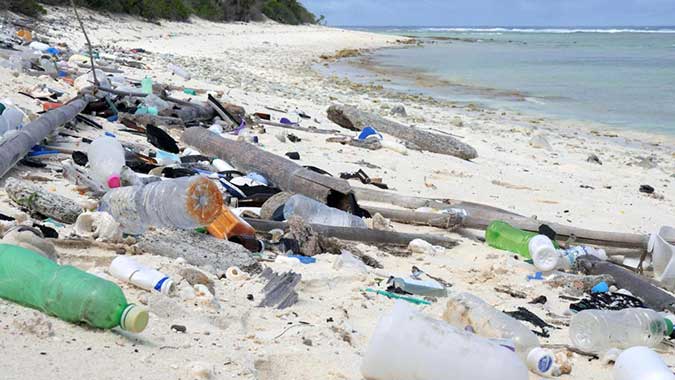
Lankan plastic debris found on beaches in the Seychelles
Vast amounts of plastic debris accumulate on beaches across the Seychelles and other small island developing states including Sri Lanka, and an observational analysis (for instance, plastic bottle labels) suggest that much of this waste originates from distant sources and not from the islands themselves.
But until now, the likely sources of this debris have not been quantified, says a new study by the University of Oxford.
“Indonesia is the primary source of land-based plastic debris found on beaches in the Seychelles, with major contributions from India and Sri Lanka,” it said.
The study led by the University of Oxford investigated by developing a high-resolution model that simulated the movement of plastic debris across the world’s oceans. This used input data on ocean currents, waves, and winds, and plastic debris entering the ocean from coastal populations, rivers and fisheries, to predict plastic debris accumulation at 27 sites in the Seychelles and wider western Indian ocean. The results have been published in Marine Pollution Bulletin.
The researchers modelled the likely sources of both land-based and marine types of plastic pollution.
Key findings:
• Indonesia is the primary source of land-based plastic debris found on beaches in the Seychelles, with major contributions from India and Sri Lanka. This was particularly the case for medium-large debris that have a high buoyancy (such as bottle caps, sandals, bottles, and small domestic items).
• Plastic debris arriving from Indonesia would have been at sea for at least 6 months, with some exceeding 2 years.
• Smaller plastic debris, such as millimetre-sized plastic fragments and pellets, tended to originate from East Africa and from within the Seychelles itself. Smaller fragments are less buoyant than larger items, and do not travel as far before sinking.
• The Seychelles also accumulate significant amounts of plastic debris of marine origin from fisheries and shipping lanes, such as discarded or lost fishing gear. The large numbers of bottles beaching at these islands with labels suggesting they come from Malaysia, Thailand and, in particular, China, were probably discarded from ships rather than floating from those countries directly. For some islands, a significantly higher proportion of plastic waste comes from marine sources, rather than land.
• Rates of plastic debris accumulation showed a strong seasonal affect. Plastic debris from both land and marine sources was most likely to land on beaches in the Seychelles at the end of the northwest monsoon, with the highest rates in March and April.
• Plastic debris accumulation may also be amplified by El Niño-Southern Oscillation (ENSO) and Indian Ocean Dipole (IOD, also known as the Indian Niño) events.
This is the first study to produce a quantitative estimate of the sources of plastic debris for the Seychelles and other remote islands in the western Indian Ocean. Such plastic pollution is a significant environmental threat, both for marine ecosystems and the communities that depend on the ocean for food, tourism, and other economic activities. In addition, plastic debris that drifts from far-off sources increases the risk of spreading invasive species and diseases.
A previous study led by University of Oxford researchers estimated that over 500 tonnes of debris had accumulated at Aldabra Atoll in Seychelles, an ecologically valuable UNESCO World Heritage Site with zero permanent population.
Lead author of the current research, Noam Vogt-Vincent (Department of Earth Sciences, University of Oxford), said ‘We have combined observational data from across the Seychelles with cutting-edge computer simulations to generate the most comprehensive predictions currently available for marine litter dispersal in the region. This will provide vital information for local management on these islands — many of which are global biodiversity hotspots — and to inform national and international responses.’
According to the researchers, the results illustrate the sheer scale of the plastic pollution challenge facing small island developing states, and makes the need for a global plastic treaty more urgent than ever. This could include, for instance, greater enforcement of policies that forbid the disposal of fishing gear and other plastics at sea. The findings also build on the ever-growing evidence that investing in waste management systems and implementing policies for waste disposal at the main source nations is the number one action to prevent land-based litter arriving at remote island sites.
Knowing when plastic debris accumulation is likely to peak could help to plan mitigation efforts. For instance, the results suggest that beach clean-ups should take place after peak debris accumulation (i.e. May to June) to reduce the likelihood of plastic debris breaking down into smaller fragments and impacting ecosystems.
Co-author Dr April Burt (Seychelles Islands Foundation and University of Oxford) said: ‘These islands are faced with the deeply inequitable situation of bearing the costs of removing waste they were not responsible for generating, contrary to the “polluter pays” principle. Our study has demonstrated that most of the plastic debris accumulating at these remote islands comes from far-off sources, and this should be the first positive step towards accountability and prevention.’
The study also involved researchers from the University of Montpellier; the Institut de Recherche pour le D’eveloppement, MARBEC; and the Okinawa Institute of Science and Technology



The U.S. Embassy in Colombo welcomed the U.S. Sports Envoys to Sri Lanka, former National Basketball Association (NBA) and Women’s National Basketball Association (WNBA) players Stephen Howard and Astou Ndiaye, from June 8 through 14.
The Public Diplomacy section of the U.S. Embassy said that it would launch a weeklong basketball program intended to harness the unifying power of sports, made possible through collaboration with Foundation of Goodness and IImpact Hoop Lab.
While in Sri Lanka, Howard and Ndiaye, both retired professional basketball players, will conduct a weeklong program, Hoops for Hope: Bridging Borders through Basketball. The Sports Envoys will lead basketball clinics and exhibition matches and engage in leadership sessions in Colombo and Southern Province for youth aged 14-18 from Northern, Uva, Eastern and Western Provinces, offering skills and leadership training both on and off the court. The U.S. Envoys will also share their expertise with the Sri Lanka Basketball Federation, national coaches, and players, furthering the development of basketball in the country. Beyond the clinics, they will collaborate with Sri Lankan schoolchildren to take part in a community service project in the Colombo area.
“We are so proud to welcome Stephen and Astou as our Sports Envoys to Sri Lanka, to build on the strong people-to-people connections between the United States and Sri Lanka,” said U.S. Ambassador Julie Chung. “The lessons that will be shared by our Sports Envoys – communication, teamwork, resilience, inclusion, and conflict resolution – are essential for leadership development, community building, equality, and peace. The U.S. Sports Envoy program is a testament to our belief that sports can be a powerful tool in promoting peace and unity.”
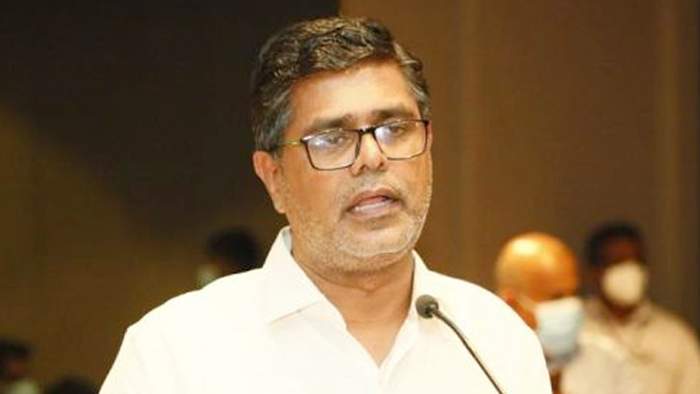
SJB Colombo District MP Mujibur Rahuman in parliament demanded to know from the government the reasons for CEB suspending the leave of all its employees until further notice from Thursday.
MP Rahuman said that the CEB has got an acting General Manager anew and the latter yesterday morning issued a circular suspending leave of all CEB employees with immediate effect until further notice.
“We demand that Minister Kanchana Wijesekera should explain this to the House. This circular was issued while this debate on the new Electricity Amendment Bill was pending. There are many who oppose this Bill. The Minister must tell parliament the reason for the urge to cancel the leave of CEB employees,” the MP said.However, Speaker Mahinda Yapa Abeywardena prevented Minister Wijesekera responding to the query and said that the matter raised by MP Rahuman was not relevant.
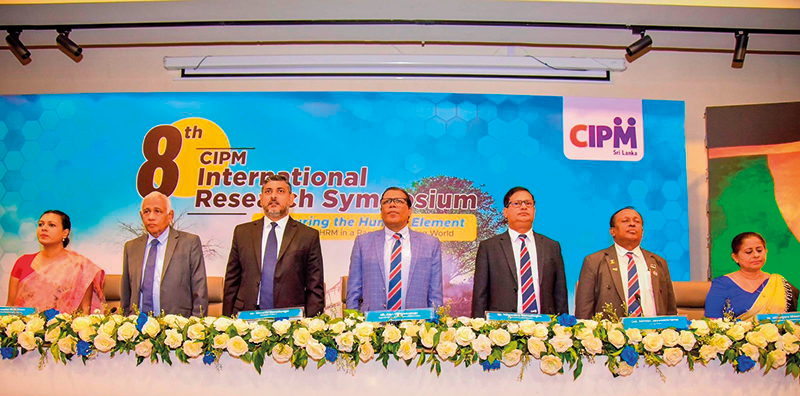
The Chartered Institute of Personnel Management (CIPM) successfully concluded the 8th Annual CIPM Symposium, which took place on 31st May 2024. Themed “Nurturing the Human Element—Redefining HRM in a Rapidly Changing World,” the symposium underscored the pivotal role of human resource management (HRM) in today’s dynamic global landscape. Since its inception in 1959, CIPM has been dedicated to advancing the HR profession through education, professional development, and advocacy, solidifying its position as Sri Lanka’s leading professional body for HRM.
Ken Vijayakumar, the President of the CIPM, graced the occasion as the chief guest. The symposium commenced with the welcome address by the Chairperson, Prof. Arosha Adikaram, followed by the Web Launch of the Symposium Proceedings and Abstract Book by the CIPM President. The event featured distinguished addresses, including a speech by Chief Guest Ken Vijayakumar, President of CIPM, and an address by Guest of Honor Shakthi Ranatunga, Chief Operating Officer of MAS Holdings Pvt. Ltd., Sri Lanka.
The symposium also featured an inspiring keynote address by Prof. Mario Fernando, Professor of Management and Director of the Centre for Cross Cultural Management (CCCM) at the University of Wollongong, Australia.
Vote of Thanks of the inauguration session was delivered by Dr. Dillanjani Weeratunga, Symposium Co-chair.
The symposium served as a comprehensive platform for researchers to present their findings across a wide range of critical topics in HRM. These included Cultural Diversity and Inclusion, Talent Development and Retention, Ethical Leadership and Corporate Social Responsibility, Adapting to Technological Advancements, Mental Health and Well-being at Work, Global Workforce Challenges, Employee Empowerment, and Reskilling and Upskilling.
The plenary session was led by Prof. Wasantha Rajapakse. Certificates were awarded to the best paper presenters during the valedictory session, followed by a vote of thanks delivered by Kamani Perera, Manager of Research and Development.
The annual symposium of CIPM was a truly inclusive event, attracting a diverse audience that spanned undergraduates, graduates, working professionals, research scholars and lecturers. This widespread interest highlights the symposium’s significance in the field of HRM, offering a unique opportunity for everyone to network and learn from scholarly brains.The CIPM International Research Symposium was sponsored by Hambantota International Port, Sri Lanka Institute of Information Technology (SLIIT), E B Creasy & Co. PLC, and Print Xcel Company.



US sports envoys to Lanka to champion youth development

Rahuman questions sudden cancellation of leave of CEB employees


