
News
MAY DAY – 2021


May Day which fell yesterday is the international day of the working people. The history of May Day goes back to the demand for better working conditions by the burgeoning labour movement in 1886 in the United States. Their agitation in May 1886 led to the massacre of labour activists in the Haymarket incident in Chicago setting off a powerful movement of solidarity throughout the world for an eight hour working day. The struggle epitomized the need to mobilize the working class to fight against inequity and safeguard the rights of the working class.
Sri Lanka is back to old times with the current health crisis being used as a pretext to attack labour’s hard fought rights and privileges. At a time when the world of work is moving towards a shorter working day, we are illegally increasing the hours of work with no additional compensation for the extra hour put in, totally disregarding our own labour laws.
The deteriorating conditions of labour has resulted in a significant number of working people being reduced to poverty with no income security. Sri Lanka has the lowest minimum wage in the region and globally only 16 countries have minimum wages that are less than that of Sri Lanka. Real wages are declining day to day as a consequence of inflationary pressures on the Sri Lankan economy. More and more people are in jobs earning incomes which do not guarantee them a decent life. Wage rates trail behind increases in productivity with whatever gains being shifted in the direction of capital. Sri Lankan labour laws and productivity schemes do not endeavour to secure for workers a share of the gains realized by enhanced worker productivity.
Women face multiple discrimination at work. Weekly hours of work are far above the global average. Arbitrary increases in permissible involuntary overtime to 720 hours per year from a previous 100 hours, extended shifts and night work that impact on their health and well-being, the indiscriminate use of surveillance technology invading their privacy and impinging on their fundamental freedoms are current features of the private sector employment which do not provide women with a conducive environment to work.
The traits of a gig economy (a labour market characterized by the prevalence of short-term contracts or freelance work as opposed to permanent jobs) are widely prevalent in the jobs that are now being created. Precarious work and non-standard forms of labour are on the increase with important consequences for unionization, worker representation and their voice and rights at work. Domestic workers and workers in the informal sector for all practical purposes fall outside the scope of the law. The modest safeguards available for employees in contract employment and precarious work have been whittled down, making it crucial for trade unions to concentrate on ensuring decent work conditions in such jobs through implementing measures that improve wages, expanding and enforcing regulations relating to contract labour, their safety and health, strengthening their social security and welfare and ensuring their voice and rights at work.
Grave issues confront workers and trade unions in the coming period. Sri Lanka is already one of the most liberal in flexibility in employment regulations and job quality according to a 2019 World Bank Report. Any further movement towards dismantling the labour law structure of the country would make our workers even more vulnerable to intensified exploitation by local and international capital.
On May Day 2021, the Ceylon Federation of Labour (CFL) calls upon organized labour to exert pressure on their leaders not to fall prey to the glib talk, specious arguments and machinations of capitalist employers to rob them of their hard won gains and to march forward in principled unity together with other sections of the working class in defence of their rights and privileges.
The uneven impact of the pandemic sweeping across the globe on the working class the promotion of ethno-religious nationalism and increased militarisation resorted to by the regime in power for its own survival make it even more necessary today to focus on class issues in order to defend, consolidate and advance the interests of Sri Lanka’s toiling masses.
Sgd. T. M. R. Rasseedin
General Secretary
Ceylon Federation of Labour (CFL)



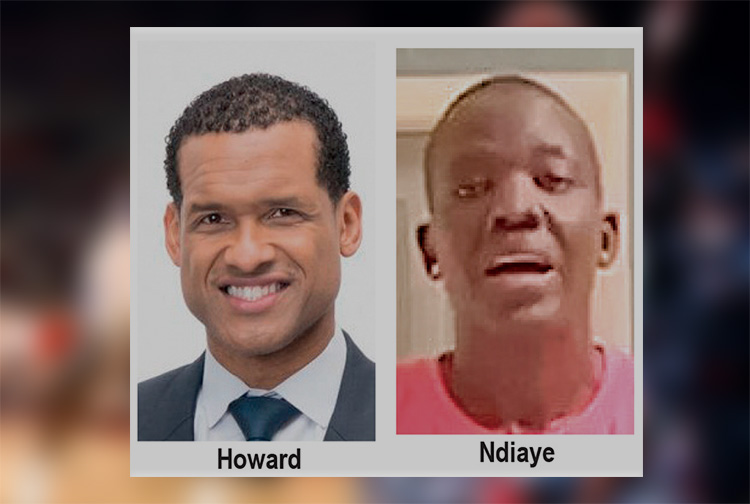
The U.S. Embassy in Colombo welcomed the U.S. Sports Envoys to Sri Lanka, former National Basketball Association (NBA) and Women’s National Basketball Association (WNBA) players Stephen Howard and Astou Ndiaye, from June 8 through 14.
The Public Diplomacy section of the U.S. Embassy said that it would launch a weeklong basketball program intended to harness the unifying power of sports, made possible through collaboration with Foundation of Goodness and IImpact Hoop Lab.
While in Sri Lanka, Howard and Ndiaye, both retired professional basketball players, will conduct a weeklong program, Hoops for Hope: Bridging Borders through Basketball. The Sports Envoys will lead basketball clinics and exhibition matches and engage in leadership sessions in Colombo and Southern Province for youth aged 14-18 from Northern, Uva, Eastern and Western Provinces, offering skills and leadership training both on and off the court. The U.S. Envoys will also share their expertise with the Sri Lanka Basketball Federation, national coaches, and players, furthering the development of basketball in the country. Beyond the clinics, they will collaborate with Sri Lankan schoolchildren to take part in a community service project in the Colombo area.
“We are so proud to welcome Stephen and Astou as our Sports Envoys to Sri Lanka, to build on the strong people-to-people connections between the United States and Sri Lanka,” said U.S. Ambassador Julie Chung. “The lessons that will be shared by our Sports Envoys – communication, teamwork, resilience, inclusion, and conflict resolution – are essential for leadership development, community building, equality, and peace. The U.S. Sports Envoy program is a testament to our belief that sports can be a powerful tool in promoting peace and unity.”
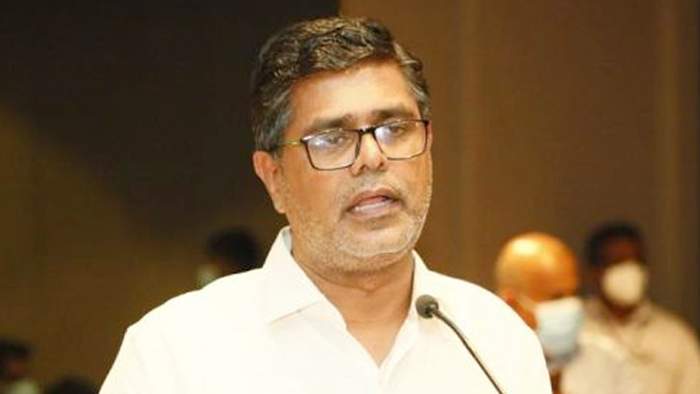
SJB Colombo District MP Mujibur Rahuman in parliament demanded to know from the government the reasons for CEB suspending the leave of all its employees until further notice from Thursday.
MP Rahuman said that the CEB has got an acting General Manager anew and the latter yesterday morning issued a circular suspending leave of all CEB employees with immediate effect until further notice.
“We demand that Minister Kanchana Wijesekera should explain this to the House. This circular was issued while this debate on the new Electricity Amendment Bill was pending. There are many who oppose this Bill. The Minister must tell parliament the reason for the urge to cancel the leave of CEB employees,” the MP said.However, Speaker Mahinda Yapa Abeywardena prevented Minister Wijesekera responding to the query and said that the matter raised by MP Rahuman was not relevant.
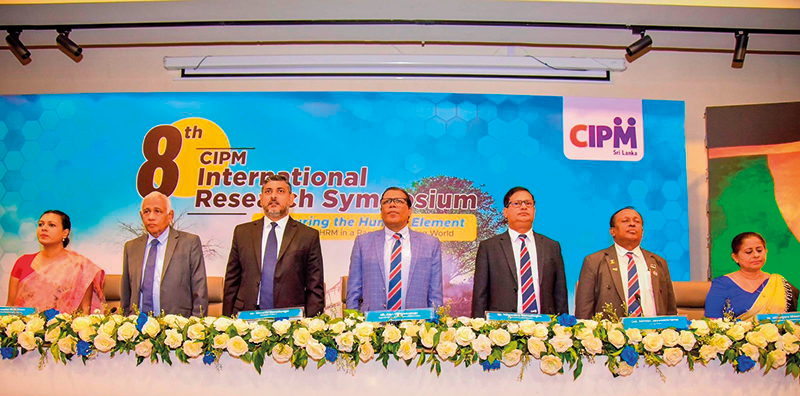
The Chartered Institute of Personnel Management (CIPM) successfully concluded the 8th Annual CIPM Symposium, which took place on 31st May 2024. Themed “Nurturing the Human Element—Redefining HRM in a Rapidly Changing World,” the symposium underscored the pivotal role of human resource management (HRM) in today’s dynamic global landscape. Since its inception in 1959, CIPM has been dedicated to advancing the HR profession through education, professional development, and advocacy, solidifying its position as Sri Lanka’s leading professional body for HRM.
Ken Vijayakumar, the President of the CIPM, graced the occasion as the chief guest. The symposium commenced with the welcome address by the Chairperson, Prof. Arosha Adikaram, followed by the Web Launch of the Symposium Proceedings and Abstract Book by the CIPM President. The event featured distinguished addresses, including a speech by Chief Guest Ken Vijayakumar, President of CIPM, and an address by Guest of Honor Shakthi Ranatunga, Chief Operating Officer of MAS Holdings Pvt. Ltd., Sri Lanka.
The symposium also featured an inspiring keynote address by Prof. Mario Fernando, Professor of Management and Director of the Centre for Cross Cultural Management (CCCM) at the University of Wollongong, Australia.
Vote of Thanks of the inauguration session was delivered by Dr. Dillanjani Weeratunga, Symposium Co-chair.
The symposium served as a comprehensive platform for researchers to present their findings across a wide range of critical topics in HRM. These included Cultural Diversity and Inclusion, Talent Development and Retention, Ethical Leadership and Corporate Social Responsibility, Adapting to Technological Advancements, Mental Health and Well-being at Work, Global Workforce Challenges, Employee Empowerment, and Reskilling and Upskilling.
The plenary session was led by Prof. Wasantha Rajapakse. Certificates were awarded to the best paper presenters during the valedictory session, followed by a vote of thanks delivered by Kamani Perera, Manager of Research and Development.
The annual symposium of CIPM was a truly inclusive event, attracting a diverse audience that spanned undergraduates, graduates, working professionals, research scholars and lecturers. This widespread interest highlights the symposium’s significance in the field of HRM, offering a unique opportunity for everyone to network and learn from scholarly brains.The CIPM International Research Symposium was sponsored by Hambantota International Port, Sri Lanka Institute of Information Technology (SLIIT), E B Creasy & Co. PLC, and Print Xcel Company.



US sports envoys to Lanka to champion youth development

Rahuman questions sudden cancellation of leave of CEB employees


