
News
Let’s cut the cackle and get on with it : The fertilizer issue


by Dr. U. Pethiyagoda
It seems that the “Going Organic” tale has lost its novelty and glamour and the matter has been “done and dusted”. Clumsy and ineffective “face-saving” efforts are grossly insufficient.
Obviously, the President cannot be expected to know the background to guide a correct decision on most of the matters that come within his purview. There are too many instances where genuine error or ill-advised steps have to be quickly reversed. Square pegs in square holes cannot move! It is a pity that Our President declared our intent to go totally organic. Apart from the embarrassment, the so called “Chemical Mafia” may react in ways that could be unpleasant. One hopes not.
But, the President, under whose watch, this extraordinarily short-sided operation was launched, has to expect that he has to take the brunt of any criticism. This coterie, (Viyath Maga) which it is said, surrounds and influences him must be made to pay (financially as well) for their sins, folly, (or crimes). I believe that prudence should guide the President to review his trust in such support. I leave it to the competence of drafters of a “New Constitution” to examine ways to prevent a recurrence of this type of colossal tragedy.
“Asewanatcha balanan……..” is the first injunction in the Mahamangala Sutra. In the case of the recent disastrous happenings in the fertilizer matter, I think it is a fair conclusion that opinion (including of those who know the subject), is that increasing the “organic content” of fertilizers is desirable. Though the nutrient content is low in comparison to “artificial or mineral”, the benign effects on soil physical properties and soil biota are significant. But here too, there are unresolved problems, such as unwitting introduction of toxic elements.
As an aside, I was involved long ago, in a study to examine the value of a two-year rejuvenation of tea fields earmarked for replanting, by planting Guatemala or Mana grass. ( the duration varied in different situations), after which the new tea plants are introduced. It seemed that this rotation, produced only a marginal increase of soil Carbon and this too was only transient. It would have been magical if a hundred years of fertility abuse under tea, could be offset by a mere two years under grass. My guess is that the ideal would be alternate 25 year cycles. In that sense the wise farmer would relocate his chena plot.
In summary, abandon the simplistic view of the “Vasa Visa” brigade for a dramatic and radical move to “traditional, organic” farming, as impossible, mythical and misdirected enthusiasm. Although the cry of 100% organic may make good press, it is bad science.
Can the system sustain a possible feared loss of a quarter or so drop in paddy production, with frustrated farmers vowing that they would not cultivate next season’s paddy, unless there is a reversal of this deadly and ill-advised overnight change to organic? The claimed ready availability of suitable “compost” both nationally and internationally, is more rubbishy than a compost heap.
There is a much more serious implication that seems to have escaped notice. The Department of Agriculture is around a century old. As also The CRI, RRI and TRI and more recently, Minor Export Crops. Naturally, much of the experimentation aimed at evolving best practices for maximum productivity. The major means were by evolving appropriate technologies and ensuring reliable supplies of the necessary inputs. Are we really serious about jettisoning the vast effort, devotion and many thousand man hours and millions of rupees expended on trials to evolve the most rewarding use of agrochemicals – fertilizers, pesticides and weed-killers. Who is to foot the bill for what now becomes an astonishing act of idiocy?
The solutions suggested to meet the acute lack of sufficient compost, and tried (at hellish cost), are at the least asinine. One is appalled at the abysmal ignorance of some in authority – (but not in service). Palliatives like “Cabinet reshuffles” will serve no purpose – it will merely provide a chance for the failed, to wreck some other place! In this game, any amount of re-dealing of the same pack will not eliminate “Jokers”.
It seems that a largely ignorant authority does not know that centuries old farming wisdom and experience that paddy needs fertilizer at specific stages of growth, each being of different composition. “Mada pohora” before planting, another to encourage tillering and “Bundi pohora” at heading and grain filling etc. After much fumbling indecision, farmers are finally given the nitrogen rich urea four weeks or so too late! This also at an incredible cost! Will we ever again have ministers, who if they don’t know, are guided by those professionals who do know?
The astonishing methods suggested, for this self-created mess are laughable, if they were not so serious. The hasty import of compost from China has led to unforeseen consequences including diplomatic ones. Anybody who does not realize the limitations of drawing a minute sample from a bulk of some several thousands of tons, cannot be serious. A single case of detection of anything deleterious is cause for rejection. A needle stuck in a haystack has a better chance of being detected. This is a case where a single positive among many negatives is reason for rejecting the whole.
We are told that several million dollars may be claimed by the supplier, whether the cargo is accepted or not. In true “Kekille Style” some genius may decide to save dollars by accepting this stuff, and thus unleashing a public and human health disaster and agricultural risk of introducing new pathogens, causing damage of catastrophic dimension. The circumstance of a Chinese Government involvement in the supplier concerned, presents a further concern.
Then, we go to importing a huge consignment of “liquid nitrogenous” (!) fertilizer (as far as I am aware, a material unknown to Science) from India, at undisclosed and probably huge cost. Many farmers have rejected this foul-smelling material as containing human sewage! As a friend jocularly recalled, PM Narendra Modi promised to have constructed a massive number of latrines to meet a grave shortage. Perhaps India has solved a harrowing problem – finding a customer to receive the stuff and pay for it! Then there was an equally bizarre promise to compensate farmers who have lost income through going organic. How precisely can this be done? Are we totally daft?
All of these problems created through machinations of the evil “Multinationals”,(the British Colonials having lost their currency!).
Incidentally, anyone displaying doubts about such painful inanities, is either a believer of “Pattapal Boru Western Science” or in the pay of evil Multinationals. I am a little peeved. After over five decades of service to the agricultural sector (one way or another), nobody not even those dreadful Multinationals, has shown any inclination to offer me a single dollar or rupee. Have I been short-changed? But then all colleagues I know, are singularly uncorrupt and incorruptible persons of impeccable integrity. So these accusations of bribery are without basis and most unfair.
This whole episode has become a face-saving exercise with several faces needing to be rescued. This is OK if it is free of potential harm. It is a matter of grave regret that The President (possibly misinformed), declared at the UN General Assembly, (no less) that we aim to be the first in the World (or more cynically, the last) country to go one hundred percent organic. Had such a statement been made by a more prominent State Leader, he may never be free of ridicule. We should be thankful that we are only a small country whose Leader’s gaffe goes (hopefully) unnoticed.
It is time for the scientists to consider how best a sensible strategy be developed, to obtain a better integration of the traditional and advanced scientific concepts. This would involve fresh thinking on crop rotation, biological control of pests and diseases, soil and water control, erosion and other undesirable but unavoidable negative environmental consequences, harmonizing responsibilities between the Departments of Agriculture and Veterinary Departments and the CRI, RRI and TRI. There is much that could and must be done. There is no point in making donkeys to bark and dogs to bray. For the immediate future of paddy cultivation, crop rotations, reserves for production of good green manure crops (like “Wal Surya Kantha – Tithonia diversifolia, Glyricidia, Ipil-Ipil and Crotolaria come to mind, The Niyaras could be more systematically used to provide vegetables, yams, and “greens”.
Perhaps we can salvage ourselves from disaster, if it catalyzes a re-visit to the virtues of crop-rotation, fallowing, integration with animal sciences (pasture/fodder) and fish culture. One nostalgically recalls, how during World War Two, paddy lands were able to provide a cornucopia of fresh and palatable vegetables.
Let us grasp this unexpected opportunity.




The U.S. Embassy in Colombo welcomed the U.S. Sports Envoys to Sri Lanka, former National Basketball Association (NBA) and Women’s National Basketball Association (WNBA) players Stephen Howard and Astou Ndiaye, from June 8 through 14.
The Public Diplomacy section of the U.S. Embassy said that it would launch a weeklong basketball program intended to harness the unifying power of sports, made possible through collaboration with Foundation of Goodness and IImpact Hoop Lab.
While in Sri Lanka, Howard and Ndiaye, both retired professional basketball players, will conduct a weeklong program, Hoops for Hope: Bridging Borders through Basketball. The Sports Envoys will lead basketball clinics and exhibition matches and engage in leadership sessions in Colombo and Southern Province for youth aged 14-18 from Northern, Uva, Eastern and Western Provinces, offering skills and leadership training both on and off the court. The U.S. Envoys will also share their expertise with the Sri Lanka Basketball Federation, national coaches, and players, furthering the development of basketball in the country. Beyond the clinics, they will collaborate with Sri Lankan schoolchildren to take part in a community service project in the Colombo area.
“We are so proud to welcome Stephen and Astou as our Sports Envoys to Sri Lanka, to build on the strong people-to-people connections between the United States and Sri Lanka,” said U.S. Ambassador Julie Chung. “The lessons that will be shared by our Sports Envoys – communication, teamwork, resilience, inclusion, and conflict resolution – are essential for leadership development, community building, equality, and peace. The U.S. Sports Envoy program is a testament to our belief that sports can be a powerful tool in promoting peace and unity.”
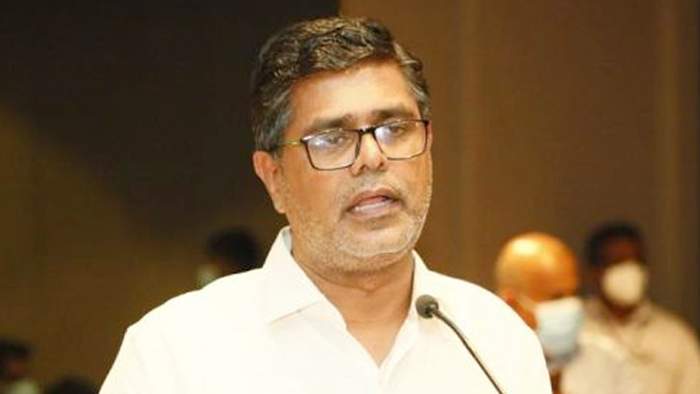
SJB Colombo District MP Mujibur Rahuman in parliament demanded to know from the government the reasons for CEB suspending the leave of all its employees until further notice from Thursday.
MP Rahuman said that the CEB has got an acting General Manager anew and the latter yesterday morning issued a circular suspending leave of all CEB employees with immediate effect until further notice.
“We demand that Minister Kanchana Wijesekera should explain this to the House. This circular was issued while this debate on the new Electricity Amendment Bill was pending. There are many who oppose this Bill. The Minister must tell parliament the reason for the urge to cancel the leave of CEB employees,” the MP said.However, Speaker Mahinda Yapa Abeywardena prevented Minister Wijesekera responding to the query and said that the matter raised by MP Rahuman was not relevant.
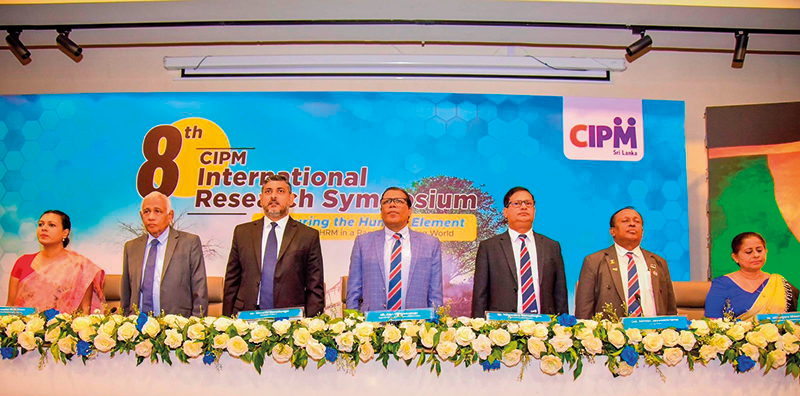
The Chartered Institute of Personnel Management (CIPM) successfully concluded the 8th Annual CIPM Symposium, which took place on 31st May 2024. Themed “Nurturing the Human Element—Redefining HRM in a Rapidly Changing World,” the symposium underscored the pivotal role of human resource management (HRM) in today’s dynamic global landscape. Since its inception in 1959, CIPM has been dedicated to advancing the HR profession through education, professional development, and advocacy, solidifying its position as Sri Lanka’s leading professional body for HRM.
Ken Vijayakumar, the President of the CIPM, graced the occasion as the chief guest. The symposium commenced with the welcome address by the Chairperson, Prof. Arosha Adikaram, followed by the Web Launch of the Symposium Proceedings and Abstract Book by the CIPM President. The event featured distinguished addresses, including a speech by Chief Guest Ken Vijayakumar, President of CIPM, and an address by Guest of Honor Shakthi Ranatunga, Chief Operating Officer of MAS Holdings Pvt. Ltd., Sri Lanka.
The symposium also featured an inspiring keynote address by Prof. Mario Fernando, Professor of Management and Director of the Centre for Cross Cultural Management (CCCM) at the University of Wollongong, Australia.
Vote of Thanks of the inauguration session was delivered by Dr. Dillanjani Weeratunga, Symposium Co-chair.
The symposium served as a comprehensive platform for researchers to present their findings across a wide range of critical topics in HRM. These included Cultural Diversity and Inclusion, Talent Development and Retention, Ethical Leadership and Corporate Social Responsibility, Adapting to Technological Advancements, Mental Health and Well-being at Work, Global Workforce Challenges, Employee Empowerment, and Reskilling and Upskilling.
The plenary session was led by Prof. Wasantha Rajapakse. Certificates were awarded to the best paper presenters during the valedictory session, followed by a vote of thanks delivered by Kamani Perera, Manager of Research and Development.
The annual symposium of CIPM was a truly inclusive event, attracting a diverse audience that spanned undergraduates, graduates, working professionals, research scholars and lecturers. This widespread interest highlights the symposium’s significance in the field of HRM, offering a unique opportunity for everyone to network and learn from scholarly brains.The CIPM International Research Symposium was sponsored by Hambantota International Port, Sri Lanka Institute of Information Technology (SLIIT), E B Creasy & Co. PLC, and Print Xcel Company.



US sports envoys to Lanka to champion youth development

Rahuman questions sudden cancellation of leave of CEB employees


