
Business
Lessons for Colombo from Manila, Bangkok and Hong Kong

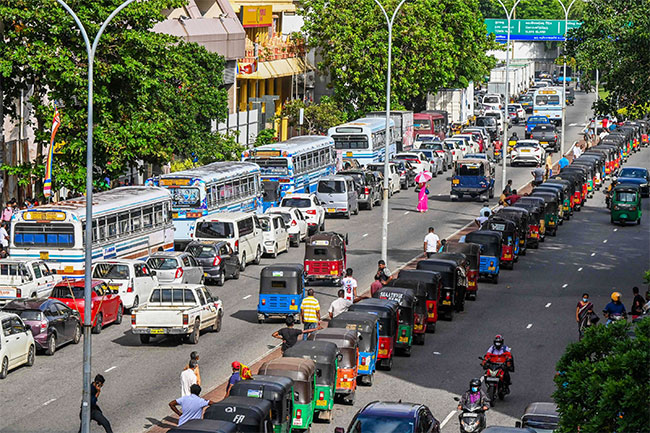
Troubled Transportation:
IPS Policy Insights
One of the most critical implications of Sri Lanka’s current economic crisis is the hard hit on the transport sector. The foreign exchange shortage has made importing fuel a major challenge, severely affecting road transportation and further impeding the performance of an already crippled economy. This Policy Insight gives context to the ongoing transportation issues in Sri Lanka and offers medium- and long-term solutions to address the issues, based on lessons learnt from the experiences of Manila, Bangkok and Hong Kong.
Poor Public Transportation
The transportation sector in Sri Lanka absorbs a fair share of petroleum imports to the country and has a very low price elasticity. Despite the many price hikes in 2021, the Ceylon Petroleum Corporation (CPC) sold a total of 3.6 billion litres of petroleum products to the transport sector, which was higher than the average of 3.4 billion litres sold from 2015 onwards. This trend of high demand continues even during the historically high petroleum product price in 2022.
A key reason for this consistently high demand for fuel, particularly in commercial capital of Colombo, is the combination of the overreliance on private transportation and the weak public transportation system. The decline in the public transport sector amidst the above-mentioned consistent high demand for petroleum products in 2021 reflects the inadequate contribution of public transportation towards the transport sector in Sri Lanka. When the demand for petroleum products in 2021 was above the previous period’s average, the operated kilometrage and passenger kilometrage of the public operator Sri Lanka Transport Board (SLTB) declined by 19.7 per cent and 28.4 per cent, respectively, while the corresponding contractions in the private transport sector were 4.4 per cent and 2.2 per cent, respectively. Some part of the decline in public transportation in 2021 can be attributed to COVID-19 related social distancing requirements in travelling. As such, amidst the severe financial crisis with the lack of capacity to import fuel in a timely manner and rising fuel prices due to global and exchange rate pressures, the key solutions to the transportation problem lie in improving the public transportation sector and exploring alternative means of transportation.
Grand Policies and Plans
Sri Lanka has undergone various planning and policy contexts in relation to public transportation. During the 2010-2015 period and its The Emerging Wonder of Asia development framework, the transport sector buzzwords included Bus Rapid Transit (BRT), Light Rail Transit (LRT) and Mass Rapid Transit (MRT). During the 2015-2019 period and its Western Region Megapolis Master Plan, the hype included the Rapid Transit System (RTS), the bus system, the rail system, the road system and the already heard LRT. In the most recent Vistas of Prosperity and Splendour framework, the lingo was peppered with a ‘park and ride’ system, metro rail system, radial and circular road system and the now familiar LRT. Despite varied packaging to cater to the administration’s approach, most of these public transportation-related efforts during the last decade were broadly connected to the National Physical Plan (NPP).
LRT Drama
All previous policy frameworks have recognised the importance of developing an LRT system to ease congestion in transport and commuting but several reasons delayed its implementation. The approval from the Central Environment Authority (CEA) for the LRT was received at the latter part of 2018. There were delays in drafting a framework to regulate the LRT system. Subsequent to fulfilling these, in 2019, the Japan International Cooperation Agency (JICA) expressed willingness to provide a soft loan of USD 1.85 billion out of the total estimated investment of USD 2.2 billion for a LRT connecting Malabe and Fort. This included a 12-year grace period, 40-year payback period, and yen interest rate of 0.1 per cent. By June 2020, Sri Lanka has already signed the agreement with JICA for a loan tranche of USD 270 million, preliminary work had begun, and a contract was signed with a project consultancy firm for USD 130 million. However, in 2020, the project was abruptly halted, the agreement with JICA was reversed and steps were made to seek new proposals from private investors under a Public-Private Partnership (PPP) arrangement.
The ever familiar – yet illusive LRT came to the forefront once again in 2022 when Sri Lanka attempted to woo Japan to extend support during the ongoing economic crisis. Sri Lanka has written to the Japanese Prime Minister requesting financial support while extending “deep regret in scrapping the LRT” project in 2020. Still, it is unclear why the soft loan from Japan was rejected in favour of a PPP and to date, public transportation in Sri Lanka is at an incipient level. When Sri Lanka returns to a position to consider such investments, there should be no room for further policy or planning mistakes or back paddling.
Lessons for Colombo
There are several lessons to be learnt based on the experiences of Metro Manila, Bangkok and Hong Kong which are case studies that Sri Lanka’s transport sector can refer to in its efforts to develop public transportation.
Metro Manila’s experience demonstrates the importance of creating a master plan and sticking to it. One such approach is legalising the transportation plan. This would make it more difficult for a project to be postponed or disbanded when governments change. Another option is to garner support from the government, opposition and the public. If the public supports the initiative, the prospective government or the opposition, has a greater incentive to complete it.
Bangkok’s experience shows how successfully managed PPPs have assisted the development of infrastructure projects without burdening the government. In the case of the Bangkok Mass Transit System (BTS) Sky Train, the government did not provide any funding and as a result, does not face any risk associated with the operation of the light rail. A private company providing 100% of the funding and taking the aggregate risk for a project may be extreme in the Sri Lankan context. But it demonstrates that Sri Lanka can be on the lookout for a private company to finance and potentially fund part of a public transportation project.
Similarly, Hong Kong demonstrates how a private company can successfully run a mass transit system and profit by investing in its train stations and developing rental space. This success was mainly hinged upon Mass Transit Railway (MTR)’s capacity to develop the land and receive the rental income and the conducive environment in Hong Kong to do so. As such, incorporating rental space into transportation investments in Sri Lanka could pave the path for future investments in public transportation to become profitable.
However, a PPP should not be considered a “silver bullet” for Sri Lanka’s public transportation issues. Bangkok’s experience showed that projects developed on a piecemeal basis lack integration and become less efficient. As a result, Bangkok’s Purple Line stops 1 kilometre away from the blue line at a different station. If Sri Lanka is to pursue PPPs for public transportation, an integrated approach where a transportation system is considered as a whole instead of a collection of independent projects in critical.
This Policy Insight is based on the new IPS publication ‘Towards a Developed Urban Transportation System: Lessons for Sri Lanka’ by Bilesha Weeraratne and Chathurga Karunanayake. The complete report can be purchased from the Publications Unit of the IPS located at 100/20, Independence Avenue, Colombo 07 and leading bookshops island wide. For more information, contact 011-2143107 / 077-3737717 or email: publications@ips.lk.
To download more POLICY INSIGHTS from IPS, visit: https://www.ips.lk/publications/policy-insights.

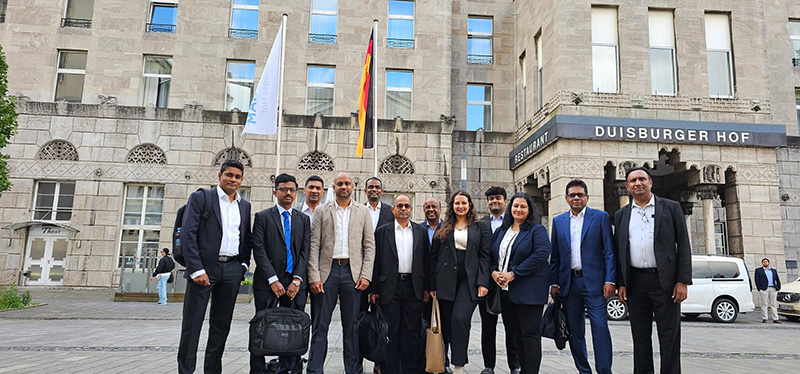
The Delegation of German Industry and Commerce in Sri Lanka (AHK Sri Lanka) proudly facilitated the first-ever Sri Lankan delegation’s participation at Drupa 2024, the world’s largest trade fair for the printing industry and technology. Held after an eight-year hiatus, Drupa 2024 was a landmark event, marking significant advancements and opportunities in the global printing industry.
AHK Sri Lanka played a pivotal role in organising and supporting the delegation, which comprised 17 members from the Sri Lanka Association for Printers (SLAP), representing eight companies from the commercial, newspaper, stationery printing, and packaging industries. This pioneering effort by AHK Sri Lanka not only showcased the diverse capabilities of Sri Lanka’s printing sector but also facilitated vital bilateral discussions with key stakeholders from the German printing industry.
Business
Unveiling Ayugiri: Browns Hotels & Resorts sets the stage for a new era in luxury Ayurveda Wellness

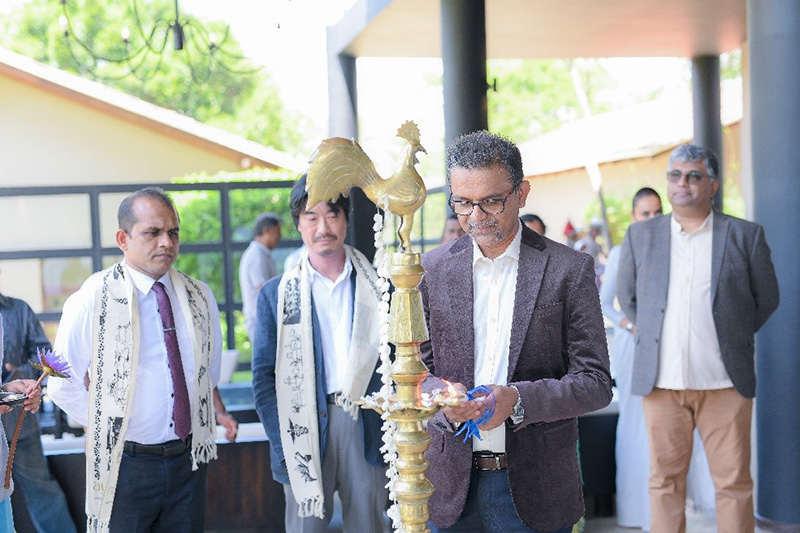
In a captivating reimagining of luxury wellness tourism, Browns Hotels & Resorts proudly unveiled the exquisite Ayugiri Ayurveda Wellness Resort Sigiriya. This momentous occasion, celebrated amidst a vibrant and serene grand opening on the 6th of June, heralds a new chapter in the Ayurveda wellness tourism landscape in Sri Lanka. Nestled amidst 54 acres of unspoiled natural splendour, Ayugiri features 22 exclusive suites and stands out as the only luxury Ayurveda wellness resort in the country offering plunge pools in every room, rendering it truly one-of-a-kind.
The grand opening of Ayugiri Ayurveda Wellness Resort was an enchanting event, where guests were captivated by the melodies of flutists and violinists resonating through Sigiriya’s lush landscapes. As traditional drummers and dancers infused the air with vibrant energy, Browns Hotels & Resorts’ CEO, Eksath Wijeratne, Kotaro Katsuki, Acting Ambassador for the Embassy of Japan and General Manager, Buwaneka Bandara, unveiled the resort’s new logo, marking a significant moment witnessed by distinguished guests from the French Embassy, Ayurveda and wellness enthusiasts along with officials from the Sigiriya area, LOLC Holdings and Browns Group.
“Our strategic expansion into wellness tourism with Ayugiri Ayurveda Wellness Resort Sigiriya symbolises a significant milestone for Browns Hotels & Resorts. Wellness tourism has consistently outperformed the overall tourism industry for over a decade, reflecting a growing global interest in travel that goes beyond leisure to offer rejuvenation and holistic well-being. By integrating the timeless wisdom of Ayurveda with modern luxury, we aim to set a new standard in luxury wellness tourism in Sri Lanka. Whether your goal is prevention, healing, or a deeper connection to inner harmony, Ayugiri offers a sanctuary for holistic well-being” stated Eksath Wijeratne.
Ayugiri encapsulates the essence of life, inspired by the lotus flower held by the graceful queens of the infamous Sigiriya frescoes. Just as the lotus emerges from the murky depths, untainted and serene,
Ayugiri invites guests on a journey of purity and rejuvenation, harmonised with a balance of mind, body and spirit, the essence of nature, echoes of culture and the wisdom of ancient Ayurvedic healing.
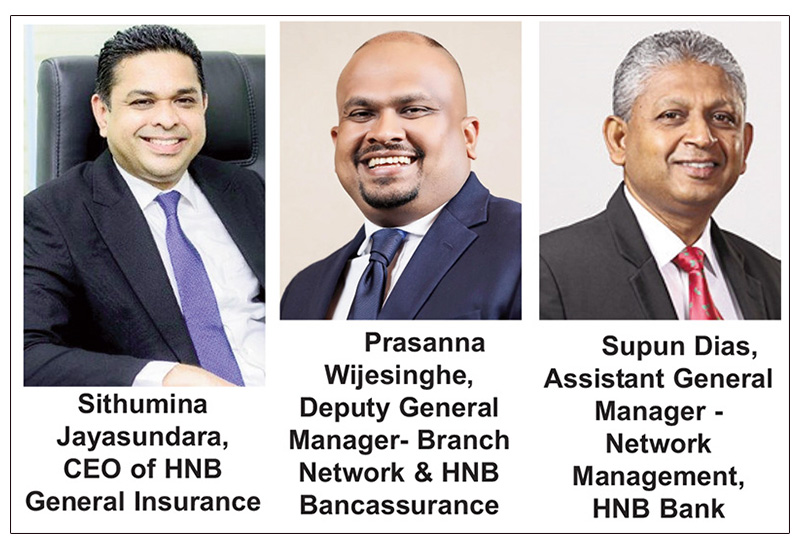
HNB General Insurance, one of Sri Lanka’s leading general insurance providers, has been honored as the Best General Bancassurance Provider in Sri Lanka 2024 by the prestigious Global Banking and Finance Review – UK.
The esteemed accolade underscores HNB General Insurance’s unwavering commitment to excellence and its outstanding performance in the field of bancassurance. Through dedication and hard work, the HNB General Insurance team has continuously endeavored to deliver innovative insurance solutions, cultivate strong relationships with banking partners, and provide unparalleled service to customers nationwide. This recognition is a testament to the team’s dedication and relentless pursuit of excellence in the bancassurance business.
“We are honored to receive this prestigious award, which reflects our team’s tireless efforts and dedication to delivering value-added insurance solutions and exceptional service through our bancassurance partnerships,” said Sithumina Jayasundara, CEO of HNB General Insurance. “This recognition reaffirms our position as a trusted insurance provider in Sri Lanka and motivates us to continue striving for excellence in serving our customers and communities.”



US sports envoys to Lanka to champion youth development

Rahuman questions sudden cancellation of leave of CEB employees


