
News
Lanka lucky to get substantial supplies of Sinopharm, but we are paying for following failed playbook of US, UK – Dr. Rannan-Eliya

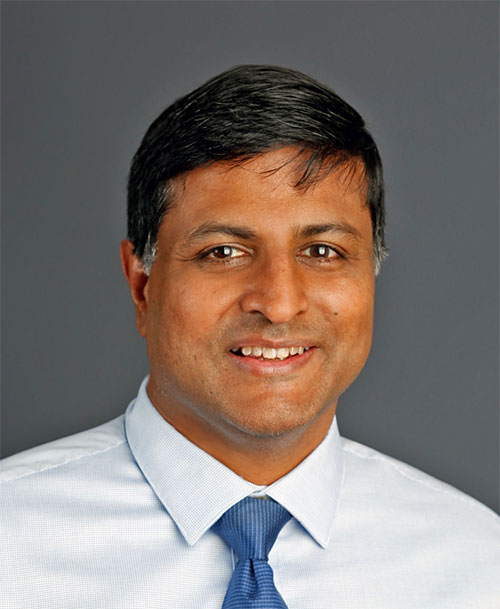
Given that Sri Lanka has access to substantial supplies of Sinopharm vaccine, Sinovac is not a good choice any longer, since Sinopharm is much better in terms of immune protection, Executive Director of the Institute for Health Policy (IHP), Dr. Ravi Rannan-Eliya says.
Dr. Eliya said that if Sri Lanka had actually stuck to President Gotabaya Rajapaksa’s official strategy of preventing and stopping outbreaks, then Sinovac might have had a role, since even a partially effective vaccine can help in reducing the cost of maintaining a COVID- free country. He added that “this essentially what China is doing right now”.
“China doesn’t need the best vaccines, just vaccines good enough to slow transmission enough to allow other control measures to beat the virus, without putting the whole country in lockdown. But we are not China. We have followed the failed playbook that the UK and the USA adopted. So we have widespread transmission in the community and literally thousands of deaths each month. So for us, buying and deploying Sinopharm, topped up with Moderna, Pfizer and Sputnik seems to be best strategy for now, with the exact mix depending on what is available quickly in quantity. Moreover, given that thousands are dying and will continue to die until the virus slows down by infecting enough people, speed and quantity are the biggest considerations, and no longer cost, since we have already made the decision to go for broke…and I mean that literally!,” he said.
Given below are excerpts of his statement: “I was asked the other day for my thoughts on the local approval and use of Sinovac, so just sharing my general take on this. Sinovac was given an emergency use license (EUL) by our NMRA on 16 July 2021, six weeks after WHO had given its EUL (1 Jun 2021). We have since not purchased it as far as I know and certainly not used it, so why?
“SHOULD SINOVAC BE APPROVED FOR EMERGENCY USE DURING THIS ONGOING COVID PANDEMIC?
“The answer to that is fairly simply – YES. This basically boils down to two considerations: (1) Does it work? (2) Is it safe enough for emergency use, given the limited evidence that any vaccine will have in an emergency scenario? This is the decision that WHO came to (and they are really slow when it comes to non-US/UK/EU vaccines), and the same decision that robust regulatory authorities in places like Hong Kong, Chile came to months before WHO. Given that and given the reality that we faced of tight global supplies of COVID vaccines, our local NMRA approval was in fact if anything rather slow. The second question is whether we should use or purchase it.
“SHOULD SINOVAC BE USED IN OUR SRI LANKAN COVID VACCINATION STRATEGY?
“The question of whether Sinovac should be used in our national COVID vaccination strategy is a completely separate one, and not one that NMRA should or could decide. This separate decision needs to be based on the overall public health strategy, plus COST and AVAILABILITY considerations. The bottom line here is that the answer depends on what our alternatives are, and how desperate we are to boost population immunity.
“There are three things to know about Sinovac. First, it is not as effective in stopping severe illness and also in stopping transmission as Sinopharm or Astra-Zeneca, and much less effective than the mRNA vaccines, like Pfizer and Moderna. Second, it is much more available to developing countries than Astra-Zeneca, Pfizer and Moderna, because Sinovac is being produced in the billions of doses and most Western countries aren’t buying it. Third, although Sinopharm is a better vaccine, Sinovac was available in bulk outside China much earlier, because Sinovac, a commercial firm, was much faster in getting approvals than the more lethargic, state-run Sinopharm.
“So Sinovac has been put to use in many countries, including in Europe and also some OECD countries, such as Chile and Mexico. GAVI has also signed agreements to purchase Sinovac for global distribution through the COVAX programme. For practical reasons. Sinovac and also Sinopharm are the only vaccines that are available in sufficient bulk to allow COVAX to deliver on its commitments to developing countries, so COVAX desperately needs both Sinovac and Sinopharm. So there is a rational case for purchasing Sinovac in bulk in many countries, and even Western-dominated entities like GAVI have come to this conclusion.
“However, for us in Sri Lanka, where we appear to now have substantial supplies of mostly Sinopharm vaccines, Sinovac is not a good choice any longer, since Sinopharm is much better in terms of immune protection. This means that with continuing widespread transmission (since contrary to President’s Official COVID Strategy, our real strategy has been for months to live and die! with the virus), Sinovac will require boosters earlier, and it will thus end up being more costly.”



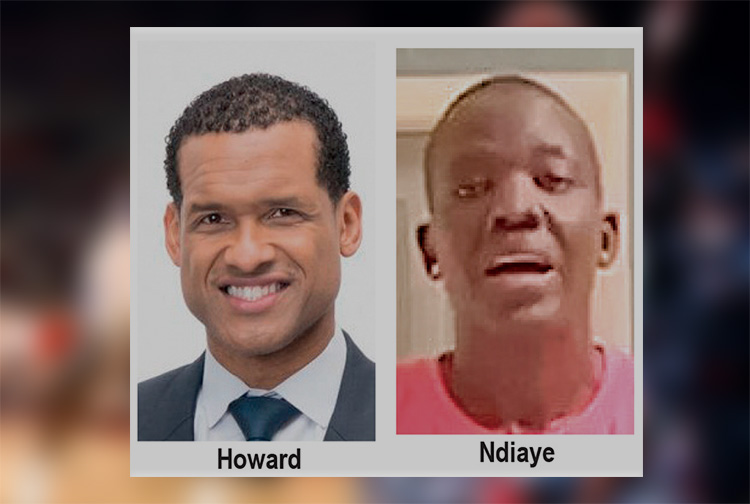
The U.S. Embassy in Colombo welcomed the U.S. Sports Envoys to Sri Lanka, former National Basketball Association (NBA) and Women’s National Basketball Association (WNBA) players Stephen Howard and Astou Ndiaye, from June 8 through 14.
The Public Diplomacy section of the U.S. Embassy said that it would launch a weeklong basketball program intended to harness the unifying power of sports, made possible through collaboration with Foundation of Goodness and IImpact Hoop Lab.
While in Sri Lanka, Howard and Ndiaye, both retired professional basketball players, will conduct a weeklong program, Hoops for Hope: Bridging Borders through Basketball. The Sports Envoys will lead basketball clinics and exhibition matches and engage in leadership sessions in Colombo and Southern Province for youth aged 14-18 from Northern, Uva, Eastern and Western Provinces, offering skills and leadership training both on and off the court. The U.S. Envoys will also share their expertise with the Sri Lanka Basketball Federation, national coaches, and players, furthering the development of basketball in the country. Beyond the clinics, they will collaborate with Sri Lankan schoolchildren to take part in a community service project in the Colombo area.
“We are so proud to welcome Stephen and Astou as our Sports Envoys to Sri Lanka, to build on the strong people-to-people connections between the United States and Sri Lanka,” said U.S. Ambassador Julie Chung. “The lessons that will be shared by our Sports Envoys – communication, teamwork, resilience, inclusion, and conflict resolution – are essential for leadership development, community building, equality, and peace. The U.S. Sports Envoy program is a testament to our belief that sports can be a powerful tool in promoting peace and unity.”
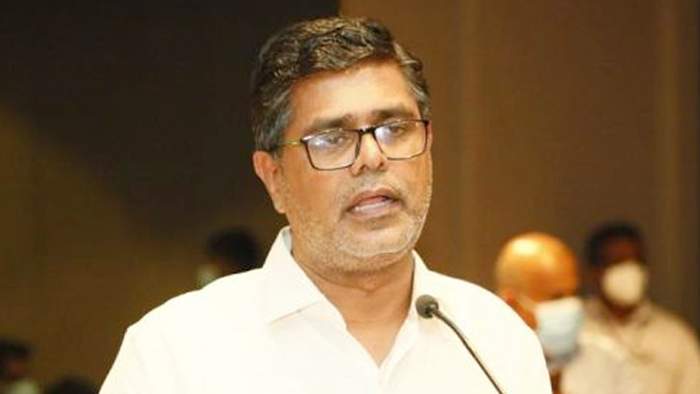
SJB Colombo District MP Mujibur Rahuman in parliament demanded to know from the government the reasons for CEB suspending the leave of all its employees until further notice from Thursday.
MP Rahuman said that the CEB has got an acting General Manager anew and the latter yesterday morning issued a circular suspending leave of all CEB employees with immediate effect until further notice.
“We demand that Minister Kanchana Wijesekera should explain this to the House. This circular was issued while this debate on the new Electricity Amendment Bill was pending. There are many who oppose this Bill. The Minister must tell parliament the reason for the urge to cancel the leave of CEB employees,” the MP said.However, Speaker Mahinda Yapa Abeywardena prevented Minister Wijesekera responding to the query and said that the matter raised by MP Rahuman was not relevant.
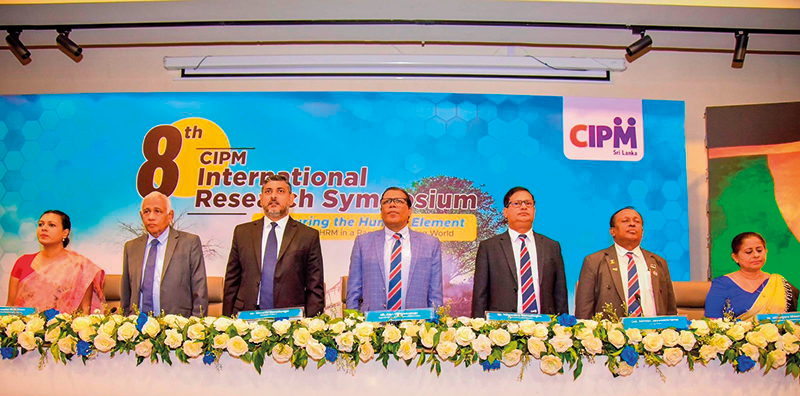
The Chartered Institute of Personnel Management (CIPM) successfully concluded the 8th Annual CIPM Symposium, which took place on 31st May 2024. Themed “Nurturing the Human Element—Redefining HRM in a Rapidly Changing World,” the symposium underscored the pivotal role of human resource management (HRM) in today’s dynamic global landscape. Since its inception in 1959, CIPM has been dedicated to advancing the HR profession through education, professional development, and advocacy, solidifying its position as Sri Lanka’s leading professional body for HRM.
Ken Vijayakumar, the President of the CIPM, graced the occasion as the chief guest. The symposium commenced with the welcome address by the Chairperson, Prof. Arosha Adikaram, followed by the Web Launch of the Symposium Proceedings and Abstract Book by the CIPM President. The event featured distinguished addresses, including a speech by Chief Guest Ken Vijayakumar, President of CIPM, and an address by Guest of Honor Shakthi Ranatunga, Chief Operating Officer of MAS Holdings Pvt. Ltd., Sri Lanka.
The symposium also featured an inspiring keynote address by Prof. Mario Fernando, Professor of Management and Director of the Centre for Cross Cultural Management (CCCM) at the University of Wollongong, Australia.
Vote of Thanks of the inauguration session was delivered by Dr. Dillanjani Weeratunga, Symposium Co-chair.
The symposium served as a comprehensive platform for researchers to present their findings across a wide range of critical topics in HRM. These included Cultural Diversity and Inclusion, Talent Development and Retention, Ethical Leadership and Corporate Social Responsibility, Adapting to Technological Advancements, Mental Health and Well-being at Work, Global Workforce Challenges, Employee Empowerment, and Reskilling and Upskilling.
The plenary session was led by Prof. Wasantha Rajapakse. Certificates were awarded to the best paper presenters during the valedictory session, followed by a vote of thanks delivered by Kamani Perera, Manager of Research and Development.
The annual symposium of CIPM was a truly inclusive event, attracting a diverse audience that spanned undergraduates, graduates, working professionals, research scholars and lecturers. This widespread interest highlights the symposium’s significance in the field of HRM, offering a unique opportunity for everyone to network and learn from scholarly brains.The CIPM International Research Symposium was sponsored by Hambantota International Port, Sri Lanka Institute of Information Technology (SLIIT), E B Creasy & Co. PLC, and Print Xcel Company.



US sports envoys to Lanka to champion youth development

Rahuman questions sudden cancellation of leave of CEB employees


