
News
Lanka crisis is personal for Origin Tea brothers

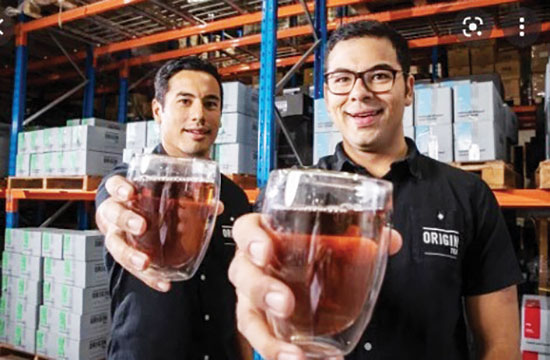
Social and economic crisis engulfing Sri Lanka is half a world away but feels very close to home for brothers Chris and Lawrence Seaton in Brisbane, says a report by Brisbane Financial Review.
Their burgeoning Brisbane-based business, Origin Tea, is about to go mainstream with the supermarket launch of products previously only available in cafés.
“We want to keep money flowing into the economy and into the pockets of locals,” Chris said.
The challenge is that the tea comes from Sri Lanka, where a financial crisis is causing severe shortages of essential goods such as fuel, medicine and food.
About 200 people work at Origin Tea’s factory in Sri Lanka, which is experiencing daily power cuts that last up to eight hours. This means switching to diesel generators, which increases production costs by 10 per cent to 20 per cent.
Chris Seaton was in Sri Lanka last month and was shaken by what he saw.
“Sri Lankan families don’t even have gas cyllinders so they can cook and put food on the table,” he said.
“Inflation there is heading towards 30 per cent, which puts all of the cost of living and interest rate talk here in perspective.
Sri Lanka is on the brink of bankruptcy and people have taken to the streets demanding the resignation of the president, who they hold responsible for the economic crisis.
A drop in tourism means the South Asian country is running desperately low on foreign currency reserves and is struggling to import fuel, medical supplies and raw materials.
Along with additional costs for diesel at the factory, pandemic-related supply chain problems mean Origin Tea must pay $6000 for every shipping container it brings to Australia, a six-fold increase on the $1000 it paid before COVID-19.
But the Seaton brothers are refusing to give up on their Sri Lankan operation.
Chris made an urgent trip to Colombo last month to establish new suppliers because local manufacturers could no longer import what they needed, including packaging.
Many Sri Lankans spend their days vying for the limited fuel stocks, so Origin Tea had to organise a shuttle bus, so employees could get to work.
“My role has changed to focusing on how to get dollars into the country because the people who manufacture our cardboard and tea bags can’t pay their suppliers,” Seaton said.
“We want to keep money flowing into the economy and into the pockets of locals.”
Origin Tea was established in 2012 when Chris and Lawrence were fresh out of university and in their early 20s.
Their vision was to “make tea cool”.
“We saw a gap in the market for single origin tea, as single origin coffee became the latest buzzword,” Chris said. “Origin Tea is one of the few offering traceability of high-grade Ceylon tea from a single origin in Sri Lanka.”
Unlike blends, single origin products guarantee provenance.
Until the pandemic, Origin Tea was largely a wholesale business, with products stocked in 1000 cafés nationally.
COVID-19 made the Seaton brothers realise they needed to sell directly to consumers, and their Origin Sticky Chai will be available in supermarkets from next month.
Agribusiness is in their blood. Their grandfather, Donald Seaton, was the founder of oilseed crushing business Gardner Smith, which was run by dad Gary until it was sold to GrainCorp in 2011.
“We have always been about making tea fun and cool but with the situation in Sri Lanka becoming more serious by the day, making and exporting our tea has become vital to helping locals feed their families,” Chris said.
Australian National University economist Sriram Shankar said Sri Lanka’s crisis was caused by many factors, including a heavy dependence on China for domestic investment, external debt and Russia’s invasion of Ukraine.
Tourism had also come to a standstill as the government was accused of political corruption.
“President Gotabaya Rajapaksa made large tax cuts that affected government revenue and fiscal policies, causing budget deficits to soar,” Dr Shankar said.
“I think Sri Lanka is on the verge of bankruptcy, as it has recently announced suspension of its foreign debt payments.
“For recovery, in the short term it needs to be bailed out by the IMF. It is currently negotiating a deal with the IMF. However, in the medium term it needs to initiate serious economic reforms to overcome the crisis.”



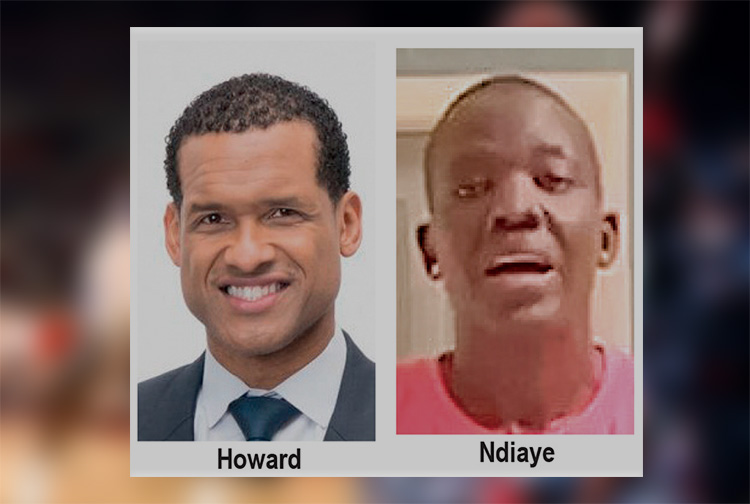
The U.S. Embassy in Colombo welcomed the U.S. Sports Envoys to Sri Lanka, former National Basketball Association (NBA) and Women’s National Basketball Association (WNBA) players Stephen Howard and Astou Ndiaye, from June 8 through 14.
The Public Diplomacy section of the U.S. Embassy said that it would launch a weeklong basketball program intended to harness the unifying power of sports, made possible through collaboration with Foundation of Goodness and IImpact Hoop Lab.
While in Sri Lanka, Howard and Ndiaye, both retired professional basketball players, will conduct a weeklong program, Hoops for Hope: Bridging Borders through Basketball. The Sports Envoys will lead basketball clinics and exhibition matches and engage in leadership sessions in Colombo and Southern Province for youth aged 14-18 from Northern, Uva, Eastern and Western Provinces, offering skills and leadership training both on and off the court. The U.S. Envoys will also share their expertise with the Sri Lanka Basketball Federation, national coaches, and players, furthering the development of basketball in the country. Beyond the clinics, they will collaborate with Sri Lankan schoolchildren to take part in a community service project in the Colombo area.
“We are so proud to welcome Stephen and Astou as our Sports Envoys to Sri Lanka, to build on the strong people-to-people connections between the United States and Sri Lanka,” said U.S. Ambassador Julie Chung. “The lessons that will be shared by our Sports Envoys – communication, teamwork, resilience, inclusion, and conflict resolution – are essential for leadership development, community building, equality, and peace. The U.S. Sports Envoy program is a testament to our belief that sports can be a powerful tool in promoting peace and unity.”
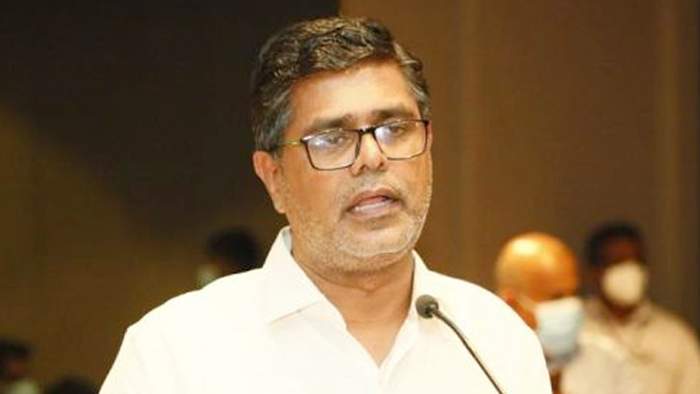
SJB Colombo District MP Mujibur Rahuman in parliament demanded to know from the government the reasons for CEB suspending the leave of all its employees until further notice from Thursday.
MP Rahuman said that the CEB has got an acting General Manager anew and the latter yesterday morning issued a circular suspending leave of all CEB employees with immediate effect until further notice.
“We demand that Minister Kanchana Wijesekera should explain this to the House. This circular was issued while this debate on the new Electricity Amendment Bill was pending. There are many who oppose this Bill. The Minister must tell parliament the reason for the urge to cancel the leave of CEB employees,” the MP said.However, Speaker Mahinda Yapa Abeywardena prevented Minister Wijesekera responding to the query and said that the matter raised by MP Rahuman was not relevant.
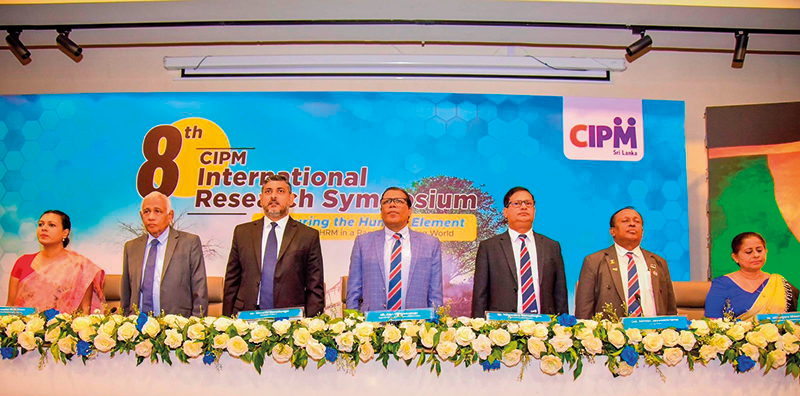
The Chartered Institute of Personnel Management (CIPM) successfully concluded the 8th Annual CIPM Symposium, which took place on 31st May 2024. Themed “Nurturing the Human Element—Redefining HRM in a Rapidly Changing World,” the symposium underscored the pivotal role of human resource management (HRM) in today’s dynamic global landscape. Since its inception in 1959, CIPM has been dedicated to advancing the HR profession through education, professional development, and advocacy, solidifying its position as Sri Lanka’s leading professional body for HRM.
Ken Vijayakumar, the President of the CIPM, graced the occasion as the chief guest. The symposium commenced with the welcome address by the Chairperson, Prof. Arosha Adikaram, followed by the Web Launch of the Symposium Proceedings and Abstract Book by the CIPM President. The event featured distinguished addresses, including a speech by Chief Guest Ken Vijayakumar, President of CIPM, and an address by Guest of Honor Shakthi Ranatunga, Chief Operating Officer of MAS Holdings Pvt. Ltd., Sri Lanka.
The symposium also featured an inspiring keynote address by Prof. Mario Fernando, Professor of Management and Director of the Centre for Cross Cultural Management (CCCM) at the University of Wollongong, Australia.
Vote of Thanks of the inauguration session was delivered by Dr. Dillanjani Weeratunga, Symposium Co-chair.
The symposium served as a comprehensive platform for researchers to present their findings across a wide range of critical topics in HRM. These included Cultural Diversity and Inclusion, Talent Development and Retention, Ethical Leadership and Corporate Social Responsibility, Adapting to Technological Advancements, Mental Health and Well-being at Work, Global Workforce Challenges, Employee Empowerment, and Reskilling and Upskilling.
The plenary session was led by Prof. Wasantha Rajapakse. Certificates were awarded to the best paper presenters during the valedictory session, followed by a vote of thanks delivered by Kamani Perera, Manager of Research and Development.
The annual symposium of CIPM was a truly inclusive event, attracting a diverse audience that spanned undergraduates, graduates, working professionals, research scholars and lecturers. This widespread interest highlights the symposium’s significance in the field of HRM, offering a unique opportunity for everyone to network and learn from scholarly brains.The CIPM International Research Symposium was sponsored by Hambantota International Port, Sri Lanka Institute of Information Technology (SLIIT), E B Creasy & Co. PLC, and Print Xcel Company.



US sports envoys to Lanka to champion youth development

Rahuman questions sudden cancellation of leave of CEB employees


