
News
Intl scientists ask UCLA to reverse Lankan origin ecologist’s suspension

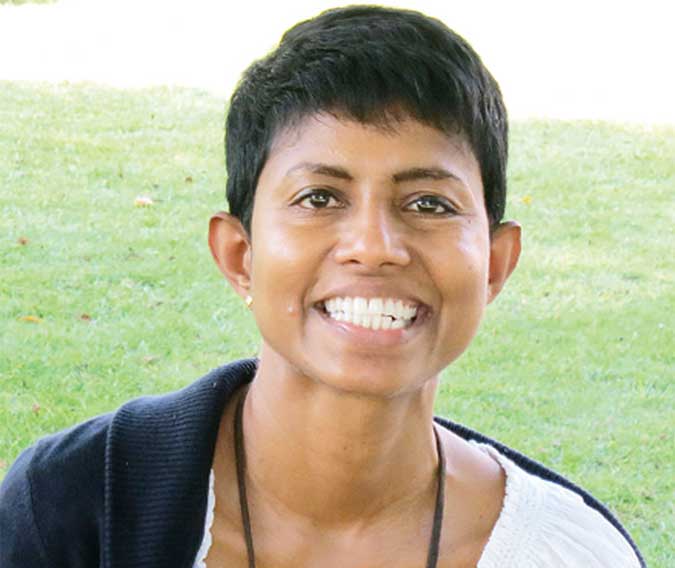
Hundreds of internationally renowned scientists have come together to petition the University of California, Los Angeles (UCLA), against its decision to suspend Lankan origin award winning ecologist, Priyanga Amarasekare, international media reports said.
A report published by the Nature, on its official site, said that the UCLA’s suspension of ecologist Amarasekare, without salary or benefits, for one year, and will cut her salary by 20% for two more years, and the sanctions on, have baffled the international scientist community who think they are retaliation for speaking out against discrimination.
The Nature report said that “in April last year, the Ecological Society of America awarded Priyanga Amarasekare one of the highest honours in the field of ecology: the Robert H. MacArthur Award. A little over two months later, the UCLA, placed Amarasekare on a one-year suspension, without pay or benefits, and forbade her from accessing her laboratory, maintaining her insect colonies, managing her grants or contacting students. Now scientists from around the world, who call Amarasekare a
“highly distinguished ecologist”, “a committed teacher and outstanding mentor” and a “tireless advocate for under-represented groups”, are calling for her reinstatement.”
Amarasekare holds B.Sc. Honours degree in Zoology from the University of Colombo, and a Ph.D. in Ecology and Evolutionary Biology from University of California Irvine. She was elected a Fellow of the Ecological Society of America in 2017. She served on the Editorial boards of Ecology Letters, Journal of Animal Ecology, and Theoretical Ecology. She is the co-Chief Editor of the Models in Ecology and Evolution section of Frontiers in Ecology and Evolution.
The report by Nature.com said that the precise allegations that led to her suspension are unknown. UCLA has declined to release them, and barred Amarasekare from discussing the matter publicly. But long-standing tensions between Amarasekare and the university are no secret. Originally from Sri Lanka and one of two women of colour who have tenure in UCLA’s ecology and evolution department, Amarasekare has previously accused the university of discrimination for repeatedly denying her promotions that were granted to colleagues. Former students and faculty members who are familiar with the situation think that Amarasekare’s suspension was retaliation for speaking out.
Some 315 scientists have raised concerns about her suspension in a petition that was delivered to the university on 23 January, arguing that Amarasekare “has long been denied significant advancement within her department, out of keeping with her contributions to the field”. Moreover, the sanctions levied against Amarasekare — including the one-year suspension and a 20% salary reduction for an additional two years — represent “the kind of punishment normally applied only to the most egregious wrongdoings”, including scientific misconduct and sexual harassment, the petitioners write.
In the absence of compelling evidence to the contrary, the scientists ask that UCLA rescind the disciplinary actions and fully compensate Amarasekare.
Officials at UCLA say that the university “supports freedom of expression and does not condone retaliation of any sort”. They declined to discuss the accusations against Amarasekare or the statements of those who support her, saying the university is “bound to respect the privacy of the numerous individuals involved in this matter”. Amarasekare also declined to comment.
Amarasekare’s colleagues told Nature that she is the rare ecologist whose research spans theoretical, computational and experimental realms. One project in her laboratory that touches on all of these areas focuses on the impact of climate change on insect communities. “She’s really several years ahead of everybody else,” says Andy Dobson, an ecologist at Princeton University in New Jersey who helped to lead the petition. Dobson has written letters to support Amarasekare’s various applications for promotion at UCLA and says he has been baffled by the university’s decisions. “She complained, and most of what’s happened seems to be a reaction against that,” he says.
Nature spoke to several former students and faculty members who defended Amarasekare in administrative hearings in September 2021. Although no one knew the specific details of the charges against her, they all thought she was targeted for speaking out against what she saw as discrimination in the department. In particular, they said Amarasekare vented about her own experience at UCLA on a departmental e-mail listserv created to discuss issues of racism and discrimination in the aftermath of the killing of George Floyd, whose death in May 2020 sparked international protests.
“That’s why she got into trouble. She ended up criticizing pretty much the entire department — with good reason,” says Marcel Vaz, an ecologist at Wilkes University in Wilkes-Barre, Pennsylvania, who was a graduate student in the department at the time. He and other students came forward to support her. “We demanded some explanation,” Vaz says, “but we never got any feedback.”
Peter Kareiva, a former UCLA faculty member who spoke on Amarasekare’s behalf during the administrative proceedings, calls her a brilliant scientist as well as a terrific teacher and student mentor. Kareiva witnessed Amarasekare raise uncomfortable issues and challenge internal policies in faculty meetings. He says she might have made mistakes in terms of “facilitating harmony” among fellow faculty members, but that her goal was always to improve the department.
“I am still incredulous by the punishment levied,” says Kareiva, who now serves as president of the Aquarium of the Pacific in Long Beach, California.
It is unclear what happens next, but scientists contacted by Nature are concerned about the impact of the suspension on Amarasekare’s current students, the disruption of her federally funded research and the potentially irretrievable loss of time-sensitive experiments that could provide insights into the ecological impacts of climate change.
As the recipient of the MacArthur award, Amarasekare is expected to discuss this research when she delivers her keynote address at the Ecological Society of America’s annual meeting in Portland, Oregon, in August.


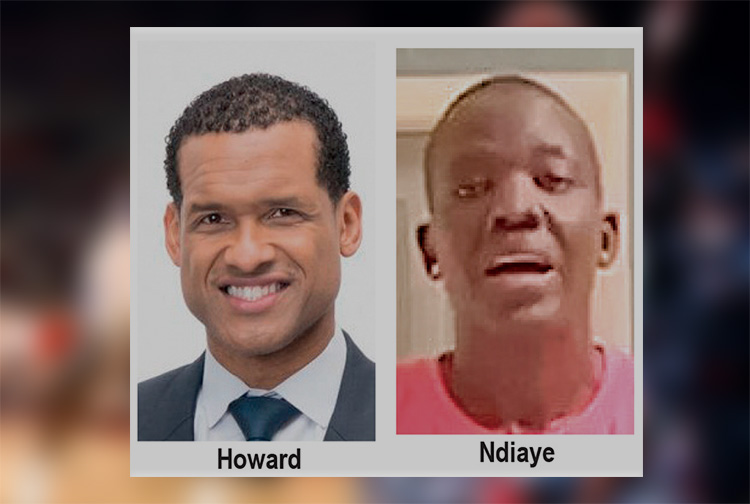
The U.S. Embassy in Colombo welcomed the U.S. Sports Envoys to Sri Lanka, former National Basketball Association (NBA) and Women’s National Basketball Association (WNBA) players Stephen Howard and Astou Ndiaye, from June 8 through 14.
The Public Diplomacy section of the U.S. Embassy said that it would launch a weeklong basketball program intended to harness the unifying power of sports, made possible through collaboration with Foundation of Goodness and IImpact Hoop Lab.
While in Sri Lanka, Howard and Ndiaye, both retired professional basketball players, will conduct a weeklong program, Hoops for Hope: Bridging Borders through Basketball. The Sports Envoys will lead basketball clinics and exhibition matches and engage in leadership sessions in Colombo and Southern Province for youth aged 14-18 from Northern, Uva, Eastern and Western Provinces, offering skills and leadership training both on and off the court. The U.S. Envoys will also share their expertise with the Sri Lanka Basketball Federation, national coaches, and players, furthering the development of basketball in the country. Beyond the clinics, they will collaborate with Sri Lankan schoolchildren to take part in a community service project in the Colombo area.
“We are so proud to welcome Stephen and Astou as our Sports Envoys to Sri Lanka, to build on the strong people-to-people connections between the United States and Sri Lanka,” said U.S. Ambassador Julie Chung. “The lessons that will be shared by our Sports Envoys – communication, teamwork, resilience, inclusion, and conflict resolution – are essential for leadership development, community building, equality, and peace. The U.S. Sports Envoy program is a testament to our belief that sports can be a powerful tool in promoting peace and unity.”
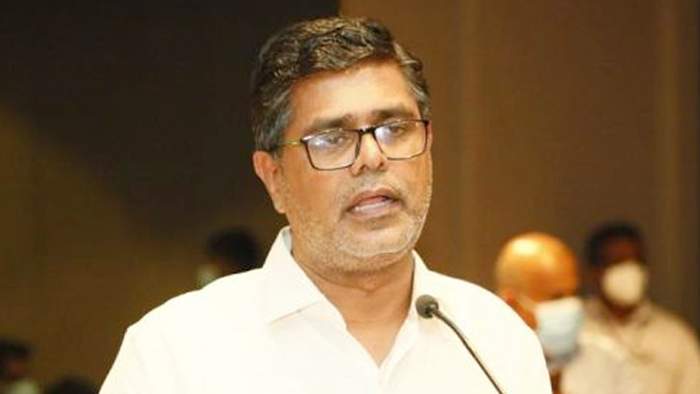
SJB Colombo District MP Mujibur Rahuman in parliament demanded to know from the government the reasons for CEB suspending the leave of all its employees until further notice from Thursday.
MP Rahuman said that the CEB has got an acting General Manager anew and the latter yesterday morning issued a circular suspending leave of all CEB employees with immediate effect until further notice.
“We demand that Minister Kanchana Wijesekera should explain this to the House. This circular was issued while this debate on the new Electricity Amendment Bill was pending. There are many who oppose this Bill. The Minister must tell parliament the reason for the urge to cancel the leave of CEB employees,” the MP said.However, Speaker Mahinda Yapa Abeywardena prevented Minister Wijesekera responding to the query and said that the matter raised by MP Rahuman was not relevant.
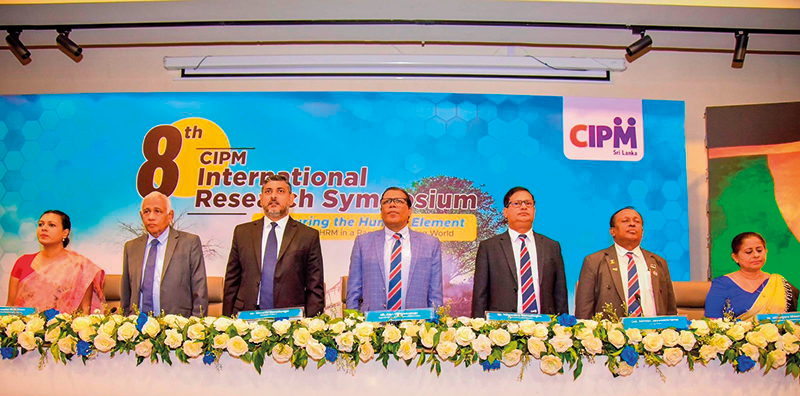
The Chartered Institute of Personnel Management (CIPM) successfully concluded the 8th Annual CIPM Symposium, which took place on 31st May 2024. Themed “Nurturing the Human Element—Redefining HRM in a Rapidly Changing World,” the symposium underscored the pivotal role of human resource management (HRM) in today’s dynamic global landscape. Since its inception in 1959, CIPM has been dedicated to advancing the HR profession through education, professional development, and advocacy, solidifying its position as Sri Lanka’s leading professional body for HRM.
Ken Vijayakumar, the President of the CIPM, graced the occasion as the chief guest. The symposium commenced with the welcome address by the Chairperson, Prof. Arosha Adikaram, followed by the Web Launch of the Symposium Proceedings and Abstract Book by the CIPM President. The event featured distinguished addresses, including a speech by Chief Guest Ken Vijayakumar, President of CIPM, and an address by Guest of Honor Shakthi Ranatunga, Chief Operating Officer of MAS Holdings Pvt. Ltd., Sri Lanka.
The symposium also featured an inspiring keynote address by Prof. Mario Fernando, Professor of Management and Director of the Centre for Cross Cultural Management (CCCM) at the University of Wollongong, Australia.
Vote of Thanks of the inauguration session was delivered by Dr. Dillanjani Weeratunga, Symposium Co-chair.
The symposium served as a comprehensive platform for researchers to present their findings across a wide range of critical topics in HRM. These included Cultural Diversity and Inclusion, Talent Development and Retention, Ethical Leadership and Corporate Social Responsibility, Adapting to Technological Advancements, Mental Health and Well-being at Work, Global Workforce Challenges, Employee Empowerment, and Reskilling and Upskilling.
The plenary session was led by Prof. Wasantha Rajapakse. Certificates were awarded to the best paper presenters during the valedictory session, followed by a vote of thanks delivered by Kamani Perera, Manager of Research and Development.
The annual symposium of CIPM was a truly inclusive event, attracting a diverse audience that spanned undergraduates, graduates, working professionals, research scholars and lecturers. This widespread interest highlights the symposium’s significance in the field of HRM, offering a unique opportunity for everyone to network and learn from scholarly brains.The CIPM International Research Symposium was sponsored by Hambantota International Port, Sri Lanka Institute of Information Technology (SLIIT), E B Creasy & Co. PLC, and Print Xcel Company.



US sports envoys to Lanka to champion youth development

Rahuman questions sudden cancellation of leave of CEB employees


