
News
India receives GTF appreciation for skipping UNHRC vote on Sri Lanka


The Global Tamil Forum (GTF) on Tuesday (23) said that by making a public statement before the vote on an accountability resolution on Sri Lanka at the UNHRC and then skipping the vote, India had clearly shown its displeasure at the lack of progress on addressing the alleged violations of human rights and international laws and the non-implementation of Sri Lanka’s numerous public commitments of the past in addressing the grievances of the Tamil people. The GTF said that Tamils were grateful to the Tamil Nadu political parties, particularly the DMK president M.K. Stalin for the recent statement calling on the Government of India not to support the Government of Sri Lanka by voting against the resolution.
The following is the text of statement issued by GTF spokesman Suren Surendiran: The Government of Sri Lanka rejected this resolution, however even all the neighbouring countries did not support that position.
It is significant that the majority of the Latin American countries and all of the European countries voted in favour of the resolution. Majority of the African countries, the Organisation of Islamic Countries (OIC) and the Asian countries did not support the position taken by the Government of Sri Lanka.
It is particularly pleasing that the countries voted in favour cover all regions across the globe and several countries who would have traditionally voted against such a resolution recognised the criticality of the situation in Sri Lanka and decided to abstain. It is indeed encouraging for victims of human rights abuses across the world that UNHRC continues to offer hope, even if the process of seeking justice is painstaking and arduous.
The current process towards this important outcome commenced with the report by the UN High Commissioner for Human Rights, Michelle Bachelet, which powerfully articulated that ‘Sri Lanka is on an alarming path towards recurrence of human rights violations’ and called for urgent action from the international community. The High Commissioner’s call was ably converted into resolution 46/1 by the core group of countries under the leadership of the UK, which in fact is a pragmatic outcome balancing the highly concerning developments in Sri Lanka with challenging geopolitical reality. Strengthening OHCHR’s capacity to collect, consolidate, analyse, and preserve information and evidence, and to develop possible strategies for future accountability processes, with sufficient budgetary and manpower support is a critical and welcoming new dimension in this resolution.
Tamils are grateful to the US Administration that initiated the original process of promoting reconciliation and accountability in Sri Lanka in 2012.
GTF would like to express its appreciation and gratitude to all progressive forces that made this current outcome possible – the Office of High Commissioner for Human Rights, the core group of countries, all countries who voted for and/or co-sponsored the resolution, the countries that abstained without voting against the resolution, eminent persons and dedicated human rights organisations who championed the cause, and more importantly the victims of human rights abuses in Sri Lanka who despite the time elapsed and the risks involved, continue to provide inspiration by bravely fighting for human rights and accountability.
Tamils are grateful to the Government of India for supporting an escalation of the Tamil demand for equality, justice (accountability), dignity and peace at a multilateral international forum like the UNHRC. By specifying India’s support to the international community calling on the Government of Sri Lanka to fulfil its commitments to devolve political power to the Tamils and to allow those devolved powers to be operationalised effectively according to the 13th amendment of the constitution is very significant.
Unlike in the previous years when the outcome at the UNHRC was eagerly sought by the Tamil community, the interests and expectations this year were much more widespread. The Muslim community, which was openly victimised through forced cremations and expected burqa ban; the Christian community which is highly disappointed with the dishonest approach towards Easter bombing investigations, and indeed the majority community which is increasingly becoming unsettled with the authoritarian and militarised trajectory the country is adopting.
GTF believes this convergence of concerns, fears and apprehensions offer hope for all the people of Sri Lanka to come together as equal citizens and communities. Such progress is possible only when all communities stop living a lie based on denial but come to terms with the truth based on evidence. The UNHRC resolution just passed provides a useful framework to work towards such an outcome. We call upon people from all communities, important stakeholders of the country including the leaders of the government and opposition, to stop using the UNHRC initiative for short term political gains, but rather listen to the coherent and powerful voice of the international community, and adopt the parameters of this resolution willingly for the betterment of the country and its people. The Government of Sri Lanka, by rejecting this resolution, is undoubtedly isolating itself from the international community.”



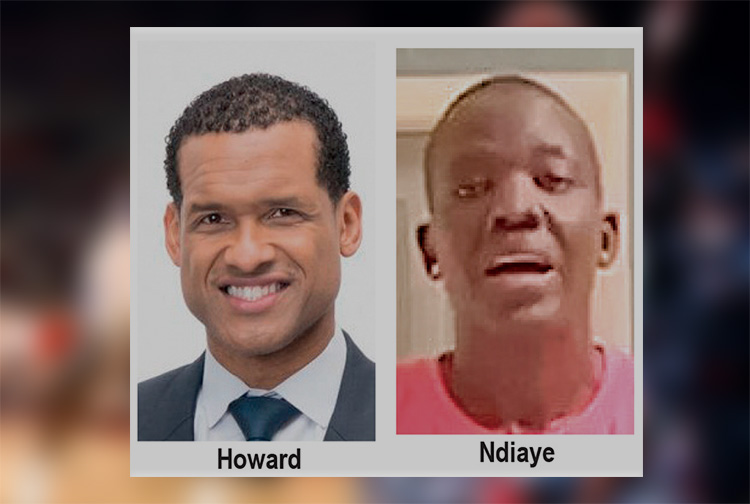
The U.S. Embassy in Colombo welcomed the U.S. Sports Envoys to Sri Lanka, former National Basketball Association (NBA) and Women’s National Basketball Association (WNBA) players Stephen Howard and Astou Ndiaye, from June 8 through 14.
The Public Diplomacy section of the U.S. Embassy said that it would launch a weeklong basketball program intended to harness the unifying power of sports, made possible through collaboration with Foundation of Goodness and IImpact Hoop Lab.
While in Sri Lanka, Howard and Ndiaye, both retired professional basketball players, will conduct a weeklong program, Hoops for Hope: Bridging Borders through Basketball. The Sports Envoys will lead basketball clinics and exhibition matches and engage in leadership sessions in Colombo and Southern Province for youth aged 14-18 from Northern, Uva, Eastern and Western Provinces, offering skills and leadership training both on and off the court. The U.S. Envoys will also share their expertise with the Sri Lanka Basketball Federation, national coaches, and players, furthering the development of basketball in the country. Beyond the clinics, they will collaborate with Sri Lankan schoolchildren to take part in a community service project in the Colombo area.
“We are so proud to welcome Stephen and Astou as our Sports Envoys to Sri Lanka, to build on the strong people-to-people connections between the United States and Sri Lanka,” said U.S. Ambassador Julie Chung. “The lessons that will be shared by our Sports Envoys – communication, teamwork, resilience, inclusion, and conflict resolution – are essential for leadership development, community building, equality, and peace. The U.S. Sports Envoy program is a testament to our belief that sports can be a powerful tool in promoting peace and unity.”
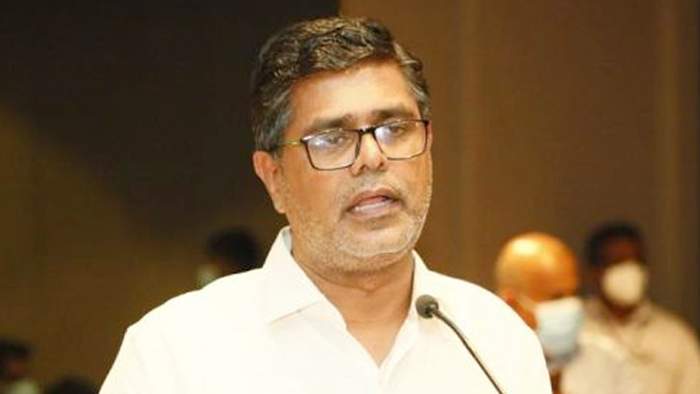
SJB Colombo District MP Mujibur Rahuman in parliament demanded to know from the government the reasons for CEB suspending the leave of all its employees until further notice from Thursday.
MP Rahuman said that the CEB has got an acting General Manager anew and the latter yesterday morning issued a circular suspending leave of all CEB employees with immediate effect until further notice.
“We demand that Minister Kanchana Wijesekera should explain this to the House. This circular was issued while this debate on the new Electricity Amendment Bill was pending. There are many who oppose this Bill. The Minister must tell parliament the reason for the urge to cancel the leave of CEB employees,” the MP said.However, Speaker Mahinda Yapa Abeywardena prevented Minister Wijesekera responding to the query and said that the matter raised by MP Rahuman was not relevant.
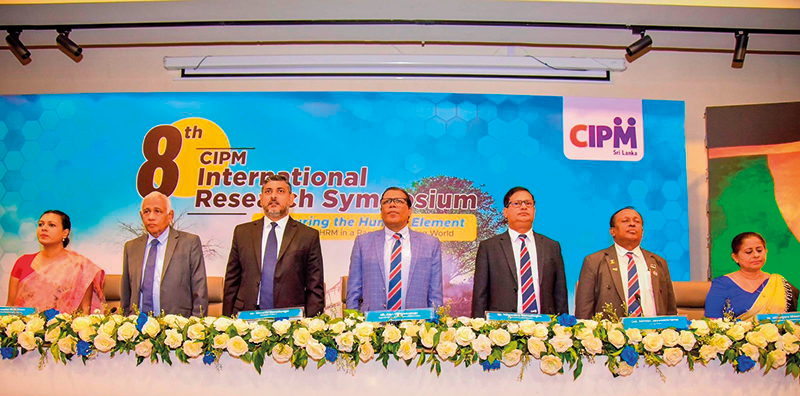
The Chartered Institute of Personnel Management (CIPM) successfully concluded the 8th Annual CIPM Symposium, which took place on 31st May 2024. Themed “Nurturing the Human Element—Redefining HRM in a Rapidly Changing World,” the symposium underscored the pivotal role of human resource management (HRM) in today’s dynamic global landscape. Since its inception in 1959, CIPM has been dedicated to advancing the HR profession through education, professional development, and advocacy, solidifying its position as Sri Lanka’s leading professional body for HRM.
Ken Vijayakumar, the President of the CIPM, graced the occasion as the chief guest. The symposium commenced with the welcome address by the Chairperson, Prof. Arosha Adikaram, followed by the Web Launch of the Symposium Proceedings and Abstract Book by the CIPM President. The event featured distinguished addresses, including a speech by Chief Guest Ken Vijayakumar, President of CIPM, and an address by Guest of Honor Shakthi Ranatunga, Chief Operating Officer of MAS Holdings Pvt. Ltd., Sri Lanka.
The symposium also featured an inspiring keynote address by Prof. Mario Fernando, Professor of Management and Director of the Centre for Cross Cultural Management (CCCM) at the University of Wollongong, Australia.
Vote of Thanks of the inauguration session was delivered by Dr. Dillanjani Weeratunga, Symposium Co-chair.
The symposium served as a comprehensive platform for researchers to present their findings across a wide range of critical topics in HRM. These included Cultural Diversity and Inclusion, Talent Development and Retention, Ethical Leadership and Corporate Social Responsibility, Adapting to Technological Advancements, Mental Health and Well-being at Work, Global Workforce Challenges, Employee Empowerment, and Reskilling and Upskilling.
The plenary session was led by Prof. Wasantha Rajapakse. Certificates were awarded to the best paper presenters during the valedictory session, followed by a vote of thanks delivered by Kamani Perera, Manager of Research and Development.
The annual symposium of CIPM was a truly inclusive event, attracting a diverse audience that spanned undergraduates, graduates, working professionals, research scholars and lecturers. This widespread interest highlights the symposium’s significance in the field of HRM, offering a unique opportunity for everyone to network and learn from scholarly brains.The CIPM International Research Symposium was sponsored by Hambantota International Port, Sri Lanka Institute of Information Technology (SLIIT), E B Creasy & Co. PLC, and Print Xcel Company.



US sports envoys to Lanka to champion youth development

Rahuman questions sudden cancellation of leave of CEB employees


