
News
Imported liquid Nano-Nitrogen fertiliser not organic, says a group of academics

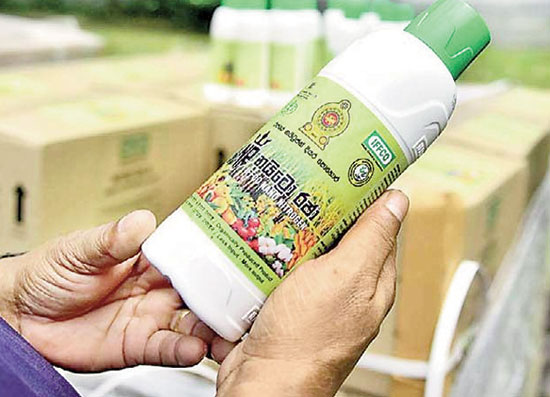
The liquid Nano-Nitrogen fertiliser from Indian Farmers Fertiliser Cooperative Ltd. (IFFCO) imported by the government is a synthetic chemical fertiliser, and not an organic fertiliser, academics attached to the Agriculture and Technology Faculties of State Universities said yesterday.
They issued a statement under the Federation of University Teachers’ Associations (FUTA) letterhead:
“The Nano-Nitrogen fertilizer of IFFCO is a urea-based formulation where urea is coated with polymers to make nano-size particles. Therefore, this fertilizer is a synthetic chemical fertiliser, and not an organic fertilizer. The Nano-Nitrogen fertilizer is recommended to apply as a foliar spray and said to contain 4% Nitrogen. This is rather a new product, which has very recently (2021 March) received approval for large scale production from the Ministry of Agriculture of India. Anyhow, nano-fertilisers are not accepted in organic agriculture in Sri Lanka as indicated in the standard of requirements for organic agriculture (SLS1324:2018),” the statement said.
FUTA added that the Ministry of Agriculture claims that three applications of 2.5 L of this fertilizer at a time (i.e. 7.5 L in total) is adequate to provide required nutrients for the cultivation of one hectare of paddy crop. When applied at this rate, Nano-Nitrogen fertilizer would provide only 300 g of Nitrogen per one hectare.
“However, in general, nearly 105 kg of nitrogen is taken up by the paddy crop yielding 4-5 tons of grains per hectare. Accordingly, Nano-Nitrogen fertiliser should be applied at a rate of 1,250 L per hectare if it is the only source of nitrogen added to the crop, which is an impossible task to be realized within a cropping season,” the academics said.
Given below is the statement in full: “The government of Sri Lanka recently imported liquid Nano-Nitrogen fertilizer from Indian Farmers Fertilizer Cooperative Ltd. (IFFCO). From an initial order of 3.1 million liters, 45,000 liters (90,000 bottles, each carrying 500 ml) were airlifted on 19th October 2021 to Sri Lanka. We have learned that there are many misconceptions being publicized in the mass media on this Nano-Nitrogen fertilizer. As a concerned group of agricultural professionals in the country, academics attached to the Agriculture and Technology Faculties of State Universities in Sri Lanka, we wish to provide correct scientific facts about the imported fertilizer and express our views on this matter as follows.
“The Nano-Nitrogen fertilizer of IFFCO is a urea-based formulation where urea is coated with polymers to make nano-size particles. Therefore, this fertilizer is a synthetic chemical fertilizer, and not an organic fertilizer. The Nano-Nitrogen fertilizer is recommended to apply as a foliar spray and said to contain 4% Nitrogen. This is rather a new product, which has very recently (2021 March) received approval for large scale production from the Ministry of Agriculture of India. Anyhow, nano-fertilizers are not accepted in organic agriculture in Sri Lanka as indicated in the standard of requirements for organic agriculture (SLS1324:2018).
“In media briefings conducted by the Ministry of Agriculture, we learned that three applications of 2.5 L of this fertilizer at a time (i.e. 7.5 L in total) is adequate to provide required nutrients for the cultivation of one hectare of paddy crop. When applied at this rate, Nano-Nitrogen fertilizer would provide only 300 g of Nitrogen per one hectare. In general, nearly 105 kg of nitrogen is taken up by the paddy crop yielding 4-5 tons of grains per hectare. Accordingly, Nano-Nitrogen fertilizer should be applied at a rate of 1,250 L per hectare if it is the only source of nitrogen added to the crop, which is an impossible task to be realized within a cropping season.
“In their official website, IFFCO has indicated that this Nano-Nitrogen fertilizer should be applied only as a top dressing along with a reduced rate of urea, while phosphorus and potassium sources are to be supplied at full rate as per the recommendations. All research reports on this liquid fertilizer have recommended using this fertilizer to fulfil only partial requirements of Nitrogen for crops and often used with 50% recommended dose of urea. Therefore, Nano-Nitrogen is more appropriate to be viewed as a supplementary source of Nitrogen than a major nutrient source.
“Spraying liquid fertilizer may not be practical for some crops unless the farmers have access to drone technology. This is because spraying large areas and taller crops such as maize and sugarcane is not practical with commonly used spray tanks. Moreover, the effectiveness of these foliar fertilizers depends on the ground-cover by leaf area, weather conditions and application technology. Therefore, it is a necessity to provide clear guidance to the farmers on correct application procedures.
“In this context there is a serious question as to what should be recommended to the farmers in Sri Lanka, as the sources of nitrogen, phosphorus and potassium nutrients are limited in the market with the recent ban imposed on importing synthetic ‘chemical’ fertilizer. It is important to note that the benefit of Nano-Nitrogen cannot be realized when the crop suffers from nutrient imbalances. The Nano-fertilizer is applied at a much lower rate than regular urea fertilizer application mainly because it is a foliar spray. Applying the Nano-Nitrogen fertilizer at high concentrations, in the absence of soil application of Nitrogen fertilizer such as urea, could damage leaves. Therefore, the available option would be to have repeated application of Nano-Nitrogen fertilizer at a lower dosage.
“It should be noted that nano-fertilizers are more expensive than regular nitrogen fertilizers. Thus, considering the cost of the fertilizer and labor cost for application, the use of foliar fertilizers in a crop like paddy is expensive and will increase the cost of production.
“Any fertilizer imported to the country needs to be tested following the accepted protocols prior to giving approval for importation and after the shipment has arrived in order to assure quality and to avoid any negative impacts. Sri Lanka does not have developed SLS standards for nano-fertilizers, yet. These standards should be developed to assure quality of the product free of biurate-like toxic substances. Besides, recommendations should not be made in an ad-hoc manner without conducting any field investigations.
“Furthermore, in the eco-friendly/green agriculture concept, much attention is given to improve and regenerate soil fertility. However, foliar application of fertilizers will not contribute to enhancing soil fertility. Therefore, while failing to achieve higher crop yields, it is highly unlikely that the expensive Nano-Fertilizer we have imported will help in realizing the objectives of green-agriculture.”




The U.S. Embassy in Colombo welcomed the U.S. Sports Envoys to Sri Lanka, former National Basketball Association (NBA) and Women’s National Basketball Association (WNBA) players Stephen Howard and Astou Ndiaye, from June 8 through 14.
The Public Diplomacy section of the U.S. Embassy said that it would launch a weeklong basketball program intended to harness the unifying power of sports, made possible through collaboration with Foundation of Goodness and IImpact Hoop Lab.
While in Sri Lanka, Howard and Ndiaye, both retired professional basketball players, will conduct a weeklong program, Hoops for Hope: Bridging Borders through Basketball. The Sports Envoys will lead basketball clinics and exhibition matches and engage in leadership sessions in Colombo and Southern Province for youth aged 14-18 from Northern, Uva, Eastern and Western Provinces, offering skills and leadership training both on and off the court. The U.S. Envoys will also share their expertise with the Sri Lanka Basketball Federation, national coaches, and players, furthering the development of basketball in the country. Beyond the clinics, they will collaborate with Sri Lankan schoolchildren to take part in a community service project in the Colombo area.
“We are so proud to welcome Stephen and Astou as our Sports Envoys to Sri Lanka, to build on the strong people-to-people connections between the United States and Sri Lanka,” said U.S. Ambassador Julie Chung. “The lessons that will be shared by our Sports Envoys – communication, teamwork, resilience, inclusion, and conflict resolution – are essential for leadership development, community building, equality, and peace. The U.S. Sports Envoy program is a testament to our belief that sports can be a powerful tool in promoting peace and unity.”
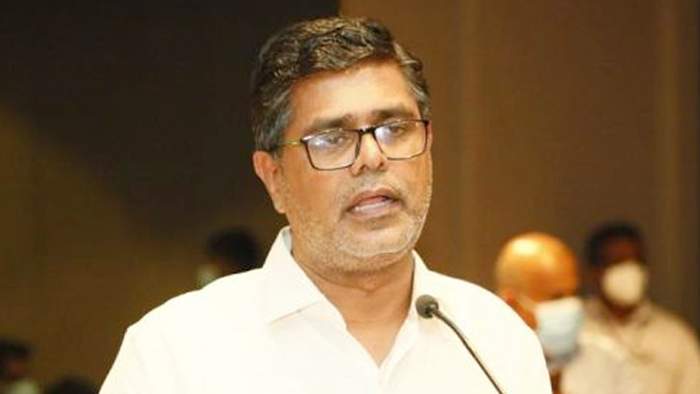
SJB Colombo District MP Mujibur Rahuman in parliament demanded to know from the government the reasons for CEB suspending the leave of all its employees until further notice from Thursday.
MP Rahuman said that the CEB has got an acting General Manager anew and the latter yesterday morning issued a circular suspending leave of all CEB employees with immediate effect until further notice.
“We demand that Minister Kanchana Wijesekera should explain this to the House. This circular was issued while this debate on the new Electricity Amendment Bill was pending. There are many who oppose this Bill. The Minister must tell parliament the reason for the urge to cancel the leave of CEB employees,” the MP said.However, Speaker Mahinda Yapa Abeywardena prevented Minister Wijesekera responding to the query and said that the matter raised by MP Rahuman was not relevant.
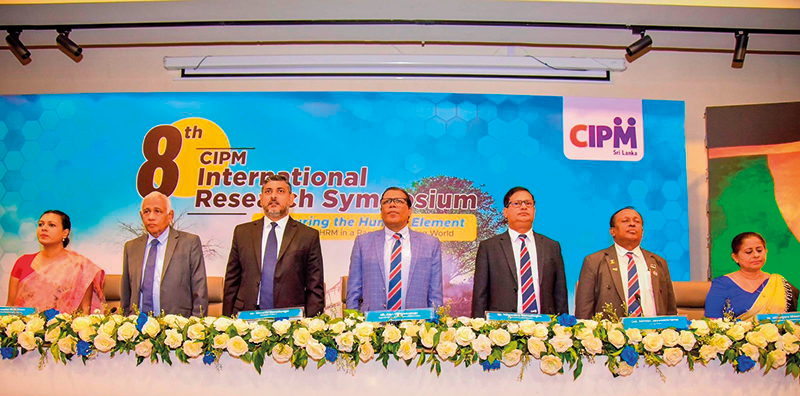
The Chartered Institute of Personnel Management (CIPM) successfully concluded the 8th Annual CIPM Symposium, which took place on 31st May 2024. Themed “Nurturing the Human Element—Redefining HRM in a Rapidly Changing World,” the symposium underscored the pivotal role of human resource management (HRM) in today’s dynamic global landscape. Since its inception in 1959, CIPM has been dedicated to advancing the HR profession through education, professional development, and advocacy, solidifying its position as Sri Lanka’s leading professional body for HRM.
Ken Vijayakumar, the President of the CIPM, graced the occasion as the chief guest. The symposium commenced with the welcome address by the Chairperson, Prof. Arosha Adikaram, followed by the Web Launch of the Symposium Proceedings and Abstract Book by the CIPM President. The event featured distinguished addresses, including a speech by Chief Guest Ken Vijayakumar, President of CIPM, and an address by Guest of Honor Shakthi Ranatunga, Chief Operating Officer of MAS Holdings Pvt. Ltd., Sri Lanka.
The symposium also featured an inspiring keynote address by Prof. Mario Fernando, Professor of Management and Director of the Centre for Cross Cultural Management (CCCM) at the University of Wollongong, Australia.
Vote of Thanks of the inauguration session was delivered by Dr. Dillanjani Weeratunga, Symposium Co-chair.
The symposium served as a comprehensive platform for researchers to present their findings across a wide range of critical topics in HRM. These included Cultural Diversity and Inclusion, Talent Development and Retention, Ethical Leadership and Corporate Social Responsibility, Adapting to Technological Advancements, Mental Health and Well-being at Work, Global Workforce Challenges, Employee Empowerment, and Reskilling and Upskilling.
The plenary session was led by Prof. Wasantha Rajapakse. Certificates were awarded to the best paper presenters during the valedictory session, followed by a vote of thanks delivered by Kamani Perera, Manager of Research and Development.
The annual symposium of CIPM was a truly inclusive event, attracting a diverse audience that spanned undergraduates, graduates, working professionals, research scholars and lecturers. This widespread interest highlights the symposium’s significance in the field of HRM, offering a unique opportunity for everyone to network and learn from scholarly brains.The CIPM International Research Symposium was sponsored by Hambantota International Port, Sri Lanka Institute of Information Technology (SLIIT), E B Creasy & Co. PLC, and Print Xcel Company.



US sports envoys to Lanka to champion youth development

Rahuman questions sudden cancellation of leave of CEB employees


