
News
Human rights situation in Sri Lanka further deteriorated in 2020: UK report

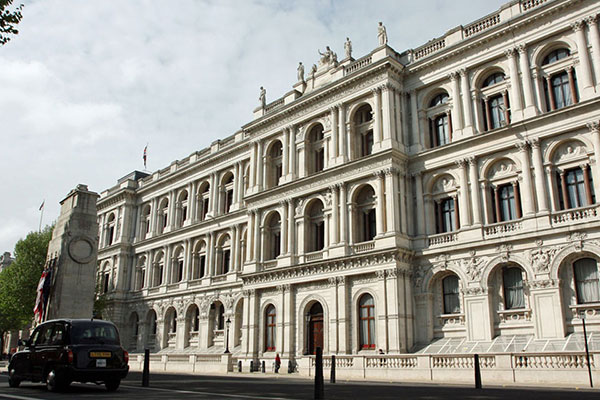
ECONOMYNEXT – The overall human rights situation in Sri Lanka continued to deteriorate in 2020, the UK’s annual report on human rights and democracy said.
Titled ‘Human Rights and Democracy: 2020 Foreign, Commonwealth & Development Office report‘, the document noted an alleged increase in surveillance and intimidation of civil society, limited or no progress with regard to accountability, militarisation and other issues.
“The government of Sri Lanka delivered free and peaceful parliamentary elections despite the COVID-19 pandemic, and maintained low numbers of COVID-19 cases compared to global figures. However, there was increased surveillance and intimidation of civil society, constraints placed on communities practising religious burial rites, a number of lengthy detentions without charge, and several setbacks on post-conflict accountability and reconciliation,” it said.
Noting Sri Lanka’s withdrawal from the United Nations Human Rights Council (UNHRC) resolutions 30/1, 34/1, and 40/1 on post-conflict transitional justice, accountability and reconciliation, the UK report said there was no progress shown by Sri Lanka despite the government announcing its commitment to a domestic mechanism for reconciliation and accountability.
“The UK made clear its commitment to reconciliation and accountability in statements delivered on behalf of the Core Group on Sri Lanka at the HRC in February, June and September,” the report said.
In June 2021, the core group, comprising, Canada, Germany, North Macedonia, Malawi, Montenegro and the UK, expressed concern over what it called the lack of progress with regard to human rights, the rights of religious minorities and other issues highlighted in resolution 46/1.
The UK report, dated July 8, 2021, said Sri Lanka’s commitment to accountability was further called into question in March 2020 when President Gotabaya Rajapaksa pardoned and released former Army Staff Sergeant Sunil Ratnayake, who was convicted in 2015 for the murder of eight civilians (including children) in Jaffna in 2000.
Ratnayake, who was attached to the long range reconnaissance patrol of the army, was sentenced to death by the Colombo High Court in June 2015 for his alleged involvement in the Mirusuvil massacre in 2000. The former soldier, who was the first accused in the case, was found guilty of the murder of eight civilians including three children.
He was pardoned by President Rajapaksa on March 26, days after an island-wide curfew was declared to contain the spread of the novel coronavirus.
Amnesty Intentional, too, said in May last year that in pardoning Ratnayake, the COVID-19 pandemic was exploited as an “opportunity to reverse justice”
The Foreign, Commonwealth & Development Office report further said the President continued to appoint controversial military figures accused of war crimes to government roles, while civilian functions such as the Secretariat for Non-Governmental Organisations were brought under the control of the Ministry of Defence. In October, the government passed the 20th amendment to the constitution, which the report said extended executive power over appointments to the judiciary and independent institutions, and reversed several important institutional checks and balances.
“In March, the President dissolved parliament ahead of elections, which were then twice postponed because of the COVID-19 outbreak. Although the government went on to deliver peaceful and democratic elections in August, the delay resulted in a lack of parliamentary oversight between March and August. The government instead formed several presidential ‘taskforces’ without parliamentary scrutiny, including to oversee the COVID-19 response,” the report further said.
The report was also critical of the government’s widely condemned move in March 2020 to cremate Muslim victims of COVID-19 against the wishes of the community with little or no scientific basis to the decision. World Health Organisation guidelines had also permitted burials.
“This particularly affected Muslim and some Christian communities, for whom burial is an essential rite. In December, the Supreme Court dismissed several petitions that challenged this policy. The outbreak of COVID-19 also led to an increase in anti-Muslim sentiment, fuelled by hate speech and disinformation suggesting that Muslims were ‘carriers’ of COVID-19 and were violating prevention measures.
In June, the UN High Commissioner for Human Rights, Michelle Bachelet, expressed concern over the clampdown on freedom of expression, noting an announcement made by the police in April to arrest those critical of the Government’s COVID-19 response,” the report said.
The report also made references to allegations that judicial medical officers and police had conducted invasive intimate examinations on LGBT+ persons without their consent, following which the Justice Minister Ali Sabry gave instructions to halt and investigate the practice.
The Prevention of Terrorism Act (PTA) has been a running theme in international pronouncements on Sri Lanka’s human rights record. The European parliament moved a resolution on June 10 calling for its release.
The UK report on Sri Lanka’s human rights situation in 2020, too, noted that the government of Sri Lanka continued to use the PTA, despite a renewed pledge at the 43rd session of the UNHRC to review the legislation.
“In April, prominent human rights lawyer Hejaaz Hizbullah was arrested by Sri Lanka’s Criminal Investigation Department under the PTA. Hejaaz was detained without charge or presentation before a court. International rights groups noted an increase in intimidation, surveillance and online abuse, including threats to lawyers, journalists, families of disappeared persons and individuals working on human rights and anti-corruption.”
Riots in Sri Lanka’s prisons in late 2020 were also highlighted in the report.
“In November, unrest at Mahara prison over COVID-19 concerns resulted in the death of eleven inmates and injury of over 150. A committee appointed to investigate the unrest concluded that the inmates’ demands had been reasonable, and autopsies revealed that all inmates had died of gunshot wounds. In November, the Human Rights Commission of Sri Lanka wrote to the Inspector General of Police to highlight an increase in deaths in custody, and released a prison study which noted that the treatment of prisoners fell below international standards,” it said.
The UK will continue to press for progress on human rights, gender equality and protections for minorities and vulnerable groups in 2021, the report further said.
“We shall continue to invest in ambitious programs which support conflict-affected communities, promote the role of civil society, facilitate social cohesion, and underline the critical importance of post-conflict reconciliation and accountability,” it added.



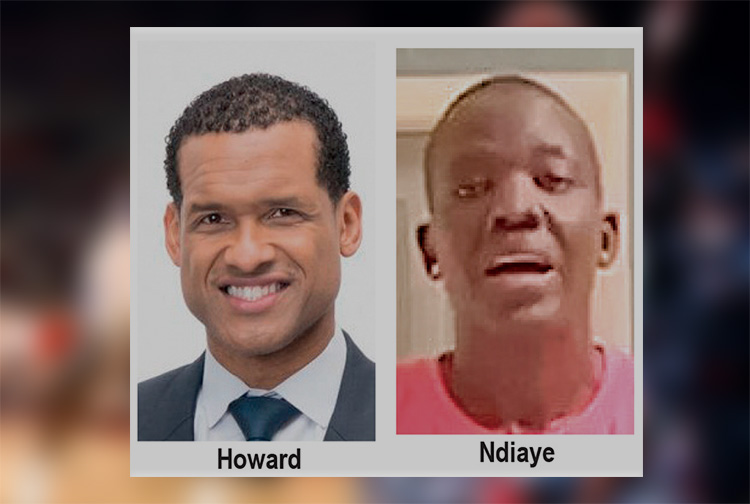
The U.S. Embassy in Colombo welcomed the U.S. Sports Envoys to Sri Lanka, former National Basketball Association (NBA) and Women’s National Basketball Association (WNBA) players Stephen Howard and Astou Ndiaye, from June 8 through 14.
The Public Diplomacy section of the U.S. Embassy said that it would launch a weeklong basketball program intended to harness the unifying power of sports, made possible through collaboration with Foundation of Goodness and IImpact Hoop Lab.
While in Sri Lanka, Howard and Ndiaye, both retired professional basketball players, will conduct a weeklong program, Hoops for Hope: Bridging Borders through Basketball. The Sports Envoys will lead basketball clinics and exhibition matches and engage in leadership sessions in Colombo and Southern Province for youth aged 14-18 from Northern, Uva, Eastern and Western Provinces, offering skills and leadership training both on and off the court. The U.S. Envoys will also share their expertise with the Sri Lanka Basketball Federation, national coaches, and players, furthering the development of basketball in the country. Beyond the clinics, they will collaborate with Sri Lankan schoolchildren to take part in a community service project in the Colombo area.
“We are so proud to welcome Stephen and Astou as our Sports Envoys to Sri Lanka, to build on the strong people-to-people connections between the United States and Sri Lanka,” said U.S. Ambassador Julie Chung. “The lessons that will be shared by our Sports Envoys – communication, teamwork, resilience, inclusion, and conflict resolution – are essential for leadership development, community building, equality, and peace. The U.S. Sports Envoy program is a testament to our belief that sports can be a powerful tool in promoting peace and unity.”
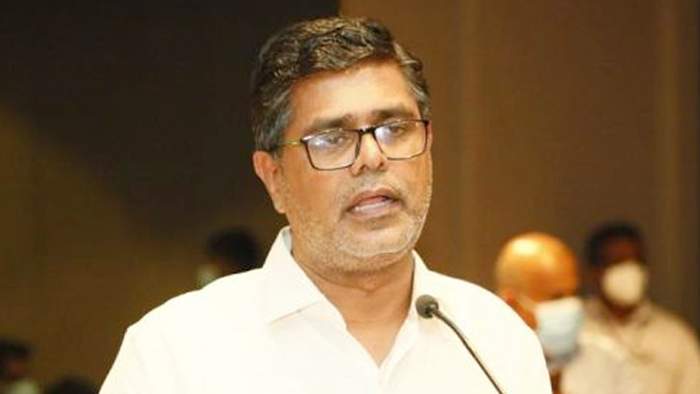
SJB Colombo District MP Mujibur Rahuman in parliament demanded to know from the government the reasons for CEB suspending the leave of all its employees until further notice from Thursday.
MP Rahuman said that the CEB has got an acting General Manager anew and the latter yesterday morning issued a circular suspending leave of all CEB employees with immediate effect until further notice.
“We demand that Minister Kanchana Wijesekera should explain this to the House. This circular was issued while this debate on the new Electricity Amendment Bill was pending. There are many who oppose this Bill. The Minister must tell parliament the reason for the urge to cancel the leave of CEB employees,” the MP said.However, Speaker Mahinda Yapa Abeywardena prevented Minister Wijesekera responding to the query and said that the matter raised by MP Rahuman was not relevant.
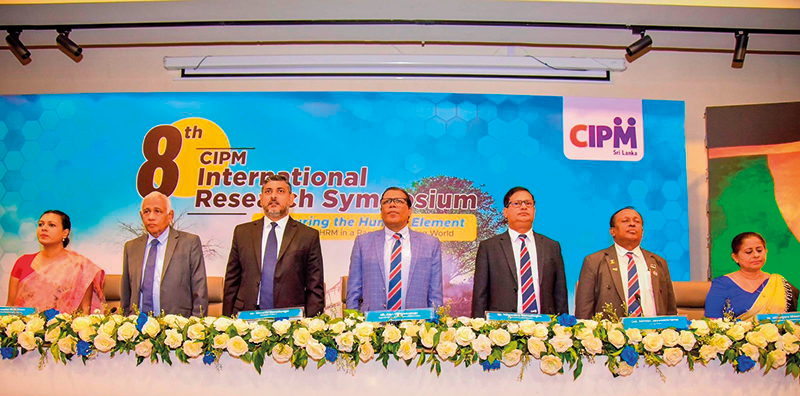
The Chartered Institute of Personnel Management (CIPM) successfully concluded the 8th Annual CIPM Symposium, which took place on 31st May 2024. Themed “Nurturing the Human Element—Redefining HRM in a Rapidly Changing World,” the symposium underscored the pivotal role of human resource management (HRM) in today’s dynamic global landscape. Since its inception in 1959, CIPM has been dedicated to advancing the HR profession through education, professional development, and advocacy, solidifying its position as Sri Lanka’s leading professional body for HRM.
Ken Vijayakumar, the President of the CIPM, graced the occasion as the chief guest. The symposium commenced with the welcome address by the Chairperson, Prof. Arosha Adikaram, followed by the Web Launch of the Symposium Proceedings and Abstract Book by the CIPM President. The event featured distinguished addresses, including a speech by Chief Guest Ken Vijayakumar, President of CIPM, and an address by Guest of Honor Shakthi Ranatunga, Chief Operating Officer of MAS Holdings Pvt. Ltd., Sri Lanka.
The symposium also featured an inspiring keynote address by Prof. Mario Fernando, Professor of Management and Director of the Centre for Cross Cultural Management (CCCM) at the University of Wollongong, Australia.
Vote of Thanks of the inauguration session was delivered by Dr. Dillanjani Weeratunga, Symposium Co-chair.
The symposium served as a comprehensive platform for researchers to present their findings across a wide range of critical topics in HRM. These included Cultural Diversity and Inclusion, Talent Development and Retention, Ethical Leadership and Corporate Social Responsibility, Adapting to Technological Advancements, Mental Health and Well-being at Work, Global Workforce Challenges, Employee Empowerment, and Reskilling and Upskilling.
The plenary session was led by Prof. Wasantha Rajapakse. Certificates were awarded to the best paper presenters during the valedictory session, followed by a vote of thanks delivered by Kamani Perera, Manager of Research and Development.
The annual symposium of CIPM was a truly inclusive event, attracting a diverse audience that spanned undergraduates, graduates, working professionals, research scholars and lecturers. This widespread interest highlights the symposium’s significance in the field of HRM, offering a unique opportunity for everyone to network and learn from scholarly brains.The CIPM International Research Symposium was sponsored by Hambantota International Port, Sri Lanka Institute of Information Technology (SLIIT), E B Creasy & Co. PLC, and Print Xcel Company.



US sports envoys to Lanka to champion youth development

Rahuman questions sudden cancellation of leave of CEB employees


