
News
How an Intruder in the General Assembly was Upstaged by a Foreign Minister

By Thalif Deen
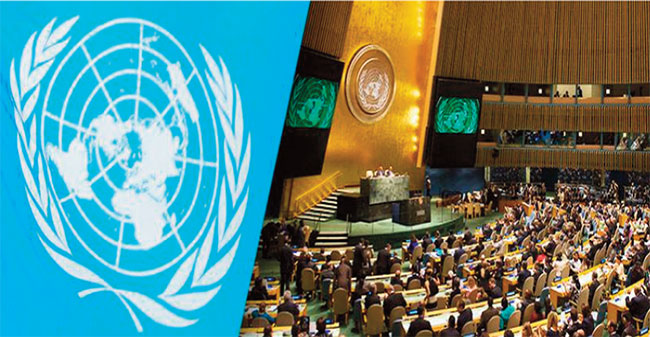
UNITED NATIONS – Sri Lanka had its fair share of Foreign Ministers who made their annual visits to the UN during the General Assembly sessions in September when the world body traditionally hosted over 150 world leaders, including heads of state and heads of government.
Sri Lanka’s Foreign Minister ACS Hameed had one of his memorable moments when an Eelam activist and lawyer from London, Krishna Vaikunthavasan, surreptitiously gate-crashed into the UN and tried to upstage Hameed by walking onto the podium of the General Assembly hall and momentarily took the speaker’s slot.
The incident, perhaps a rarity in the history of the UN, saw the intruder unleashing a diatribe against a member state accusing it of genocide and lambasting the government for committing war crimes against the Tamils fighting for a separate state in northern Sri Lanka.
When the president of the Assembly realized he had an interloper on his hands, he cut off the mike and summoned security guards who bodily ejected him from the hall and banned him from the UN premises. And as Hameed walked up to the podium, there was pin drop silence in the Assembly Hall.
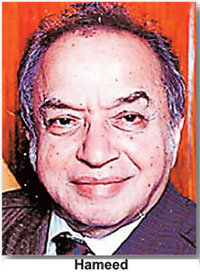 As a member of the Sri Lanka delegation at that time, I was seated behind Hameed. But the unflappable Hameed, unprompted by any of his delegates, produced a riveting punchline: “Mr President”, he said “I want to thank the previous speaker for keeping his speech short,” he said, as the Assembly, known to suffer longwinded speeches, broke into peals of laughter. The intruder was in effect upstaged by the Foreign Minister.
Hameed’s canny sense of humor also went far beyond the confines of the UN. When he came under attack for staying in five-star luxury hotels during the UN General Assembly sessions in New York, he fired back at the Opposition MP in Parliament with a rejoinder dripping with sarcasm: “Where do you want me to stay when I travel overseas as the Foreign Minister?”, he asked. “in thosai boutiques?”
To put it in perspective, that would be like rooming at the Ambal Café in Hulftsdorf or Saraswathy Lodge in Bambalapitya. Or perhaps Saravana Bhavan in New York’s Lexington Avenue.
Hameed routinely pitched his tent either at New York’s Hyatt Regency, the Intercontinental Barclay, the Waldorf Astoria or the Palace Hotel—and he did it in style, like scores of other high-flying Foreign Ministers arriving for the UN sessions. A globe-trotter of near-biblical proportions, he was probably in Colombo only on transit, in between catching overseas flights.
Hameed was an unforgettable character in his heyday—enjoying every single moment of his tenure as Foreign Minister beginning 1977. And more so, because President JR Jayewardene (JRJ) never addressed the UN nor stepped into the UN premises (even while he stayed at the Waldorf Astoria in New York during his state visit to Washington DC in April 1983.) The reasons for shunning the UN remains a mystery.
With Sri Lanka holding the chairmanship of the Non-Aligned Movement (NAM) during 1976-1979, Hameed was constantly called upon to preside over some of the thorniest international issues of the mid-1970s: which of the two Cambodian factions had the rightful claim to the seat at the UN (the General Assembly session that day was held up for over four hours as he negotiated behind closed doors to help resolve the dispute, with backing from the UN’s Legal Adviser)? Was it Kampuchea under the Khmer Rouge regime (1975-1979)?
And, in another dispute, should Egypt, which had signed the Camp David peace agreement with Israel in 1978, be driven out of NAM? There were also sharp divisions in NAM over the disputed territory of Western Sahara in the Maghreb region of North Africa and the split over the Soviet invasion of Afghanistan (1979-1989).
 As he sat in judgement, Hameed’s closest advisers during the General Assembly sessions included two outstanding career diplomats, Jayantha Dhanapala and Nihal Rodrigo, along with Ernest Corea, Sri Lanka’s High Commissioner to Canada and later Ambassador to the United States.
Ernest was one of Hameed’s longstanding friends, having known him long before he became Foreign Minister, and was the only Sri Lankan Ambassador who addressed him by his first name: Shahul, throwing protocol to the winds.
As Ernest once told me : “Shahul faced many challenges in his life – one of them was a lack of physical height – but his biggest challenge was managing the Foreign Affairs portfolio for the Sri Lanka government. To the best of my recollection, he was the first Foreign Minister to hold that portfolio without the direct involvement of the Prime Minister’s/President’s office”. Previously, Defence and External Affairs were integrated into a single portfolio.
When President Jayewardene unhitched them, there was a fairly widespread perception, particularly in Colombo’s foreign policy establishment, that the whole business of foreign affairs was being downgraded. “Shahul proved them wrong”, said Ernest.
As part of the landscape in the UN Delegate’s Lounge, Hameed was seen holding court, even as he kept chomping at his cigar, probably the best from Cuba, which he picked up in Havana during his frequent trips to the Cuban capital, before Sri Lanka handed over the NAM chairmanship to Fidel Castro in 1979.
At home, Hameed had a tough task steering the NAM ship among sceptics like Gamini Dissanayake and Lalith Athulathmudali, and of course, JRJ himself. Still, Hameed showed remarkable patience and persistence.
Perhaps his most joyous moment as Foreign Minister was when JRJ told Fidel Castro at the Havana summit that it was Hameed who enabled Sri Lanka to hand over NAM’s leadership to Cuba “untarnished and unaltered.”
This put to rest the speculation even within his own party that his days as Foreign Minister would be short. “The fact is that JRJ realized as few others did that Shahul had an intuitive feel for international relations. Those who had the privilege of working with him understood this. He had his faults. Who doesn’t?,” asked Ernest.
“I am not going to be counted among his critics who might want to let fly at him now that he is no longer with us. Rather, I would like to remind those of us who worked with him and others who observed him at work that he was outstanding in several areas”.
First, he was tri-lingual: in English, Sinhala and Tamil. This gave him a remarkable reputation among his peers. Second, he had a phenomenal memory and could at precisely the correct moment during a drafting session pull out from the recesses of his mind a word, a phrase or other salient reference that added substance and depth to a public policy statement. He was also insistent, as some of his colleagues were not, that a solid Sri Lanka/India relationship was an essential component of foreign policy, said Ernest.
“One more point needs to be stressed and this is very personal. He was an excellent extempore speaker. He could intervene in a debate to deal with a complex issue for which most of us were unprepared as if he was saying to himself: “Here’s that loose ball I was waiting for,” declared Ernest.
Armed with self-deprecating humour, Hameed funded the publication of a collection of cartoons that lampooned him. He particularly relished a cartoon which showed him sitting before a huge globe with the caption: “Let me see – what are the countries I have still not visited.” His initials ACS were spelled out as “All Countries Seen.”
An equally lovable cartoon in November 1978 showed a world-weary Hameed arriving at the Katunayake airport and innocently asking a passer-by: “My dear man, could you show me the way to Harispattuwa?,” his electorate in his hometown of Akurana, a majority Sinhala Buddhist electorate. And to have been elected over a very long period was a tribute to Hameed’s political relationship among his voters.
The cartoons were sketches from some of Sri Lanka’s celebrated artistes of the 1970s, including W.R.Wijesoma, Jiffrey Yoonoos, Mark Gerreyn and Amita Abayesekera.”One of the greatest gifts is the ability to laugh at oneself,” said Wijesoma in an introduction to the book titled “Mr Foreign Minister”, ” Mr Hameed is doing just that, and I believe he is having the last laugh.”
Oscar Wilde once made the distinction between two forms of torture: the rack and the Press. Ask any politician, said Hameed, and he would opt for the grisly torture chamber over the editorial offices and the news desks in Colombo.
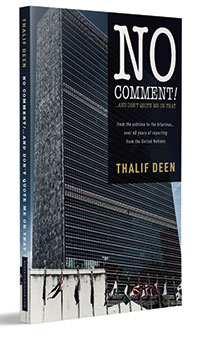
This article is adapted from a newly-released book on the United Nations titled “No Comment—and Don’t Quote Me on that” authored by Thalif Deen. The book is available on Amazon and at the Viitha Yapa bookshop.



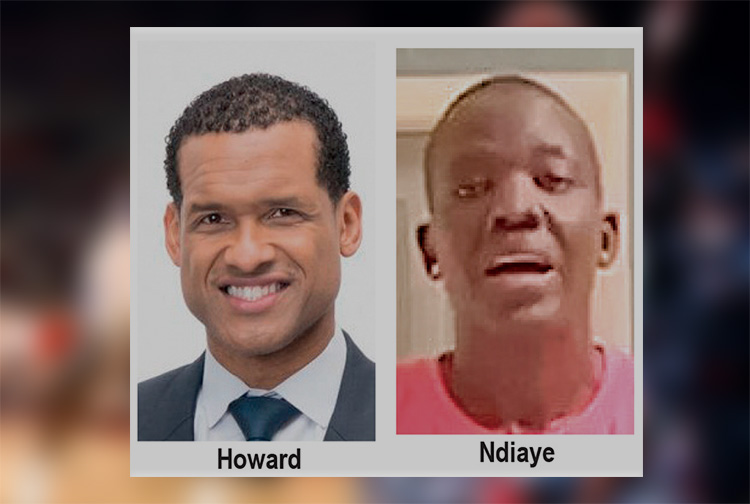
The U.S. Embassy in Colombo welcomed the U.S. Sports Envoys to Sri Lanka, former National Basketball Association (NBA) and Women’s National Basketball Association (WNBA) players Stephen Howard and Astou Ndiaye, from June 8 through 14.
The Public Diplomacy section of the U.S. Embassy said that it would launch a weeklong basketball program intended to harness the unifying power of sports, made possible through collaboration with Foundation of Goodness and IImpact Hoop Lab.
While in Sri Lanka, Howard and Ndiaye, both retired professional basketball players, will conduct a weeklong program, Hoops for Hope: Bridging Borders through Basketball. The Sports Envoys will lead basketball clinics and exhibition matches and engage in leadership sessions in Colombo and Southern Province for youth aged 14-18 from Northern, Uva, Eastern and Western Provinces, offering skills and leadership training both on and off the court. The U.S. Envoys will also share their expertise with the Sri Lanka Basketball Federation, national coaches, and players, furthering the development of basketball in the country. Beyond the clinics, they will collaborate with Sri Lankan schoolchildren to take part in a community service project in the Colombo area.
“We are so proud to welcome Stephen and Astou as our Sports Envoys to Sri Lanka, to build on the strong people-to-people connections between the United States and Sri Lanka,” said U.S. Ambassador Julie Chung. “The lessons that will be shared by our Sports Envoys – communication, teamwork, resilience, inclusion, and conflict resolution – are essential for leadership development, community building, equality, and peace. The U.S. Sports Envoy program is a testament to our belief that sports can be a powerful tool in promoting peace and unity.”
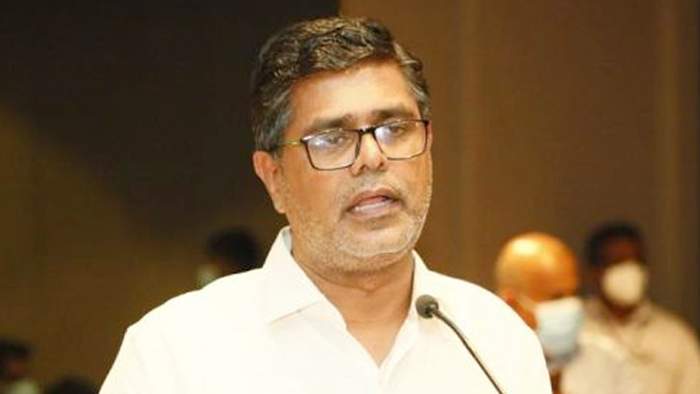
SJB Colombo District MP Mujibur Rahuman in parliament demanded to know from the government the reasons for CEB suspending the leave of all its employees until further notice from Thursday.
MP Rahuman said that the CEB has got an acting General Manager anew and the latter yesterday morning issued a circular suspending leave of all CEB employees with immediate effect until further notice.
“We demand that Minister Kanchana Wijesekera should explain this to the House. This circular was issued while this debate on the new Electricity Amendment Bill was pending. There are many who oppose this Bill. The Minister must tell parliament the reason for the urge to cancel the leave of CEB employees,” the MP said.However, Speaker Mahinda Yapa Abeywardena prevented Minister Wijesekera responding to the query and said that the matter raised by MP Rahuman was not relevant.
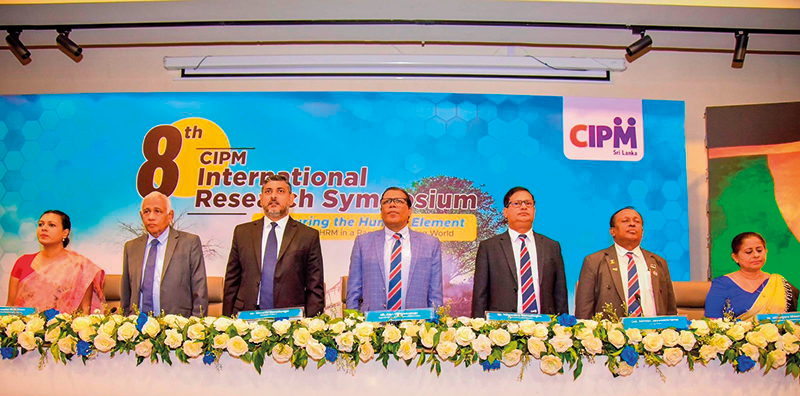
The Chartered Institute of Personnel Management (CIPM) successfully concluded the 8th Annual CIPM Symposium, which took place on 31st May 2024. Themed “Nurturing the Human Element—Redefining HRM in a Rapidly Changing World,” the symposium underscored the pivotal role of human resource management (HRM) in today’s dynamic global landscape. Since its inception in 1959, CIPM has been dedicated to advancing the HR profession through education, professional development, and advocacy, solidifying its position as Sri Lanka’s leading professional body for HRM.
Ken Vijayakumar, the President of the CIPM, graced the occasion as the chief guest. The symposium commenced with the welcome address by the Chairperson, Prof. Arosha Adikaram, followed by the Web Launch of the Symposium Proceedings and Abstract Book by the CIPM President. The event featured distinguished addresses, including a speech by Chief Guest Ken Vijayakumar, President of CIPM, and an address by Guest of Honor Shakthi Ranatunga, Chief Operating Officer of MAS Holdings Pvt. Ltd., Sri Lanka.
The symposium also featured an inspiring keynote address by Prof. Mario Fernando, Professor of Management and Director of the Centre for Cross Cultural Management (CCCM) at the University of Wollongong, Australia.
Vote of Thanks of the inauguration session was delivered by Dr. Dillanjani Weeratunga, Symposium Co-chair.
The symposium served as a comprehensive platform for researchers to present their findings across a wide range of critical topics in HRM. These included Cultural Diversity and Inclusion, Talent Development and Retention, Ethical Leadership and Corporate Social Responsibility, Adapting to Technological Advancements, Mental Health and Well-being at Work, Global Workforce Challenges, Employee Empowerment, and Reskilling and Upskilling.
The plenary session was led by Prof. Wasantha Rajapakse. Certificates were awarded to the best paper presenters during the valedictory session, followed by a vote of thanks delivered by Kamani Perera, Manager of Research and Development.
The annual symposium of CIPM was a truly inclusive event, attracting a diverse audience that spanned undergraduates, graduates, working professionals, research scholars and lecturers. This widespread interest highlights the symposium’s significance in the field of HRM, offering a unique opportunity for everyone to network and learn from scholarly brains.The CIPM International Research Symposium was sponsored by Hambantota International Port, Sri Lanka Institute of Information Technology (SLIIT), E B Creasy & Co. PLC, and Print Xcel Company.



US sports envoys to Lanka to champion youth development

Rahuman questions sudden cancellation of leave of CEB employees


