
News
Have we got our economic and Covid-19 priorities right?

Sri Lanka has over 50% living below the poverty line, and the malnutrition rate is estimated to be 18%. It is obvious that first priority should be given to relief of hunger. Then to fighting the COVID 19 epidemic, a health care problem. It is after relieving these that money should be devoted to infrastructure like highways. But in Sri Lanka it appears to be the other way round.
Health care is a priority, but even on this aspect, are we acting sensibly? In the Daily News of 15.07.21, the Director of the Health Promotion Bureau is quoted as saying that the number of COVID 19 cases has dropped to 6.2% on the basis of random PCR tests, from an earlier figure of 10%.
The Epidemiology Unit has carried out about 7,000 random PCR tests daily covering all MOH divisions in the country. The best public health measure is the observance of the three health rules – wearing masks, observing social distancing and washing the hands with soap and water after touching anything touched by others. This has been going on from the outset and is being successful at little or no cost.
As nearly 80% of COVID-19 infections are asymptomatic or extremely mild, they develop immunity and do not need any vaccination. Vaccination is only indicated to the vulnerable group – elderly (over 60 years), those with serious underlying diseases e.g. respiratory, cardiac, diabetes mellitus, cancers etc. This group of about 20% of the population should be vaccinated, commencing with the oldest age group, as they are prone to develop and some of them can die. The occasional occurrence of a case in a child fits into the pattern associated with several virus diseases called Kawasaki syndrome. As such, there is no need to immunize children, taken as a group.
An intensive program is now underway to vaccinate all those above 30 years in every district in Sri Lanka. 36% of this target population has received the first dose already and 21% both doses. A large mass of expensive vaccines from different countries are being rushed into the country as if we are faced with a life or death struggle.
By the end of June, Sri Lanka had only 277,519 cases with 3,574 deaths (1.4%). A social scientist visited Kanatte cemetery a few days ago and inquired whether there had been an increase in deaths since the COVID outbreak began and she was able to confirm that no such spike had occurred. Why then this great hurry to vaccinate? Even in the USA, no doctors and other health care workers have died of COVID- 19.
The vaccine industry which is in decline has seen a golden opportunity to expand and profit. An intensive campaign was carried out in the USA to frighten the people and to compel them to take the vaccine, which had already been mass produced. It also provided a good opportunity to test new varieties of vaccines e.g. the mRNA vaccines (like the Pfizer and Moderna COVID 19 vaccines from the USA), which are really the introduction of genetic material to get our body cells to produce the spike protein alone of the virus, not the whole virus.
As we all know, the introduction of foreign genetic material is considered to be unsafe and future outcomes are uncertain. That is why the European Union refused to import genetically modified (GM) foods from South America. There were campaigns in the USA questioning the safety and efficacy of the COVID vaccines. Sales in the USA and West have not been great, as questions have been raised by scientists.
In North America and Europe, it was because of the big spike of cases, specially approaching winter that the COVID-19 phobia gained ground, and “emergency use” was resorted to. There is no such emergency situation in Sri Lanka. Further, Asian and African countries that have used BCG as a protection against TB have been shown to have benefited from it and have little COVID 19.
The vaccine is also expensive and many people in the USA refused to buy it, specially the poor blacks and browns. The vaccine industry had to find a market for this massive unsold surplus. What better than to look abroad for markets among those already mentally conditioned to accept the vaccine as a necessity? It is not difficult to buy over officials and decision- makers and get the local private sector to come in with suitable inducements. This is what we are seeing in many countries world-wide, and here in Sri Lanka too.
Governments tend to fall in line in the face of such intensive campaigning.. The COVID phobia is there among the people to be exploited and the environment and the partners are also in place, so why not exploit it?
The vaccine producers themselves admit that the optimal time for boosters is still being worked out to get full protection. The side effects are also being looked for and are not fully known. This particularly applies to the long term effects. The protection will be short term and in all probability annual boosters will be required. This is going to be a considerable cost.
On the political side, the lockdown policy practiced in Sri Lanka has no real benefit from a medical point of view, and is only increasing poverty and disrupting the economy, leading to job losses. We need more informed debate on this whole issue and then come out with what really needs to be done. Protests against vaccination should be allowed, as much as for vaccination.
Prof. Tissa Vitarana



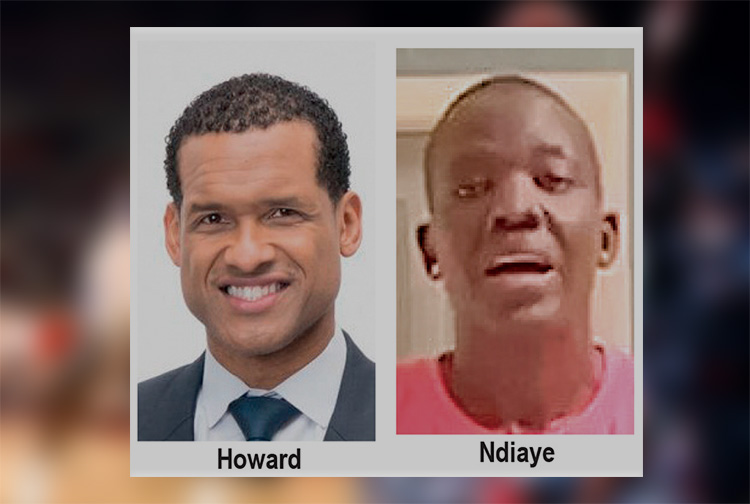
The U.S. Embassy in Colombo welcomed the U.S. Sports Envoys to Sri Lanka, former National Basketball Association (NBA) and Women’s National Basketball Association (WNBA) players Stephen Howard and Astou Ndiaye, from June 8 through 14.
The Public Diplomacy section of the U.S. Embassy said that it would launch a weeklong basketball program intended to harness the unifying power of sports, made possible through collaboration with Foundation of Goodness and IImpact Hoop Lab.
While in Sri Lanka, Howard and Ndiaye, both retired professional basketball players, will conduct a weeklong program, Hoops for Hope: Bridging Borders through Basketball. The Sports Envoys will lead basketball clinics and exhibition matches and engage in leadership sessions in Colombo and Southern Province for youth aged 14-18 from Northern, Uva, Eastern and Western Provinces, offering skills and leadership training both on and off the court. The U.S. Envoys will also share their expertise with the Sri Lanka Basketball Federation, national coaches, and players, furthering the development of basketball in the country. Beyond the clinics, they will collaborate with Sri Lankan schoolchildren to take part in a community service project in the Colombo area.
“We are so proud to welcome Stephen and Astou as our Sports Envoys to Sri Lanka, to build on the strong people-to-people connections between the United States and Sri Lanka,” said U.S. Ambassador Julie Chung. “The lessons that will be shared by our Sports Envoys – communication, teamwork, resilience, inclusion, and conflict resolution – are essential for leadership development, community building, equality, and peace. The U.S. Sports Envoy program is a testament to our belief that sports can be a powerful tool in promoting peace and unity.”
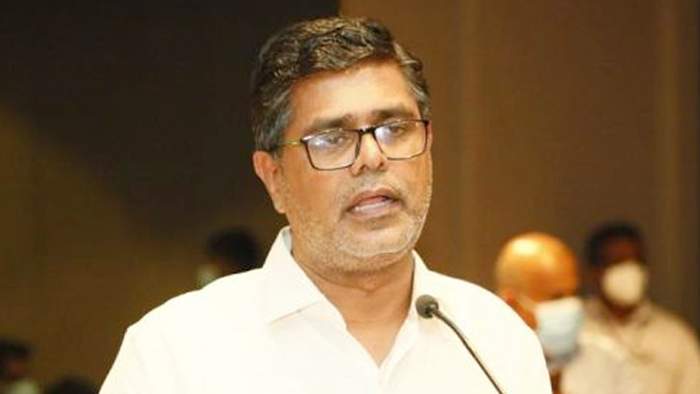
SJB Colombo District MP Mujibur Rahuman in parliament demanded to know from the government the reasons for CEB suspending the leave of all its employees until further notice from Thursday.
MP Rahuman said that the CEB has got an acting General Manager anew and the latter yesterday morning issued a circular suspending leave of all CEB employees with immediate effect until further notice.
“We demand that Minister Kanchana Wijesekera should explain this to the House. This circular was issued while this debate on the new Electricity Amendment Bill was pending. There are many who oppose this Bill. The Minister must tell parliament the reason for the urge to cancel the leave of CEB employees,” the MP said.However, Speaker Mahinda Yapa Abeywardena prevented Minister Wijesekera responding to the query and said that the matter raised by MP Rahuman was not relevant.
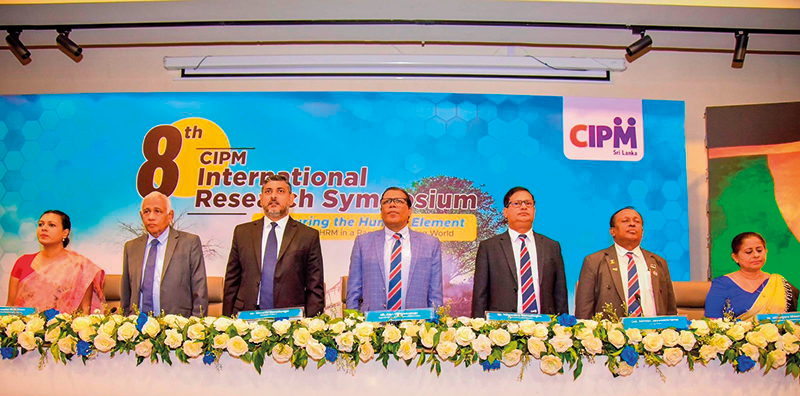
The Chartered Institute of Personnel Management (CIPM) successfully concluded the 8th Annual CIPM Symposium, which took place on 31st May 2024. Themed “Nurturing the Human Element—Redefining HRM in a Rapidly Changing World,” the symposium underscored the pivotal role of human resource management (HRM) in today’s dynamic global landscape. Since its inception in 1959, CIPM has been dedicated to advancing the HR profession through education, professional development, and advocacy, solidifying its position as Sri Lanka’s leading professional body for HRM.
Ken Vijayakumar, the President of the CIPM, graced the occasion as the chief guest. The symposium commenced with the welcome address by the Chairperson, Prof. Arosha Adikaram, followed by the Web Launch of the Symposium Proceedings and Abstract Book by the CIPM President. The event featured distinguished addresses, including a speech by Chief Guest Ken Vijayakumar, President of CIPM, and an address by Guest of Honor Shakthi Ranatunga, Chief Operating Officer of MAS Holdings Pvt. Ltd., Sri Lanka.
The symposium also featured an inspiring keynote address by Prof. Mario Fernando, Professor of Management and Director of the Centre for Cross Cultural Management (CCCM) at the University of Wollongong, Australia.
Vote of Thanks of the inauguration session was delivered by Dr. Dillanjani Weeratunga, Symposium Co-chair.
The symposium served as a comprehensive platform for researchers to present their findings across a wide range of critical topics in HRM. These included Cultural Diversity and Inclusion, Talent Development and Retention, Ethical Leadership and Corporate Social Responsibility, Adapting to Technological Advancements, Mental Health and Well-being at Work, Global Workforce Challenges, Employee Empowerment, and Reskilling and Upskilling.
The plenary session was led by Prof. Wasantha Rajapakse. Certificates were awarded to the best paper presenters during the valedictory session, followed by a vote of thanks delivered by Kamani Perera, Manager of Research and Development.
The annual symposium of CIPM was a truly inclusive event, attracting a diverse audience that spanned undergraduates, graduates, working professionals, research scholars and lecturers. This widespread interest highlights the symposium’s significance in the field of HRM, offering a unique opportunity for everyone to network and learn from scholarly brains.The CIPM International Research Symposium was sponsored by Hambantota International Port, Sri Lanka Institute of Information Technology (SLIIT), E B Creasy & Co. PLC, and Print Xcel Company.



US sports envoys to Lanka to champion youth development

Rahuman questions sudden cancellation of leave of CEB employees


