
News
Harsha de Silva says “Sri Lanka in dire straits” (Parliament Speech 3/5/22)

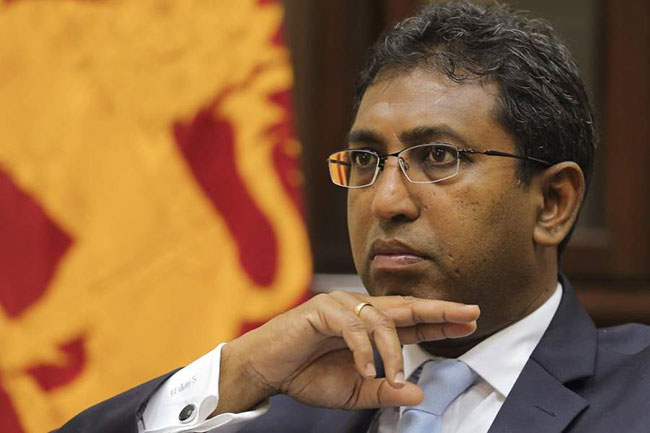
Earlier today the Minister of Finance, Hon. Ali Sabry, stated that the reluctance to go to the IMF much earlier was a grave mistake, in addition to the massive tax cuts and delayed depreciation of the rupee. However, I cautioned and suggested these changes as far back as 2020 November, although it fell on deaf ears. Today, these same Ministers act as if they are reborn. It is unfortunate that we did not make the right decisions at the time, as our debt was sustainable then, currently our debt is deemed unsustainable, thus the IMF is unable to provide us with any Rapid Financing Instrument (RFI).
In regard to the detrimental tax cuts, during the time of President Ranasinghe Premadasa, our tax to GDP was as high as 20 percent. When the SLFP came into power in 1994, taxation was still at 17 percent, however when Sirisena-Wickramasinghe took office in 2015, it had reduced to a meager 9 percent. Between 2015 and 2019 tax rates increased back up to 12.5 percent, although Sri Lanka’s tax to GDP today stands at 7.5 percent, which is the lowest in the whole world. How can an emerging island nation such as Sri Lanka move forward at this rate? Our people would not be suffering this much, had the government heeded the advice I repeatedly provided in Parliament and outside.
Hon. Ali Sabry made a massive revelation today by stating that we possess only a mere USD 50 mn, while also highlighting the urgent need of USD 4 billion to keep the country functioning. We cannot even offload a fuel ship with USD 50 mn, thus where will we find this money to keep us afloat? Our beloved neighbor, India has already committed almost USD 5 billion. Asian Clearing Union (ACU) payments alone amount to roughly USD 200 mn a month, a total of USD 2.5 bn a year.
In addition to another USD 1 bn to import food and medicine as well as USD 500 mn for fuel and USD 400 as a currency swap. However, China is yet to make a commitment of this nature. Although they support our IMF program, they have clearly expressed their reluctance to restructure our debt, which will further delay our debt-restructuring process.
We hear that President Gotabaya has written to the Japanese Prime Minister requesting some money, while extending his deep regret in scrapping the LRT project. It is critical that we receive these funds from Japan, as they are the only option we have left. Contrary to statements made by former Ministers such as Cabraal who stated that we will receive funds from the Middle East and various other countries, ultimately, it is only Japan that we have left. Sri Lanka will come to a complete standstill if we do not find these urgent funds.
This economic crisis has hit people across the board indiscriminately, (regardess) of their social classes. Our middle class, in particular, has been hit severely although they would not discuss this in public due to embarrassment. Households are discussing how they can cut their expenses and utilize their diminished savings to fund their normal day-to-day activities. Today’s newspapers revealed that the Cabinet has decided to provide Rs. 7,500 to all Samurdhi recipients, although I would like to highlight that this is purely insufficient.
This cash transfer should be extended to all families living on and below the poverty line, as they are all facing hardships. It ought to be a universal cash transfer system to ensure adequate coverage, opposed to targeted schemes such as Samurdhi that are politicized. According to a World Bank report, 60 percent of the population that ought to receive Samurdhi benefits are not recipients, while 60 percent who are undeserving are recipients. Thus, I urge the government not to politicize these cash transfers, as the majority of our population is struggling to make ends meet, and make these payments available to all.
The Hon. Finance Minister also touched on the welfare state earlier in his speech, however, it should be emphasized that 60 percent of government subsidies are consumed by the wealthiest million in this country, who are at the top of the social pyramid. The bottom million of the population only consumes less than 5 percent, thus our welfare state is highly inequitable. We need a complete overhaul of our welfare state and subsidies, as they should go to the most deserving. Additionally, we have to implement a wide-ranging social protection program to cushion the most vulnerable communities from the impending economic woes.
Unfortunately, we do not even have sufficient funds to operate the 1990 Suwa Seriya, which brings over 1,000 patients to critical care in a given day. I appeal to the Hon. Minister of Finance and the Hon. Prime Minister to please allocate the necessary funds to keep the 1990 Suwa Seriya functioning, as it is a crucial necessity in these hard times.
Moreover, we need to initiate a macro-stabilization program to stabilize our currency, interest rates and inflation. Who in their right mind would let a country’s currency free float all of a sudden with no guidance whatsoever? A fall of over 100 percent with no end in sight, as revealed earlier we have inadequate reserves to defend it. When the Rajapaksa government took over in 2019, the dollar was at 180 LKR. This very government heavily criticized the Sirisena-Wickramasinghe government for letting the rupee depreciate from 130 LKR/USD to 180 LKR/USD from 2015 – 2019.
However, today the Rajapaksa government has driven our rupee from 180 LKR/USD to 370 LKR/USD in two years! How many lives are jeopardized due to this depreciation? As a result, millions of Sri Lankans are unable to buy daily essentials such as milk powder, medicine and gas. We need to hold these people accountable, they should not be able to just resign and go home after driving 22 million people to the ground! How can they sleep at night knowing people are dying in queues waiting for petrol? They should be prosecuted under criminal negligence.
Interest rates are 25 percent today, and could go high as 30 percent! These rates are unbearable for small-medium enterprises, how are they expected to keep operations? The government claims they cannot do anything about it, obviously we cannot do anything now as they brought us to the edge of the cliff before bringing in necessary changes. Unfortunately, we will have to hold these interest rates for at least another six months to stabilize.
Lastly, official food inflation, according to the Department of Census and Statistics, is at a whopping 47 percent, while unofficial food inflation may be even higher! How in god’s name are people expected to find adequate sustenance for their families, when a single coconut is at 100 rupees, a kilo of dhal at 500 rupees, a kilo of rice at 240 rupees and a kilo of sugar at 260 rupees? Therefore, we are in an urgent need for a stabilization program that includes exchange rate, inflation and interest rates. There has to be a system to stabilize this economy, without stability this is going haywire and it is unbearable for the average man to survive.



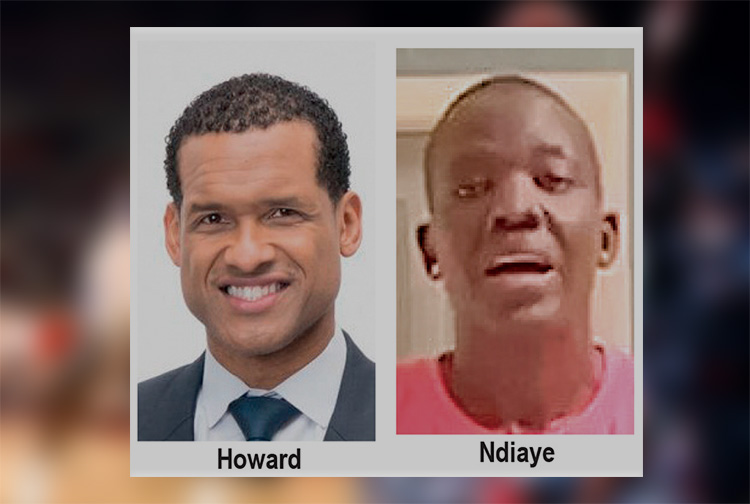
The U.S. Embassy in Colombo welcomed the U.S. Sports Envoys to Sri Lanka, former National Basketball Association (NBA) and Women’s National Basketball Association (WNBA) players Stephen Howard and Astou Ndiaye, from June 8 through 14.
The Public Diplomacy section of the U.S. Embassy said that it would launch a weeklong basketball program intended to harness the unifying power of sports, made possible through collaboration with Foundation of Goodness and IImpact Hoop Lab.
While in Sri Lanka, Howard and Ndiaye, both retired professional basketball players, will conduct a weeklong program, Hoops for Hope: Bridging Borders through Basketball. The Sports Envoys will lead basketball clinics and exhibition matches and engage in leadership sessions in Colombo and Southern Province for youth aged 14-18 from Northern, Uva, Eastern and Western Provinces, offering skills and leadership training both on and off the court. The U.S. Envoys will also share their expertise with the Sri Lanka Basketball Federation, national coaches, and players, furthering the development of basketball in the country. Beyond the clinics, they will collaborate with Sri Lankan schoolchildren to take part in a community service project in the Colombo area.
“We are so proud to welcome Stephen and Astou as our Sports Envoys to Sri Lanka, to build on the strong people-to-people connections between the United States and Sri Lanka,” said U.S. Ambassador Julie Chung. “The lessons that will be shared by our Sports Envoys – communication, teamwork, resilience, inclusion, and conflict resolution – are essential for leadership development, community building, equality, and peace. The U.S. Sports Envoy program is a testament to our belief that sports can be a powerful tool in promoting peace and unity.”
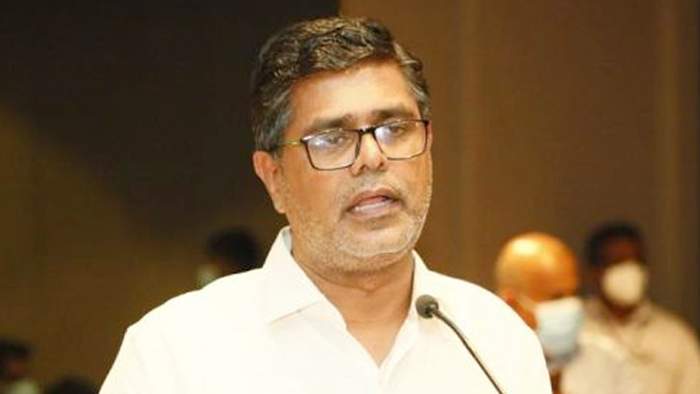
SJB Colombo District MP Mujibur Rahuman in parliament demanded to know from the government the reasons for CEB suspending the leave of all its employees until further notice from Thursday.
MP Rahuman said that the CEB has got an acting General Manager anew and the latter yesterday morning issued a circular suspending leave of all CEB employees with immediate effect until further notice.
“We demand that Minister Kanchana Wijesekera should explain this to the House. This circular was issued while this debate on the new Electricity Amendment Bill was pending. There are many who oppose this Bill. The Minister must tell parliament the reason for the urge to cancel the leave of CEB employees,” the MP said.However, Speaker Mahinda Yapa Abeywardena prevented Minister Wijesekera responding to the query and said that the matter raised by MP Rahuman was not relevant.
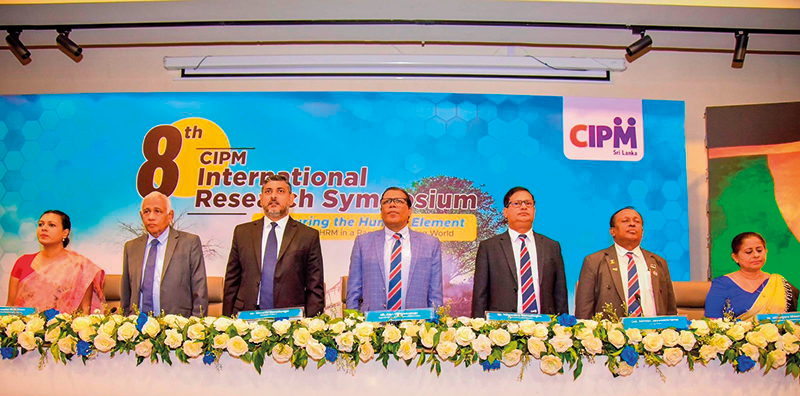
The Chartered Institute of Personnel Management (CIPM) successfully concluded the 8th Annual CIPM Symposium, which took place on 31st May 2024. Themed “Nurturing the Human Element—Redefining HRM in a Rapidly Changing World,” the symposium underscored the pivotal role of human resource management (HRM) in today’s dynamic global landscape. Since its inception in 1959, CIPM has been dedicated to advancing the HR profession through education, professional development, and advocacy, solidifying its position as Sri Lanka’s leading professional body for HRM.
Ken Vijayakumar, the President of the CIPM, graced the occasion as the chief guest. The symposium commenced with the welcome address by the Chairperson, Prof. Arosha Adikaram, followed by the Web Launch of the Symposium Proceedings and Abstract Book by the CIPM President. The event featured distinguished addresses, including a speech by Chief Guest Ken Vijayakumar, President of CIPM, and an address by Guest of Honor Shakthi Ranatunga, Chief Operating Officer of MAS Holdings Pvt. Ltd., Sri Lanka.
The symposium also featured an inspiring keynote address by Prof. Mario Fernando, Professor of Management and Director of the Centre for Cross Cultural Management (CCCM) at the University of Wollongong, Australia.
Vote of Thanks of the inauguration session was delivered by Dr. Dillanjani Weeratunga, Symposium Co-chair.
The symposium served as a comprehensive platform for researchers to present their findings across a wide range of critical topics in HRM. These included Cultural Diversity and Inclusion, Talent Development and Retention, Ethical Leadership and Corporate Social Responsibility, Adapting to Technological Advancements, Mental Health and Well-being at Work, Global Workforce Challenges, Employee Empowerment, and Reskilling and Upskilling.
The plenary session was led by Prof. Wasantha Rajapakse. Certificates were awarded to the best paper presenters during the valedictory session, followed by a vote of thanks delivered by Kamani Perera, Manager of Research and Development.
The annual symposium of CIPM was a truly inclusive event, attracting a diverse audience that spanned undergraduates, graduates, working professionals, research scholars and lecturers. This widespread interest highlights the symposium’s significance in the field of HRM, offering a unique opportunity for everyone to network and learn from scholarly brains.The CIPM International Research Symposium was sponsored by Hambantota International Port, Sri Lanka Institute of Information Technology (SLIIT), E B Creasy & Co. PLC, and Print Xcel Company.



US sports envoys to Lanka to champion youth development

Rahuman questions sudden cancellation of leave of CEB employees


