
News
Govt. unveil plans to build solar power based national mini-grid


Apart from LNG plants in the pipeline
by IFHAM NIZAM
As the demand-supply gap in Sri Lanka’s power generation sector continues to widens, the government announced plans for an ambitious solar power based national mini-grid that extends to villages. This is apart from the LNG plants in the pipeline.
Ceylon Electricity Board (CEB) Chairman Eng. Vijitha Herath said that on completion, the proposed solar network is expected to offer a unit of electricity 45% lower than electricity produced from existing solar powered networks.
Former Minister Basil Rajapaksa, who is also the Chairman of Sri Lanka’s Presidential Task Force on Economic Revival and Poverty Alleviation, has instructed the CEB to construct 100-kilowatt solar power plants and connect them to 7,250 transformers across the country within the next three years.
A key feature of the project is that it is fashioned on the support of villagers at local level. The village level credit and finance institutions such as Samurdhi Banks, Rural Banks, Cooperative Societies and Community Network projects are also considered as key investors in the project which calls for an estimated Rs. 10 million (USD 56,000) investment.
Competitive bidding is to be called soon, according to official sources, who also revealed the projected 1,000MW can be obtained at Rs. 12 per unit, 45% lower than the 300MW of solar energy obtained at Rs. 22 per unit for the last five years.
The project, which is in line with the CEB and Lanka Electricity Company’s (LECO) project to connect 10,000, 100 kW solar power plants to the Distribution Transformer Network, will integrate 7,250 transformers from the 35,000 transformer network installed across the country.
In Sri Lanka, the gap between the demand and supply of power is fast becoming unbridgeable. According to CEB estimates, Sri Lanka’s electricity demand is expected to grow at 5.3 percent on average in the 2015 – 2034 period, in addition the peak demand is expected to grow at 4.7 percent on average.
With the average cost of generation at Rs. 23 and the selling price at Rs. 16, the CEB finds hard to bridge the gap. This trend had been continuing for more than four years.
A senior Electrical Engineer said the CEB cannot go on with expensive diesel and emergency power and should stick with the proposed Long Term Generation Plan.
CEB’s Long-Term Generation Expansion Plan encompasses LNG-fired combined cycle power plants and associated LNG import infrastructure – 2×300 MW dual fuel combined cycle power plants to be commissioned in the western region by 2022.
The associated LNG importing infrastructure is to be developed on a fast track process with sufficient capacity to cater to both the new power plants and the conversion of other oil-fired combined cycle power plants in the western region.
Furthermore, an additional 3×300 MW natural gas combined cycle power plants are expected to be commissioned by 2026 in either Kerawalapitiya or Hambantota.
Power and Energy Minister Dallas Alahapperuma said that during the last five years, only 300MW were added to the national grid, although the demand for electricity is growing at 6% on an annual basis.
Lanka Transformers Limited (LTL), which will own a majority stake has received Cabinet approval for the construction. The power plant with a capacity of 300MW (extending up to 350MW) to be commenced at the Lakdanavi Power Plant premises in Kerawalapitiya in December after the Power Purchase Agreement signed later this month.
The first phase of plant, the open cycle 225 MW, will be completed in 21 months and 125MW Combined Cycle would be completed in one year, a senior Electrical Engineer told The Sunday Island.
He said that the government should go all out to call for tenders to bring LNG at the earliest, rather than waiting till the plants are completed. “This is a crucial process that cannot be taken lightly,” he added
At present, about 35 percent of Sri Lanka’s national power generation comes from diesel power plants where the cost of production per unit is as high as Rs. 30. LNG power plants can reduce the cost up to Rs. 15 per unit.




The U.S. Embassy in Colombo welcomed the U.S. Sports Envoys to Sri Lanka, former National Basketball Association (NBA) and Women’s National Basketball Association (WNBA) players Stephen Howard and Astou Ndiaye, from June 8 through 14.
The Public Diplomacy section of the U.S. Embassy said that it would launch a weeklong basketball program intended to harness the unifying power of sports, made possible through collaboration with Foundation of Goodness and IImpact Hoop Lab.
While in Sri Lanka, Howard and Ndiaye, both retired professional basketball players, will conduct a weeklong program, Hoops for Hope: Bridging Borders through Basketball. The Sports Envoys will lead basketball clinics and exhibition matches and engage in leadership sessions in Colombo and Southern Province for youth aged 14-18 from Northern, Uva, Eastern and Western Provinces, offering skills and leadership training both on and off the court. The U.S. Envoys will also share their expertise with the Sri Lanka Basketball Federation, national coaches, and players, furthering the development of basketball in the country. Beyond the clinics, they will collaborate with Sri Lankan schoolchildren to take part in a community service project in the Colombo area.
“We are so proud to welcome Stephen and Astou as our Sports Envoys to Sri Lanka, to build on the strong people-to-people connections between the United States and Sri Lanka,” said U.S. Ambassador Julie Chung. “The lessons that will be shared by our Sports Envoys – communication, teamwork, resilience, inclusion, and conflict resolution – are essential for leadership development, community building, equality, and peace. The U.S. Sports Envoy program is a testament to our belief that sports can be a powerful tool in promoting peace and unity.”
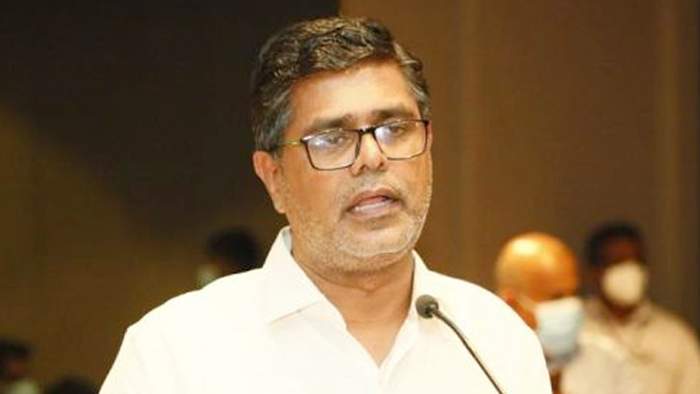
SJB Colombo District MP Mujibur Rahuman in parliament demanded to know from the government the reasons for CEB suspending the leave of all its employees until further notice from Thursday.
MP Rahuman said that the CEB has got an acting General Manager anew and the latter yesterday morning issued a circular suspending leave of all CEB employees with immediate effect until further notice.
“We demand that Minister Kanchana Wijesekera should explain this to the House. This circular was issued while this debate on the new Electricity Amendment Bill was pending. There are many who oppose this Bill. The Minister must tell parliament the reason for the urge to cancel the leave of CEB employees,” the MP said.However, Speaker Mahinda Yapa Abeywardena prevented Minister Wijesekera responding to the query and said that the matter raised by MP Rahuman was not relevant.
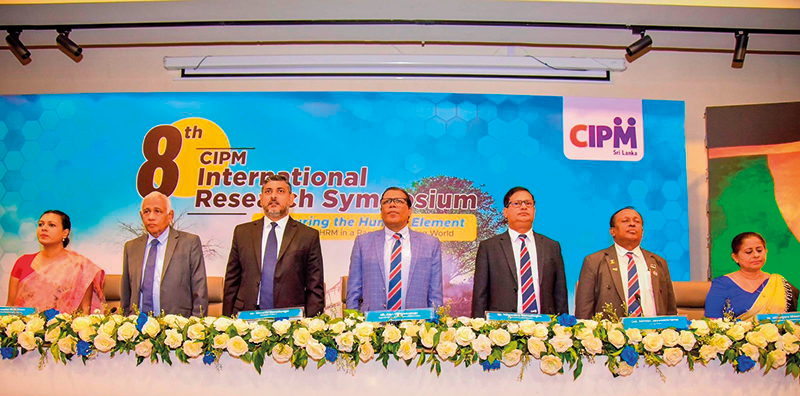
The Chartered Institute of Personnel Management (CIPM) successfully concluded the 8th Annual CIPM Symposium, which took place on 31st May 2024. Themed “Nurturing the Human Element—Redefining HRM in a Rapidly Changing World,” the symposium underscored the pivotal role of human resource management (HRM) in today’s dynamic global landscape. Since its inception in 1959, CIPM has been dedicated to advancing the HR profession through education, professional development, and advocacy, solidifying its position as Sri Lanka’s leading professional body for HRM.
Ken Vijayakumar, the President of the CIPM, graced the occasion as the chief guest. The symposium commenced with the welcome address by the Chairperson, Prof. Arosha Adikaram, followed by the Web Launch of the Symposium Proceedings and Abstract Book by the CIPM President. The event featured distinguished addresses, including a speech by Chief Guest Ken Vijayakumar, President of CIPM, and an address by Guest of Honor Shakthi Ranatunga, Chief Operating Officer of MAS Holdings Pvt. Ltd., Sri Lanka.
The symposium also featured an inspiring keynote address by Prof. Mario Fernando, Professor of Management and Director of the Centre for Cross Cultural Management (CCCM) at the University of Wollongong, Australia.
Vote of Thanks of the inauguration session was delivered by Dr. Dillanjani Weeratunga, Symposium Co-chair.
The symposium served as a comprehensive platform for researchers to present their findings across a wide range of critical topics in HRM. These included Cultural Diversity and Inclusion, Talent Development and Retention, Ethical Leadership and Corporate Social Responsibility, Adapting to Technological Advancements, Mental Health and Well-being at Work, Global Workforce Challenges, Employee Empowerment, and Reskilling and Upskilling.
The plenary session was led by Prof. Wasantha Rajapakse. Certificates were awarded to the best paper presenters during the valedictory session, followed by a vote of thanks delivered by Kamani Perera, Manager of Research and Development.
The annual symposium of CIPM was a truly inclusive event, attracting a diverse audience that spanned undergraduates, graduates, working professionals, research scholars and lecturers. This widespread interest highlights the symposium’s significance in the field of HRM, offering a unique opportunity for everyone to network and learn from scholarly brains.The CIPM International Research Symposium was sponsored by Hambantota International Port, Sri Lanka Institute of Information Technology (SLIIT), E B Creasy & Co. PLC, and Print Xcel Company.



US sports envoys to Lanka to champion youth development

Rahuman questions sudden cancellation of leave of CEB employees


