
News
Govt.’s recovery strategy recipe for disaster – Sajith

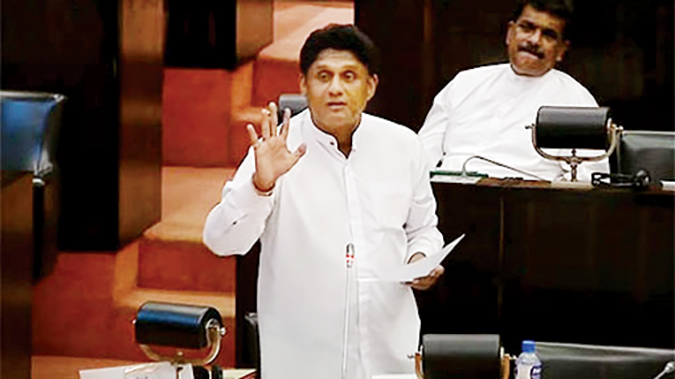
by Saman Indrajith
Opposition and SJB leader Sajith Premadasa told Parliament, on Friday, that the government’s economic recovery plan, announced to the House by President Ranil Wickremesinghe, would give rise to serious humanitarian issues, if implemented.
Premadasa said that the economic plan, envisaged by the government, would lead to a further contraction of the economy, causing more hardships to the public. “We cannot come out of the prevailing crisis by placing the lives of people in danger,” he said.
President Wickremesinghe had, in his roadmap to recovery, failed to address the most vital issues that had to be sorted out for the country to come out of the present crisis, Premadasa said, adding that 6.3 million people were facing severe acute food insecurity and their situation would worsen if the government did not provide relief.
“The President said that the Buddha had, in the Kutadanta Sutta, mentioned four principles that King Maha Vijita should follow in rebuilding a nation. Accepting real advice, understanding the real nature of the problem, taking the problem as a whole and finding solutions according to a plan, and full implementation of the plan, with confidence, were those four points. We, however, have concerns whether the government has identified the problem correctly. We present this 20-point blueprint in the hope that the President would take them into consideration to save the lives of people from imminent danger.
“The first point is the restructuring of debt, and the IMF bailout package for Sri Lanka and their sustainability. The loans we have obtained are bilateral, multilateral, and sovereign bonds. There are reports that a Staff-Level agreement has been reached with the IMF. Again, there are statements that it is not an agreement but an understanding. Some say it is an accord, or a pact. Some others term it a pledge. It is said that the IMF has promised to grant 2.9 billion US dollars, in four years, under its extended financial facility project. The IMF cannot give money if there is no proper agreement. We have been asking the government to produce this agreement to Parliament but the government has not done so. How could the government expect our support to implement a plan for economic recovery when it is not appraising Parliament of the content of this so-called agreement? The incumbent President, as an Opposition MP, kept demanding, in this very same House, that the government should not hide the IMF agreement from Parliament and the people. There is no point in hurling accusations that the Opposition would not support it while the government keeps hiding this agreement from us. We need to know what the government has offered to get financial assistance, during its talks with the IMF, bilateral and multilateral talks and talks with sovereign bond holders, the Paris Club, the London Club.
“The second point is that the government should include a sound economic growth strategy in its plan. We have come down from positive growth levels to negative growth levels. To extricate ourselves from this crisis, the government is to bring about policies to further contract the economy. On the one hand, taxes are increased to boost government revenue, and on the other, welfare expenditure is curtailed to introduce what is termed focussed expenditure. We understand that bankrupt countries need to follow strict measures but we are not agreeable to the plans to make the economy contract further. The President’s speech did not mention any growth strategy. Anyone who knows the Keynesian aggregate demand formula of C+G+I+X-M, will understand that this government is planning to reduce demand to bring down consumption and bring down investment and truncate the economy to get out of the crisis. Consequences of such plans, if implemented, will have a serious effect on people who are already in dire situations. What we need is a growth, strategy not the further shrinking of the economy to place the lives of people in danger. The economy cannot be revived by a small group of people, confining themselves to small rooms, to make plans.”
The Opposition Leader said the government must visit the people and understand their woes and the destruction by wrong economic decisions.The third point is the soaring cost of living and inflation which the President failed to address in his statement. In this country, today, there is a hyper-inflationary situation. The prices of food items are expected to increase by about 100 percent. The government makes the economy contract so it could control demand-pull inflation. What we have now is cost-push inflation. This cannot be sorted out by contracting the economy or by paving the way for the collapse of businesses. Our plan should have a social democratic orientation.
The fourth point is poverty alleviation. Poverty has increased manifold in recent months. Income poverty, consumption poverty and social poverty have increased in our society. Poverty has now reached the middle-class level. Of our population, 60 to 70 percent people are now in poverty. This is having a corrosive effect on our society. Social unrest is high in both urban and rural areas. This crisis demands targeted interventions immediately. We must channel our limited funds to save the lives of the poor. The time has come for the rich to pay attention to this problem.
“Increasing malnutrition is the fifth issue to be addressed. The statistics of UNICEF, UNFEA, FAO and WFP show horrendous social conditions faced by the masses and Lankan children are acutely vulnerable to the worsening social crisis. They show that an estimated 6.3 million people faced moderate to severe acute food insecurity, and that their situation would worsen if no adequate life-saving assistance, and livelihood support, was provided. We are now in second place in Asia’s worst malnutrition countries and in sixth place globally. The President’s statement did not mention how to address this problem. We must provide assistance to children and pregnant mothers.
“The sixth issue is the crisis in the health sector. The hospital system has come to a standstill without medicine and surgeries have been stopped. Prices of medicines have been increased by 300 percent. As per a survey by Save the Children, 75 percent of Lankan children are experiencing strenuous stress conditions and psychological unrest. The President’s statement failed to address this issue, too. We, as the Opposition, provided Rs 159.7 million worth assistance to the hospital.
“Unemployment is the seventh issue that we demand the government should address. Industrial and self-employment sectors have collapsed. People in the top-layer of the workforce are leaving the country. Owing to growing unemployment, we are in the threshold of a massive societal crisis. Huge youth unrest is brewing to explode soon.
“Mounting debt is an issue that needs to be addressed. It is the eighth issue in our 20-point blueprint to save the economy. In 2019, per capita debts stood at Rs 597,605. As at April 2022 it had almost doubled with Rs 1,0952,000. The President’s statement has not addressed this issue either.
“The ninth issue is restoring income earning exports. This could be done despite the crisis. When the country was like a torch, burning at both ends, in the 1988-89 period, the then government successfully completed setting up of 200 garment factories to give jobs amidst the crisis,” Premadasa said.
Premadasa said that the controls on import of raw materials had led to the decapitation of domestic industries and it is the 10th issue that the SJB has identified among the 20-point plan to be addressed.The 11th point was to immediately address the increasing crime wave that is spreading fast all over the country.
Premadasa said that increasing the ease of doing business and ending corruption was the 12th point. He said that the government must recover the money stolen from the state, via various scams, and use that money to boost the state revenue. He urged the government to recover the stolen funds via an anti-corruption programme, and the UN’s Stolen Asset Recovery Assistance programme.Ensuring food security is the 13th issue in the 20-point plan presented by Premadasa.
He said that saving the small and medium scale enterprises on which 4.5 million people were dependent was the 14th issue. Those engaged in SMEs were now in debt and the government had no plan, and it allowed the banks to take over their remaining properties through parate executions, he said.The 15th point was reviving the construction and tourism industries to save the jobs of hundreds of thousands of people.
The 16th point was a state intervention to restore the country’s education sector which was in a mess following the economic crisis that produced reports of hundreds of schoolchildren fainting in schools because they are starving. The government boasts that it provides midday meals to 1.1 million children. There are 4.3 million children and how could the government differentiate hunger of one child from another, he queried.
Taking immediate measures to prevent brain drain, ensuring the youth and skilled professionals in participatory governance, and restarting the development projects were the 18th, 19th and 20th issues of the SJB blueprint to address the economic crisis, he said, adding that the President had failed to provide solutions to those issues.


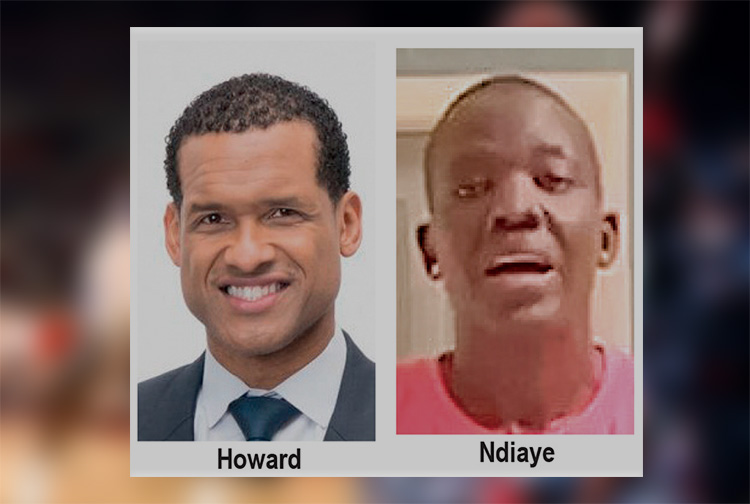
The U.S. Embassy in Colombo welcomed the U.S. Sports Envoys to Sri Lanka, former National Basketball Association (NBA) and Women’s National Basketball Association (WNBA) players Stephen Howard and Astou Ndiaye, from June 8 through 14.
The Public Diplomacy section of the U.S. Embassy said that it would launch a weeklong basketball program intended to harness the unifying power of sports, made possible through collaboration with Foundation of Goodness and IImpact Hoop Lab.
While in Sri Lanka, Howard and Ndiaye, both retired professional basketball players, will conduct a weeklong program, Hoops for Hope: Bridging Borders through Basketball. The Sports Envoys will lead basketball clinics and exhibition matches and engage in leadership sessions in Colombo and Southern Province for youth aged 14-18 from Northern, Uva, Eastern and Western Provinces, offering skills and leadership training both on and off the court. The U.S. Envoys will also share their expertise with the Sri Lanka Basketball Federation, national coaches, and players, furthering the development of basketball in the country. Beyond the clinics, they will collaborate with Sri Lankan schoolchildren to take part in a community service project in the Colombo area.
“We are so proud to welcome Stephen and Astou as our Sports Envoys to Sri Lanka, to build on the strong people-to-people connections between the United States and Sri Lanka,” said U.S. Ambassador Julie Chung. “The lessons that will be shared by our Sports Envoys – communication, teamwork, resilience, inclusion, and conflict resolution – are essential for leadership development, community building, equality, and peace. The U.S. Sports Envoy program is a testament to our belief that sports can be a powerful tool in promoting peace and unity.”
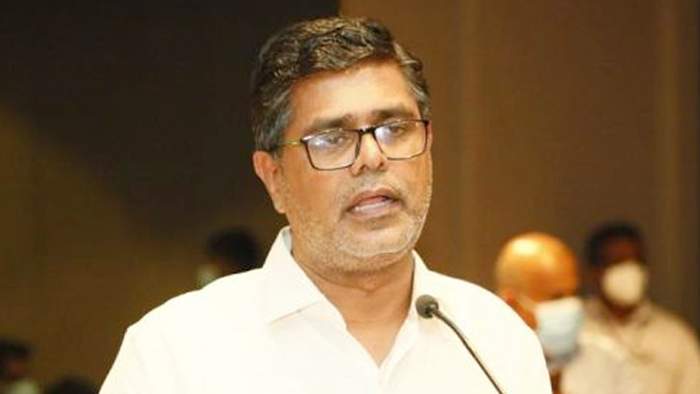
SJB Colombo District MP Mujibur Rahuman in parliament demanded to know from the government the reasons for CEB suspending the leave of all its employees until further notice from Thursday.
MP Rahuman said that the CEB has got an acting General Manager anew and the latter yesterday morning issued a circular suspending leave of all CEB employees with immediate effect until further notice.
“We demand that Minister Kanchana Wijesekera should explain this to the House. This circular was issued while this debate on the new Electricity Amendment Bill was pending. There are many who oppose this Bill. The Minister must tell parliament the reason for the urge to cancel the leave of CEB employees,” the MP said.However, Speaker Mahinda Yapa Abeywardena prevented Minister Wijesekera responding to the query and said that the matter raised by MP Rahuman was not relevant.
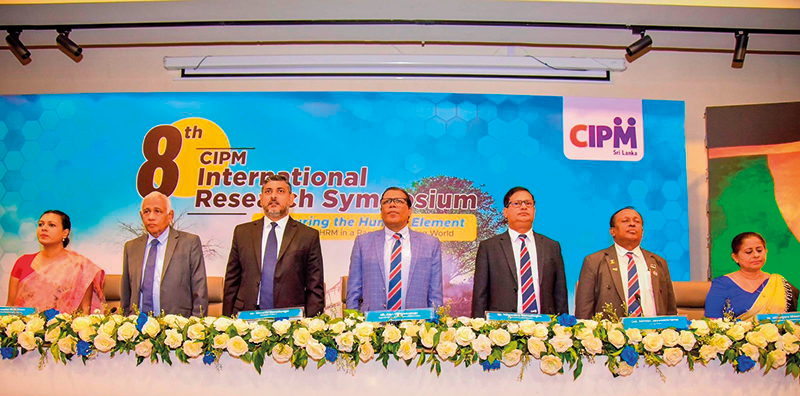
The Chartered Institute of Personnel Management (CIPM) successfully concluded the 8th Annual CIPM Symposium, which took place on 31st May 2024. Themed “Nurturing the Human Element—Redefining HRM in a Rapidly Changing World,” the symposium underscored the pivotal role of human resource management (HRM) in today’s dynamic global landscape. Since its inception in 1959, CIPM has been dedicated to advancing the HR profession through education, professional development, and advocacy, solidifying its position as Sri Lanka’s leading professional body for HRM.
Ken Vijayakumar, the President of the CIPM, graced the occasion as the chief guest. The symposium commenced with the welcome address by the Chairperson, Prof. Arosha Adikaram, followed by the Web Launch of the Symposium Proceedings and Abstract Book by the CIPM President. The event featured distinguished addresses, including a speech by Chief Guest Ken Vijayakumar, President of CIPM, and an address by Guest of Honor Shakthi Ranatunga, Chief Operating Officer of MAS Holdings Pvt. Ltd., Sri Lanka.
The symposium also featured an inspiring keynote address by Prof. Mario Fernando, Professor of Management and Director of the Centre for Cross Cultural Management (CCCM) at the University of Wollongong, Australia.
Vote of Thanks of the inauguration session was delivered by Dr. Dillanjani Weeratunga, Symposium Co-chair.
The symposium served as a comprehensive platform for researchers to present their findings across a wide range of critical topics in HRM. These included Cultural Diversity and Inclusion, Talent Development and Retention, Ethical Leadership and Corporate Social Responsibility, Adapting to Technological Advancements, Mental Health and Well-being at Work, Global Workforce Challenges, Employee Empowerment, and Reskilling and Upskilling.
The plenary session was led by Prof. Wasantha Rajapakse. Certificates were awarded to the best paper presenters during the valedictory session, followed by a vote of thanks delivered by Kamani Perera, Manager of Research and Development.
The annual symposium of CIPM was a truly inclusive event, attracting a diverse audience that spanned undergraduates, graduates, working professionals, research scholars and lecturers. This widespread interest highlights the symposium’s significance in the field of HRM, offering a unique opportunity for everyone to network and learn from scholarly brains.The CIPM International Research Symposium was sponsored by Hambantota International Port, Sri Lanka Institute of Information Technology (SLIIT), E B Creasy & Co. PLC, and Print Xcel Company.



US sports envoys to Lanka to champion youth development

Rahuman questions sudden cancellation of leave of CEB employees


