
News
Gevindu underscores need for 20 A pending new Constitution

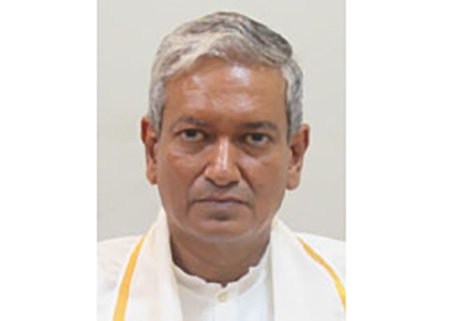
…discusses merits, demerits et al
By Shamindra Ferdinando
SLPP National List lawmaker Gevindu Cumaratunga says the 20th Amendment to the Constitution enacted last month is required to rectify weakening of the State by the 19th Amendment. Alleging that the 19th Amendment had been introduced in 2015 with an overwhelming majority primarily to achieve three objectives namely (I) remove the Rajapaksas from politics (II) provide executive powers to the then Prime Minister Ranil Wickremesinghe and (III) weaken the Sri Lankan State by depriving the executive of the previously enjoyed power.
In a brief interview with The Island, MP Cumaratunga, who is also the leader of the civil society organization Yuthukama, said that the despicable political project had been largely defeated. Those who had conspired to provide executive powers to the Premier at the expense of the President through the 19th Amendment were politically irrelevant today, the lawmaker pointed out.
Having reversed the UNP spearheaded strategy with the successful conclusion of 2019 presidential and 2020 parliamentary polls, the government had now done away with measures to weaken the State, the MP said.
Cumaratunga said that he discussed those issues on the second day of the debate on the 20th Amendment on Oct 22. The parliament provided the required 2/3 majority for the Amendment. Speaker Mahinda Yapa Abeywardena signed it into law on Oct 29.
Cumaratunga underscored the pivotal importance of correctly recognizing the objectives of the 19th Amendment and the challenges faced by the 20th Amendment.
“The 19th Amendment was brought into achieve sinister external objectives. The 20th Amendment was proposed to defeat that project jointly implemented by foreign powers and their local agents. If they succeeded in their high profile project to introduce a new constitution to their liking spearheaded by UNP leader Wickremesinghe, we would have ended up in total chaos with permanent foreign military presence and the country being a supply base for Western powers.”
The 19th Amendment was nothing but a dangerous constitutional tool that could have caused anarchy at every level, the newcomer to parliamentary politics alleged. In addition to NL member Cumaratunga, another key Yuthukama activist Anupa Pasquel was elected from the Kalutara district on the SLPP ticket at the August poll.
Cumaratunga explained how the conspirators included worthy sections to hide their real intentions. The MP alleged that their strategy had been quite efficient and useful from their point of view as the public were largely deceived. Cumaratunga said that nationalist groups, including Yuthukama wholeheartedly accepted many clauses which they sincerely believed were in the public interests.
Cumaratunga appreciated the restriction of the number of cabinet ministers and non-cabinet ministers to prevent political horse trading. This thwarted political parties from exploiting instability in parliament for their advantage, the MP said. “We also accepted the provision in the 19th Amendment to prevent the party in power to bring in emergency Bills, constitutional changes,” Cumaratunga said, recalling how the then President JRJ brought in the 13th Amendment to appease India and the 15 Amendment introduced by slain President Ranasinghe Premadasa to placate religious minorities. MP Cumaratunga alleged that the 19th Amendment included a clause prohibiting emergency amendments/Bills in a bid to hide their sinister intentions. The right of the public to challenge new laws in the Supreme Court should not be interfered with in any way, lawmaker Cumaratunga said.
Yuthukama
Chief alleged that additional measures were introduced by way of the 19th Amendment to strengthen the State auditing process in a cunning bid to divert the attention from selling vital state assets. While strengthening the hands of the Auditor General, the yahapalana administration perpetrated Treasury bond scams twice, the second in March 2016 far bigger than the first in late Feb 2015, MP Cumaratunga said. Responding to another query, Cumaratunga asserted that the handing over of Hambantota port on a 99-year-lease to China in 2017 exposed the previous government.
Cumaratunga appreciated President Gotabaya Rajapaksa and Premier Mahinda Rajapaksa effecting a spate of changes following representations made by the Maha Sangha and them once the 20 th Amendment was unveiled.
Cumaratunga said that the 20th Amendment faced the daunting challenge of reversing the 19th but the entire 78 Constitution as well as a series of amendments meant to protect the interests of political parties and their leaders.
Commenting on Manohara de Silva’s examination of strategies adopted by separatist elements, lawmaker Cumaratunga pointed out almost all amendments introduced after the 13th Amendment sought to pacify those promoting separatist ideology. The MP explained a campaign undertaken by Yuthukama soon after the enactment of the 19th Amendment in 2015 and the need to bring in 20th Amendment until consensus could be reached on a new Constitution.
A 9-member committee headed by Romesh de Silva, PC, is formulating a new Constitution.
Lawmaker Cumaratunga, in his speech delivered in parliament on Oct 22 pointed out the absurdity in following the Indian ‘system’ in introducing the 13th Amendment to the Constitution. Cumaratunga highlighted the introduction of a term (Railway Areas) in keeping with the Indian Constitution regardless of no such designated area in Sri Lanka.
Commending the government decision to expand the number of members of the Election Commission from present three to five, MP Cumaratunga said that their earnest wish is to bring in a new Constitution before President Gotabaya Rajapaksa begins his second year in Nov 2021. Cumaratunga said that Yuuthukama found seven sections in the original 20th Amendment wholly unacceptable. Among them was a bid to promote separatist ideology as well as to do away with the provision to subject the Office of the President and the Prime Minister to the State auditing process.
Yuthukama
leader acknowledged that all their proposals hadn’t been accepted including the one in respect of checks and balances among the President, the Prime Minister and the Parliament though the required was met to a certain extent by the President receiving the constitution right to dissolve parliament two and half years after the first sitting.
Appreciating the formulation of a Parliamentary Council in respect of the appointment of judges to higher courts, members of Commissions, including their chairmen, Attorney General and IGP instead of the previous Constitution Council that followed the NGO agenda, MP Cumaratunga said that the President’s prerogative regarding the appointment of the AG and the IGP was important. However, the MP acknowledged that the Parliamentary Council role in merely making observations needs to be resolved. Cumaratunga appealed to President Gotabaya Rajapaksa to make appointments taking into consideration recommendations/observations of the Parliamentary Council. The lawmaker also emphasized the importance of the Speaker’s role in the proposed mechanism for the President to receive recommendations/observations of the five-member Parliamentary Council. Cumaratunga said that the proposed mechanisms should be subjected to the Speaker’s approval; as such a decision should be made available to the parliament as it would ensure the intervention of the House in the matter.



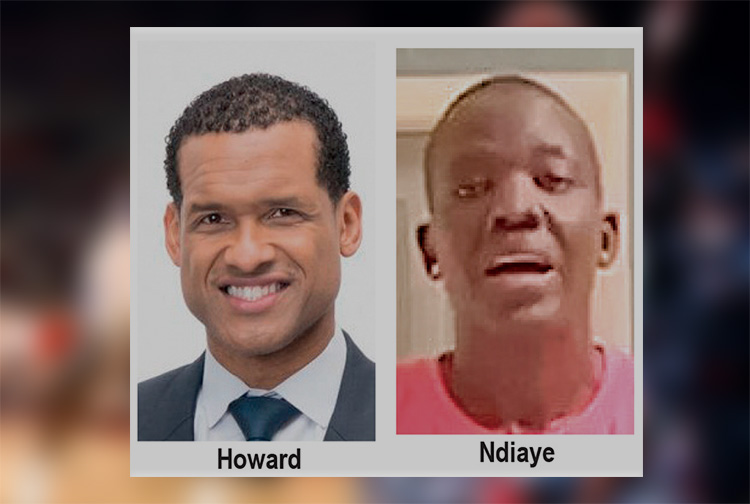
The U.S. Embassy in Colombo welcomed the U.S. Sports Envoys to Sri Lanka, former National Basketball Association (NBA) and Women’s National Basketball Association (WNBA) players Stephen Howard and Astou Ndiaye, from June 8 through 14.
The Public Diplomacy section of the U.S. Embassy said that it would launch a weeklong basketball program intended to harness the unifying power of sports, made possible through collaboration with Foundation of Goodness and IImpact Hoop Lab.
While in Sri Lanka, Howard and Ndiaye, both retired professional basketball players, will conduct a weeklong program, Hoops for Hope: Bridging Borders through Basketball. The Sports Envoys will lead basketball clinics and exhibition matches and engage in leadership sessions in Colombo and Southern Province for youth aged 14-18 from Northern, Uva, Eastern and Western Provinces, offering skills and leadership training both on and off the court. The U.S. Envoys will also share their expertise with the Sri Lanka Basketball Federation, national coaches, and players, furthering the development of basketball in the country. Beyond the clinics, they will collaborate with Sri Lankan schoolchildren to take part in a community service project in the Colombo area.
“We are so proud to welcome Stephen and Astou as our Sports Envoys to Sri Lanka, to build on the strong people-to-people connections between the United States and Sri Lanka,” said U.S. Ambassador Julie Chung. “The lessons that will be shared by our Sports Envoys – communication, teamwork, resilience, inclusion, and conflict resolution – are essential for leadership development, community building, equality, and peace. The U.S. Sports Envoy program is a testament to our belief that sports can be a powerful tool in promoting peace and unity.”
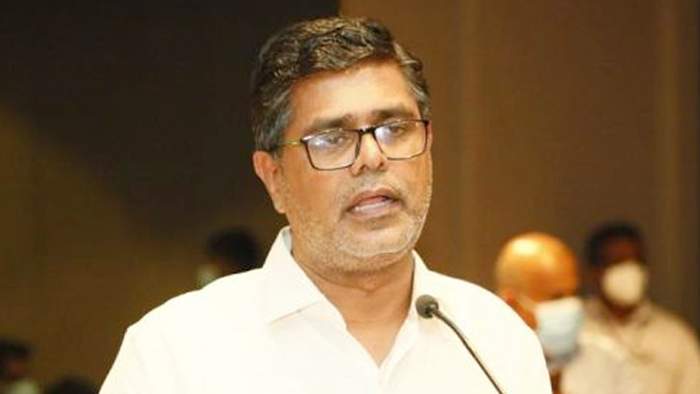
SJB Colombo District MP Mujibur Rahuman in parliament demanded to know from the government the reasons for CEB suspending the leave of all its employees until further notice from Thursday.
MP Rahuman said that the CEB has got an acting General Manager anew and the latter yesterday morning issued a circular suspending leave of all CEB employees with immediate effect until further notice.
“We demand that Minister Kanchana Wijesekera should explain this to the House. This circular was issued while this debate on the new Electricity Amendment Bill was pending. There are many who oppose this Bill. The Minister must tell parliament the reason for the urge to cancel the leave of CEB employees,” the MP said.However, Speaker Mahinda Yapa Abeywardena prevented Minister Wijesekera responding to the query and said that the matter raised by MP Rahuman was not relevant.
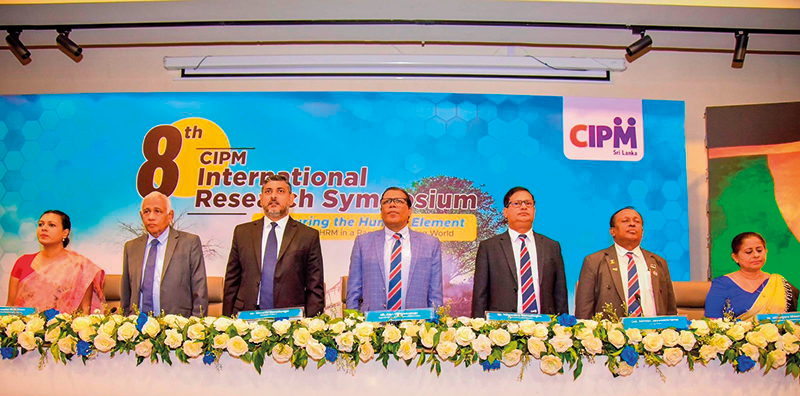
The Chartered Institute of Personnel Management (CIPM) successfully concluded the 8th Annual CIPM Symposium, which took place on 31st May 2024. Themed “Nurturing the Human Element—Redefining HRM in a Rapidly Changing World,” the symposium underscored the pivotal role of human resource management (HRM) in today’s dynamic global landscape. Since its inception in 1959, CIPM has been dedicated to advancing the HR profession through education, professional development, and advocacy, solidifying its position as Sri Lanka’s leading professional body for HRM.
Ken Vijayakumar, the President of the CIPM, graced the occasion as the chief guest. The symposium commenced with the welcome address by the Chairperson, Prof. Arosha Adikaram, followed by the Web Launch of the Symposium Proceedings and Abstract Book by the CIPM President. The event featured distinguished addresses, including a speech by Chief Guest Ken Vijayakumar, President of CIPM, and an address by Guest of Honor Shakthi Ranatunga, Chief Operating Officer of MAS Holdings Pvt. Ltd., Sri Lanka.
The symposium also featured an inspiring keynote address by Prof. Mario Fernando, Professor of Management and Director of the Centre for Cross Cultural Management (CCCM) at the University of Wollongong, Australia.
Vote of Thanks of the inauguration session was delivered by Dr. Dillanjani Weeratunga, Symposium Co-chair.
The symposium served as a comprehensive platform for researchers to present their findings across a wide range of critical topics in HRM. These included Cultural Diversity and Inclusion, Talent Development and Retention, Ethical Leadership and Corporate Social Responsibility, Adapting to Technological Advancements, Mental Health and Well-being at Work, Global Workforce Challenges, Employee Empowerment, and Reskilling and Upskilling.
The plenary session was led by Prof. Wasantha Rajapakse. Certificates were awarded to the best paper presenters during the valedictory session, followed by a vote of thanks delivered by Kamani Perera, Manager of Research and Development.
The annual symposium of CIPM was a truly inclusive event, attracting a diverse audience that spanned undergraduates, graduates, working professionals, research scholars and lecturers. This widespread interest highlights the symposium’s significance in the field of HRM, offering a unique opportunity for everyone to network and learn from scholarly brains.The CIPM International Research Symposium was sponsored by Hambantota International Port, Sri Lanka Institute of Information Technology (SLIIT), E B Creasy & Co. PLC, and Print Xcel Company.



US sports envoys to Lanka to champion youth development

Rahuman questions sudden cancellation of leave of CEB employees


