
News
FUTA tells govt to keep KDU for its original purpose of giving higher education and training to tri-forces officers

The Federation of University Teachers Associations (FUTA) yesterday urged the government to restructure the existing Kotelawala National Defence University so that it served its intended purpose of providing higher education and training to officers of the tri-forces.
A statement signed by Rohan Laksiri, General Secretary of FUTA said: The Federation of University Teachers Associations (FUTA) expresses its grave concern and dismay regarding the remarks made by President Gotabaya Rajapaksa at a meeting held to brief the Maha Sangha about the COVID 19 situation in the country and the Kotelawala Defense University (KNDU) Bill. These remarks, which were widely reported on news channels and also included in a press release issued by the Presidential Media Division, show an alarming degree of ignorance regarding the higher education sector and its regulatory framework. Contrary to the President’s remarks that those opposing the KNDU bill do so in ignorance, we would like to point out that it is the President and those who advise him who seem to be either ignorant or engaged in willfully misleading the public.
The president’s remarks and the press release refer to a “UGC Act”. To the best of our knowledge no such document exists. We believe this is a mistaken reference the Universities Act of 1978 – which provides a visionary regulatory mechanism for university education in Sri Lanka and represents a legal framework that has stood the test of time for over 40 years. The remarks made by the President suggest that the government intends to modify the Universities Act so that KNDU and other universities that currently do not come under the purview of the UGC can be brought under UGC purview. This is a new and worrying development. It appears that given the intensifying public resistance to the proposed KNDU bill, which was presented to parliament but has been temporarily withheld from voting, the government is attempting ad hoc amendments to the Universities Acts to push through its short-sighted policies of corporatizing and militarizing university education. Given a number of public remarks made by some senior politicians of this government, it is obvious that two narrow principles guide the government policy. One is an extremely narrow-minded view about creating a ‘disciplined society’ and seeing education as a process of creating uncritical and unthinking ‘subjects’ as opposed to a democratic citizenry. The other is an equally narrow-minded goal of turning university and higher education into a commodity determined by market principles.
We, as the Federation of University Teachers Associations, call upon the government to immediately halt its highly arbitrary and non-consultative attempts at meddling with the university and higher education regulatory framework of this country. We recognize that higher education and university reforms are necessary and that the Universities Act of 1978 may require certain timely modifications. However, any such modification needs to happen through a broad and democratic consultative process that both safeguard the free education principles that all post-independence governments of this country have ensured and at the same time protect the democratic spirit deeply engrained in the university system of Sri Lanka. We are currently living through the deep and negative consequences of arbitrary decision making and the unnecessary encroachment of the military into areas of civilian governance. The government’s hasty, non-consultative and ignorant attempts at university and higher education reform at this point, will simply lead to the creation of an education system and culture which will lack quality, rigor and will erode the fundamental values on which our education system is built. We earnestly urge the government to immediately enter into a consultative process with all education sector stakeholders and we also call upon all segments of Sri Lankan society to resist and rally against the ad-hoc and shortsighted reform agenda of this government. We also urge the government to restructure the existing Kotelawala National Defense University so that it serves its intended purpose of providing higher education and training to officers of the tri-forces. We would like to reiterate that all academic programmes currently enrolled in civilian students should be integrated into the existing university system in the country and that a military institution is not a suitable place to provide higher education to civilians.



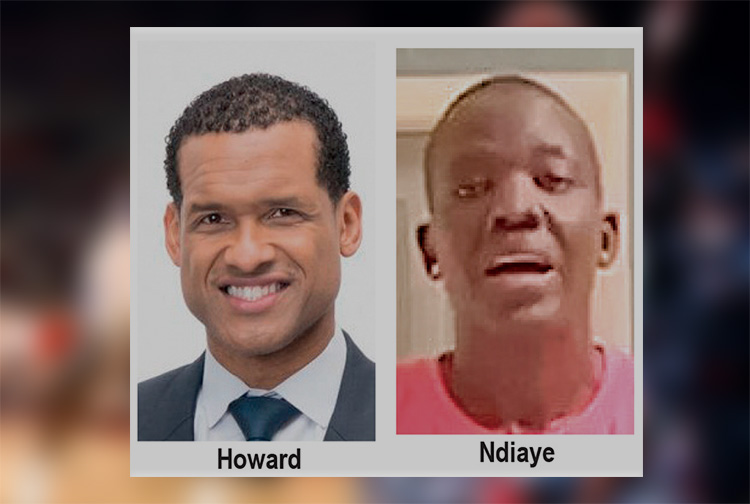
The U.S. Embassy in Colombo welcomed the U.S. Sports Envoys to Sri Lanka, former National Basketball Association (NBA) and Women’s National Basketball Association (WNBA) players Stephen Howard and Astou Ndiaye, from June 8 through 14.
The Public Diplomacy section of the U.S. Embassy said that it would launch a weeklong basketball program intended to harness the unifying power of sports, made possible through collaboration with Foundation of Goodness and IImpact Hoop Lab.
While in Sri Lanka, Howard and Ndiaye, both retired professional basketball players, will conduct a weeklong program, Hoops for Hope: Bridging Borders through Basketball. The Sports Envoys will lead basketball clinics and exhibition matches and engage in leadership sessions in Colombo and Southern Province for youth aged 14-18 from Northern, Uva, Eastern and Western Provinces, offering skills and leadership training both on and off the court. The U.S. Envoys will also share their expertise with the Sri Lanka Basketball Federation, national coaches, and players, furthering the development of basketball in the country. Beyond the clinics, they will collaborate with Sri Lankan schoolchildren to take part in a community service project in the Colombo area.
“We are so proud to welcome Stephen and Astou as our Sports Envoys to Sri Lanka, to build on the strong people-to-people connections between the United States and Sri Lanka,” said U.S. Ambassador Julie Chung. “The lessons that will be shared by our Sports Envoys – communication, teamwork, resilience, inclusion, and conflict resolution – are essential for leadership development, community building, equality, and peace. The U.S. Sports Envoy program is a testament to our belief that sports can be a powerful tool in promoting peace and unity.”
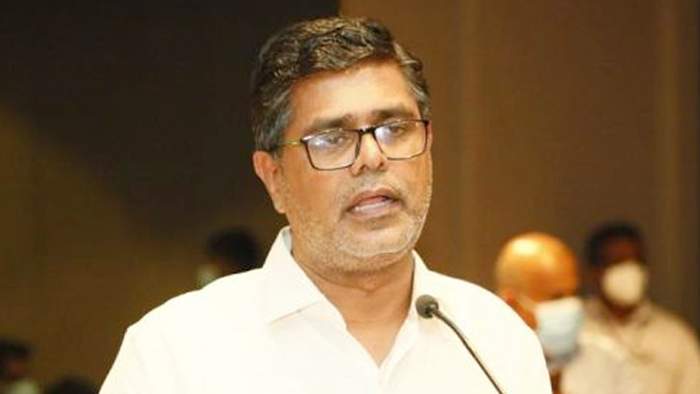
SJB Colombo District MP Mujibur Rahuman in parliament demanded to know from the government the reasons for CEB suspending the leave of all its employees until further notice from Thursday.
MP Rahuman said that the CEB has got an acting General Manager anew and the latter yesterday morning issued a circular suspending leave of all CEB employees with immediate effect until further notice.
“We demand that Minister Kanchana Wijesekera should explain this to the House. This circular was issued while this debate on the new Electricity Amendment Bill was pending. There are many who oppose this Bill. The Minister must tell parliament the reason for the urge to cancel the leave of CEB employees,” the MP said.However, Speaker Mahinda Yapa Abeywardena prevented Minister Wijesekera responding to the query and said that the matter raised by MP Rahuman was not relevant.
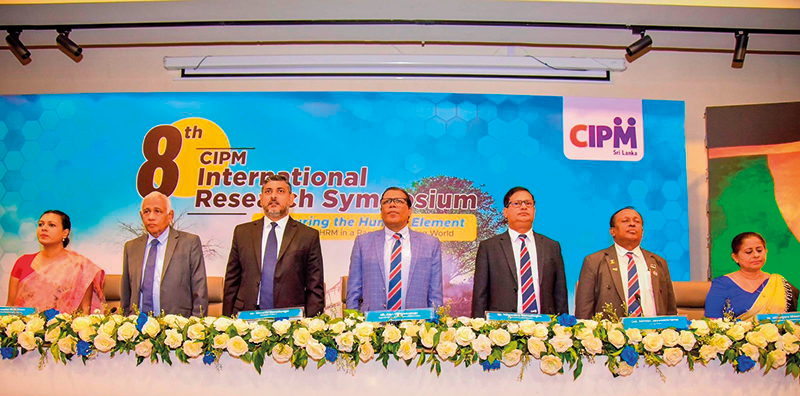
The Chartered Institute of Personnel Management (CIPM) successfully concluded the 8th Annual CIPM Symposium, which took place on 31st May 2024. Themed “Nurturing the Human Element—Redefining HRM in a Rapidly Changing World,” the symposium underscored the pivotal role of human resource management (HRM) in today’s dynamic global landscape. Since its inception in 1959, CIPM has been dedicated to advancing the HR profession through education, professional development, and advocacy, solidifying its position as Sri Lanka’s leading professional body for HRM.
Ken Vijayakumar, the President of the CIPM, graced the occasion as the chief guest. The symposium commenced with the welcome address by the Chairperson, Prof. Arosha Adikaram, followed by the Web Launch of the Symposium Proceedings and Abstract Book by the CIPM President. The event featured distinguished addresses, including a speech by Chief Guest Ken Vijayakumar, President of CIPM, and an address by Guest of Honor Shakthi Ranatunga, Chief Operating Officer of MAS Holdings Pvt. Ltd., Sri Lanka.
The symposium also featured an inspiring keynote address by Prof. Mario Fernando, Professor of Management and Director of the Centre for Cross Cultural Management (CCCM) at the University of Wollongong, Australia.
Vote of Thanks of the inauguration session was delivered by Dr. Dillanjani Weeratunga, Symposium Co-chair.
The symposium served as a comprehensive platform for researchers to present their findings across a wide range of critical topics in HRM. These included Cultural Diversity and Inclusion, Talent Development and Retention, Ethical Leadership and Corporate Social Responsibility, Adapting to Technological Advancements, Mental Health and Well-being at Work, Global Workforce Challenges, Employee Empowerment, and Reskilling and Upskilling.
The plenary session was led by Prof. Wasantha Rajapakse. Certificates were awarded to the best paper presenters during the valedictory session, followed by a vote of thanks delivered by Kamani Perera, Manager of Research and Development.
The annual symposium of CIPM was a truly inclusive event, attracting a diverse audience that spanned undergraduates, graduates, working professionals, research scholars and lecturers. This widespread interest highlights the symposium’s significance in the field of HRM, offering a unique opportunity for everyone to network and learn from scholarly brains.The CIPM International Research Symposium was sponsored by Hambantota International Port, Sri Lanka Institute of Information Technology (SLIIT), E B Creasy & Co. PLC, and Print Xcel Company.



US sports envoys to Lanka to champion youth development

Rahuman questions sudden cancellation of leave of CEB employees


