
News
Fitch Downgrades Sri Lanka’s Long-Term Local-Currency IDR to ‘CC’

FitchRatings has downgraded Sri Lanka’s Long-Term Local-Currency Issuer Default Rating (IDR) to ‘CC’, from ‘CCC’, and has affirmed the Long-Term Foreign-Currency IDR at ‘RD’ (Restricted Default). Fitch typically does not assign Outlooks to ratings of ‘CCC+’ or below.
Fitch has also removed the Long-Term Local-Currency IDR from Under Criteria Observation, on which it was placed on 14 July 2022, following the publication of the updated Sovereign Rating Criteria.A full list of rating actions is at the end of this rating action commentary.
KEY RATING DRIVERS
Challenging Domestic Financing Outlook:Sri Lanka continues to service its local-currency debt, but the downgrade of the Long-Term Local-Currency IDR reflects our view that a local-currency debt default is probable, in view of an untenably high domestic interest payment/revenue ratio, high interest costs, tight domestic financing conditions and rising local-currency debt/GDP in the context of high domestic fiscal financing requirements, which authorities forecast at about 8% of GDP in 2022.
According to authorities, domestic interest payments in 8M22 were LKR718.8 billion, taking the domestic interest/revenue ratio to an estimated 56% in 8M22; the highest among sovereigns rated ‘CCC+’ and below. Reliance on central bank financing has increased, as domestic options are limited. Domestic debt rose to about 53% of government debt by end-July 2022, according to official provisional data. Treasury bill issuance has been increasing. We expect a local debt restructuring would aim to maintain financial system stability, for example, by extending maturities or lowering coupon payments, rather than a reduction in face value. Sri Lanka continues to service its local-currency debt.
External Debt Restructuring:The sovereign remains in default on foreign-currency obligations and has initiated a debt restructuring arrangement with official and private external creditors.The Ministry of Finance issued a statement on 12 April 2022 that it had suspended normal debt servicing of several categories of external debt, including bonds issued in international capital markets, foreign currency-denominated loan agreements and credit facilities with commercial banks and institutional lenders.
Fitch downgraded the Long-Term Foreign-Currency IDR to ‘RD’ following the expiry of the 30-day grace period on coupon payments that were due on 18 April 2022. A staff level agreement with the IMF was reached on 1 September for USD2.9 billion, for 48 months, under the Extended Fund Facility. The facility will not be approved until Sri Lanka has implemented agreed actions, financing assurances have been received from official creditors and good-faith efforts have been made to reach agreement with private creditors. The timing of completion of the external debt restructuring remains uncertain.
Banking Sector Faces Tight Liquidity:Sri Lankan banks’ access to foreign-currency funding is constrained by the sovereign default. Any local-currency debt restructuring would elevate funding and liquidity stress, given the predominance of local-currency funding, at 74% of the total, and large holdings of local currency-denominated government securities. A restructuring could necessitate recapitalisation by the government, though further regulatory forbearance measures could keep banks compliant with regulatory minimums on a reported basis, however, underlying capital positions could stay weak.
Budget Aims for Fiscal Consolidation:In the 2023 budget authorities aim to lower the deficit to 9.8% of GDP in 2022 and 7.9% of GDP in 2023, factoring in high revenue growth and a pickup in spending. It also aims to raise government revenue to 15% of GDP by 2025 and reduce public sector debt to no more than 100% of GDP over the medium term, in line with the IMF’s target of a primary surplus of 2.3% of GDP by 2025. We expect a contraction in GDP in 2023 and so are less optimistic on the government’s fiscal consolidation path. We expect general government debt/GDP to reach around 109% by end-2022.
Political Risks Weigh on Fiscal Outlook:Political instability could threaten reform implementation. The government’s parliamentary position appears strong, but the government lacks public support. This increases the risk of further destabilising protests if economic conditions do not improve or reforms generate public opposition. President Wickremesinghe was prime minister in the previous administration under President Rajapaksa, who was brought down by protests. Parliament and the government also remain dominated by politicians who are affiliated with the Rajapaksa family.
High Inflation: Inflation is high, although it has declined from its September peak of 69.8% as measured by the Colombo Consumer Price Index. We expect headline inflation to fall further in 2023 on easing domestic supply conditions, lower food prices and the impact of policy rate hikes. Risks remain, from a potential commodity-price shock, particularly owing to the war in Ukraine. Financing from the Central Bank has been a key funding source for the government, but a new Central Bank Act, may limit such financing in the future. We believe rate hikes have peaked, after a policy rate hike of 950bp in 2022.
Economy Contracting:Sri Lanka’s economy contracted by a sharp 4.8% yoy in 1H22 and we expect a full-year GDP contraction of 6.0%. There is still uncertainty about the pace of the country’s economic outlook in 2023, partly because the timing of the external debt restructuring is unknown. We forecast growth to contract by 2.2% in 2023 then to pick up in 2024 under our baseline.


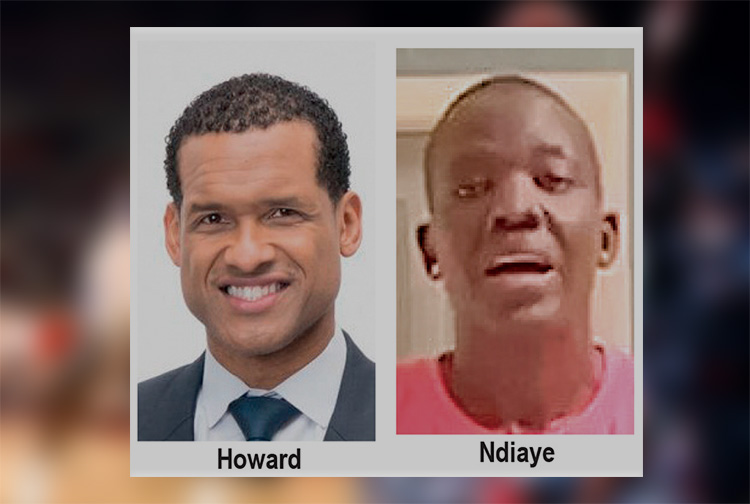
The U.S. Embassy in Colombo welcomed the U.S. Sports Envoys to Sri Lanka, former National Basketball Association (NBA) and Women’s National Basketball Association (WNBA) players Stephen Howard and Astou Ndiaye, from June 8 through 14.
The Public Diplomacy section of the U.S. Embassy said that it would launch a weeklong basketball program intended to harness the unifying power of sports, made possible through collaboration with Foundation of Goodness and IImpact Hoop Lab.
While in Sri Lanka, Howard and Ndiaye, both retired professional basketball players, will conduct a weeklong program, Hoops for Hope: Bridging Borders through Basketball. The Sports Envoys will lead basketball clinics and exhibition matches and engage in leadership sessions in Colombo and Southern Province for youth aged 14-18 from Northern, Uva, Eastern and Western Provinces, offering skills and leadership training both on and off the court. The U.S. Envoys will also share their expertise with the Sri Lanka Basketball Federation, national coaches, and players, furthering the development of basketball in the country. Beyond the clinics, they will collaborate with Sri Lankan schoolchildren to take part in a community service project in the Colombo area.
“We are so proud to welcome Stephen and Astou as our Sports Envoys to Sri Lanka, to build on the strong people-to-people connections between the United States and Sri Lanka,” said U.S. Ambassador Julie Chung. “The lessons that will be shared by our Sports Envoys – communication, teamwork, resilience, inclusion, and conflict resolution – are essential for leadership development, community building, equality, and peace. The U.S. Sports Envoy program is a testament to our belief that sports can be a powerful tool in promoting peace and unity.”
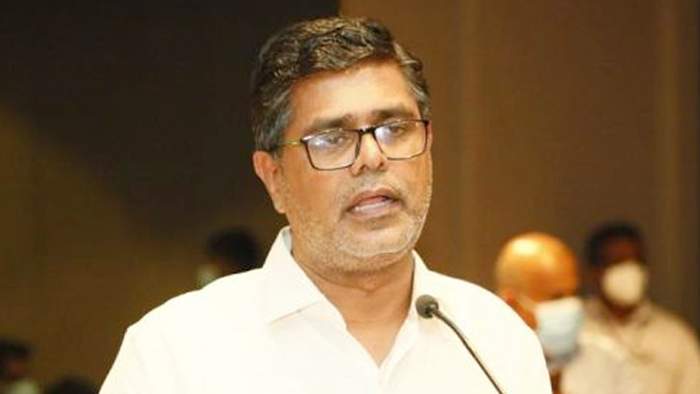
SJB Colombo District MP Mujibur Rahuman in parliament demanded to know from the government the reasons for CEB suspending the leave of all its employees until further notice from Thursday.
MP Rahuman said that the CEB has got an acting General Manager anew and the latter yesterday morning issued a circular suspending leave of all CEB employees with immediate effect until further notice.
“We demand that Minister Kanchana Wijesekera should explain this to the House. This circular was issued while this debate on the new Electricity Amendment Bill was pending. There are many who oppose this Bill. The Minister must tell parliament the reason for the urge to cancel the leave of CEB employees,” the MP said.However, Speaker Mahinda Yapa Abeywardena prevented Minister Wijesekera responding to the query and said that the matter raised by MP Rahuman was not relevant.
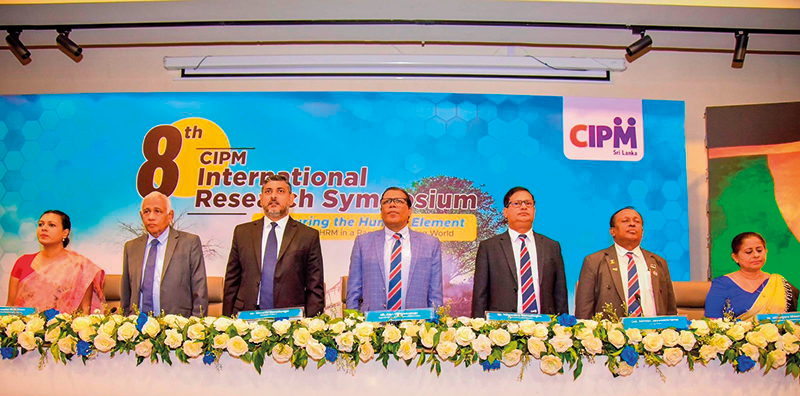
The Chartered Institute of Personnel Management (CIPM) successfully concluded the 8th Annual CIPM Symposium, which took place on 31st May 2024. Themed “Nurturing the Human Element—Redefining HRM in a Rapidly Changing World,” the symposium underscored the pivotal role of human resource management (HRM) in today’s dynamic global landscape. Since its inception in 1959, CIPM has been dedicated to advancing the HR profession through education, professional development, and advocacy, solidifying its position as Sri Lanka’s leading professional body for HRM.
Ken Vijayakumar, the President of the CIPM, graced the occasion as the chief guest. The symposium commenced with the welcome address by the Chairperson, Prof. Arosha Adikaram, followed by the Web Launch of the Symposium Proceedings and Abstract Book by the CIPM President. The event featured distinguished addresses, including a speech by Chief Guest Ken Vijayakumar, President of CIPM, and an address by Guest of Honor Shakthi Ranatunga, Chief Operating Officer of MAS Holdings Pvt. Ltd., Sri Lanka.
The symposium also featured an inspiring keynote address by Prof. Mario Fernando, Professor of Management and Director of the Centre for Cross Cultural Management (CCCM) at the University of Wollongong, Australia.
Vote of Thanks of the inauguration session was delivered by Dr. Dillanjani Weeratunga, Symposium Co-chair.
The symposium served as a comprehensive platform for researchers to present their findings across a wide range of critical topics in HRM. These included Cultural Diversity and Inclusion, Talent Development and Retention, Ethical Leadership and Corporate Social Responsibility, Adapting to Technological Advancements, Mental Health and Well-being at Work, Global Workforce Challenges, Employee Empowerment, and Reskilling and Upskilling.
The plenary session was led by Prof. Wasantha Rajapakse. Certificates were awarded to the best paper presenters during the valedictory session, followed by a vote of thanks delivered by Kamani Perera, Manager of Research and Development.
The annual symposium of CIPM was a truly inclusive event, attracting a diverse audience that spanned undergraduates, graduates, working professionals, research scholars and lecturers. This widespread interest highlights the symposium’s significance in the field of HRM, offering a unique opportunity for everyone to network and learn from scholarly brains.The CIPM International Research Symposium was sponsored by Hambantota International Port, Sri Lanka Institute of Information Technology (SLIIT), E B Creasy & Co. PLC, and Print Xcel Company.



US sports envoys to Lanka to champion youth development

Rahuman questions sudden cancellation of leave of CEB employees


