
News
Extremist ideology posed serious challenge-PM Rajapaksa tells Inter-faith forum

Calls for eternal vigilance against all forms of terrorist action
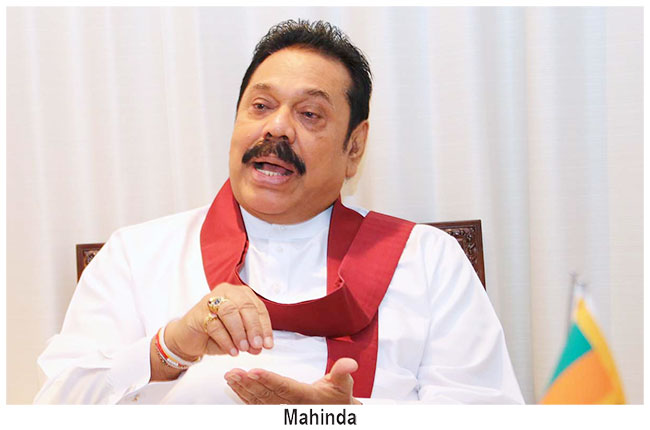
Prime Minister Mahinda Rajapaksa yesterday (12) said that extremist ideology, and violence associated with it, represented one of the most serious challenges of our time.
Addressing the G 20 Interfaith Forum in Bologna, Italy, PM Rajapaksa said: “It is appropriate to recall the tragic events of 09/11, exactly 20 years ago, and to share our deep sense of grief with the families of victims of this outrage and, indeed, with all humankind. This is a reminder of the need for eternal vigilance against all forms of terrorist action, whoever be the offenders and whatever be their professed aims and purposes.”
The following is the text of PM Rajapaksa’s speech: “A prominent feature of our region is ethnic, religious and cultureral diversity. Our countries are home to people from diverse ethnic backgrounds, professing different religions and nurtured by an array of cultures. And yet, rising above these differences, we have responded to the challenge of building a sense of mature nationhood, uniting all the different communities. Our future as one nation depends very much on this idea of unity and solidarity which is absolutely essential to achieve our economic, political and social goals.
It is especially fitting that this prestigious event should take place in Bologna, a city which has rightly established its reputation as a world leader in culture, in the arts and in all fields of intellectual activity. This enchanting city enshrines for all time the spirit of the Italian Renaissance, and its remarkable contributions to the growth of civilization. The world has certainly been enriched by the genius and creativity of the great Italian masters of that period in history.
I observe from the conference documents, prepared with great clarity, that you have placed a sharp focus on the areas in which peace and harmony among cultures play a vital role in our time. I have no hesitation in identifying education as the most important of these areas. Young minds are impressionable, and it is during the childhood years that there is the greatest chance to develop the right attitudes and values. While there are, clearly, differences embedded in the substance of different religions; there is also a core of beliefs and convictions that are common to all religions.
It is the duty of policy makers and educationists, through the curriculum and methods of teaching in our schools and universities, to emphasize what all religions share in common, the areas of consensus rather than the points reflecting differences. Youth in our educational institutions have the unique opportunity to build bridges rather than walls and to forge friendships which last through life. The government in my own country is giving priority right now to reform the content of education to bring it in line with modern requirements and to equip our youth to secure satisfying livelihoods which will sustain them in life.
The grave heath crisis which the world is experiencing at this time, serves to underline the bonds which unite us all: COVID-19 makes no distinction among religions, nationalities and civilizations. It strikes a deadly blow at all humanity. In order to survive the pandemic and resume our lives once more, international cooperation needs to be strengthened. Vaccines and other protection, made possible by modern medicine, must be available across the globe, with firm arrangements in place for less affluent nations to be assisted by international organizations and by countries with stronger economies. It is a battle that has to be won, not by some, but by all. While it may be legitimate for countries to close their borders temporarily to contain the virus, isolation is not the answer. One of the realities of the world, in which we live, is the free movement of goods, services and people across national frontiers. Migration in search of a better life is challenged by conditions prevailing today, but employment opportunities on an equitable basis must continue to be available freely.
This is a field in which gender equality and dignity is of special importance. Gautama the Buddha, in his final sermon, The Maha Parinibbana Sutra, declared that the moral quality of a society is to be assessed by the kindness and compassion shown to its more vulnerable members.
Our government is very much preoccupied with the protection of women and children against exploitation and all forms of discrimination at home, in places of employment and in society at large. Outdated laws relating to marriage, custody and inheritance are being currently updated by the Parliament of Sri Lanka. Our attitude is one of zero tolerance of human trafficking.
Climate change and other environmental issues are in the forefront of our minds. Sri Lanka is trying its best to adopt a balanced approach to human development. While progress on economic issues is necessary to support rapidly growing populations, this cannot be done at the expense of the environment.
Arahat Mahinda, the son of Emperor Dharmasoka of India, who brought the cherished gift of Buddhism to our shores, addressing King Devanampiyatissa of our country, said, “O, King, you are not the absolute owner but only the temporary trustee of our mountains and forests, our rivers and streams, the fauna and flora of our land: you are duty bound to hand over these assets to future generations in the condition in which you inherited them from your forefathers”. These words, an integral part of our culture, continue to define our policy towards the environment.
Reconciliation is a critical need of our time. Conflicts and escalating tensions are all too evident around us. Peace and stability come from healthy relationships with all who live in our countries, including those with whom we have deep disagreements. Here, again, our religion teaches us that hatred is not conquered by hatred but by love alone. Rather than dwell on grievances derived from the past, we must focus on the present, the need for harmony with points of view different from our own, and the inspiring new frontier which awaits us all if we forge the urgently needed links of brotherhood and understanding.”



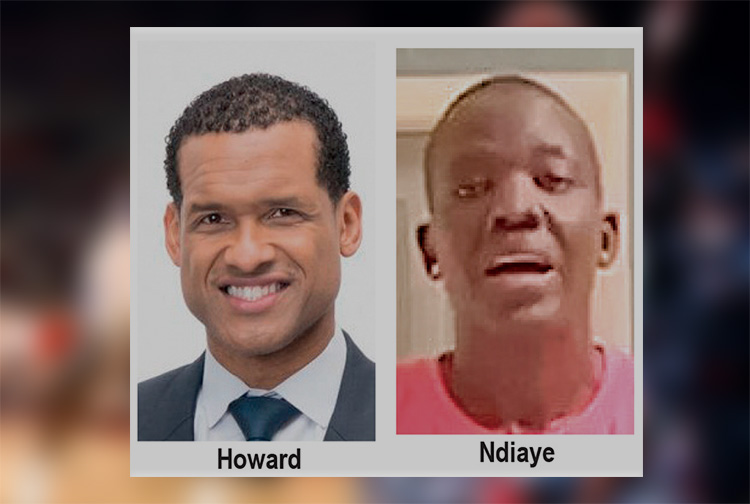
The U.S. Embassy in Colombo welcomed the U.S. Sports Envoys to Sri Lanka, former National Basketball Association (NBA) and Women’s National Basketball Association (WNBA) players Stephen Howard and Astou Ndiaye, from June 8 through 14.
The Public Diplomacy section of the U.S. Embassy said that it would launch a weeklong basketball program intended to harness the unifying power of sports, made possible through collaboration with Foundation of Goodness and IImpact Hoop Lab.
While in Sri Lanka, Howard and Ndiaye, both retired professional basketball players, will conduct a weeklong program, Hoops for Hope: Bridging Borders through Basketball. The Sports Envoys will lead basketball clinics and exhibition matches and engage in leadership sessions in Colombo and Southern Province for youth aged 14-18 from Northern, Uva, Eastern and Western Provinces, offering skills and leadership training both on and off the court. The U.S. Envoys will also share their expertise with the Sri Lanka Basketball Federation, national coaches, and players, furthering the development of basketball in the country. Beyond the clinics, they will collaborate with Sri Lankan schoolchildren to take part in a community service project in the Colombo area.
“We are so proud to welcome Stephen and Astou as our Sports Envoys to Sri Lanka, to build on the strong people-to-people connections between the United States and Sri Lanka,” said U.S. Ambassador Julie Chung. “The lessons that will be shared by our Sports Envoys – communication, teamwork, resilience, inclusion, and conflict resolution – are essential for leadership development, community building, equality, and peace. The U.S. Sports Envoy program is a testament to our belief that sports can be a powerful tool in promoting peace and unity.”
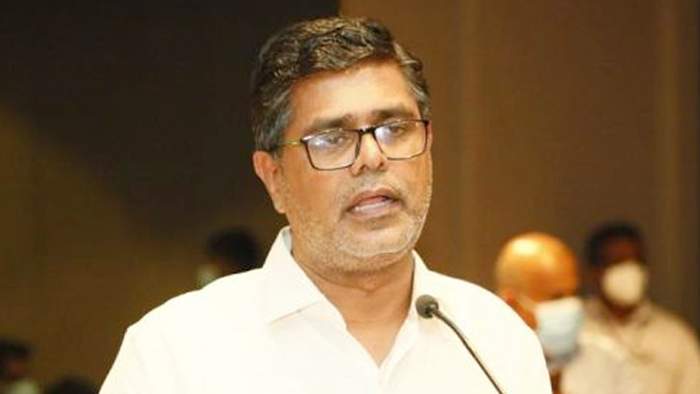
SJB Colombo District MP Mujibur Rahuman in parliament demanded to know from the government the reasons for CEB suspending the leave of all its employees until further notice from Thursday.
MP Rahuman said that the CEB has got an acting General Manager anew and the latter yesterday morning issued a circular suspending leave of all CEB employees with immediate effect until further notice.
“We demand that Minister Kanchana Wijesekera should explain this to the House. This circular was issued while this debate on the new Electricity Amendment Bill was pending. There are many who oppose this Bill. The Minister must tell parliament the reason for the urge to cancel the leave of CEB employees,” the MP said.However, Speaker Mahinda Yapa Abeywardena prevented Minister Wijesekera responding to the query and said that the matter raised by MP Rahuman was not relevant.
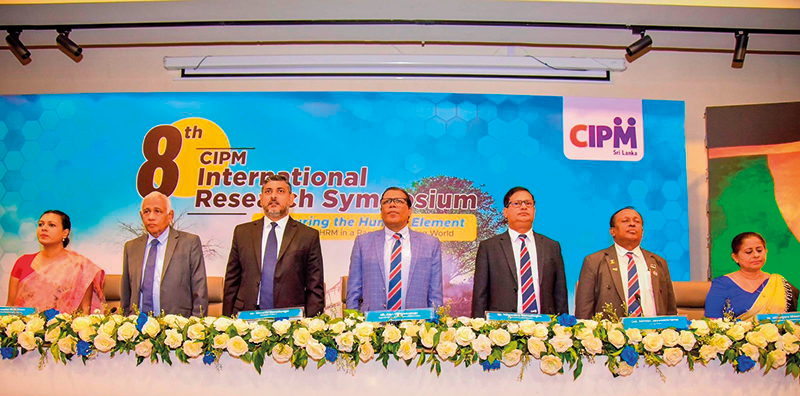
The Chartered Institute of Personnel Management (CIPM) successfully concluded the 8th Annual CIPM Symposium, which took place on 31st May 2024. Themed “Nurturing the Human Element—Redefining HRM in a Rapidly Changing World,” the symposium underscored the pivotal role of human resource management (HRM) in today’s dynamic global landscape. Since its inception in 1959, CIPM has been dedicated to advancing the HR profession through education, professional development, and advocacy, solidifying its position as Sri Lanka’s leading professional body for HRM.
Ken Vijayakumar, the President of the CIPM, graced the occasion as the chief guest. The symposium commenced with the welcome address by the Chairperson, Prof. Arosha Adikaram, followed by the Web Launch of the Symposium Proceedings and Abstract Book by the CIPM President. The event featured distinguished addresses, including a speech by Chief Guest Ken Vijayakumar, President of CIPM, and an address by Guest of Honor Shakthi Ranatunga, Chief Operating Officer of MAS Holdings Pvt. Ltd., Sri Lanka.
The symposium also featured an inspiring keynote address by Prof. Mario Fernando, Professor of Management and Director of the Centre for Cross Cultural Management (CCCM) at the University of Wollongong, Australia.
Vote of Thanks of the inauguration session was delivered by Dr. Dillanjani Weeratunga, Symposium Co-chair.
The symposium served as a comprehensive platform for researchers to present their findings across a wide range of critical topics in HRM. These included Cultural Diversity and Inclusion, Talent Development and Retention, Ethical Leadership and Corporate Social Responsibility, Adapting to Technological Advancements, Mental Health and Well-being at Work, Global Workforce Challenges, Employee Empowerment, and Reskilling and Upskilling.
The plenary session was led by Prof. Wasantha Rajapakse. Certificates were awarded to the best paper presenters during the valedictory session, followed by a vote of thanks delivered by Kamani Perera, Manager of Research and Development.
The annual symposium of CIPM was a truly inclusive event, attracting a diverse audience that spanned undergraduates, graduates, working professionals, research scholars and lecturers. This widespread interest highlights the symposium’s significance in the field of HRM, offering a unique opportunity for everyone to network and learn from scholarly brains.The CIPM International Research Symposium was sponsored by Hambantota International Port, Sri Lanka Institute of Information Technology (SLIIT), E B Creasy & Co. PLC, and Print Xcel Company.



US sports envoys to Lanka to champion youth development

Rahuman questions sudden cancellation of leave of CEB employees


