
News
Excise Department grapples with billions of rupees in lost tax revenue

Due to ban on liquor sales during travel restrictions
by Suresh Perera
The continued prohibition on liquor sales due to existing travel restrictions in the country has dealt a crippling blow to the Excise Department with the loss of tax revenue exceeding a whopping Rs. 10 billion (Rs. 10,000 million) so far.
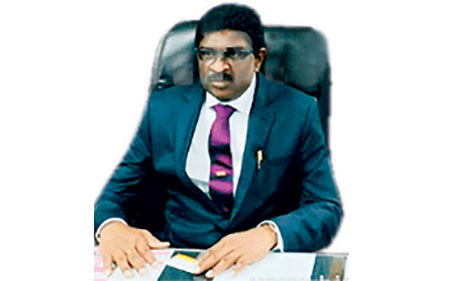
“We have been deprived of around Rs. 600 million per day in excise duties”, says M. J. Gunasiri, Commissioner-General of Excise.
Since the sale of alcohol was banned with the indefinite closure of all licensed liquor sales outlets (commonly called ‘wine stores), taverns, clubs and hotels on May 21, 2021, the loss in terms of tax income to the Excise Department for the past 18 days (up to June 8) has shot up to more than Rs. 10 billion, he said.
Excise tax on alcoholic beverages is a key source of government income, accounting for around 7% of tax revenue. The Treasury reported tax revenues of 944.4 billion for the seven months in 2019 up from Rs. 670.4 billion in the corresponding period the previous year, according to latest figures available.
Asked about the loss of tax revenue from tobacco sales, Gunasiri said the income earned by the Excise Department from this segment is marginal as the Finance Ministry absorbs the bulk of it.
“We have garnered only Rs. 35 million from tobacco sales so far this year”, he said.
With legal alcoholic beverages shut out, the illicit hooch business is thriving, the Excise Department chief remarked. “Some people have even resorted to distilling spirits at home”.
This is a dangerous trend as the illegal brew can even poison tipplers due to lack of standardization, he cautioned. “People should not jeopardize their lives by drinking such unsafe concoctions”.
Asked whether legal booze cannot be allowed to be ordered online for home delivery on a restricted basis to overcome the problem of risky ‘home-made alcohol’ to some extent, Gunasiri opined that sales cannot be done selectively.
“Such a move will also come under heavy flak though it’s fact that the illicit moonshine trade is cashing in on the situation in a big way”, he pointed out.
With legally produced products no longer available, ‘kasippu’ (illicit hooch) distillers are having a field day, trade sources asserted. “With the police tied down to implementing Covid-19 related measures and enforcing travel restrictions, there’s hardly the time and space for raids to round them up”.
Local liquor was also available in the blackmarket at exorbitant prices – a 750ml bottle of Extra Special Arrack (commonly called ‘gal’), usually sold at Rs. 1,600, had spiked to Rs. 5,000 over the past few days. The pricing started at around Rs. 2,500 per bottle, but shot up as legal products remained out of bounds with the extension of the travel restrictions, the sources said.
The Excise Department subsequently sealed all liquor outlets in a bid to prevent the ‘leak’ of available stocks.
“It’s true that many people have turned to rotgut as there is no option”, Gunasiri said.
On Tuesday, the Excise Department granted permission to facilitate the sale of liquor in “Safe and Secure Level 1 Hotels” during the travel restrictions.
Asked what “Level 1 Hotels” meant, the Excise Department boss explained that they represented Tourist Board approved star class properties which accommodate foreign visitors.
There are foreigners arriving in Sri Lanka under air transport bubbles and they can be served liquor if they are in-house guests of a star class hotel, he elaborated.
“This does not mean that anybody can walk into the bar of a hotel coming under the specified category and consume liquor”, he clarified.
This facility was granted to give foreigners access to liquor during their stay in Sri Lanka, Gunasiri further said.
Asked for a clarification on the legally specified quantum of alcohol an individual can have in his possession in terms of the amended regulations, he outlined that its 7.5 litres of any brand of local liquor (ten 750ml bottles) and 80 litres of foreign liquor, irrespective of whether its whisky, gin, brandy, rum, vodka, beer etc. as long as they are imported products.
The specified quantities are strictly for personal use and cannot be sold to a third party, he stressed.
Gunasiri served as the Deputy Commissioner General of the Inland Revenue Department prior to his appointment to head the Excise Department.



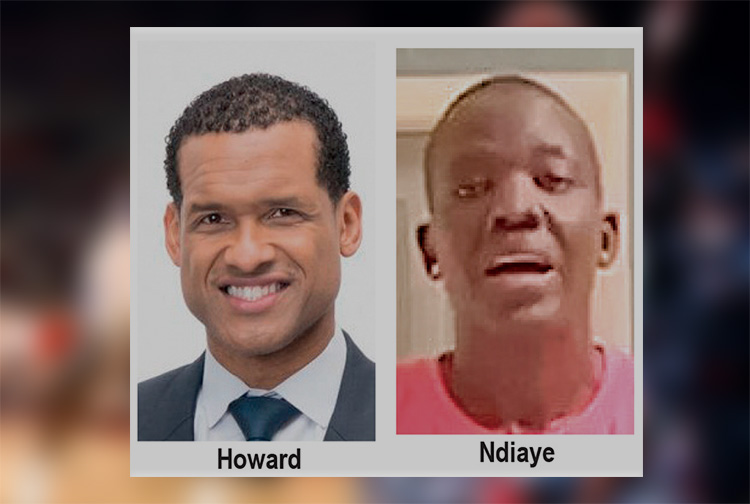
The U.S. Embassy in Colombo welcomed the U.S. Sports Envoys to Sri Lanka, former National Basketball Association (NBA) and Women’s National Basketball Association (WNBA) players Stephen Howard and Astou Ndiaye, from June 8 through 14.
The Public Diplomacy section of the U.S. Embassy said that it would launch a weeklong basketball program intended to harness the unifying power of sports, made possible through collaboration with Foundation of Goodness and IImpact Hoop Lab.
While in Sri Lanka, Howard and Ndiaye, both retired professional basketball players, will conduct a weeklong program, Hoops for Hope: Bridging Borders through Basketball. The Sports Envoys will lead basketball clinics and exhibition matches and engage in leadership sessions in Colombo and Southern Province for youth aged 14-18 from Northern, Uva, Eastern and Western Provinces, offering skills and leadership training both on and off the court. The U.S. Envoys will also share their expertise with the Sri Lanka Basketball Federation, national coaches, and players, furthering the development of basketball in the country. Beyond the clinics, they will collaborate with Sri Lankan schoolchildren to take part in a community service project in the Colombo area.
“We are so proud to welcome Stephen and Astou as our Sports Envoys to Sri Lanka, to build on the strong people-to-people connections between the United States and Sri Lanka,” said U.S. Ambassador Julie Chung. “The lessons that will be shared by our Sports Envoys – communication, teamwork, resilience, inclusion, and conflict resolution – are essential for leadership development, community building, equality, and peace. The U.S. Sports Envoy program is a testament to our belief that sports can be a powerful tool in promoting peace and unity.”
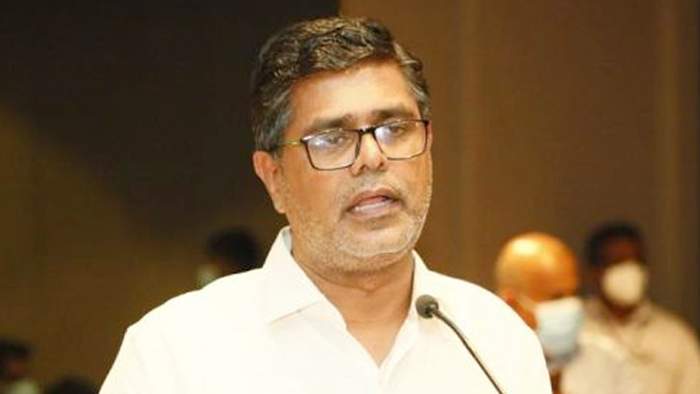
SJB Colombo District MP Mujibur Rahuman in parliament demanded to know from the government the reasons for CEB suspending the leave of all its employees until further notice from Thursday.
MP Rahuman said that the CEB has got an acting General Manager anew and the latter yesterday morning issued a circular suspending leave of all CEB employees with immediate effect until further notice.
“We demand that Minister Kanchana Wijesekera should explain this to the House. This circular was issued while this debate on the new Electricity Amendment Bill was pending. There are many who oppose this Bill. The Minister must tell parliament the reason for the urge to cancel the leave of CEB employees,” the MP said.However, Speaker Mahinda Yapa Abeywardena prevented Minister Wijesekera responding to the query and said that the matter raised by MP Rahuman was not relevant.
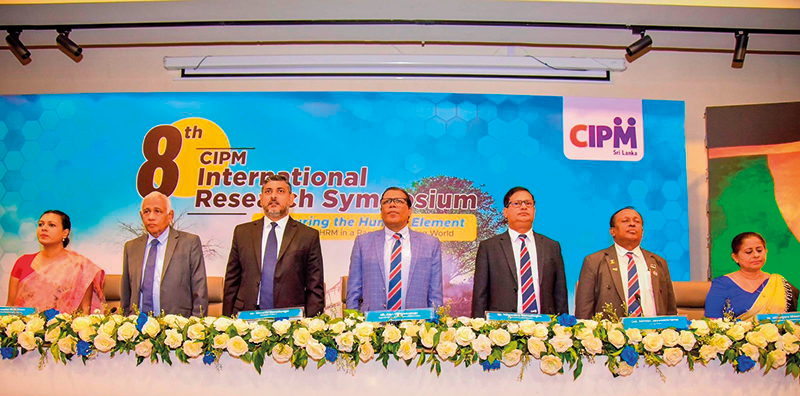
The Chartered Institute of Personnel Management (CIPM) successfully concluded the 8th Annual CIPM Symposium, which took place on 31st May 2024. Themed “Nurturing the Human Element—Redefining HRM in a Rapidly Changing World,” the symposium underscored the pivotal role of human resource management (HRM) in today’s dynamic global landscape. Since its inception in 1959, CIPM has been dedicated to advancing the HR profession through education, professional development, and advocacy, solidifying its position as Sri Lanka’s leading professional body for HRM.
Ken Vijayakumar, the President of the CIPM, graced the occasion as the chief guest. The symposium commenced with the welcome address by the Chairperson, Prof. Arosha Adikaram, followed by the Web Launch of the Symposium Proceedings and Abstract Book by the CIPM President. The event featured distinguished addresses, including a speech by Chief Guest Ken Vijayakumar, President of CIPM, and an address by Guest of Honor Shakthi Ranatunga, Chief Operating Officer of MAS Holdings Pvt. Ltd., Sri Lanka.
The symposium also featured an inspiring keynote address by Prof. Mario Fernando, Professor of Management and Director of the Centre for Cross Cultural Management (CCCM) at the University of Wollongong, Australia.
Vote of Thanks of the inauguration session was delivered by Dr. Dillanjani Weeratunga, Symposium Co-chair.
The symposium served as a comprehensive platform for researchers to present their findings across a wide range of critical topics in HRM. These included Cultural Diversity and Inclusion, Talent Development and Retention, Ethical Leadership and Corporate Social Responsibility, Adapting to Technological Advancements, Mental Health and Well-being at Work, Global Workforce Challenges, Employee Empowerment, and Reskilling and Upskilling.
The plenary session was led by Prof. Wasantha Rajapakse. Certificates were awarded to the best paper presenters during the valedictory session, followed by a vote of thanks delivered by Kamani Perera, Manager of Research and Development.
The annual symposium of CIPM was a truly inclusive event, attracting a diverse audience that spanned undergraduates, graduates, working professionals, research scholars and lecturers. This widespread interest highlights the symposium’s significance in the field of HRM, offering a unique opportunity for everyone to network and learn from scholarly brains.The CIPM International Research Symposium was sponsored by Hambantota International Port, Sri Lanka Institute of Information Technology (SLIIT), E B Creasy & Co. PLC, and Print Xcel Company.



US sports envoys to Lanka to champion youth development

Rahuman questions sudden cancellation of leave of CEB employees


