
News
Dodgy Politics of ‘Viyathuns’

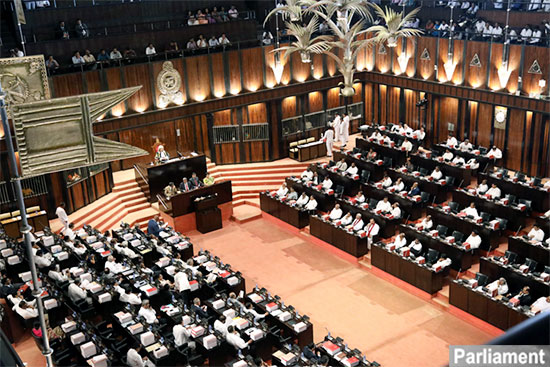
“The Island” on Saturday (8 August) has carried a report, captioned “A sizable Viyathmaga group enters Parliament”. The content of this report should be assessed against the slogan – electing “educated” people to the Parliament, gaining currency in the recent past mainly due to the deterioration in parliamentary standards and decorum.
Under British colonialism, in 1910, it was claimed that in the Legislative Council “the low country Sinhalese, the Kandyans and Tamil peasantry are represented in the Legislative Council by native members, selected from the educated classes of these races.” But, in actual practice, British Government Agents, of the Western and Central Provinces, were nominated as the “real representatives” of the peasantry, under the pretext that the “best part of their lives has been spent in Ceylon”. Under McCullum reforms, in 1910, an “Educated Ceylonese Constituency “was declared possessing stipulated professional, income or educational qualifications for voters not registered in the European and Burgher electorates.
Have we not elected “educated” people to the legislature – to the State Council and, thereafter, to the Parliament – since we gained adult suffrage in 1931, the year we began the real electoral process? Nobody can deny that since 1931, to date, we have elected QCs, PCs, a host of lawyers of different kinds, doctors, chartered accountants, engineers, academics, including a few vice-chancellors, and other professionals, to represent the people. Many of those had held very important portfolios. Similarly, many of those were responsible for our ongoing economic, political, socio-cultural problems and disasters, as well as the blunders made in the international arena. Elaboration is not needed that it was the “educated” representatives who were behind the divisive politics, on communal lines, in Sri Lanka. One of the most eminent Vellala Mathematicians, who disliked Ivor Jennings being appointed as the Vice-Chancellor of the University of Ceylon, who later became an MP, was in the forefront of preventing the depressed castes of Jaffna entering the Maviddapuram Kovil, the in mid-sixties.
Is appointing more “Viyathuns” to the Parliament the solution to our economic, political and socio-cultural problems? Before answering this question one must have a clear definition of the Sinhala term “Viyatha” and its plural “Viyathun”. Here we do not intend to give its many-faceted meanings, found in classical Sinhala literature, because it is a very cumbersome exercise. There are many references to “Viyathun” and “Viyath Sabha” in classical Sinhala literature. One such reference is “Viyath Na” or “Viyath Nayaka”, signifying the Teacher of the King. This term was unashamedly used by one of our Viyathuns as one of his recent election slogans! A grave error made by many in the present context is to use the term “Viyathun” to describe professionals and technocrats, which is absolutely wrong. Another misconception is using the term “Viyathun” to denote our so-called intellectuals. Chairman Mao, in his writings, had defined clearly the class characteristics of intellectuals.
Soon after the November Presidential Elections, writing to a Sinhala weekly, I have stated that one of the biggest challenges of the new President is striking a balance between the technocrats and the seasoned politicians, headed by MR, working at grass-root level; in other words establishing a close relationship between the technocrats, who are clad in three-piece suits, and the seasoned politicians who wear cloth and banyan. The success of the future governance will depend, basically, on the success of this close affinity.
We should not forget that in the recently concluded General Elections, the Viyathuns reaped the harvests in the fields asweddumised by the grass-root level politicians, who toiled day and night, for many years, who worked against all tremendous odds, braving stormy weather and physical harm. We identify these two groups as sowers (ploughmen) and reapers. The reapers also had the benefit of the “wave” which we have observed in the 1956, 1970 and 1977 General Elections. According to popular lore, in 1977, fielding even a “polpittha” was enough to win a parliamentary seat. Riding on the waves is an easy task, rather than clearing wayside roadblocks and obstacles. The sowers were equipped with unparalleled organising ability.
Viyathuns may have produced results in their chosen fields and careers. It is not a guarantee they will succeed and stand out in a different field, under different circumstances. Only in business you convert challenges into opportunities. In politics, challenges take one to the brink of disaster.
During the recently concluded Parliamentary elections, we observed “Viyathuns” resorting to the same ugly tactics, used by seasoned politicians, when they entered the “manape” fray. We heard self-centered, egoistic slogans and saw third-grade celluloid-hero type videos. We also witnessed open conflicts, and even use of strong arm tactics, by the sowers and reapers. It was evident that to win, any “Viyatha” had to come down to the level of a grass-root level politician. Financially, materially and in terms of the number of “catchers’ around them, they were not poor. They matched or, in most cases, overwhelmed their senior cousins in advertising. It was rumoured that some obtained millions for their election campaigns. As true “Viyathuns” they should disclose their funding sources, setting an example, inculcating a new political culture.
Making loud noises, without any substance, at public gatherings, like “beating a palm frond with gravel” (“thal aththata boralu gahanawa”) is not a quality of a “Viyatha’. We saw many “Viyathuns” occupying the centre stage and later decamping, accepting high posts and becoming ideologues of the opposing camp. So, we have to be very careful when we deal with “Viyathuns” who are very liberal in their thinking, who do not have any sound political ideology, euro-centric in art and cultural values like any other politician in opposing camps, and who do not provide space to art and culture in their political agendas.
SENA THORADENIYA



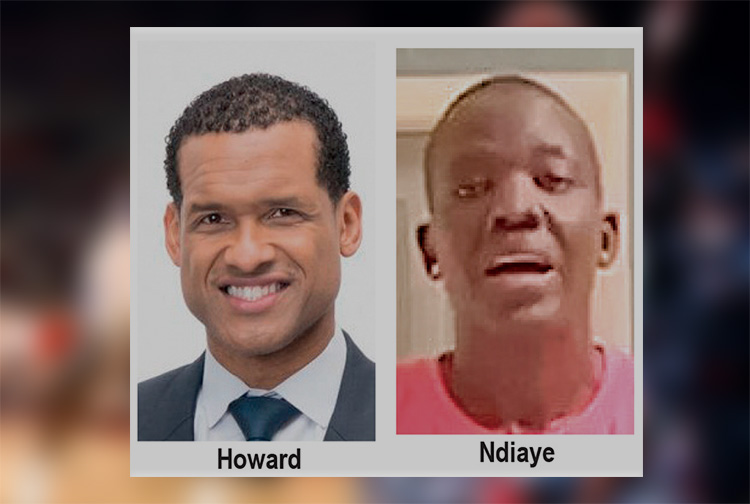
The U.S. Embassy in Colombo welcomed the U.S. Sports Envoys to Sri Lanka, former National Basketball Association (NBA) and Women’s National Basketball Association (WNBA) players Stephen Howard and Astou Ndiaye, from June 8 through 14.
The Public Diplomacy section of the U.S. Embassy said that it would launch a weeklong basketball program intended to harness the unifying power of sports, made possible through collaboration with Foundation of Goodness and IImpact Hoop Lab.
While in Sri Lanka, Howard and Ndiaye, both retired professional basketball players, will conduct a weeklong program, Hoops for Hope: Bridging Borders through Basketball. The Sports Envoys will lead basketball clinics and exhibition matches and engage in leadership sessions in Colombo and Southern Province for youth aged 14-18 from Northern, Uva, Eastern and Western Provinces, offering skills and leadership training both on and off the court. The U.S. Envoys will also share their expertise with the Sri Lanka Basketball Federation, national coaches, and players, furthering the development of basketball in the country. Beyond the clinics, they will collaborate with Sri Lankan schoolchildren to take part in a community service project in the Colombo area.
“We are so proud to welcome Stephen and Astou as our Sports Envoys to Sri Lanka, to build on the strong people-to-people connections between the United States and Sri Lanka,” said U.S. Ambassador Julie Chung. “The lessons that will be shared by our Sports Envoys – communication, teamwork, resilience, inclusion, and conflict resolution – are essential for leadership development, community building, equality, and peace. The U.S. Sports Envoy program is a testament to our belief that sports can be a powerful tool in promoting peace and unity.”
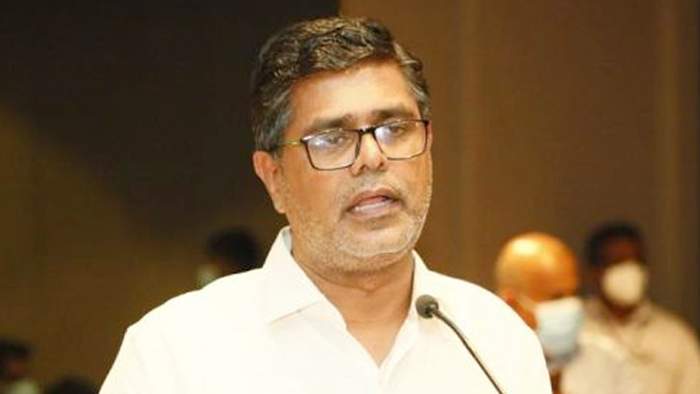
SJB Colombo District MP Mujibur Rahuman in parliament demanded to know from the government the reasons for CEB suspending the leave of all its employees until further notice from Thursday.
MP Rahuman said that the CEB has got an acting General Manager anew and the latter yesterday morning issued a circular suspending leave of all CEB employees with immediate effect until further notice.
“We demand that Minister Kanchana Wijesekera should explain this to the House. This circular was issued while this debate on the new Electricity Amendment Bill was pending. There are many who oppose this Bill. The Minister must tell parliament the reason for the urge to cancel the leave of CEB employees,” the MP said.However, Speaker Mahinda Yapa Abeywardena prevented Minister Wijesekera responding to the query and said that the matter raised by MP Rahuman was not relevant.
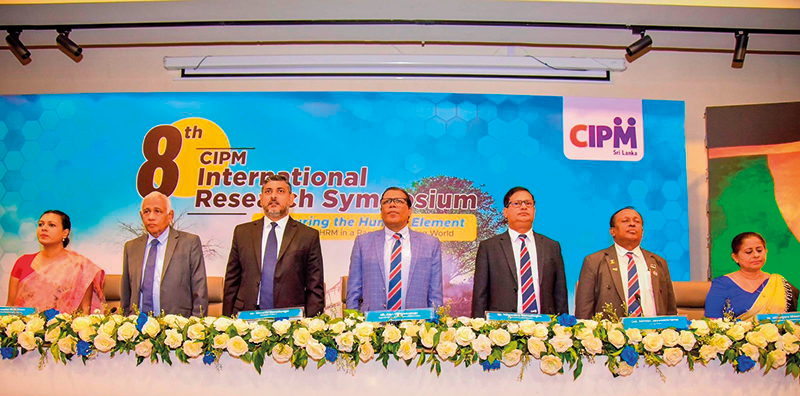
The Chartered Institute of Personnel Management (CIPM) successfully concluded the 8th Annual CIPM Symposium, which took place on 31st May 2024. Themed “Nurturing the Human Element—Redefining HRM in a Rapidly Changing World,” the symposium underscored the pivotal role of human resource management (HRM) in today’s dynamic global landscape. Since its inception in 1959, CIPM has been dedicated to advancing the HR profession through education, professional development, and advocacy, solidifying its position as Sri Lanka’s leading professional body for HRM.
Ken Vijayakumar, the President of the CIPM, graced the occasion as the chief guest. The symposium commenced with the welcome address by the Chairperson, Prof. Arosha Adikaram, followed by the Web Launch of the Symposium Proceedings and Abstract Book by the CIPM President. The event featured distinguished addresses, including a speech by Chief Guest Ken Vijayakumar, President of CIPM, and an address by Guest of Honor Shakthi Ranatunga, Chief Operating Officer of MAS Holdings Pvt. Ltd., Sri Lanka.
The symposium also featured an inspiring keynote address by Prof. Mario Fernando, Professor of Management and Director of the Centre for Cross Cultural Management (CCCM) at the University of Wollongong, Australia.
Vote of Thanks of the inauguration session was delivered by Dr. Dillanjani Weeratunga, Symposium Co-chair.
The symposium served as a comprehensive platform for researchers to present their findings across a wide range of critical topics in HRM. These included Cultural Diversity and Inclusion, Talent Development and Retention, Ethical Leadership and Corporate Social Responsibility, Adapting to Technological Advancements, Mental Health and Well-being at Work, Global Workforce Challenges, Employee Empowerment, and Reskilling and Upskilling.
The plenary session was led by Prof. Wasantha Rajapakse. Certificates were awarded to the best paper presenters during the valedictory session, followed by a vote of thanks delivered by Kamani Perera, Manager of Research and Development.
The annual symposium of CIPM was a truly inclusive event, attracting a diverse audience that spanned undergraduates, graduates, working professionals, research scholars and lecturers. This widespread interest highlights the symposium’s significance in the field of HRM, offering a unique opportunity for everyone to network and learn from scholarly brains.The CIPM International Research Symposium was sponsored by Hambantota International Port, Sri Lanka Institute of Information Technology (SLIIT), E B Creasy & Co. PLC, and Print Xcel Company.



US sports envoys to Lanka to champion youth development

Rahuman questions sudden cancellation of leave of CEB employees


