
News
Delhi, Colombo should build on Trincomalee deal with broader strategy’: Lankan envoy

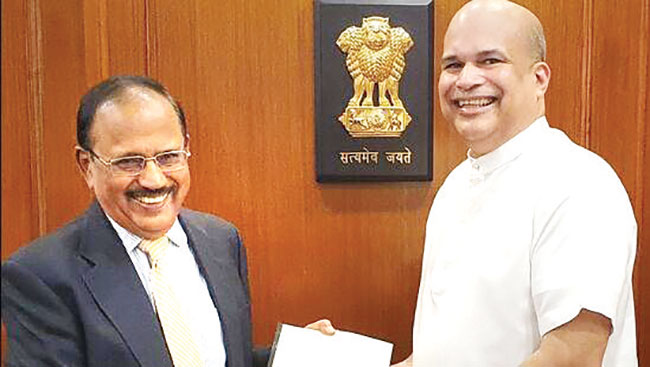
Lankan High Commissioner in India Milinda Moragoda said the two countries should move on from the transactional phase and look at the bigger picture, including integrating Sri Lanka into India’s overall energy security policy India and Sri Lanka should forge a larger strategic framework that builds on the Indian presence in key projects such as the Trincomalee oil tank farm and Colombo port and benefits both countries, Sri Lankan high commissioner Milinda Moragoda has said, according to a report in The Hindustan Times.
Moragoda sought to play down Chinese foreign minister Wang Yi’s recent remarks that no “third party” should interfere in China-Sri Lanka ties by citing the comments of Prime Minister Mahinda Rajapaksa, who said that China is a very close friend of Sri Lanka while India “is our brother and sister”.
Sri Lanka inked a deal with a subsidiary of Indian Oil Corporation (IOC) last week for the long-gestating project to refurbish and develop the British-era Trincomalee oil farm, an 850-acre storage facility with a capacity of almost one million tonnes.
The Hindustan Times report said: State-owned Sri Lanka Ports Authority and Adani Group finalised a deal last year to develop the west container terminal at Colombo port. Dredging work at the terminal is expected to start later this month.
In an “integrated country strategy” document that Moragoda prepared before assuming office in India last year, he suggested that the two sides should evolve from a transactional stage to a strategic, and then a special relationship. He said in an interview on Thursday the time has come for both sides to move on from the transactional phase and look at the bigger picture, including integrating Sri Lanka into India’s overall energy security policy.
“The west terminal [at Colombo port] and the tank farm are two very important transactions, As I see it, the two sides should move seamlessly into the strategic area,” he said, adding he perceived the Trincomalee deal as “integrating Sri Lanka with India in the petroleum, oil and gas sector”.
The two sides should jointly develop a business plan for the Trincomalee tank farm that accounts for projections that India’s energy needs will grow by 50% by 2030 and the need for refining capacity will go up 30%. The two sides can look into joint oil and gas exploration in the Cauvery basin and developing a refining facility at Trincomalee, Moragoda said.
“For us, Trincomalee could potentially be a petroleum hub for India, both for storage and refining. Trincomalee can only service India, it is too far away from sea lanes…We need to think strategically and that’s going to be the next step. Looking at this narrowly as a tank farm transaction would be wrong,” he said.
Oil storage and refining facilities at Trincomalee will also boost Sri Lanka’s energy security. “As India is the world’s third-largest energy consumer, it can get much better deals for petroleum than Sri Lanka. We can work with India on our requirements and it will give us energy security,” he said.
Asked about Chinese foreign minister Wang’s remarks, during a recent visit to Colombo, that no “third party” should interfere in China-Sri Lanka relations, Moragoda said: ” Prime Minister Mahinda Rajapaksa always has a very pithy way of putting things and when he was asked about this, he always said China is a very close friend, but India is our brother and sister.”
He added, “So it’s a different relationship. For us to interpret that comment doesn’t make sense, given the relationship with India.”
Wang’s remarks were widely perceived in New Delhi as a reference to India, especially against the backdrop of India’s opposition to projects under the Belt and Road Initiative in the neighbourhood.
Cooperation on the Trincomalee tank farm, held up since 1987, has been followed by Indian assistance for Sri Lanka to overcome a severe economic crisis, including depleting foreign currency reserves that experts believe can lead to a default on external debt. Following a meeting with Indian envoy Gopal Baglay in Colombo on Thursday, Sri Lanka’s Central Bank governor Ajith Nivard Cabraal tweeted India will provide a SAARC currency swap and other forms of cooperation.
The SAARC currency swap will be for $400 million and India has deferred $500 million due to the Asian Clearing Union for two months. Moragoda said more developments are expected in this regard in the coming weeks.
Sri Lanka expects to get a revolving credit line of $500 million from India’s Exim Bank for buying petrol and diesel and another package for emergency purchases of food and medicines. Steps are being taken to operationalise a line of credit offered by India for counter-terrorism efforts and a grant for a naval floating dock, Moragoda said.
“Sri Lanka is the largest recipient of Indian defence scholarships, and at any time 600 to 700 of our personnel are training in India. We want to increase this and expand it to the police,” he said.
“We’re planning to use the Aadhar card as a template for Sri Lanka’s ID card. Our president is very, very enthusiastic about it. He’s also the minister in-charge of the science and technology sector. Those discussions are ongoing,” he added.



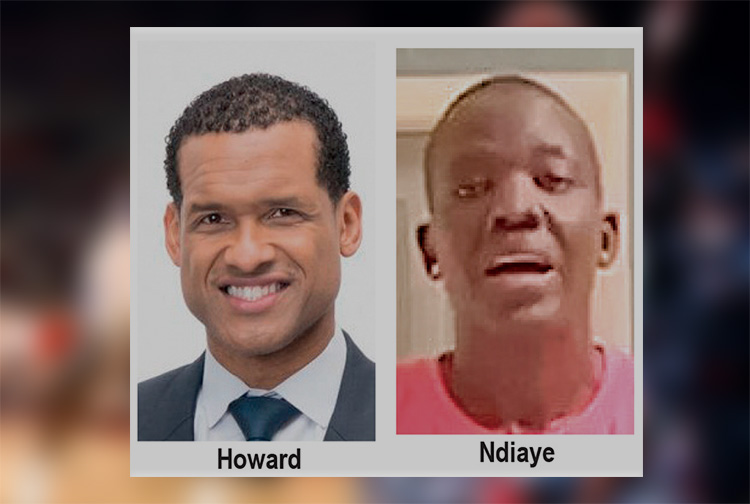
The U.S. Embassy in Colombo welcomed the U.S. Sports Envoys to Sri Lanka, former National Basketball Association (NBA) and Women’s National Basketball Association (WNBA) players Stephen Howard and Astou Ndiaye, from June 8 through 14.
The Public Diplomacy section of the U.S. Embassy said that it would launch a weeklong basketball program intended to harness the unifying power of sports, made possible through collaboration with Foundation of Goodness and IImpact Hoop Lab.
While in Sri Lanka, Howard and Ndiaye, both retired professional basketball players, will conduct a weeklong program, Hoops for Hope: Bridging Borders through Basketball. The Sports Envoys will lead basketball clinics and exhibition matches and engage in leadership sessions in Colombo and Southern Province for youth aged 14-18 from Northern, Uva, Eastern and Western Provinces, offering skills and leadership training both on and off the court. The U.S. Envoys will also share their expertise with the Sri Lanka Basketball Federation, national coaches, and players, furthering the development of basketball in the country. Beyond the clinics, they will collaborate with Sri Lankan schoolchildren to take part in a community service project in the Colombo area.
“We are so proud to welcome Stephen and Astou as our Sports Envoys to Sri Lanka, to build on the strong people-to-people connections between the United States and Sri Lanka,” said U.S. Ambassador Julie Chung. “The lessons that will be shared by our Sports Envoys – communication, teamwork, resilience, inclusion, and conflict resolution – are essential for leadership development, community building, equality, and peace. The U.S. Sports Envoy program is a testament to our belief that sports can be a powerful tool in promoting peace and unity.”
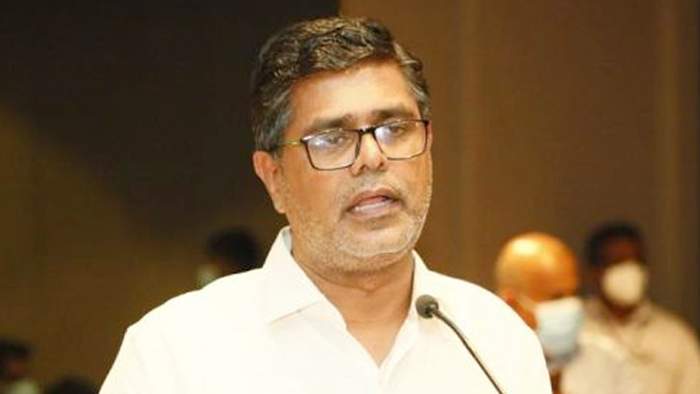
SJB Colombo District MP Mujibur Rahuman in parliament demanded to know from the government the reasons for CEB suspending the leave of all its employees until further notice from Thursday.
MP Rahuman said that the CEB has got an acting General Manager anew and the latter yesterday morning issued a circular suspending leave of all CEB employees with immediate effect until further notice.
“We demand that Minister Kanchana Wijesekera should explain this to the House. This circular was issued while this debate on the new Electricity Amendment Bill was pending. There are many who oppose this Bill. The Minister must tell parliament the reason for the urge to cancel the leave of CEB employees,” the MP said.However, Speaker Mahinda Yapa Abeywardena prevented Minister Wijesekera responding to the query and said that the matter raised by MP Rahuman was not relevant.
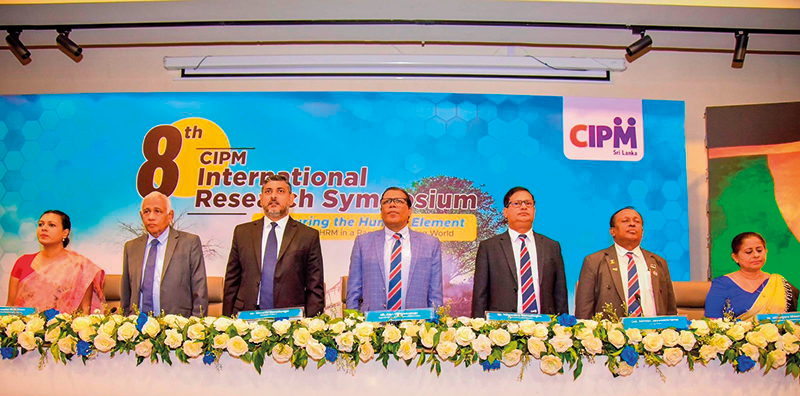
The Chartered Institute of Personnel Management (CIPM) successfully concluded the 8th Annual CIPM Symposium, which took place on 31st May 2024. Themed “Nurturing the Human Element—Redefining HRM in a Rapidly Changing World,” the symposium underscored the pivotal role of human resource management (HRM) in today’s dynamic global landscape. Since its inception in 1959, CIPM has been dedicated to advancing the HR profession through education, professional development, and advocacy, solidifying its position as Sri Lanka’s leading professional body for HRM.
Ken Vijayakumar, the President of the CIPM, graced the occasion as the chief guest. The symposium commenced with the welcome address by the Chairperson, Prof. Arosha Adikaram, followed by the Web Launch of the Symposium Proceedings and Abstract Book by the CIPM President. The event featured distinguished addresses, including a speech by Chief Guest Ken Vijayakumar, President of CIPM, and an address by Guest of Honor Shakthi Ranatunga, Chief Operating Officer of MAS Holdings Pvt. Ltd., Sri Lanka.
The symposium also featured an inspiring keynote address by Prof. Mario Fernando, Professor of Management and Director of the Centre for Cross Cultural Management (CCCM) at the University of Wollongong, Australia.
Vote of Thanks of the inauguration session was delivered by Dr. Dillanjani Weeratunga, Symposium Co-chair.
The symposium served as a comprehensive platform for researchers to present their findings across a wide range of critical topics in HRM. These included Cultural Diversity and Inclusion, Talent Development and Retention, Ethical Leadership and Corporate Social Responsibility, Adapting to Technological Advancements, Mental Health and Well-being at Work, Global Workforce Challenges, Employee Empowerment, and Reskilling and Upskilling.
The plenary session was led by Prof. Wasantha Rajapakse. Certificates were awarded to the best paper presenters during the valedictory session, followed by a vote of thanks delivered by Kamani Perera, Manager of Research and Development.
The annual symposium of CIPM was a truly inclusive event, attracting a diverse audience that spanned undergraduates, graduates, working professionals, research scholars and lecturers. This widespread interest highlights the symposium’s significance in the field of HRM, offering a unique opportunity for everyone to network and learn from scholarly brains.The CIPM International Research Symposium was sponsored by Hambantota International Port, Sri Lanka Institute of Information Technology (SLIIT), E B Creasy & Co. PLC, and Print Xcel Company.



US sports envoys to Lanka to champion youth development

Rahuman questions sudden cancellation of leave of CEB employees


