
News
CORRECT COLLECTIVE ACTION ESSENTIAL TO SAVE SRI LANKA FROM SEVERE CRISIS

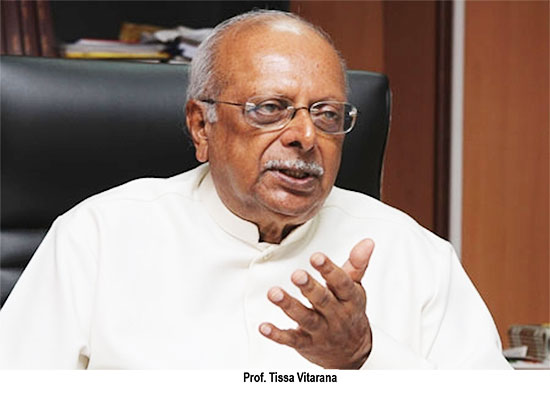
by PROF. TISSA VITARANA
Sri Lanka is facing multiple crises, worst of all a severe economic crisis that can end in bankruptcy. But some Government policy makers are acting as if this is just a hiccup that will pass away and needs no properly targeted drastic action.
For some strange reason the people have not been informed of the gravity of the situation and that a period of austerity with belt- tightening by the whole nation is necessary. Nearly all countries, rich and poor, big and small are faced with this situation. So it is nothing to be ashamed off.
In fact the obtaining of the country’s requirement of vaccines, amid severe competition, was an achievement (though I would have been happier if the mRNA vaccines like Pfizer were left out).The Government policy seems to rely almost entirely on the vaccination programme.
It would appear that the expectation is that if nearly everybody is vaccinated the spread of the disease will also end. But this is not the case as those vaccinated can acquire the infection and also transmitted to others. The vaccination only prevents severe disease and death of the vaccinated individual.
Therefore it is essential that the government strictly enforces the observance of the epidemiological health rules (constant wearing of a good mask, the observance of social distancing, the constant washing of hands well with soap and water if anyone touches an object handled by any other person, and the avoidance of crowds by all. This may need the setting up of Covid-19 committees at village level which can acquire the necessary know how and see that the rules are enforced.
A clear plan of action to address this entire situation and which rallies the whole nation is required. The enforcement of the health rules should be given equal or higher priority in the total program.
Since 1977, after nearly 44 years of a neoliberal economy (where the regulation is by market forces which increase imports and the profit of the super-rich, without providing the basic needs of the people) is the main cause of the crisis.
The cost of imports far outstrips the income from exports, leading to a huge foreign trade imbalance. The drop of dollar income from tourism and expatriate labour due to the Covid-19 pandemic has aggravated the situation. The country has been brought into a situation where our foreign reserves are down to less than one billion US dollars (USD), from an earlier average of USD 7 to 8 billion.
This is not enough to buy our needs from abroad for even one month, nor to repay the accumulated loans acquired mainly after 1977 which amounts to about USD 6 billion per year. The internationally recognized Fitch rating has brought their assessment of our economy down to CC (in a scale that extends from AAA to single C).
Thus as we are rated as being close to bankruptcy and no foreign investors can be expected to come here due to the high risk. Therefore we are forced to borrow short term loans at high interest, specially swaps. Sri Lanka is caught in a foreign “debt trap” and is fast running out of USD to buy even essentials like food and medicines from abroad. The lack of dollars will lead to a severe shortage of essentials. The result will be racketeering and high prices – a black market. This will send prices up further.
Within the country the economic situation is extremely bad and specially people in the villages and the urban slums are suffering terribly. Within Sri Lanka 60% of our population is living in poverty. Hunger is widespread and many live on one meal a day. The malnutrition level has gone up to 18.3% (which means that out of five children who are five years of age one is suffering from malnutrition). Not only will the body and mental development of these malnourished children be badly affected, it can have some adverse impact on the entire future generation.
A significant section of the future generation will be mentally deficient, in addition to being short and thin and may behave abnormally. There may be an increase of crime and misbehavior. This trend has already appeared among a significant section of the present younger generation (who have lost their jobs, and become drug addicts as well as part of the underworld).
It is sad to see intelligent and skilled youth queuing up to obtain passports and visas to go abroad, at a time when we need their skills and energy to develop our country. We can ill-afford this brain drain. My fear is that if the economic and social situation deteriorates further, employed professionals too may join this queue.
How do we prevent or minimize these unfortunate trends? The question asked is how long will this Covid-19 pandemic last. On the basis of experience with past pandemics and epidemics, which have generally existed in epidemic form for two or three years, they have then become milder routine infections like the common cold, or influenza. The appearance and increase of herd immunity contributes to the above change. It is my hope that with Covid -19 too this will be the case.
With regard to the repayment of our loans as a country which has been badly hit by the Covid-19 pandemic as well as the global economic crisis we are entitled to re-negotiate and restructure the repayment of our sovereign debt. Accordingly we should ask for a period (say about five years) where we do not re pay our debt to the creditors. This is to enable us to bring about the requisite changes of the policies that will result in sustainable development. During this period we can ensure that our people obtain their essential needs and their suffering be minimized.
The welfare state (free health, free education, allowances to the needy etc.) must not only be properly implemented during this period but also be sustained in the future. Our dependence on loans can be minimized by ensuring that the haves also take a significant part of the burden. The tax rate in Sri Lanka, both personal (14%) and corporate (18%) is one of the lowest in the world. This must be increased to well above the upper limit of tax charged in countries of Europe (35-40%).




The U.S. Embassy in Colombo welcomed the U.S. Sports Envoys to Sri Lanka, former National Basketball Association (NBA) and Women’s National Basketball Association (WNBA) players Stephen Howard and Astou Ndiaye, from June 8 through 14.
The Public Diplomacy section of the U.S. Embassy said that it would launch a weeklong basketball program intended to harness the unifying power of sports, made possible through collaboration with Foundation of Goodness and IImpact Hoop Lab.
While in Sri Lanka, Howard and Ndiaye, both retired professional basketball players, will conduct a weeklong program, Hoops for Hope: Bridging Borders through Basketball. The Sports Envoys will lead basketball clinics and exhibition matches and engage in leadership sessions in Colombo and Southern Province for youth aged 14-18 from Northern, Uva, Eastern and Western Provinces, offering skills and leadership training both on and off the court. The U.S. Envoys will also share their expertise with the Sri Lanka Basketball Federation, national coaches, and players, furthering the development of basketball in the country. Beyond the clinics, they will collaborate with Sri Lankan schoolchildren to take part in a community service project in the Colombo area.
“We are so proud to welcome Stephen and Astou as our Sports Envoys to Sri Lanka, to build on the strong people-to-people connections between the United States and Sri Lanka,” said U.S. Ambassador Julie Chung. “The lessons that will be shared by our Sports Envoys – communication, teamwork, resilience, inclusion, and conflict resolution – are essential for leadership development, community building, equality, and peace. The U.S. Sports Envoy program is a testament to our belief that sports can be a powerful tool in promoting peace and unity.”
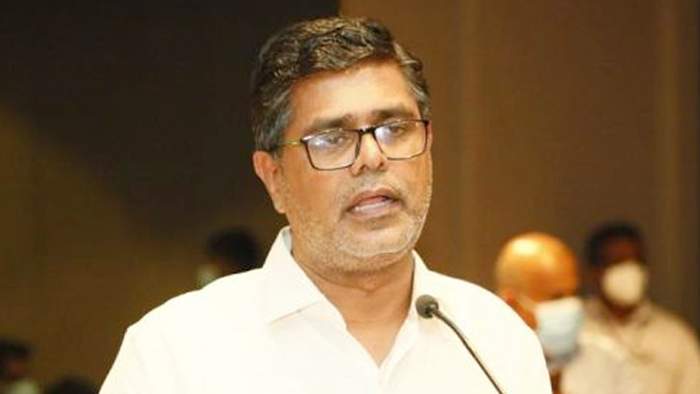
SJB Colombo District MP Mujibur Rahuman in parliament demanded to know from the government the reasons for CEB suspending the leave of all its employees until further notice from Thursday.
MP Rahuman said that the CEB has got an acting General Manager anew and the latter yesterday morning issued a circular suspending leave of all CEB employees with immediate effect until further notice.
“We demand that Minister Kanchana Wijesekera should explain this to the House. This circular was issued while this debate on the new Electricity Amendment Bill was pending. There are many who oppose this Bill. The Minister must tell parliament the reason for the urge to cancel the leave of CEB employees,” the MP said.However, Speaker Mahinda Yapa Abeywardena prevented Minister Wijesekera responding to the query and said that the matter raised by MP Rahuman was not relevant.
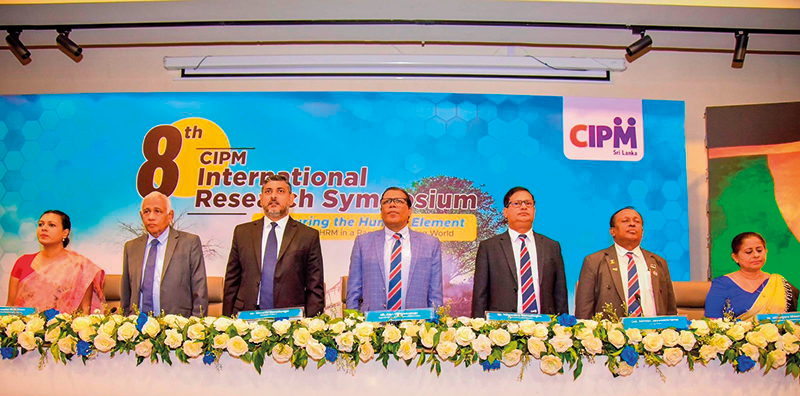
The Chartered Institute of Personnel Management (CIPM) successfully concluded the 8th Annual CIPM Symposium, which took place on 31st May 2024. Themed “Nurturing the Human Element—Redefining HRM in a Rapidly Changing World,” the symposium underscored the pivotal role of human resource management (HRM) in today’s dynamic global landscape. Since its inception in 1959, CIPM has been dedicated to advancing the HR profession through education, professional development, and advocacy, solidifying its position as Sri Lanka’s leading professional body for HRM.
Ken Vijayakumar, the President of the CIPM, graced the occasion as the chief guest. The symposium commenced with the welcome address by the Chairperson, Prof. Arosha Adikaram, followed by the Web Launch of the Symposium Proceedings and Abstract Book by the CIPM President. The event featured distinguished addresses, including a speech by Chief Guest Ken Vijayakumar, President of CIPM, and an address by Guest of Honor Shakthi Ranatunga, Chief Operating Officer of MAS Holdings Pvt. Ltd., Sri Lanka.
The symposium also featured an inspiring keynote address by Prof. Mario Fernando, Professor of Management and Director of the Centre for Cross Cultural Management (CCCM) at the University of Wollongong, Australia.
Vote of Thanks of the inauguration session was delivered by Dr. Dillanjani Weeratunga, Symposium Co-chair.
The symposium served as a comprehensive platform for researchers to present their findings across a wide range of critical topics in HRM. These included Cultural Diversity and Inclusion, Talent Development and Retention, Ethical Leadership and Corporate Social Responsibility, Adapting to Technological Advancements, Mental Health and Well-being at Work, Global Workforce Challenges, Employee Empowerment, and Reskilling and Upskilling.
The plenary session was led by Prof. Wasantha Rajapakse. Certificates were awarded to the best paper presenters during the valedictory session, followed by a vote of thanks delivered by Kamani Perera, Manager of Research and Development.
The annual symposium of CIPM was a truly inclusive event, attracting a diverse audience that spanned undergraduates, graduates, working professionals, research scholars and lecturers. This widespread interest highlights the symposium’s significance in the field of HRM, offering a unique opportunity for everyone to network and learn from scholarly brains.The CIPM International Research Symposium was sponsored by Hambantota International Port, Sri Lanka Institute of Information Technology (SLIIT), E B Creasy & Co. PLC, and Print Xcel Company.



US sports envoys to Lanka to champion youth development

Rahuman questions sudden cancellation of leave of CEB employees


