
News
Combination of ill-timed decisions prevented Lanka recover from pandemic shock


The country has lost several hundred thousand jobs to Covid-19. The impact of the agrochemical ban on agriculture, the mismanagement of the exchange rate, a highly accommodative monetary policy, and the use of foreign exchange reserves for debt repayment thwarted the country’s ability to recover from the initial shock of COVID-19, an ILO study titled, ‘The labour market implications of Sri Lanka’s multiple crises,‘ has revealed.
“These policy decisions generated multiple crises which impacted on businesses, workers, and their families, manifesting in shortages of essential consumer goods including food, fuel, power, raw materials, and capital equipment on the one hand, and the disruption of key public services, such as education and health, on the other. The fiscal bind and looming debt crisis have also left Sri Lanka very little room to manoeuvre. The economic crises have, in turn, generated political instability and further constrained timely decision-making about how to deal with the crisis,” the ILO report said.
The multiple crises have intensified long-standing worrisome features of the labour market: they have expanded unemployment, widened gender gaps in labour force participation, and given rise to job insecurity, uncertainty, and hardship, it said.
“Sri Lanka lost more than 200,000 jobs to the pandemic between the fourth quarter 2019 and the second quarter 2021. The employment share of the informal sector increased because formal sector employment contracted more sharply. Although there was some recovery, during the second half of 2021, extensive job losse, among employers, augured ill for the vigorous regeneration of jobs,” the study reveals.
The report added that the pandemic also impacted the skills development sector. Efforts to provide education and training online were constrained, mainly due to problems of infrastructure access, particularly outside of the Western Province. Enrolment and completion of TVET courses in 2020, relative to 2019, declined by 50 and 57 percent respectively. However, the imposition of power cuts, in 2022, are likely to have disrupted even these limited measures.
“The pandemic also saw the emergence of the new poor — those who fell into poverty because of the pandemic – among the more educated and employed in industry and service sectors, particularly in urban areas and Western Province, the latter which accounted for the largest share of the new poor. These negative developments would have worsened in 2022 as the economic crises intensified,” it said.
Sri Lanka is currently in a full-blown debt and balance-of-payments crisis, leading to massive shortages of essentials and severe disruption to economic activity. As the crisis continues to deteriorate and is likely to lead to a deep impact on the labour market, which will require careful monitoring and analysis over the months to come, the ILO said. The severity of the crisis means that policy-makers need to grasp the nettle of structural reforms needed for recovery and job-rich growth, which will require carefully balancing macroeconomic stabilization with longer-term goals of creating decent, sustainable, and productive employment. The report suggests eight areas of policy intervention for the short, medium and long term.
They are; addressing current macroeconomic crisis through fiscal consolidation and debt restructuring, plus improved fiscal space, restoring investor confidence, reformulating investment, industry, and trade policies to support export-led growth, technological transformation, productive efficiency and job creation, especially for SMEs, increasing R&D and infrastructure investments with a clear focus on 3IR and 4IR technologies, promoting demand-driven skills development and adjustment to a post-COVID-19 economy, including remedial education/training, creating a social dialogue and legislative reform to support flexible arrangements while protecting workers, promoting policies that foster women’s entry into the labour market and support other hard-hit groups, and expanding access to adequate social protection to workers and families (including institutional reforms).
The report also said that Sri Lanka needs to work on improving learning outcomes. Even the TVET sector performs no better than the general education system, the ILO said. According to a 2018 ADB study, a sizable proportion of TVET graduates leave training programmes, without the skills that employers require. Tracer studies on the employability of TVET graduates reveal a high rate of unemployment among TVET graduates who had been trained for employment in even the fast-growing ICT, construction, tourism, and light engineering subsectors.



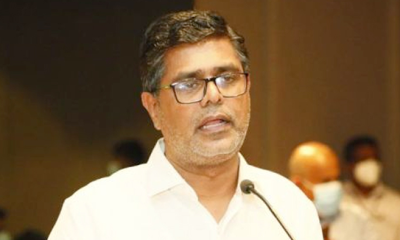
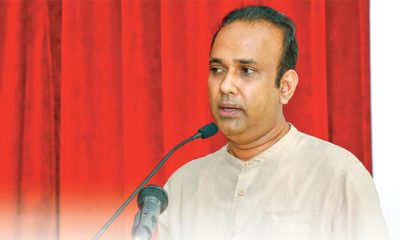



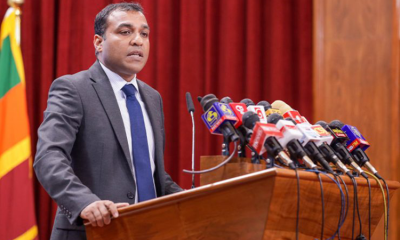


The U.S. Embassy in Colombo welcomed the U.S. Sports Envoys to Sri Lanka, former National Basketball Association (NBA) and Women’s National Basketball Association (WNBA) players Stephen Howard and Astou Ndiaye, from June 8 through 14.
The Public Diplomacy section of the U.S. Embassy said that it would launch a weeklong basketball program intended to harness the unifying power of sports, made possible through collaboration with Foundation of Goodness and IImpact Hoop Lab.
While in Sri Lanka, Howard and Ndiaye, both retired professional basketball players, will conduct a weeklong program, Hoops for Hope: Bridging Borders through Basketball. The Sports Envoys will lead basketball clinics and exhibition matches and engage in leadership sessions in Colombo and Southern Province for youth aged 14-18 from Northern, Uva, Eastern and Western Provinces, offering skills and leadership training both on and off the court. The U.S. Envoys will also share their expertise with the Sri Lanka Basketball Federation, national coaches, and players, furthering the development of basketball in the country. Beyond the clinics, they will collaborate with Sri Lankan schoolchildren to take part in a community service project in the Colombo area.
“We are so proud to welcome Stephen and Astou as our Sports Envoys to Sri Lanka, to build on the strong people-to-people connections between the United States and Sri Lanka,” said U.S. Ambassador Julie Chung. “The lessons that will be shared by our Sports Envoys – communication, teamwork, resilience, inclusion, and conflict resolution – are essential for leadership development, community building, equality, and peace. The U.S. Sports Envoy program is a testament to our belief that sports can be a powerful tool in promoting peace and unity.”
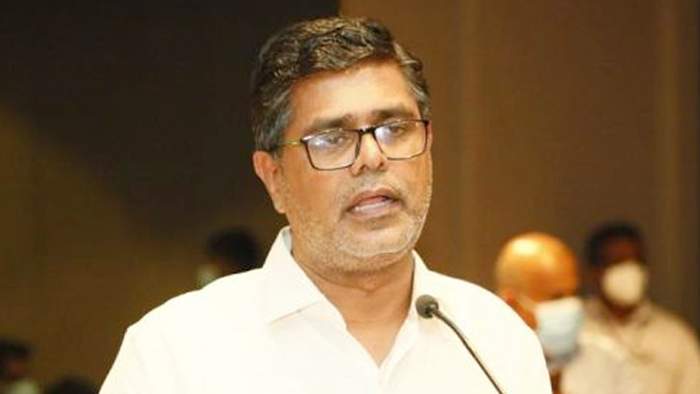
SJB Colombo District MP Mujibur Rahuman in parliament demanded to know from the government the reasons for CEB suspending the leave of all its employees until further notice from Thursday.
MP Rahuman said that the CEB has got an acting General Manager anew and the latter yesterday morning issued a circular suspending leave of all CEB employees with immediate effect until further notice.
“We demand that Minister Kanchana Wijesekera should explain this to the House. This circular was issued while this debate on the new Electricity Amendment Bill was pending. There are many who oppose this Bill. The Minister must tell parliament the reason for the urge to cancel the leave of CEB employees,” the MP said.However, Speaker Mahinda Yapa Abeywardena prevented Minister Wijesekera responding to the query and said that the matter raised by MP Rahuman was not relevant.
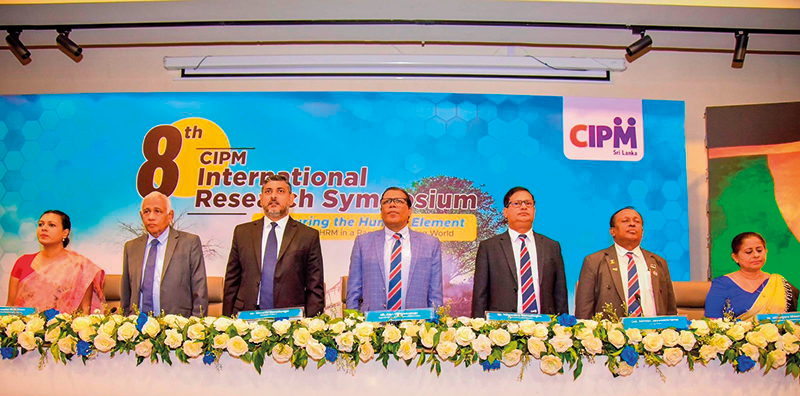
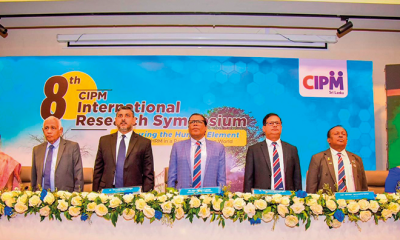
The Chartered Institute of Personnel Management (CIPM) successfully concluded the 8th Annual CIPM Symposium, which took place on 31st May 2024. Themed “Nurturing the Human Element—Redefining HRM in a Rapidly Changing World,” the symposium underscored the pivotal role of human resource management (HRM) in today’s dynamic global landscape. Since its inception in 1959, CIPM has been dedicated to advancing the HR profession through education, professional development, and advocacy, solidifying its position as Sri Lanka’s leading professional body for HRM.
Ken Vijayakumar, the President of the CIPM, graced the occasion as the chief guest. The symposium commenced with the welcome address by the Chairperson, Prof. Arosha Adikaram, followed by the Web Launch of the Symposium Proceedings and Abstract Book by the CIPM President. The event featured distinguished addresses, including a speech by Chief Guest Ken Vijayakumar, President of CIPM, and an address by Guest of Honor Shakthi Ranatunga, Chief Operating Officer of MAS Holdings Pvt. Ltd., Sri Lanka.
The symposium also featured an inspiring keynote address by Prof. Mario Fernando, Professor of Management and Director of the Centre for Cross Cultural Management (CCCM) at the University of Wollongong, Australia.
Vote of Thanks of the inauguration session was delivered by Dr. Dillanjani Weeratunga, Symposium Co-chair.
The symposium served as a comprehensive platform for researchers to present their findings across a wide range of critical topics in HRM. These included Cultural Diversity and Inclusion, Talent Development and Retention, Ethical Leadership and Corporate Social Responsibility, Adapting to Technological Advancements, Mental Health and Well-being at Work, Global Workforce Challenges, Employee Empowerment, and Reskilling and Upskilling.
The plenary session was led by Prof. Wasantha Rajapakse. Certificates were awarded to the best paper presenters during the valedictory session, followed by a vote of thanks delivered by Kamani Perera, Manager of Research and Development.
The annual symposium of CIPM was a truly inclusive event, attracting a diverse audience that spanned undergraduates, graduates, working professionals, research scholars and lecturers. This widespread interest highlights the symposium’s significance in the field of HRM, offering a unique opportunity for everyone to network and learn from scholarly brains.The CIPM International Research Symposium was sponsored by Hambantota International Port, Sri Lanka Institute of Information Technology (SLIIT), E B Creasy & Co. PLC, and Print Xcel Company.



US sports envoys to Lanka to champion youth development

Rahuman questions sudden cancellation of leave of CEB employees


