
News
‘Chinese investment’ in sea cucumber farm sparks concerns among northern fishermen

By Meera Sirinivasan
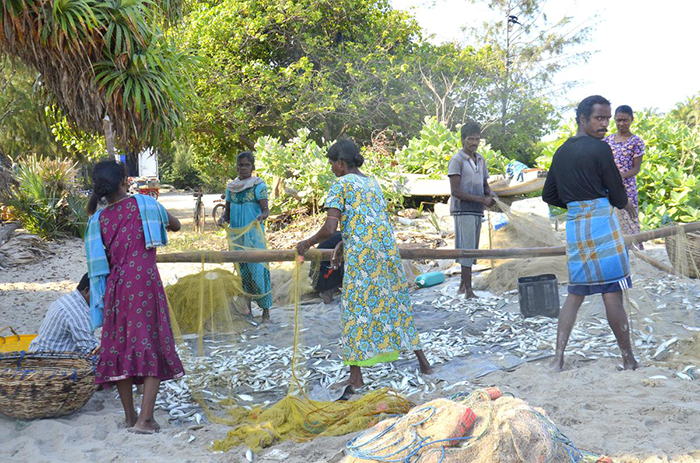
Citing media reports of a Chinese firm investing in a sea cucumber farm in Pungudutivu, off Jaffna Peninsula, local fishermen have raised concern over its potential impact on their livelihoods, marine ecosystem, and land.
“We recognise the need for investment in our war-affected region, but the sea cucumber farms are mainly for exports. They will only bring more harm than benefit for those of us living here,” said Annalingam Annarasa, President of the Jaffna Fisheries Federation. The commercial ventures, they fear, could adversely affect the local marine ecology on which their livelihoods rely.
Small-scale artisanal fishermen like him see the government’s recent push on aquaculture as the latest blow to their livelihoods, already precarious due to the relentless bottom-trawling by Indian fishermen in their seas for years, and the drastic, nearly four-fold increase in kerosene price last month.
In 2021, Sri Lanka exported about 336 tonnes of sea cucumber to China, Singapore, and Hong Kong, according to local media reports. Desperate to find dollars to stabilise its battered economy, the Sri Lankan government appears to have identified potential for both, foreign investment and exports in breeding and selling the sausage-shaped marine animal considered a delicacy in China and Southeast Asia. Locals do not consume sea cucumbers.
In June this year, the Cabinet approved a proposal for a large-scale commercial sea cucumber project spanning 5,000 acres in Jaffna, Mannar, Kilinochchi and Batticaloa districts, after Sri Lanka earned “a significant amount” of foreign exchange by exporting sea cucumbers. The proposal came from Fisheries Minister Douglas Devananda, who represents Jaffna district in Parliament. The National Aquaculture Development Authority functioning under his ministry is leading the initiative.
“We need both investment and technology in the north to cultivate sea cucumbers. I have been asking India for five to six years but have not had any response. We must explore other options, right? We are only talking to a Chinese firm, no project has been finalised yet,” Devananda told The Hindu, adding he will “never allow” any threat to India’s security concerns. Pungudutivu, where the farm is being proposed, is near Nainativu, which is one of the three islands where Sri Lanka had cleared a Chinese renewable energy project last year. However, with India objecting to it, citing the project’s proximity to its southern coast, Sri Lanka cancelled the venture, instead agreeing to accommodate an Indian project at the three sites.
The sea cucumber projects will “certainly bring jobs locally,” the Minister further said, ensuring the project will not affect local fishermen.
When contacted, the Chinese Embassy said it had no information yet on a Chinese firm investing in a sea cucumber farm in the small island off Jaffna Peninsula. “It could be a private company negotiating on a commercial basis,” a spokesman said. However, pointing to an existing joint venture between a Chinese firm and Sri Lanka, in the coastal village of Ariyalai in Jaffna, the Chinese official said “it has created about one thousand jobs for nearby villages. Last year it provided 5 lakh sea cucumber seedlings to local farmers for free and $ one million was brought in.”
Another Chinese project in the neighbouring Kilinochchi district faced stiff opposition last year from local fishermen who objected to the farm fencing off some land adjoining the sea, restricting access to even local fishermen.
“We agitated since they were not consulting us, and we noticed that while the firm was promoted a hatchery, they were actually fishing the sea cucumbers from our waters. That sort of large catch on a regular basis can really damage our marine resources,” said K. Baheerathan of the Koutharimunai Fishermen’s Association.
According to locals, Chinese investments are fewer compared to the proliferation of some 250 sea cucumber farms in the north in the last year. “Most of the investors are locals, but many are not from the fisher community. They are politically well-connected and influential…the real issue is our Fisheries Ministry is now focused only on aquaculture for profits, and not fisheries which is also about livelihoods. Fishermen like us, our experiences or knowledge don’t figure in their plans,” Annarasa said. (The Hindu)



The U.S. Embassy in Colombo welcomed the U.S. Sports Envoys to Sri Lanka, former National Basketball Association (NBA) and Women’s National Basketball Association (WNBA) players Stephen Howard and Astou Ndiaye, from June 8 through 14.
The Public Diplomacy section of the U.S. Embassy said that it would launch a weeklong basketball program intended to harness the unifying power of sports, made possible through collaboration with Foundation of Goodness and IImpact Hoop Lab.
While in Sri Lanka, Howard and Ndiaye, both retired professional basketball players, will conduct a weeklong program, Hoops for Hope: Bridging Borders through Basketball. The Sports Envoys will lead basketball clinics and exhibition matches and engage in leadership sessions in Colombo and Southern Province for youth aged 14-18 from Northern, Uva, Eastern and Western Provinces, offering skills and leadership training both on and off the court. The U.S. Envoys will also share their expertise with the Sri Lanka Basketball Federation, national coaches, and players, furthering the development of basketball in the country. Beyond the clinics, they will collaborate with Sri Lankan schoolchildren to take part in a community service project in the Colombo area.
“We are so proud to welcome Stephen and Astou as our Sports Envoys to Sri Lanka, to build on the strong people-to-people connections between the United States and Sri Lanka,” said U.S. Ambassador Julie Chung. “The lessons that will be shared by our Sports Envoys – communication, teamwork, resilience, inclusion, and conflict resolution – are essential for leadership development, community building, equality, and peace. The U.S. Sports Envoy program is a testament to our belief that sports can be a powerful tool in promoting peace and unity.”
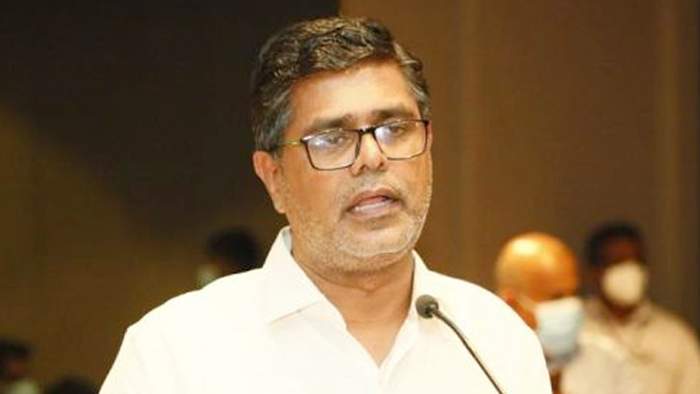
SJB Colombo District MP Mujibur Rahuman in parliament demanded to know from the government the reasons for CEB suspending the leave of all its employees until further notice from Thursday.
MP Rahuman said that the CEB has got an acting General Manager anew and the latter yesterday morning issued a circular suspending leave of all CEB employees with immediate effect until further notice.
“We demand that Minister Kanchana Wijesekera should explain this to the House. This circular was issued while this debate on the new Electricity Amendment Bill was pending. There are many who oppose this Bill. The Minister must tell parliament the reason for the urge to cancel the leave of CEB employees,” the MP said.However, Speaker Mahinda Yapa Abeywardena prevented Minister Wijesekera responding to the query and said that the matter raised by MP Rahuman was not relevant.
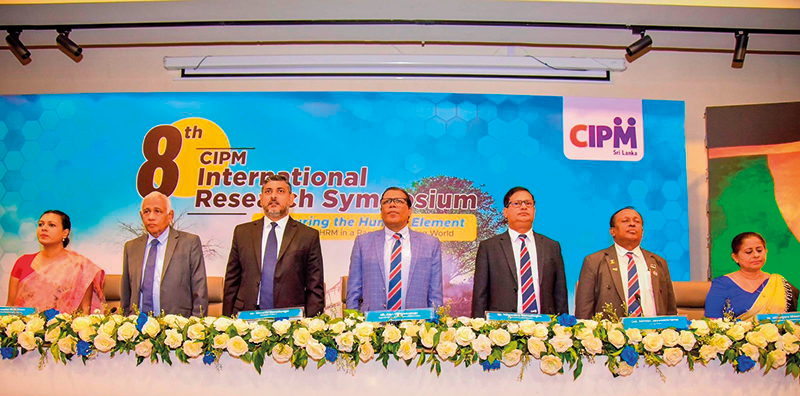
The Chartered Institute of Personnel Management (CIPM) successfully concluded the 8th Annual CIPM Symposium, which took place on 31st May 2024. Themed “Nurturing the Human Element—Redefining HRM in a Rapidly Changing World,” the symposium underscored the pivotal role of human resource management (HRM) in today’s dynamic global landscape. Since its inception in 1959, CIPM has been dedicated to advancing the HR profession through education, professional development, and advocacy, solidifying its position as Sri Lanka’s leading professional body for HRM.
Ken Vijayakumar, the President of the CIPM, graced the occasion as the chief guest. The symposium commenced with the welcome address by the Chairperson, Prof. Arosha Adikaram, followed by the Web Launch of the Symposium Proceedings and Abstract Book by the CIPM President. The event featured distinguished addresses, including a speech by Chief Guest Ken Vijayakumar, President of CIPM, and an address by Guest of Honor Shakthi Ranatunga, Chief Operating Officer of MAS Holdings Pvt. Ltd., Sri Lanka.
The symposium also featured an inspiring keynote address by Prof. Mario Fernando, Professor of Management and Director of the Centre for Cross Cultural Management (CCCM) at the University of Wollongong, Australia.
Vote of Thanks of the inauguration session was delivered by Dr. Dillanjani Weeratunga, Symposium Co-chair.
The symposium served as a comprehensive platform for researchers to present their findings across a wide range of critical topics in HRM. These included Cultural Diversity and Inclusion, Talent Development and Retention, Ethical Leadership and Corporate Social Responsibility, Adapting to Technological Advancements, Mental Health and Well-being at Work, Global Workforce Challenges, Employee Empowerment, and Reskilling and Upskilling.
The plenary session was led by Prof. Wasantha Rajapakse. Certificates were awarded to the best paper presenters during the valedictory session, followed by a vote of thanks delivered by Kamani Perera, Manager of Research and Development.
The annual symposium of CIPM was a truly inclusive event, attracting a diverse audience that spanned undergraduates, graduates, working professionals, research scholars and lecturers. This widespread interest highlights the symposium’s significance in the field of HRM, offering a unique opportunity for everyone to network and learn from scholarly brains.The CIPM International Research Symposium was sponsored by Hambantota International Port, Sri Lanka Institute of Information Technology (SLIIT), E B Creasy & Co. PLC, and Print Xcel Company.



US sports envoys to Lanka to champion youth development

Rahuman questions sudden cancellation of leave of CEB employees


