
News
China says its new land border law will not affect existing border treaties


BY S VENKAT NARAYAN Our Special Correspondent
NEW DELHI: China said on Thursday that its new land border law will not affect the implementation of existing border treaties, and urged relevant countries to avoid making “undue speculation” about a “normal legislation”.
China’s national legislature — the National People’s Congress (NPC) — on October 23 adopted the new law on the protection and exploitation of the land border areas. This drew sharp reaction from India as it was passed amid the protracted military standoff between the two sides in eastern Ladakh region.
On Wednesday, India hit out at China for bringinmg out the new land border law, and said it expects China to avoid taking any action under the “pretext” of the legislation that could “unilaterally” alter the situation in the border areas.
External Affairs Ministry Spokesperson Arindam Bagchi described China’s decision to bring out the law as a matter of “concern” as it can have implications on the existing bilateral pacts on the management of the border and the overall boundary question.
“China’s unilateral decision to bring about a legislation which can have implication on our existing bilateral arrangements on border management as well as on the boundary question is of concern to us,” he said.
“Such unilateral move will have no bearing on the arrangements that both sides have already reached earlier, whether it is on the boundary question or for maintaining peace and tranquillity along the Line of Actual Control (LAC) in India-China border areas,” he said.
Responding to questions on the Land Border Law, Chinese Foreign Ministry spokesman Wang Wenbin said: “It is a normal domestic legislation that serves our realistic needs and also confirms to international practice”.
“This law has clear stipulations on China’s cooperation with its neighbouring countries and the handling of the land border issues,” he said at a regular foreign ministry briefing in Beijing.
In an apparent response to India’s concerns, Wang said: “It will not affect China’s implementation of existing border treaties. Nor will it change existing practice in our cooperation with neighbouring countries. It does not mean that there is a change in our position on the border development issue.”
To a specific question about India’s criticism of the law, Wang said: “I just briefed you on the considerations behind the law. We hope relevant countries can avoid making undue speculation about the normal legislation in China.”
Earlier, elaborating on the provisions of the new law adopted by the NPC last week, Wang said President Xi Jinping signed decree No. 99 on the same day announcing that the law will come into effect from January 1, 2022.
“The Article 62 of the law identifies the leading mechanism and duties of departments of military and localities in implementing the law. It sets the rules for the demarcation procedures and also covers the areas of defence and management of borders as far as international cooperation,” he said.
“China has 22,000 kms of land borders. It has 14 land neighbours. The promulgation of the law is to coordinate and have unified standards for strengthening border management and advance relevant cooperation,” he said.
“This is an important measure in advancing the rule of law. It is a normal domestic legislation that serves our realistic needs and also confirms to international practice,” Wang said.
India and Bhutan are the two countries with which China is yet to finalise the border agreements, while Beijing resolved the boundary disputes with 12 other neighbours.
While India-China border disputes cover 3,488-km along the Line of Actual Control, the China-Bhutan dispute covers about 400 km.
India and China have already held over 20 rounds of border talks under the framework of the Special Representatives dialogue which was set up to find an early solution to the border dispute.
Both sides have been maintaining that pending the final resolution of the boundary issue, it is necessary to maintain peace and tranquillity in the border areas.
The eastern Ladakh border standoff between the Indian and Chinese militaries erupted on May 5 last year following a violent clash in the Pangong lake areas and both sides gradually enhanced their deployment by rushing in tens of thousands of soldiers as well as heavy weaponry.
The tension escalated following a deadly clash in Galwan Valley on June 15 last year. As a result of a series of military and diplomatic talks, the two sides completed the disengagement process in the north and south banks of the Pangong lake in February and in the Gogra area in August.
The last round of military talks on October 10 ended in a stalemate following which both sides blamed each other for the impasse.




The U.S. Embassy in Colombo welcomed the U.S. Sports Envoys to Sri Lanka, former National Basketball Association (NBA) and Women’s National Basketball Association (WNBA) players Stephen Howard and Astou Ndiaye, from June 8 through 14.
The Public Diplomacy section of the U.S. Embassy said that it would launch a weeklong basketball program intended to harness the unifying power of sports, made possible through collaboration with Foundation of Goodness and IImpact Hoop Lab.
While in Sri Lanka, Howard and Ndiaye, both retired professional basketball players, will conduct a weeklong program, Hoops for Hope: Bridging Borders through Basketball. The Sports Envoys will lead basketball clinics and exhibition matches and engage in leadership sessions in Colombo and Southern Province for youth aged 14-18 from Northern, Uva, Eastern and Western Provinces, offering skills and leadership training both on and off the court. The U.S. Envoys will also share their expertise with the Sri Lanka Basketball Federation, national coaches, and players, furthering the development of basketball in the country. Beyond the clinics, they will collaborate with Sri Lankan schoolchildren to take part in a community service project in the Colombo area.
“We are so proud to welcome Stephen and Astou as our Sports Envoys to Sri Lanka, to build on the strong people-to-people connections between the United States and Sri Lanka,” said U.S. Ambassador Julie Chung. “The lessons that will be shared by our Sports Envoys – communication, teamwork, resilience, inclusion, and conflict resolution – are essential for leadership development, community building, equality, and peace. The U.S. Sports Envoy program is a testament to our belief that sports can be a powerful tool in promoting peace and unity.”
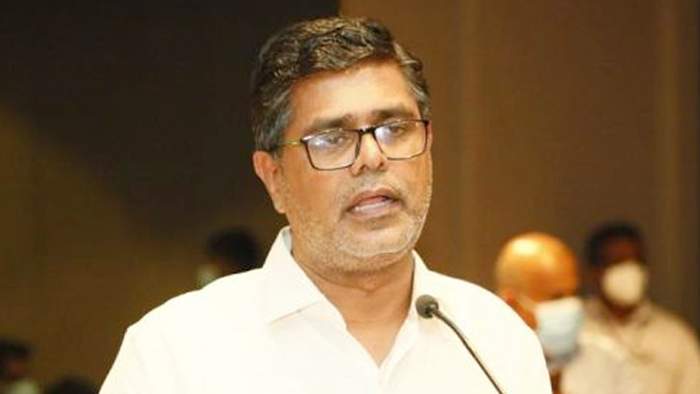
SJB Colombo District MP Mujibur Rahuman in parliament demanded to know from the government the reasons for CEB suspending the leave of all its employees until further notice from Thursday.
MP Rahuman said that the CEB has got an acting General Manager anew and the latter yesterday morning issued a circular suspending leave of all CEB employees with immediate effect until further notice.
“We demand that Minister Kanchana Wijesekera should explain this to the House. This circular was issued while this debate on the new Electricity Amendment Bill was pending. There are many who oppose this Bill. The Minister must tell parliament the reason for the urge to cancel the leave of CEB employees,” the MP said.However, Speaker Mahinda Yapa Abeywardena prevented Minister Wijesekera responding to the query and said that the matter raised by MP Rahuman was not relevant.
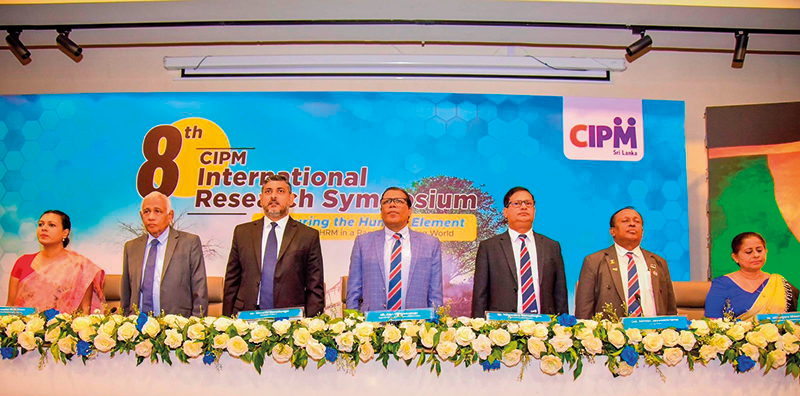
The Chartered Institute of Personnel Management (CIPM) successfully concluded the 8th Annual CIPM Symposium, which took place on 31st May 2024. Themed “Nurturing the Human Element—Redefining HRM in a Rapidly Changing World,” the symposium underscored the pivotal role of human resource management (HRM) in today’s dynamic global landscape. Since its inception in 1959, CIPM has been dedicated to advancing the HR profession through education, professional development, and advocacy, solidifying its position as Sri Lanka’s leading professional body for HRM.
Ken Vijayakumar, the President of the CIPM, graced the occasion as the chief guest. The symposium commenced with the welcome address by the Chairperson, Prof. Arosha Adikaram, followed by the Web Launch of the Symposium Proceedings and Abstract Book by the CIPM President. The event featured distinguished addresses, including a speech by Chief Guest Ken Vijayakumar, President of CIPM, and an address by Guest of Honor Shakthi Ranatunga, Chief Operating Officer of MAS Holdings Pvt. Ltd., Sri Lanka.
The symposium also featured an inspiring keynote address by Prof. Mario Fernando, Professor of Management and Director of the Centre for Cross Cultural Management (CCCM) at the University of Wollongong, Australia.
Vote of Thanks of the inauguration session was delivered by Dr. Dillanjani Weeratunga, Symposium Co-chair.
The symposium served as a comprehensive platform for researchers to present their findings across a wide range of critical topics in HRM. These included Cultural Diversity and Inclusion, Talent Development and Retention, Ethical Leadership and Corporate Social Responsibility, Adapting to Technological Advancements, Mental Health and Well-being at Work, Global Workforce Challenges, Employee Empowerment, and Reskilling and Upskilling.
The plenary session was led by Prof. Wasantha Rajapakse. Certificates were awarded to the best paper presenters during the valedictory session, followed by a vote of thanks delivered by Kamani Perera, Manager of Research and Development.
The annual symposium of CIPM was a truly inclusive event, attracting a diverse audience that spanned undergraduates, graduates, working professionals, research scholars and lecturers. This widespread interest highlights the symposium’s significance in the field of HRM, offering a unique opportunity for everyone to network and learn from scholarly brains.The CIPM International Research Symposium was sponsored by Hambantota International Port, Sri Lanka Institute of Information Technology (SLIIT), E B Creasy & Co. PLC, and Print Xcel Company.



US sports envoys to Lanka to champion youth development

Rahuman questions sudden cancellation of leave of CEB employees


