
News
‘Changing medication will not help unless we change the doctor to solve the country’s problems’ – Eran Wickramaratne, MP

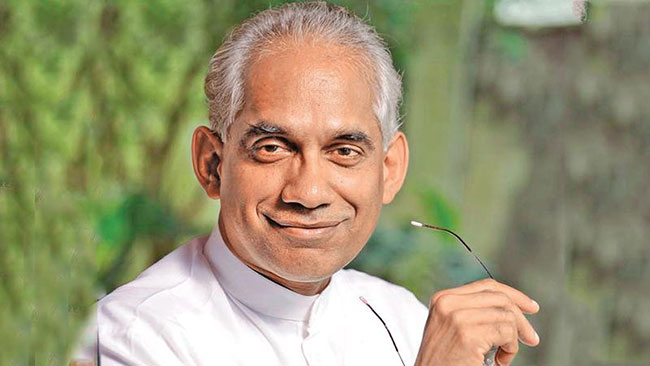
MP Eran Wickramaratne speaking in the debate on the Central Bank of Sri Lanka (CBSL) annual report – 2020 in Parliament last week said that under this government, Sri Lanka is currently facing crises such as higher spending than revenue, higher import expenditure than exports indicating a deficit in the current account and widening budget deficit.
He said what needs to be done is to change the doctor rather than changing the medication to resolve these problems faced in the country.
He further said that the cost of living and the price of petrol have gone up and the country was facing huge problems. Even a school child realizes that government revenue has declined. Now 70% of government revenue is spent on interest on loan repayment. Lebanon is the only country in the world that pays higher interest than Sri Lanka as a percentage of national revenue.
Wickramaratne said that it was first thought that changing ministers was useless for this issue and the policies should be changed. But the Government ministers were saying that though the opposition was pinpointing the disease they did not propose any solution.
The solution to the problem in this country is to change the doctor. There is no point in changing the medication, he suggested.
Today Sri Lanka is facing a dual crises. One is that spending is higher than our national revenue. This is an average deficit of 7.6 per cent of GDP since 1990. Incomes began to fall since 1995. This problem has been exacerbated by the gradual decline in the country’s revenue from 17.3% to 11.6% of GDP from 2006 to 2014 under the Government of President Mahinda Rajapaksa.
“However, the previous government had set its sights on the increase of revenue in 2018. We then said that we should take a basic step to reduce the budget deficit and increase revenue. Accordingly, the good governance government was able to increase the revenue to 13.5% by 2018. But due to the 2018 coup, government revenue fell to 12.6 percent, Wickramaratne further said.
The second structural crisis is the deficit in the current account. Since 2000 exports revenue continue to decline as a percentage of GDP. As a result of these two issues, we have to borrow internationally and locally, he said.
Governments in our country have not addressed these fundamental issues. Even today this government does not seem to have focused on this need. If there is a change in policy, we look forward to hearing about that change in the next budget.
Minister Cabraal, who spoke today, for the first time in 2007 went to the international market as the Governor of the Central bank and obtained a $ 500 million ISB (International Sovereign Bond) loan to address the issues of the budget deficit.
Of course, he is now delivering sermons telling different stories that the government does not need international money. That was the first time Sri Lanka had obtained an ISB loan through Mr. Cabraal. The then government started borrowing in 2007 as a new source to cover the fiscal deficit. Since then, it has continued to borrow dollars at higher interest rates. This is the problem faced by this country now.
Under such a context who will come and invest in Sri Lanka? We borrowed and created white elephants. This Government during its previous regime launched projects such as Nelum Kuluna and Hambantota Conference Hall that do not directly benefit the people or the country. Implementing such projects making use of loans is not an appropriate decision. Bandaranaike Conference Hall is a gift from China.
Even in the future, if we take a loan, we should invest them in a project that would generate income for the masses and the country.
Everyone remembers that in the last quarter of 2018, the foreign reserves stood at $ 7.8 billion. But by the time of the 2018 coup, it was down by $ 1 billion. Sri Lankan rupee depreciated by 10 rupees. Although GDP was said to have declined during the previous government, the average growth rate remained at 4.3% until the third quarter of 2018. This government has lied that growth has slowed. This problem in this country arose because of the conspiracy that preceded the Easter attack.
The previous government introduced a modernized Finance Bill for national accounting. The accounting system was changed. The income from it gradually increased. Now it must be said that the Central Bank has done some mathematical gimmicks with its report.
The Central Bank report 2020 showed that expenditure has decreased in that year. The national accounting by the CBSL continues to be calculated on cash basis. CBSL has changed the accounting system into accrual basis in 2020 and though it showed that the budget deficit is 11 % by transferring the expenses of Rs 420 billion to previous year’s account. Actually the deficit is 14 % of GDP, the highest fiscal deficit recorded in this country in 38 years.
Another gimmick was to show that the total debt to GDP ratio by 2020 was 101%, but it is 109% when combined with loans obtained by state-owned enterprises separately. In addition, the Petroleum Corporation’s debt of Rs. 345 billion increased by 16% by 2020. In 2019 it went up from Rs 297 b to Rs 345 b while the world oil prices were low, while the country used less oil because of the lockdown. When the oil prices fell the government did not pass on the benefit to consumers.
There was a third gimmick in this report. Although it is said that our foreign borrowing has come down, this is really a numbered game. The value of international sovereign bonds is stated in market value, but it should have been stated based on the face value. The billion dollar ISB paid recently was also based on face value. Therefore, in order to know the true value of the loan, the face value of the loan must be stated. If the face value is mentioned, the amount of foreign loans will increase further.
Wickramratne urged not to use this numbered game if we are to create credibility and the confidence in investors and rating agencies when building a country. He also called on the members of the Monetary Board to protect the independence of the Central Bank.



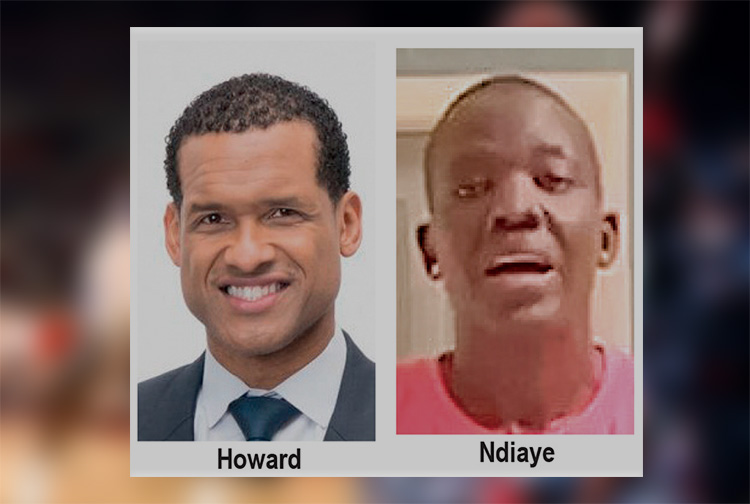
The U.S. Embassy in Colombo welcomed the U.S. Sports Envoys to Sri Lanka, former National Basketball Association (NBA) and Women’s National Basketball Association (WNBA) players Stephen Howard and Astou Ndiaye, from June 8 through 14.
The Public Diplomacy section of the U.S. Embassy said that it would launch a weeklong basketball program intended to harness the unifying power of sports, made possible through collaboration with Foundation of Goodness and IImpact Hoop Lab.
While in Sri Lanka, Howard and Ndiaye, both retired professional basketball players, will conduct a weeklong program, Hoops for Hope: Bridging Borders through Basketball. The Sports Envoys will lead basketball clinics and exhibition matches and engage in leadership sessions in Colombo and Southern Province for youth aged 14-18 from Northern, Uva, Eastern and Western Provinces, offering skills and leadership training both on and off the court. The U.S. Envoys will also share their expertise with the Sri Lanka Basketball Federation, national coaches, and players, furthering the development of basketball in the country. Beyond the clinics, they will collaborate with Sri Lankan schoolchildren to take part in a community service project in the Colombo area.
“We are so proud to welcome Stephen and Astou as our Sports Envoys to Sri Lanka, to build on the strong people-to-people connections between the United States and Sri Lanka,” said U.S. Ambassador Julie Chung. “The lessons that will be shared by our Sports Envoys – communication, teamwork, resilience, inclusion, and conflict resolution – are essential for leadership development, community building, equality, and peace. The U.S. Sports Envoy program is a testament to our belief that sports can be a powerful tool in promoting peace and unity.”
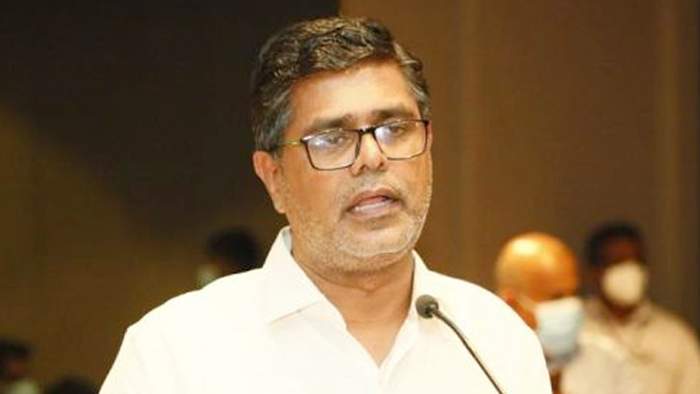
SJB Colombo District MP Mujibur Rahuman in parliament demanded to know from the government the reasons for CEB suspending the leave of all its employees until further notice from Thursday.
MP Rahuman said that the CEB has got an acting General Manager anew and the latter yesterday morning issued a circular suspending leave of all CEB employees with immediate effect until further notice.
“We demand that Minister Kanchana Wijesekera should explain this to the House. This circular was issued while this debate on the new Electricity Amendment Bill was pending. There are many who oppose this Bill. The Minister must tell parliament the reason for the urge to cancel the leave of CEB employees,” the MP said.However, Speaker Mahinda Yapa Abeywardena prevented Minister Wijesekera responding to the query and said that the matter raised by MP Rahuman was not relevant.
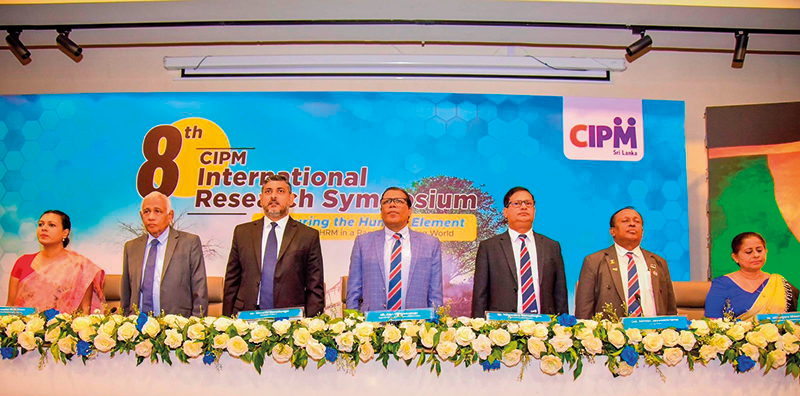
The Chartered Institute of Personnel Management (CIPM) successfully concluded the 8th Annual CIPM Symposium, which took place on 31st May 2024. Themed “Nurturing the Human Element—Redefining HRM in a Rapidly Changing World,” the symposium underscored the pivotal role of human resource management (HRM) in today’s dynamic global landscape. Since its inception in 1959, CIPM has been dedicated to advancing the HR profession through education, professional development, and advocacy, solidifying its position as Sri Lanka’s leading professional body for HRM.
Ken Vijayakumar, the President of the CIPM, graced the occasion as the chief guest. The symposium commenced with the welcome address by the Chairperson, Prof. Arosha Adikaram, followed by the Web Launch of the Symposium Proceedings and Abstract Book by the CIPM President. The event featured distinguished addresses, including a speech by Chief Guest Ken Vijayakumar, President of CIPM, and an address by Guest of Honor Shakthi Ranatunga, Chief Operating Officer of MAS Holdings Pvt. Ltd., Sri Lanka.
The symposium also featured an inspiring keynote address by Prof. Mario Fernando, Professor of Management and Director of the Centre for Cross Cultural Management (CCCM) at the University of Wollongong, Australia.
Vote of Thanks of the inauguration session was delivered by Dr. Dillanjani Weeratunga, Symposium Co-chair.
The symposium served as a comprehensive platform for researchers to present their findings across a wide range of critical topics in HRM. These included Cultural Diversity and Inclusion, Talent Development and Retention, Ethical Leadership and Corporate Social Responsibility, Adapting to Technological Advancements, Mental Health and Well-being at Work, Global Workforce Challenges, Employee Empowerment, and Reskilling and Upskilling.
The plenary session was led by Prof. Wasantha Rajapakse. Certificates were awarded to the best paper presenters during the valedictory session, followed by a vote of thanks delivered by Kamani Perera, Manager of Research and Development.
The annual symposium of CIPM was a truly inclusive event, attracting a diverse audience that spanned undergraduates, graduates, working professionals, research scholars and lecturers. This widespread interest highlights the symposium’s significance in the field of HRM, offering a unique opportunity for everyone to network and learn from scholarly brains.The CIPM International Research Symposium was sponsored by Hambantota International Port, Sri Lanka Institute of Information Technology (SLIIT), E B Creasy & Co. PLC, and Print Xcel Company.



US sports envoys to Lanka to champion youth development

Rahuman questions sudden cancellation of leave of CEB employees


