
News
Challenge for Sri Lanka demonstrates it is after economic benefits and not geopolitical mischief

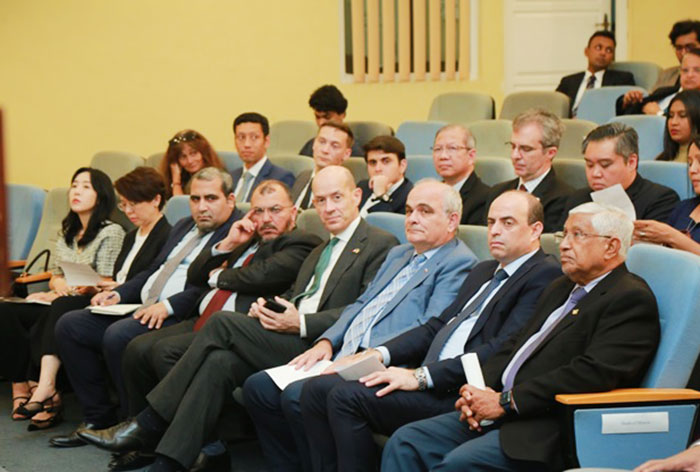
– former Foreign Secy. Ambassador Palihakkara
Former Foreign Secretary, Ambassador H. M. G. S. Palihakkara, has said the overarching challenge that is faced by Sri Lanka in its foreign relations, is demonstrating that it is after tangible economic benefits and not “geopolitical mischief” in the Indian Ocean. He emphasized the need to harmonise domestic and foreign policies to effectively overcome the acute issues arising from the economic crisis, to deal with the Indian Ocean geopolitical “trilemma” between India, China, and the United States, and to address accountability and reconciliation at a system-wide level. Ambassador Palihakkara further suggested that Sri Lanka must re-establish its core principles for foreign policy to better navigate this ever-changing geopolitical climate, which includes a focus on avoiding involvement in great power rivalries, reciprocal engagement with all countries, and promoting a policy of international cooperation geared towards the Sustainable Development Goals (SDG).
Ambassador Palihakkara made these observations while participating in the inaugural ‘LKI Foreign Policy Forum’, titled “Changing Global Dynamics: Implications for Sri Lanka”, held on Wednesday, 9th August 2023, at the Lakshman Kadirgamar Institute of International Relations and Strategic Studies (LKI) Lighthouse Auditorium. The event, held to coincide with the 18th death anniversary of the Late Hon. Lakshman Kadirgamar, was inaugurated by Foreign Minister M.U.M. Ali Sabry, and attended by State Minister of Foreign Affairs Tharaka Balasuriya, as well as a representative gathering, comprising heads of diplomatic missions and international organisations, government officials, academics, business leaders, civil society, media practitioners, as well as students.
Earlier, LKI Executive Director Ambassador Ravinatha Aryasinha, who moderated the session, identified seven key trends in the changing global dynamics: volatile global power politics; emerging pressures on the global economy; power rivalries in the Indian Ocean; the increased significance of India; the crisis in multilateralism; the inconsistency of state voting in the United Nations system; and the changing role of non-state actors in a rapidly expanding public sphere.
Dr Harinda Vidanage, Director/International Relations and Director/Centre for Strategic Assessment, Kotelawala Defence University (KDU), discussed the current nature of global affairs with reference to great power and multilateral alliances, the pursuit of small state strategic autonomy in the Indian Ocean, and the preparedness of the defence industrial base to address present-day threats in the Indo-Pacific region. Referring to the future of small state strategic autonomy, he mentioned a probable ‘shaking of the established powers’ by emerging middle-range powers, such as India and France, and said Sri Lanka failed to benefit from foreign investments due to the binary oversimplification of complex situations. Dr. Vidanage emphasised that the way forward in the security sector requires strategic assessments of present-day and emerging threats that would effectively address the current challenges in the realm of security, including the spread of disinformation and the politicisation of these matters within Sri Lanka.
Dr Dushni Weerakoon, Executive Director, Institute of Policy Studies (IPS), recognised the growing importance of geopolitical and security strategies into economic policy, with trade and investment strategies no longer being built on purely economic principles. She described how trade policy has become a battleground and major economies are now focussing on building domestic capacity in crucial sectors, such as renewable energy and semiconductors, to reduce dependence on bilateral partners. In the question-and-answer session, she also questioned the sustainability of Sri Lanka’s non-aligned foreign policy, as it weakens their position in trade negotiations.
Dr. Jehan Perera, Executive Director, National Peace Council of Sri Lanka (NPC), emphasised the vital role of civil society organisations in guiding the “moral compass” of Sri Lanka and securing the people’s interests, particularly on the issues of human rights and good governance. Dr. Perera described the success of such moves in the past and how civil society can shape, endorse, and overturn questionable and discriminatory policies in the name of the people. He said that the need for timely elections, addressing requirements of the European Union’s GSP+, the proposed Anti-Terrorism Act, and the political will that is necessary to promote power sharing, could be issues that will influence the attitude towards Sri Lanka by the international community.
The panel discussion was followed by a thought-provoking question-and-answer session, where panellists responded to questions and comments from the audience. Topics included the contemporary relevance of the UN charter, Sri Lanka’s relationship with India, the establishment and expansion of Free Trade Agreements, the evolving role of non-state actors in foreign policy decisions, and the importance of Sri Lanka’s strategic location in the Indian Ocean. This provided a platform for new perspectives on relevant issues regarding Sri Lanka’s foreign policy and promoted further discussion.



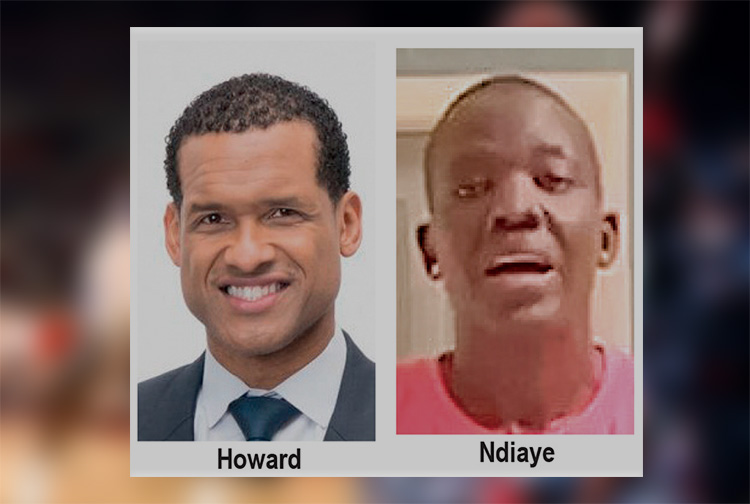
The U.S. Embassy in Colombo welcomed the U.S. Sports Envoys to Sri Lanka, former National Basketball Association (NBA) and Women’s National Basketball Association (WNBA) players Stephen Howard and Astou Ndiaye, from June 8 through 14.
The Public Diplomacy section of the U.S. Embassy said that it would launch a weeklong basketball program intended to harness the unifying power of sports, made possible through collaboration with Foundation of Goodness and IImpact Hoop Lab.
While in Sri Lanka, Howard and Ndiaye, both retired professional basketball players, will conduct a weeklong program, Hoops for Hope: Bridging Borders through Basketball. The Sports Envoys will lead basketball clinics and exhibition matches and engage in leadership sessions in Colombo and Southern Province for youth aged 14-18 from Northern, Uva, Eastern and Western Provinces, offering skills and leadership training both on and off the court. The U.S. Envoys will also share their expertise with the Sri Lanka Basketball Federation, national coaches, and players, furthering the development of basketball in the country. Beyond the clinics, they will collaborate with Sri Lankan schoolchildren to take part in a community service project in the Colombo area.
“We are so proud to welcome Stephen and Astou as our Sports Envoys to Sri Lanka, to build on the strong people-to-people connections between the United States and Sri Lanka,” said U.S. Ambassador Julie Chung. “The lessons that will be shared by our Sports Envoys – communication, teamwork, resilience, inclusion, and conflict resolution – are essential for leadership development, community building, equality, and peace. The U.S. Sports Envoy program is a testament to our belief that sports can be a powerful tool in promoting peace and unity.”
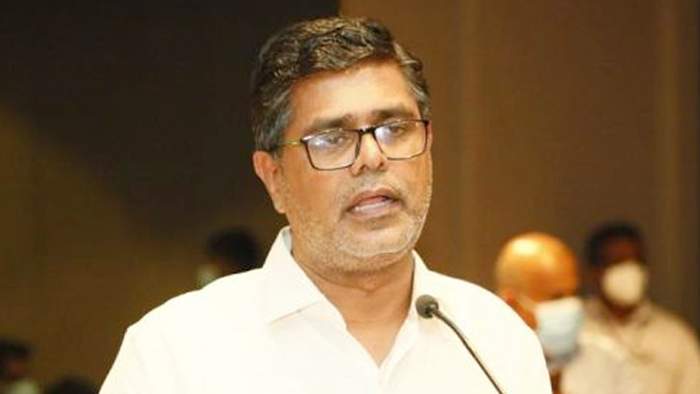
SJB Colombo District MP Mujibur Rahuman in parliament demanded to know from the government the reasons for CEB suspending the leave of all its employees until further notice from Thursday.
MP Rahuman said that the CEB has got an acting General Manager anew and the latter yesterday morning issued a circular suspending leave of all CEB employees with immediate effect until further notice.
“We demand that Minister Kanchana Wijesekera should explain this to the House. This circular was issued while this debate on the new Electricity Amendment Bill was pending. There are many who oppose this Bill. The Minister must tell parliament the reason for the urge to cancel the leave of CEB employees,” the MP said.However, Speaker Mahinda Yapa Abeywardena prevented Minister Wijesekera responding to the query and said that the matter raised by MP Rahuman was not relevant.
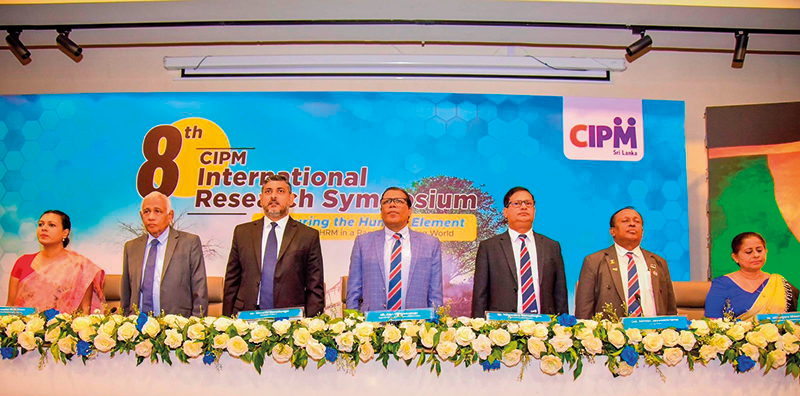
The Chartered Institute of Personnel Management (CIPM) successfully concluded the 8th Annual CIPM Symposium, which took place on 31st May 2024. Themed “Nurturing the Human Element—Redefining HRM in a Rapidly Changing World,” the symposium underscored the pivotal role of human resource management (HRM) in today’s dynamic global landscape. Since its inception in 1959, CIPM has been dedicated to advancing the HR profession through education, professional development, and advocacy, solidifying its position as Sri Lanka’s leading professional body for HRM.
Ken Vijayakumar, the President of the CIPM, graced the occasion as the chief guest. The symposium commenced with the welcome address by the Chairperson, Prof. Arosha Adikaram, followed by the Web Launch of the Symposium Proceedings and Abstract Book by the CIPM President. The event featured distinguished addresses, including a speech by Chief Guest Ken Vijayakumar, President of CIPM, and an address by Guest of Honor Shakthi Ranatunga, Chief Operating Officer of MAS Holdings Pvt. Ltd., Sri Lanka.
The symposium also featured an inspiring keynote address by Prof. Mario Fernando, Professor of Management and Director of the Centre for Cross Cultural Management (CCCM) at the University of Wollongong, Australia.
Vote of Thanks of the inauguration session was delivered by Dr. Dillanjani Weeratunga, Symposium Co-chair.
The symposium served as a comprehensive platform for researchers to present their findings across a wide range of critical topics in HRM. These included Cultural Diversity and Inclusion, Talent Development and Retention, Ethical Leadership and Corporate Social Responsibility, Adapting to Technological Advancements, Mental Health and Well-being at Work, Global Workforce Challenges, Employee Empowerment, and Reskilling and Upskilling.
The plenary session was led by Prof. Wasantha Rajapakse. Certificates were awarded to the best paper presenters during the valedictory session, followed by a vote of thanks delivered by Kamani Perera, Manager of Research and Development.
The annual symposium of CIPM was a truly inclusive event, attracting a diverse audience that spanned undergraduates, graduates, working professionals, research scholars and lecturers. This widespread interest highlights the symposium’s significance in the field of HRM, offering a unique opportunity for everyone to network and learn from scholarly brains.The CIPM International Research Symposium was sponsored by Hambantota International Port, Sri Lanka Institute of Information Technology (SLIIT), E B Creasy & Co. PLC, and Print Xcel Company.



US sports envoys to Lanka to champion youth development

Rahuman questions sudden cancellation of leave of CEB employees


