
News
CEB to float tenders for solar power generation under free market demand-supply dynamics


By Ifham Nizam
The Ceylon Electricity Board (CEB) will float tenders to attract more investors willing to undertake solar power generation under free market demand-supply dynamics, officials said.
While promoting solar energy from its inception, a gradual transformation from the Feed-in-Tariff (FIT) scheme to a competitive bidding process has been introduced by the CEB in keeping with the tariff reduction trend in the global market.
“Prospective solar power developers can now bid for very competitive rates”, they assured.
Initially, the CEB introduced the cost reflective feed-in tariff scheme to attract investments for the new technology. After the solar power industry grew, the CEB gradually introduced the competitive bidding process in line with the Sri Lanka Electricity Act.
As at December 2020, 414 MW of Solar power capacity has been grid connected. Interestingly, solar power generation has become an open market for many the world over, who exploit the freely available and almost non-exhaustible energy.
The CEB has already initiated the first phase of the planned 7,000 ground mounted solar power projects with installed capacity of 75 kW (AC) each (total project target 525 MW) to be positioned in rural and semi urban areas. The project, promoted under the theme ‘Gamata Balagarayak’ pioneers the engagement of local entrepreneurs for national energy generation.
The CEB has pledged its commitment to renewable, clean and green energy, with solar power taking the lead as a key energy source.
Under the declared policy of the government, it is envisaged to generate 70 per cent of the overall power demand from clean and renewable power sources. In this order, the CEB places top priority to finance solar power projects across the country through private sector participation, they said.
Around Rs. 7.2 billion has been allocated for future capacity enhancement of transmission networks and augmentation of grid substations to develop renewable energy, the officials said.
The Long Term Generation Expansion Plan (LTGEP) draft 2020-2039 proposed an increased renewable energy addition target (including solar PV) compared to the approved previous 2018-2037 plan.
As the 2020-2039 draft has not been approved yet despite its submission many months ago, the CEB is now preparing the draft LTGEP 2022-2041 with enhanced renewable energy addition targets to boost the renewable energy share by 2030 as stipulated by the prevailing policy guidelines.
As a developing country, Sri Lanka has been reaping the benefits of these indigenous renewable energy sources for decades with sustainable economic growth, they pointed out.
With almost all major hydro-power resources tapped, it is expected to gradually phase out the use of fossil fuel based thermal power. Energy experts are of the view that the world will experience a gradual reduction of fossil fuel by the middle of this century.
The country’s electricity energy needs were predominantly met by renewable energy sources over decades, with the prime contribution from major hydro power resources enabling the country to maintain green credential with low carbon emissions per capita level in power generation throughout the past years.
However, the growing energy demand necessitated the development of different power generation sources. When global consensus was in place to combat climate change, Sri Lanka progressed towards low carbon pathways through renewable energy.
A substantial increase of renewable energy sources is envisaged in the electricity sector thereby reducing greenhouse gas emissions and enhancing energy security aspects, the officials said.
Situated within the equatorial belt, Sri Lanka’s solar resource maps indicate higher potentials in the northern half, eastern and southern parts of the country. The potential in other areas including mountainous regions is mainly characterized by climatic and geographical features and the use of available resources require the consideration of competing land values for the proposed projects and availability of transmission and distribution infrastructure.
Solar Photovoltaic development in Sri Lanka has been gathering momentum due to rapidly falling costs of technology and global trends in the improvement in solar PV technology as a clean energy. At present, with the facilitation of the Ministry of Power, the CEB and Sri Lanka Sustainable Energy Authority (SLSEA), development of grid scale solar PV power projects, small scale distributed solar PV projects and rooftop solar PV installations are in progress on a commercial scale.
Distributed solar PV resource development has its own advantages and challenges that require careful consideration. Similar to the wind resource, the technical potential of integrating solar PV resources into the power system is assessed by the renewable energy grid integration study conducted by the CEB.



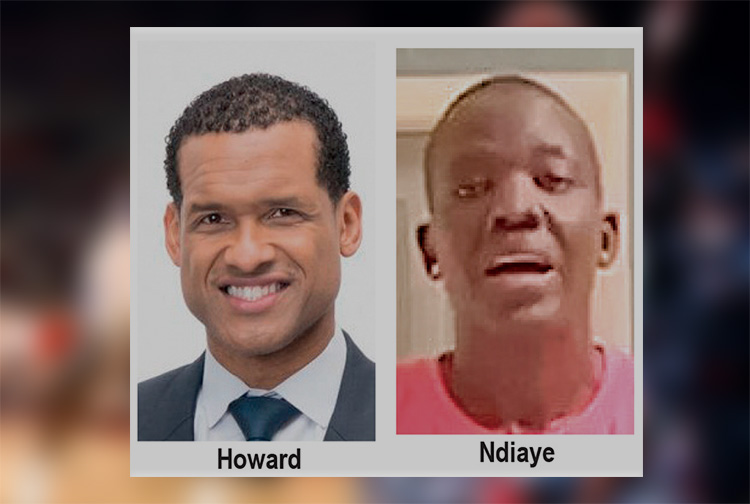
The U.S. Embassy in Colombo welcomed the U.S. Sports Envoys to Sri Lanka, former National Basketball Association (NBA) and Women’s National Basketball Association (WNBA) players Stephen Howard and Astou Ndiaye, from June 8 through 14.
The Public Diplomacy section of the U.S. Embassy said that it would launch a weeklong basketball program intended to harness the unifying power of sports, made possible through collaboration with Foundation of Goodness and IImpact Hoop Lab.
While in Sri Lanka, Howard and Ndiaye, both retired professional basketball players, will conduct a weeklong program, Hoops for Hope: Bridging Borders through Basketball. The Sports Envoys will lead basketball clinics and exhibition matches and engage in leadership sessions in Colombo and Southern Province for youth aged 14-18 from Northern, Uva, Eastern and Western Provinces, offering skills and leadership training both on and off the court. The U.S. Envoys will also share their expertise with the Sri Lanka Basketball Federation, national coaches, and players, furthering the development of basketball in the country. Beyond the clinics, they will collaborate with Sri Lankan schoolchildren to take part in a community service project in the Colombo area.
“We are so proud to welcome Stephen and Astou as our Sports Envoys to Sri Lanka, to build on the strong people-to-people connections between the United States and Sri Lanka,” said U.S. Ambassador Julie Chung. “The lessons that will be shared by our Sports Envoys – communication, teamwork, resilience, inclusion, and conflict resolution – are essential for leadership development, community building, equality, and peace. The U.S. Sports Envoy program is a testament to our belief that sports can be a powerful tool in promoting peace and unity.”
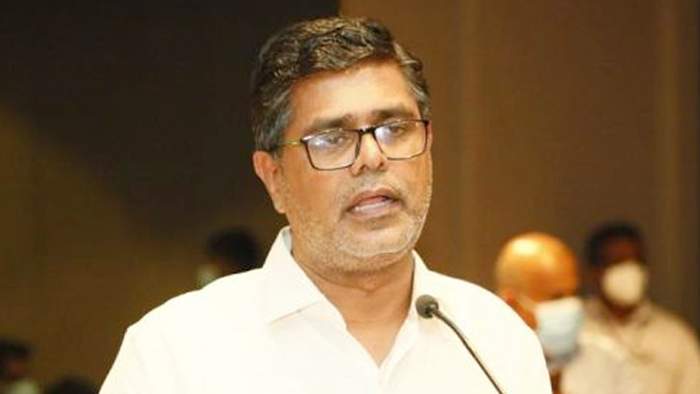
SJB Colombo District MP Mujibur Rahuman in parliament demanded to know from the government the reasons for CEB suspending the leave of all its employees until further notice from Thursday.
MP Rahuman said that the CEB has got an acting General Manager anew and the latter yesterday morning issued a circular suspending leave of all CEB employees with immediate effect until further notice.
“We demand that Minister Kanchana Wijesekera should explain this to the House. This circular was issued while this debate on the new Electricity Amendment Bill was pending. There are many who oppose this Bill. The Minister must tell parliament the reason for the urge to cancel the leave of CEB employees,” the MP said.However, Speaker Mahinda Yapa Abeywardena prevented Minister Wijesekera responding to the query and said that the matter raised by MP Rahuman was not relevant.
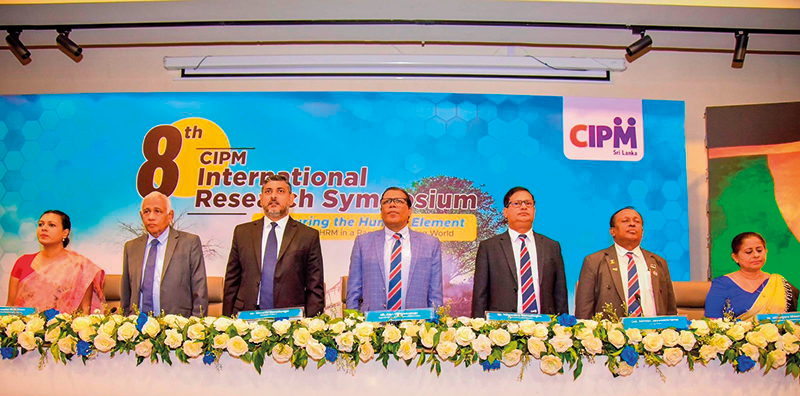
The Chartered Institute of Personnel Management (CIPM) successfully concluded the 8th Annual CIPM Symposium, which took place on 31st May 2024. Themed “Nurturing the Human Element—Redefining HRM in a Rapidly Changing World,” the symposium underscored the pivotal role of human resource management (HRM) in today’s dynamic global landscape. Since its inception in 1959, CIPM has been dedicated to advancing the HR profession through education, professional development, and advocacy, solidifying its position as Sri Lanka’s leading professional body for HRM.
Ken Vijayakumar, the President of the CIPM, graced the occasion as the chief guest. The symposium commenced with the welcome address by the Chairperson, Prof. Arosha Adikaram, followed by the Web Launch of the Symposium Proceedings and Abstract Book by the CIPM President. The event featured distinguished addresses, including a speech by Chief Guest Ken Vijayakumar, President of CIPM, and an address by Guest of Honor Shakthi Ranatunga, Chief Operating Officer of MAS Holdings Pvt. Ltd., Sri Lanka.
The symposium also featured an inspiring keynote address by Prof. Mario Fernando, Professor of Management and Director of the Centre for Cross Cultural Management (CCCM) at the University of Wollongong, Australia.
Vote of Thanks of the inauguration session was delivered by Dr. Dillanjani Weeratunga, Symposium Co-chair.
The symposium served as a comprehensive platform for researchers to present their findings across a wide range of critical topics in HRM. These included Cultural Diversity and Inclusion, Talent Development and Retention, Ethical Leadership and Corporate Social Responsibility, Adapting to Technological Advancements, Mental Health and Well-being at Work, Global Workforce Challenges, Employee Empowerment, and Reskilling and Upskilling.
The plenary session was led by Prof. Wasantha Rajapakse. Certificates were awarded to the best paper presenters during the valedictory session, followed by a vote of thanks delivered by Kamani Perera, Manager of Research and Development.
The annual symposium of CIPM was a truly inclusive event, attracting a diverse audience that spanned undergraduates, graduates, working professionals, research scholars and lecturers. This widespread interest highlights the symposium’s significance in the field of HRM, offering a unique opportunity for everyone to network and learn from scholarly brains.The CIPM International Research Symposium was sponsored by Hambantota International Port, Sri Lanka Institute of Information Technology (SLIIT), E B Creasy & Co. PLC, and Print Xcel Company.



US sports envoys to Lanka to champion youth development

Rahuman questions sudden cancellation of leave of CEB employees


