
News
Can revival of SOEs create the opportunity to alleviate the crushing debt burden?


Pathfinder Economic Alert: Proposal for budget speech
The Government of Sri Lanka has announced that it will implement reforms and strategies to revive state-owned enterprises (SOEs), while maintaining its policy decision to discontinue privatisation. Effective implementation of the proposed reforms would increase the value of SOEs. An important issue to be addressed is whether this creates an opportunity to raise financing for alleviating the country’s onerous debt burden. The crushing effects of this debt burden on the people of this country has been demonstrated by the constrained response of the Government in protecting people and livelihoods during the pandemic.
Sri Lanka’s fiscal stimulus as a percentage of GDP has been significantly lower than comparable countries. The Central Bank and a well-capitalized banking system have been able to step into the breach. However, the impact of the burden imposed on the capital adequacy of the banking system will only be known after the moratoriums are lifted. The Government’s success in containing the pandemic (March – September 2020) was a major positive factor in coping with its unprecedented effects, particularly through the early opening up of the economy.
This note argues that the Government’s efforts to reform SOEs creates an opportunity to address the onerous debt burden by selling public assets. Where the Government intends to retain control, it can consider selling minority stakes. However, there is a strong case for the sale of assets like the Hilton and Hyatt hotels once market conditions become more favourable. The emergence of a vaccine that is 90 percent effective is likely to accelerate the bounce back of the hotel and tourism sector
The Government is seeking to introduce a holistic programme of reform for improving the management of SOEs. In doing so, there is merit in drawing on the Statements of Intent (SOIs) drawn up by the major SOEs in recent years. The current initiative is pushing for the professionalization of the management of SOEs through rigorous recruitment schemes and capacity building in order to promote prudent decision-making and operational efficiency. The upgraded management teams will be called upon to develop medium-term strategic plans which identify growth strategies, including through business process engineering, mergers and amalgamations. These new business models are expected to respond to emerging opportunities in the post-pandemic world and meet challenges particularly in relation to logistics and supply chain resilience. Each SOE will also be expected to develop robust key performance indicators. In addition, monitoring mechanisms are to be established at the line ministries and Treasury.
An important gap in the proposed reforms relates to pricing policy. The largest proportion of the losses incurred by SOEs is attributable to pricing policy. Economic services (CPC, CEB, SLTB, SLR and NWS&DB) are provided below cost. There is a considerable body of empirical research which demonstrates that such subsidies are a very inefficient means of supporting the poor and vulnerable. In practice, they tend to benefit higher income groups disproportionately. It is more effective to provide a social safety net through a well-designed and targeted income transfer scheme. The highly inefficient (poorly designed and poorly targeted) Samurdhi Programme should be reformed to achieve this objective. This would provide greater leeway for adopting pricing policies that do not impose an unsustainable burden on the Government Budget and /or balance sheets of state banks. The current subsidy-based model of delivering economic services is no longer affordable given the highly constrained fiscal space and the debt dynamics which threaten the well being of the people.
The Pathfinder Foundation is concerned that the lack of fiscal space and the possibility of a debt crisis highlights the unsustainability of the Government being the employer of first resort. Sri Lanka’s post-colonial history involves the commitment of successive governments to creating unproductive public sector employment. However, the current highly constrained fiscal space calls for a radical re-think of the traditional approach of the Government being the employer of first resort. Historically, successive governments have been unwilling or unable to introduce economic reforms that would increase gainful employment outside the government sector. For SOE reforms to be effective, there should be complementary policies which generate productive employment opportunities thoughout the economy.
The Way Forward
The agenda for reforming SOEs includes the following: improved corporate governance; appointment of competent CEOs; recruitment of qualified professionals for procurement, finance, human resource development and other key management positions; adoption of realistic pricing policies and investment strategies; institutionalizing performance audit and financial management controls; and expenditure management. Success depends on taking tough decisions. It is noteworthy that governments, such as Norway and Abu Dhabi, have refused to provide additional financial support to their national airlines even though these two jurisdictions have two of the largest sovereign wealth funds in the world. Yet Sri Lanka, despite its parlous public finances, has not been able to take tough decisions in relation to its national carrier.
Successful implementation of SOE reforms will reduce the burden on the budget and strengthen state bank balance sheets. In addition, the valuation of these enterprises will be enhanced and the opportunity will be created to consider very seriously how a programme of asset disposal can contribute to alleviating the unsustainable debt burden. This course of action would be a less painful option for the general public than raising taxes or cutting priority expenditure.
Consideration should be given to categorizing state-owned assets into those which can be sold outright, such as the Hilton and Hyatt hotels. A second category could be assets which can generate considerable financing for the Government through the sale of minority stakes. For instance, the sale of 10-15 percent of the Bank of Ceylon and People’s Bank would generate a considerable amount of money. Part of this can be allocated to the employees of the institutions. Furthermore, if these stakes are sold through the stock market, the listing regulations would result in disclosure requirements which would improve corporate governance. There could be a third category of public assets for which the Government can decide there should be no change in ownership structure.
A separate vehicle can be created (similar to a sinking fund) into which the sale proceeds can be credited. These funds can be earmarked solely for the purpose of debt-management. The timing of such transactions should be determined by the improvement in market conditions. It would be timely to commence thinking about such an initiative at a time when sentiment and confidence, at home and abroad, is being boosted by the emergence of a vaccine which is over 90 percent effective.
The Pathfinder Foundation believes that the Budget Speech (Nov 17, 2020) provides an opportunity for the Government to elaborate on such a programme which offers the prospect of reducing the debt burden in a manner that contains the pain inflicted on the people of Sri Lanka. Such a programme will also transmit a positive signal to investors and creditors, both at home and abroad, as well as to rating agencies thereby increasing the credit worthiness of the country.
This is a PATHFINDER ALERT of the Pathfinder Foundation. Readers’ comments are welcome at www.pathfinderfoundation.org



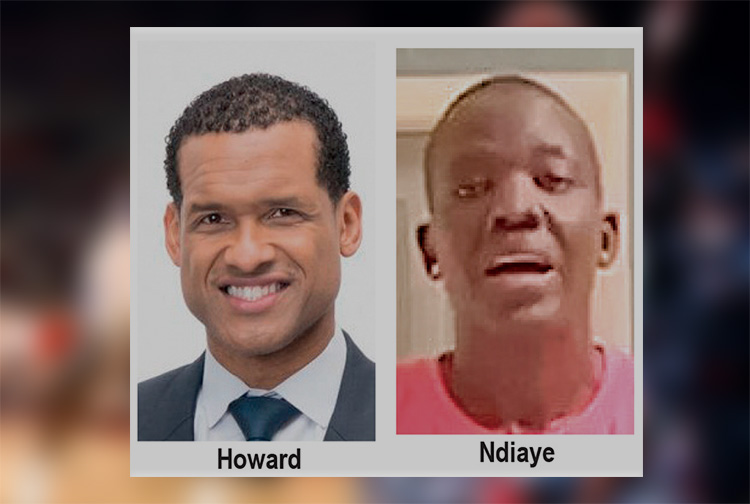
The U.S. Embassy in Colombo welcomed the U.S. Sports Envoys to Sri Lanka, former National Basketball Association (NBA) and Women’s National Basketball Association (WNBA) players Stephen Howard and Astou Ndiaye, from June 8 through 14.
The Public Diplomacy section of the U.S. Embassy said that it would launch a weeklong basketball program intended to harness the unifying power of sports, made possible through collaboration with Foundation of Goodness and IImpact Hoop Lab.
While in Sri Lanka, Howard and Ndiaye, both retired professional basketball players, will conduct a weeklong program, Hoops for Hope: Bridging Borders through Basketball. The Sports Envoys will lead basketball clinics and exhibition matches and engage in leadership sessions in Colombo and Southern Province for youth aged 14-18 from Northern, Uva, Eastern and Western Provinces, offering skills and leadership training both on and off the court. The U.S. Envoys will also share their expertise with the Sri Lanka Basketball Federation, national coaches, and players, furthering the development of basketball in the country. Beyond the clinics, they will collaborate with Sri Lankan schoolchildren to take part in a community service project in the Colombo area.
“We are so proud to welcome Stephen and Astou as our Sports Envoys to Sri Lanka, to build on the strong people-to-people connections between the United States and Sri Lanka,” said U.S. Ambassador Julie Chung. “The lessons that will be shared by our Sports Envoys – communication, teamwork, resilience, inclusion, and conflict resolution – are essential for leadership development, community building, equality, and peace. The U.S. Sports Envoy program is a testament to our belief that sports can be a powerful tool in promoting peace and unity.”
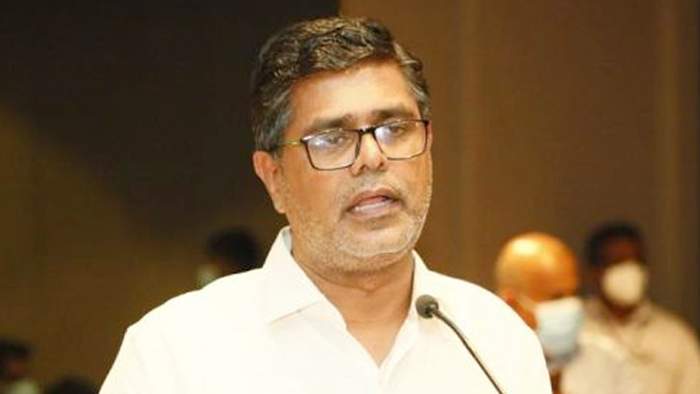
SJB Colombo District MP Mujibur Rahuman in parliament demanded to know from the government the reasons for CEB suspending the leave of all its employees until further notice from Thursday.
MP Rahuman said that the CEB has got an acting General Manager anew and the latter yesterday morning issued a circular suspending leave of all CEB employees with immediate effect until further notice.
“We demand that Minister Kanchana Wijesekera should explain this to the House. This circular was issued while this debate on the new Electricity Amendment Bill was pending. There are many who oppose this Bill. The Minister must tell parliament the reason for the urge to cancel the leave of CEB employees,” the MP said.However, Speaker Mahinda Yapa Abeywardena prevented Minister Wijesekera responding to the query and said that the matter raised by MP Rahuman was not relevant.
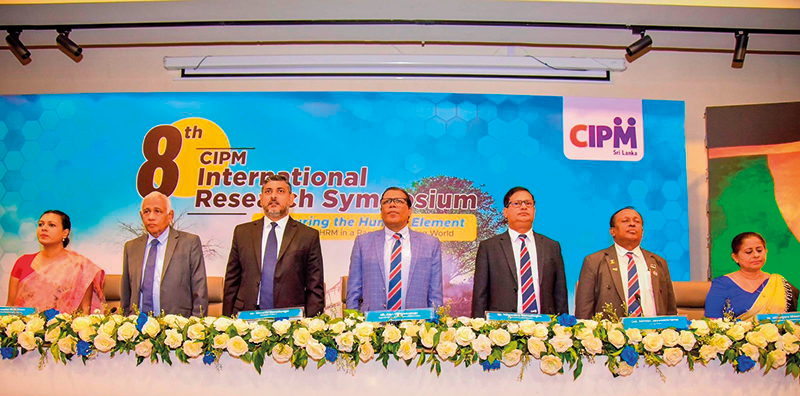
The Chartered Institute of Personnel Management (CIPM) successfully concluded the 8th Annual CIPM Symposium, which took place on 31st May 2024. Themed “Nurturing the Human Element—Redefining HRM in a Rapidly Changing World,” the symposium underscored the pivotal role of human resource management (HRM) in today’s dynamic global landscape. Since its inception in 1959, CIPM has been dedicated to advancing the HR profession through education, professional development, and advocacy, solidifying its position as Sri Lanka’s leading professional body for HRM.
Ken Vijayakumar, the President of the CIPM, graced the occasion as the chief guest. The symposium commenced with the welcome address by the Chairperson, Prof. Arosha Adikaram, followed by the Web Launch of the Symposium Proceedings and Abstract Book by the CIPM President. The event featured distinguished addresses, including a speech by Chief Guest Ken Vijayakumar, President of CIPM, and an address by Guest of Honor Shakthi Ranatunga, Chief Operating Officer of MAS Holdings Pvt. Ltd., Sri Lanka.
The symposium also featured an inspiring keynote address by Prof. Mario Fernando, Professor of Management and Director of the Centre for Cross Cultural Management (CCCM) at the University of Wollongong, Australia.
Vote of Thanks of the inauguration session was delivered by Dr. Dillanjani Weeratunga, Symposium Co-chair.
The symposium served as a comprehensive platform for researchers to present their findings across a wide range of critical topics in HRM. These included Cultural Diversity and Inclusion, Talent Development and Retention, Ethical Leadership and Corporate Social Responsibility, Adapting to Technological Advancements, Mental Health and Well-being at Work, Global Workforce Challenges, Employee Empowerment, and Reskilling and Upskilling.
The plenary session was led by Prof. Wasantha Rajapakse. Certificates were awarded to the best paper presenters during the valedictory session, followed by a vote of thanks delivered by Kamani Perera, Manager of Research and Development.
The annual symposium of CIPM was a truly inclusive event, attracting a diverse audience that spanned undergraduates, graduates, working professionals, research scholars and lecturers. This widespread interest highlights the symposium’s significance in the field of HRM, offering a unique opportunity for everyone to network and learn from scholarly brains.The CIPM International Research Symposium was sponsored by Hambantota International Port, Sri Lanka Institute of Information Technology (SLIIT), E B Creasy & Co. PLC, and Print Xcel Company.



US sports envoys to Lanka to champion youth development

Rahuman questions sudden cancellation of leave of CEB employees


